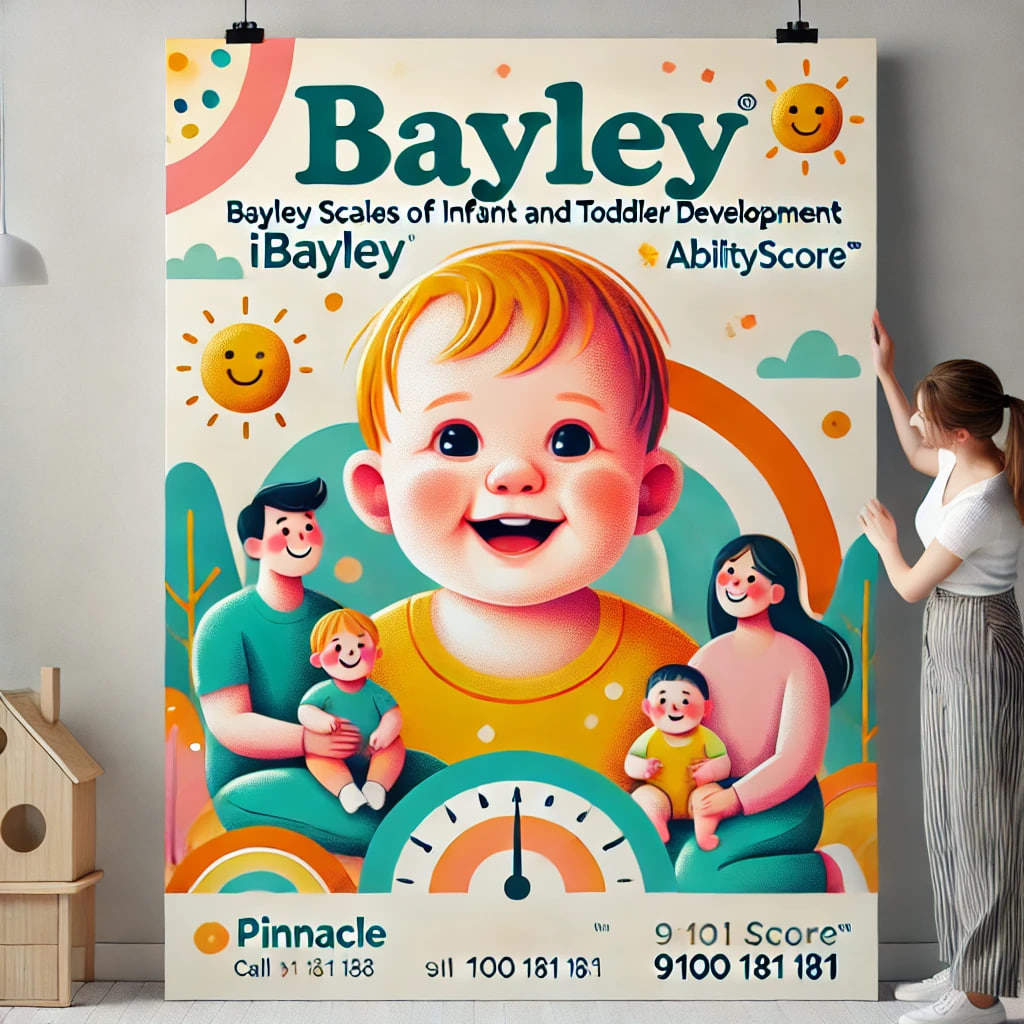
Pinnacle iBAYLEY-4 - Bayley Scales of Infant and Toddler Development-2
share
The Bayley Scales of Infant and Toddler Development, 2nd Edition, is a comprehensive tool used to assess the developmental functioning of infants and toddlers. It helps in understanding key areas such as cognition, language, and motor skills, ultimately aiding in early intervention for developmental delays.
The Bayley Scales is an evaluation tool that measures developmental progress in infants and young children from age 1-42 months. It provides insights into cognitive, language, physical, social-emotional, and adaptive behavior.
The assessment helps in identifying developmental delays early, allowing for timely intervention which is crucial for maximizing a child’s developmental potential.
A trained psychologist or therapist conducts the evaluation through a series of structured tasks and observations tailored to the child’s age, analyzing responses and behaviors.
Pinnacle Blooms Network has successfully conducted over 1,00,00,000 personalized assessments with a 97% proven accuracy rate, supporting families across more than 60 countries.
Ananya was 18 months old when her parents first noticed she wasn''t babbling like kids her age. Overwhelmed with concern, they approached Pinnacle Blooms Network, where the Bayley Scales assessment brought clarity. With tailored therapies, Ananya is now not only making sounds but engaging with her environment actively. Her parents found hope with each new milestone she achieved.
Diagnosis : Speech Delay and Social Skills Deficiency
Progress : After a series of sessions, Aarav began forming full sentences and engaging in group play, illustrating significant improvement in social interactions.
At Pinnacle Blooms Network, we believe in breaking barriers. Book your child''s assessment by calling 9100 181 181 or writing to us at care@pinnacleblooms.org.
*Names are indicative only and have been changed for privacy protectionSuccess Testimonial
Name : Ravi
RelationShip : Father
Testimonial : Pinnacle Blooms changed our lives. Aarav is now communicating with us, and it''s a joy to witness his progress.
These are reference questions and illustrative examples. This section does not collect child responses, calculate scores or produce an individual assessment result.
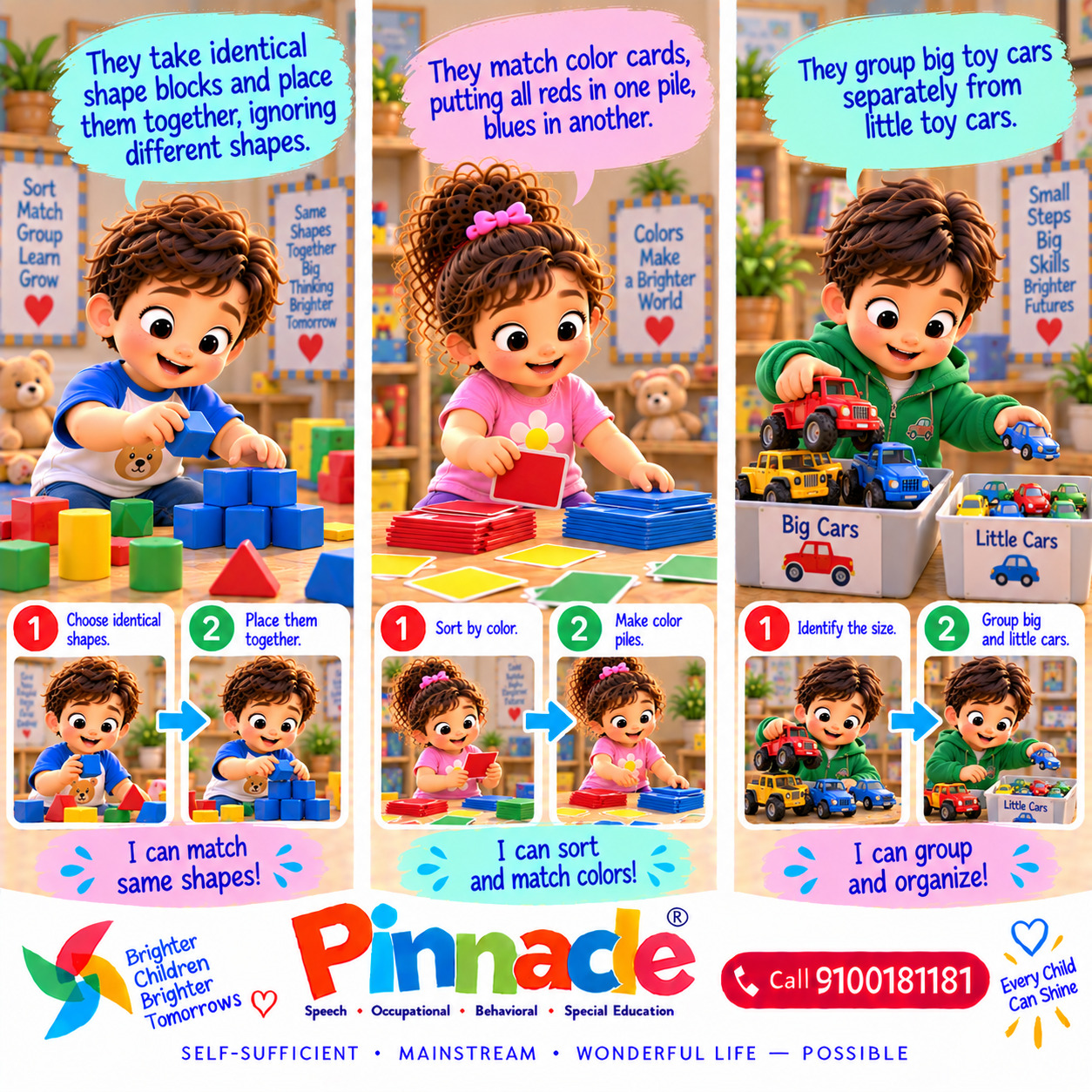
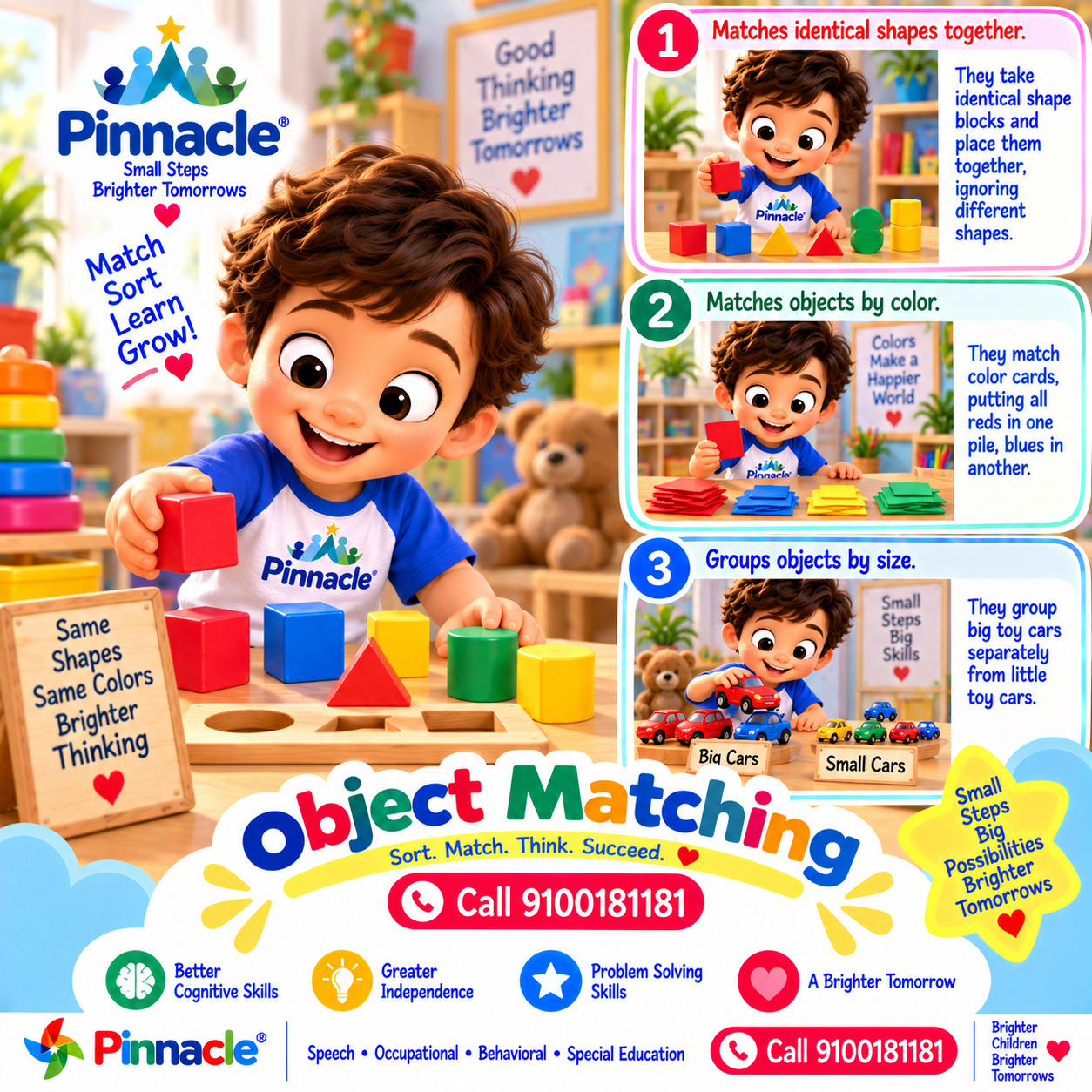
Can the child identify and match similar objects by shape, color, or size?
Topic: Object Matching
Example 1
They take identical shape blocks and place them together, ignoring different shapes.
Example 2
They match color cards, putting all reds in one pile, blues in another.
Example 3
They group big toy cars separately from little toy cars.
Example illustrationQuestion illustration
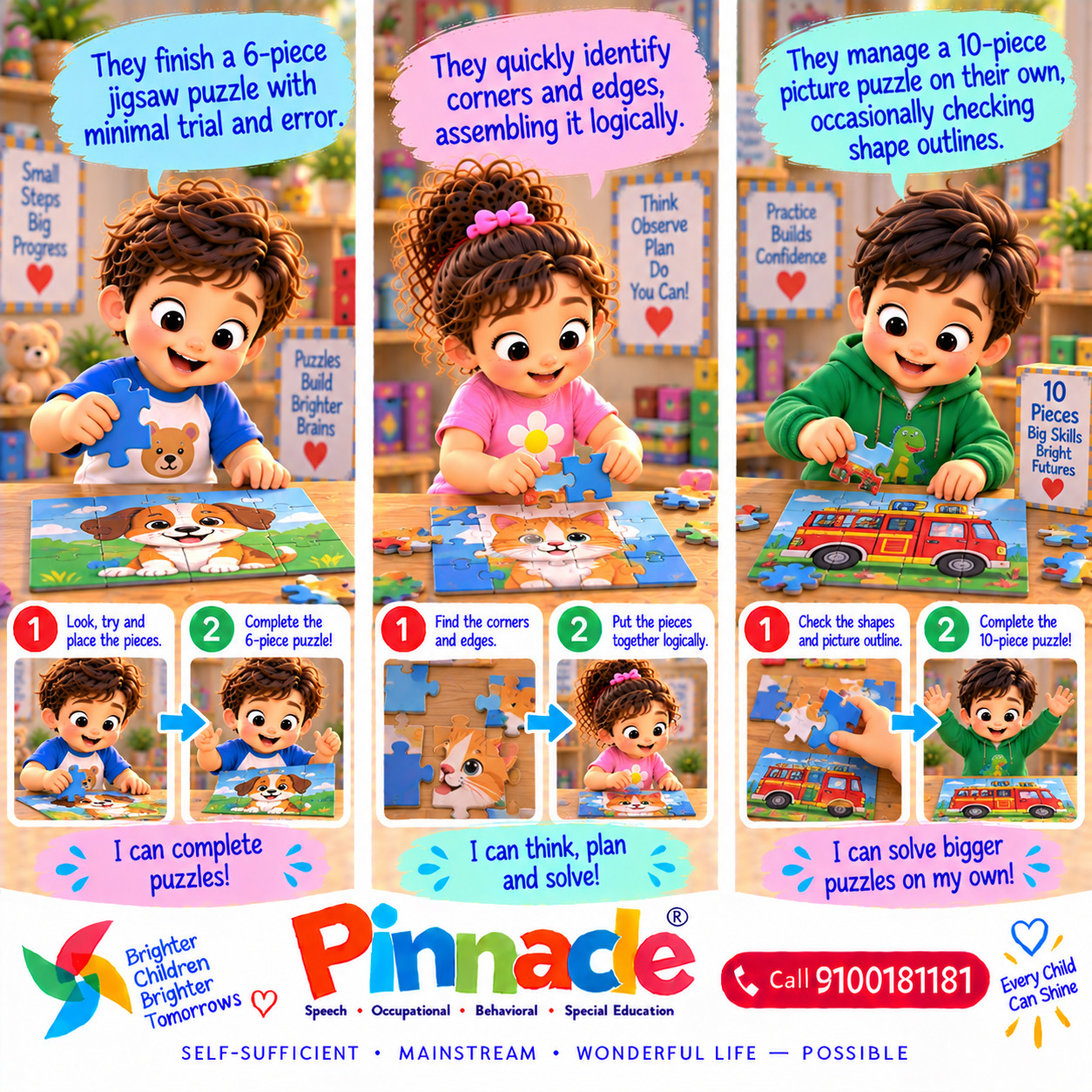
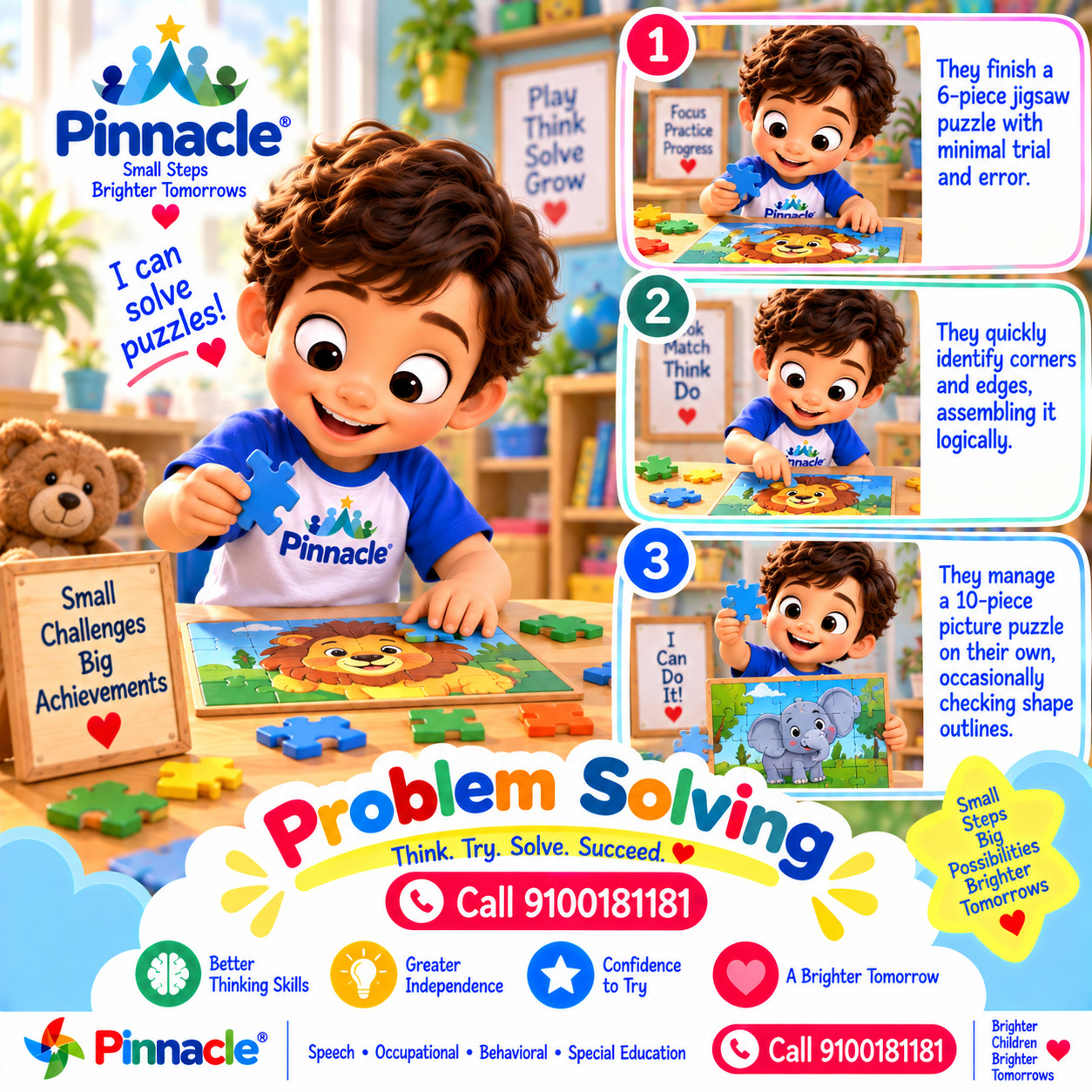
Can the child solve simple puzzles (5-10 pieces) independently?
Topic: Problem Solving
Example 1
They finish a 6-piece jigsaw puzzle with minimal trial and error.
Example 2
They quickly identify corners and edges, assembling it logically.
Example 3
They manage a 10-piece picture puzzle on their own, occasionally checking shape outlines.
Example illustrationQuestion illustration
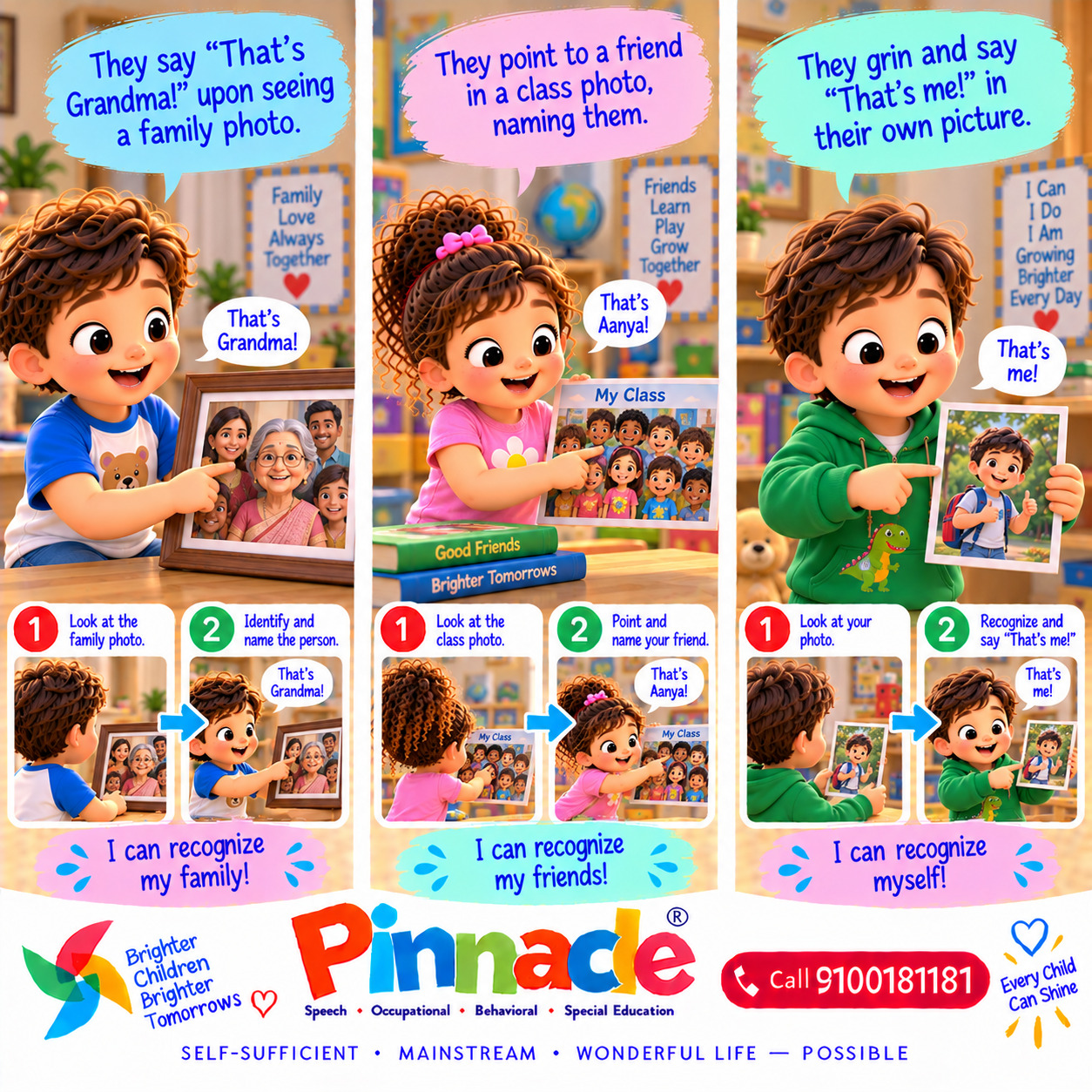
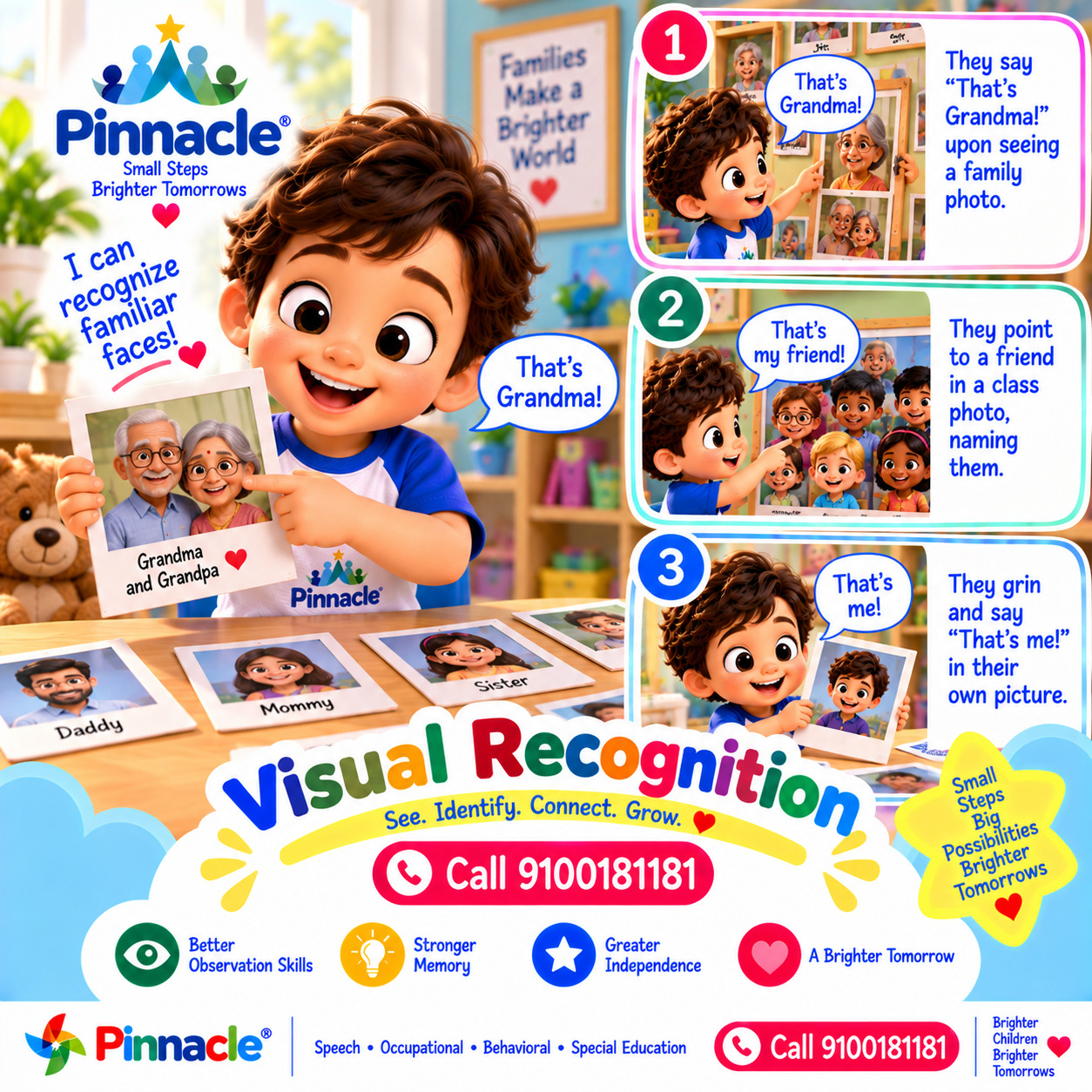
Does the child recognize familiar faces in pictures?
Topic: Visual Recognition
Example 1
They say “That’s Grandma!” upon seeing a family photo.
Example 2
They point to a friend in a class photo, naming them.
Example 3
They grin and say “That’s me!” in their own picture.
Example illustrationQuestion illustration
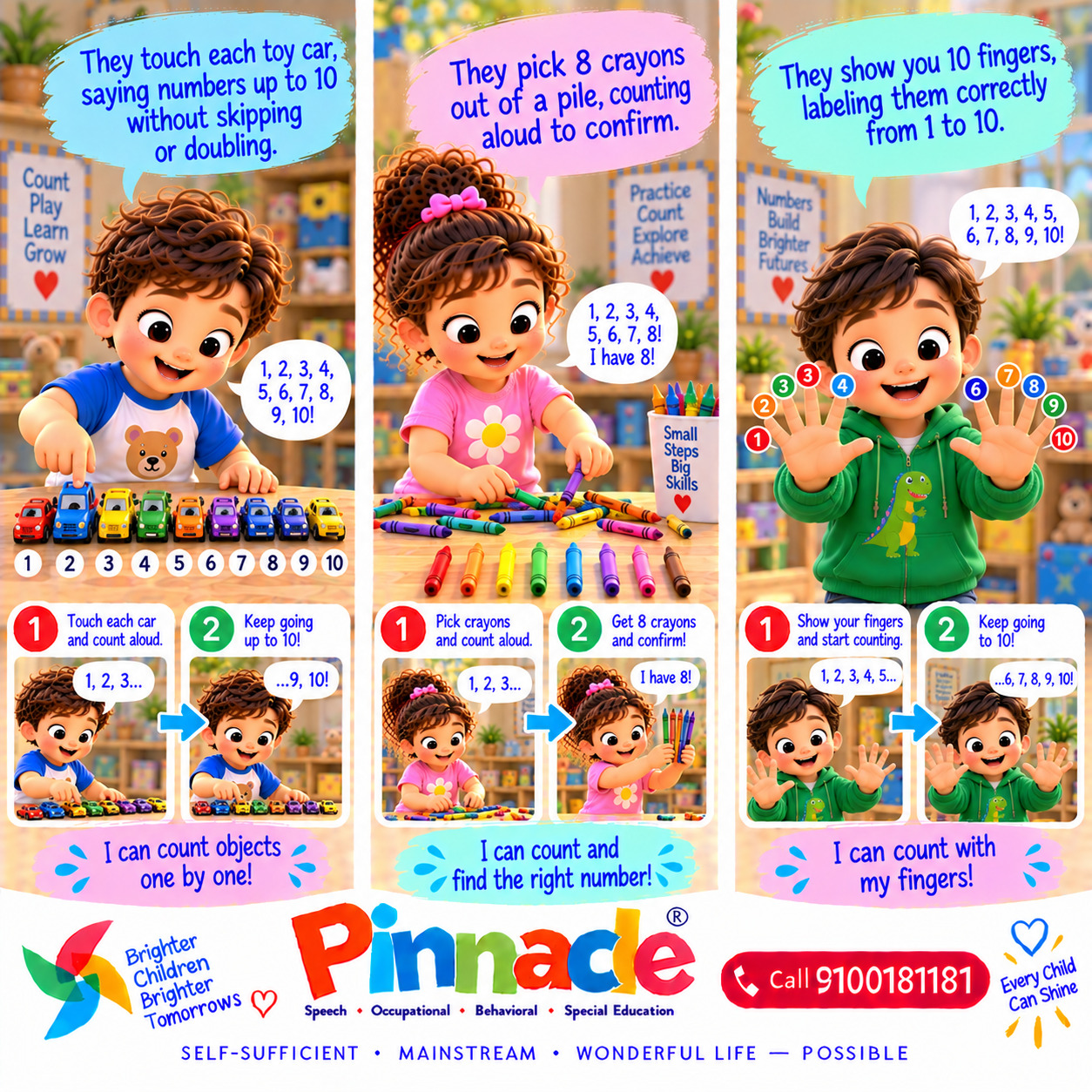
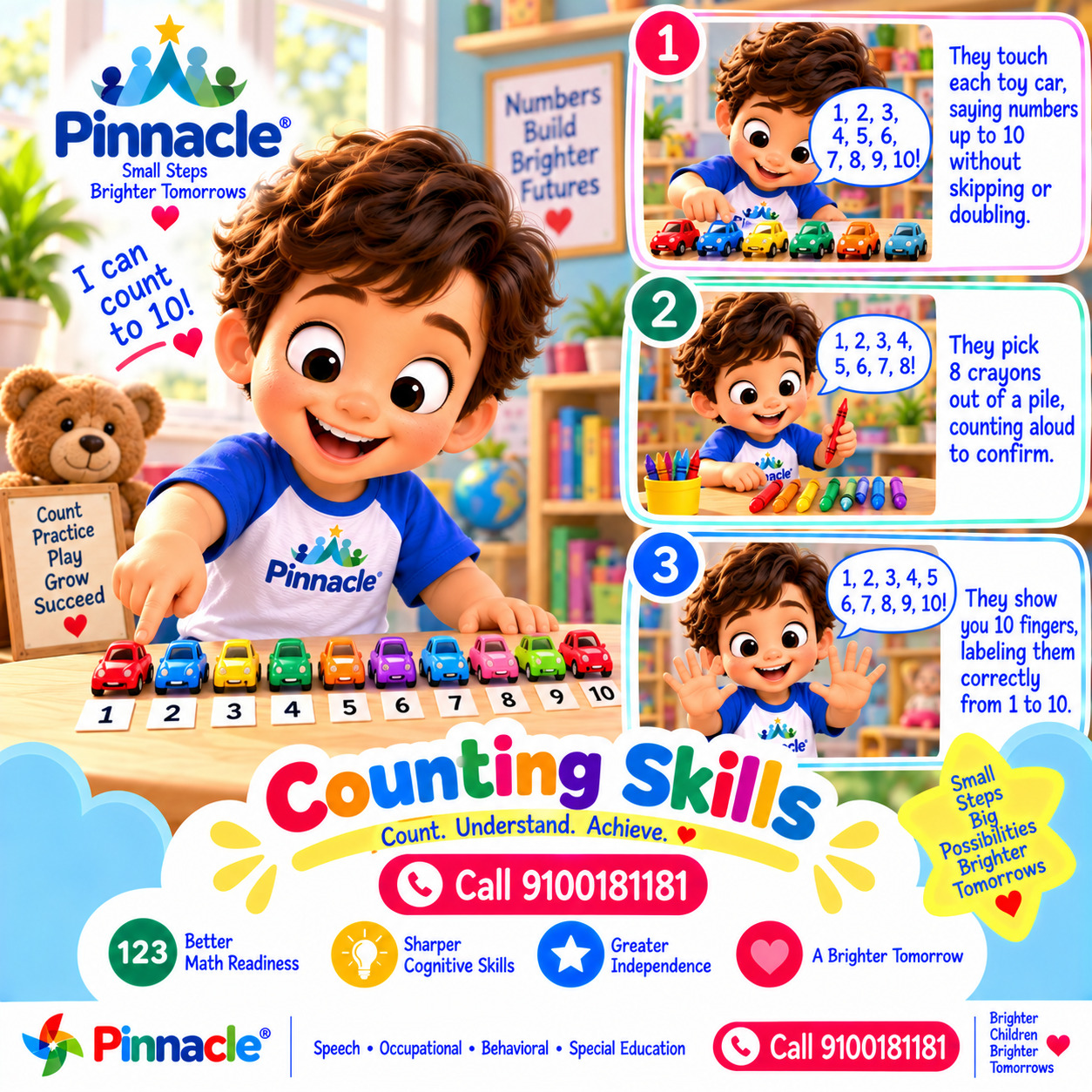
Can the child count objects accurately (at least up to 10)?
Topic: Counting Skills
Example 1
They touch each toy car, saying numbers up to 10 without skipping or doubling.
Example 2
They pick 8 crayons out of a pile, counting aloud to confirm.
Example 3
They show you 10 fingers, labeling them correctly from 1 to 10.
Example illustrationQuestion illustration
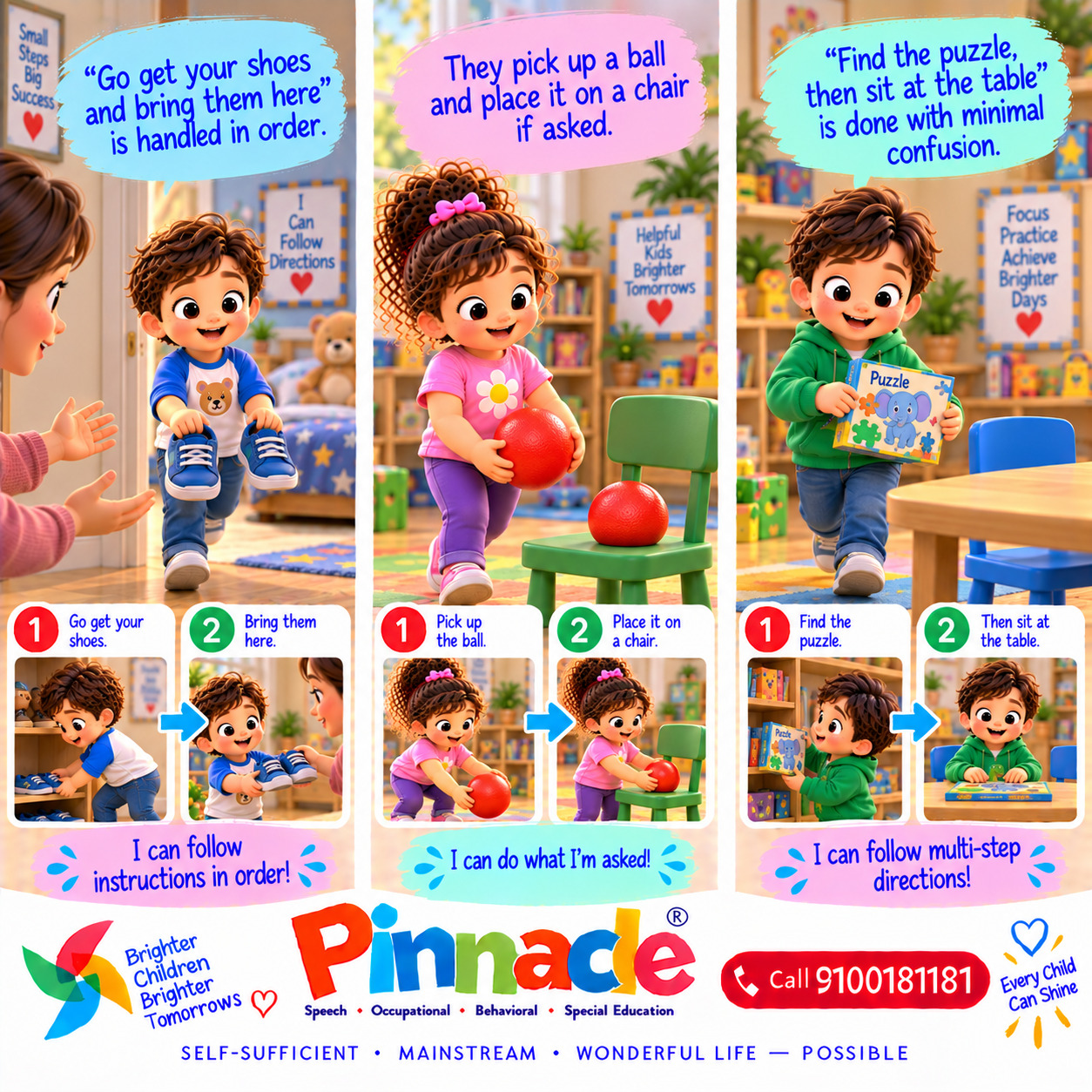
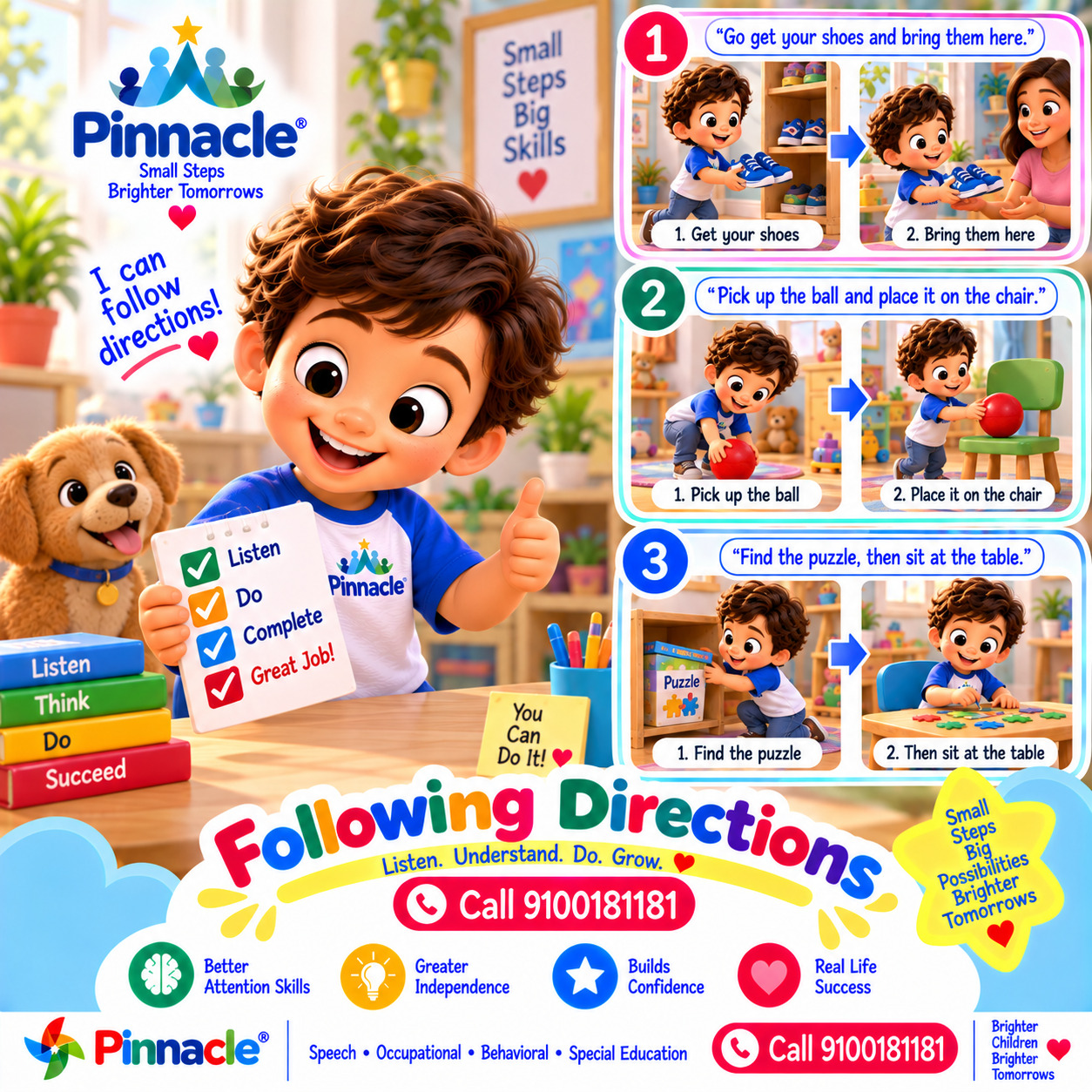
Does the child follow simple 2-step instructions (e.g., “Get the book and sit down”)?
Topic: Following Directions
Example 1
“Go get your shoes and bring them here” is handled in order.
Example 2
They pick up a ball and place it on a chair if asked.
Example 3
“Find the puzzle, then sit at the table” is done with minimal confusion.
Example illustrationQuestion illustration
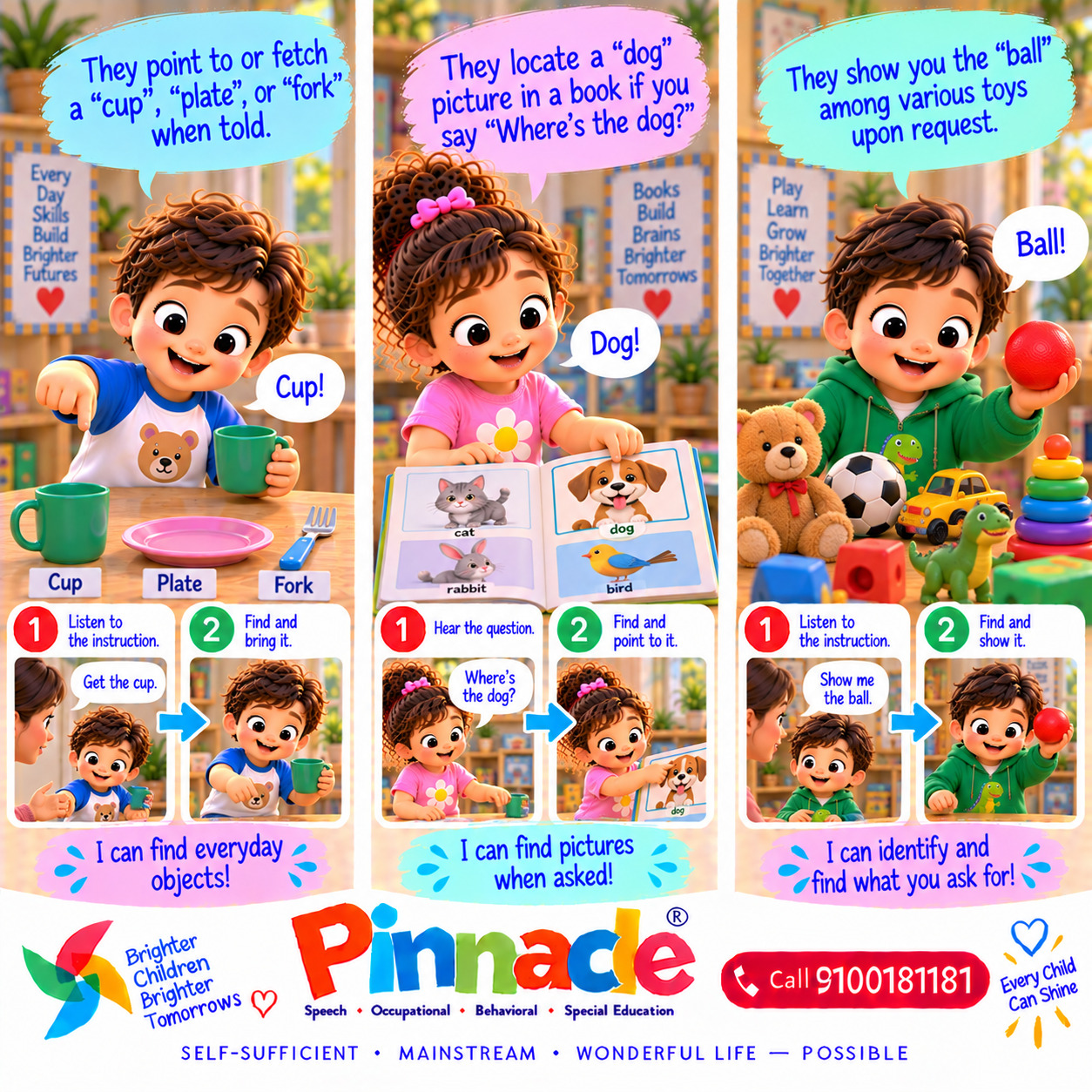
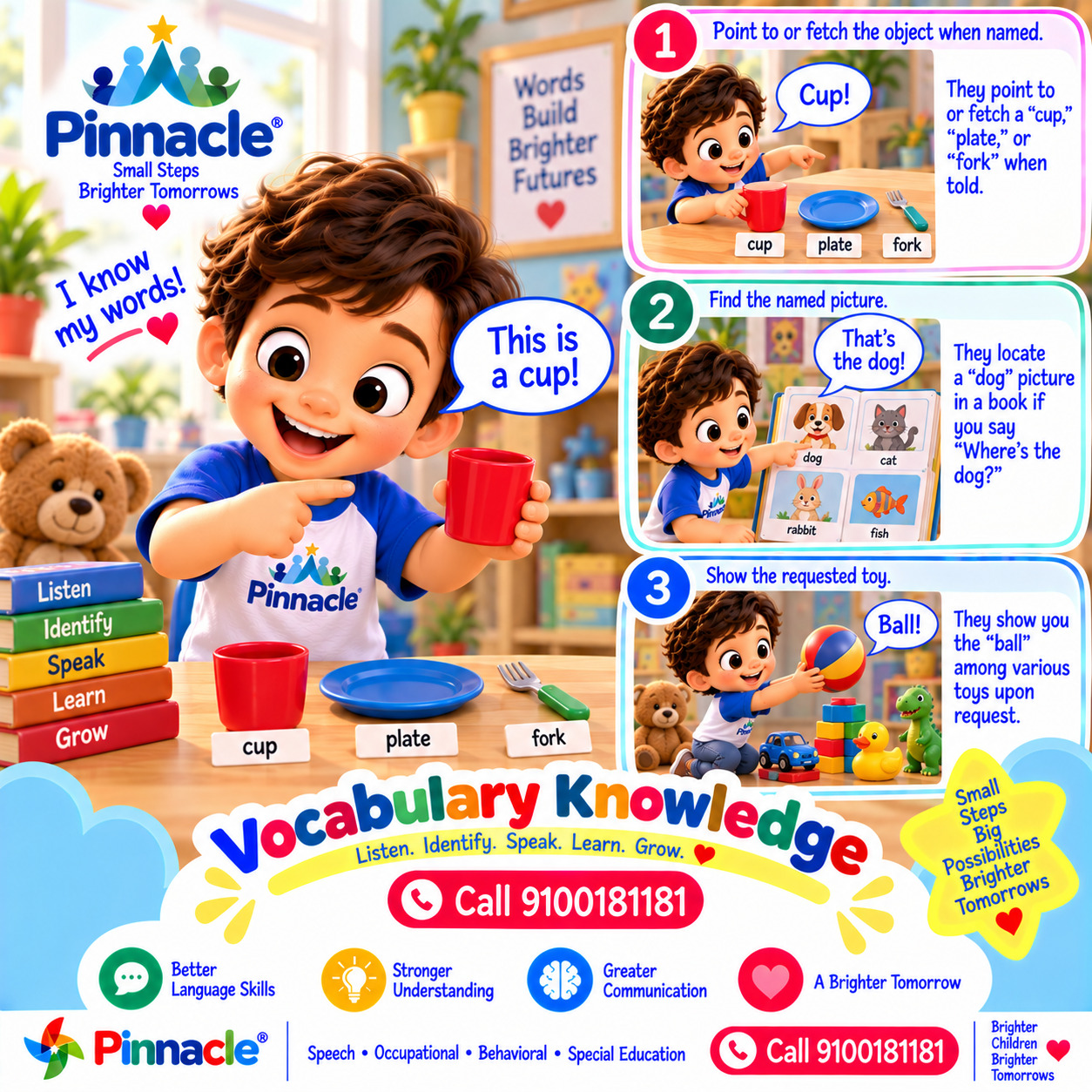
Can the child identify common objects when named?
Topic: Vocabulary Knowledge
Example 1
They point to or fetch a “cup,” “plate,” or “fork” when told.
Example 2
They locate a “dog” picture in a book if you say “Where’s the dog?”
Example 3
They show you the “ball” among various toys upon request.
Example illustrationQuestion illustration
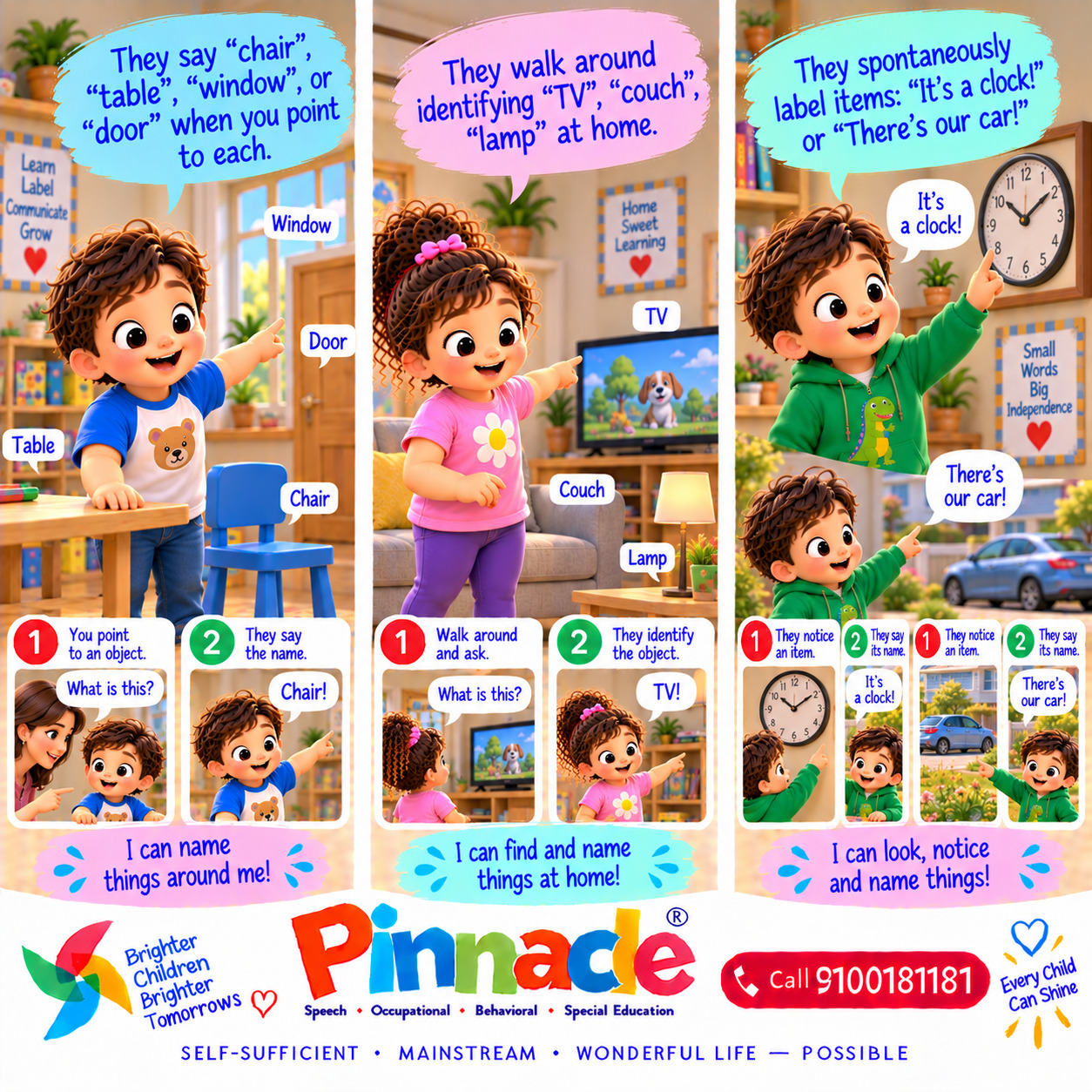
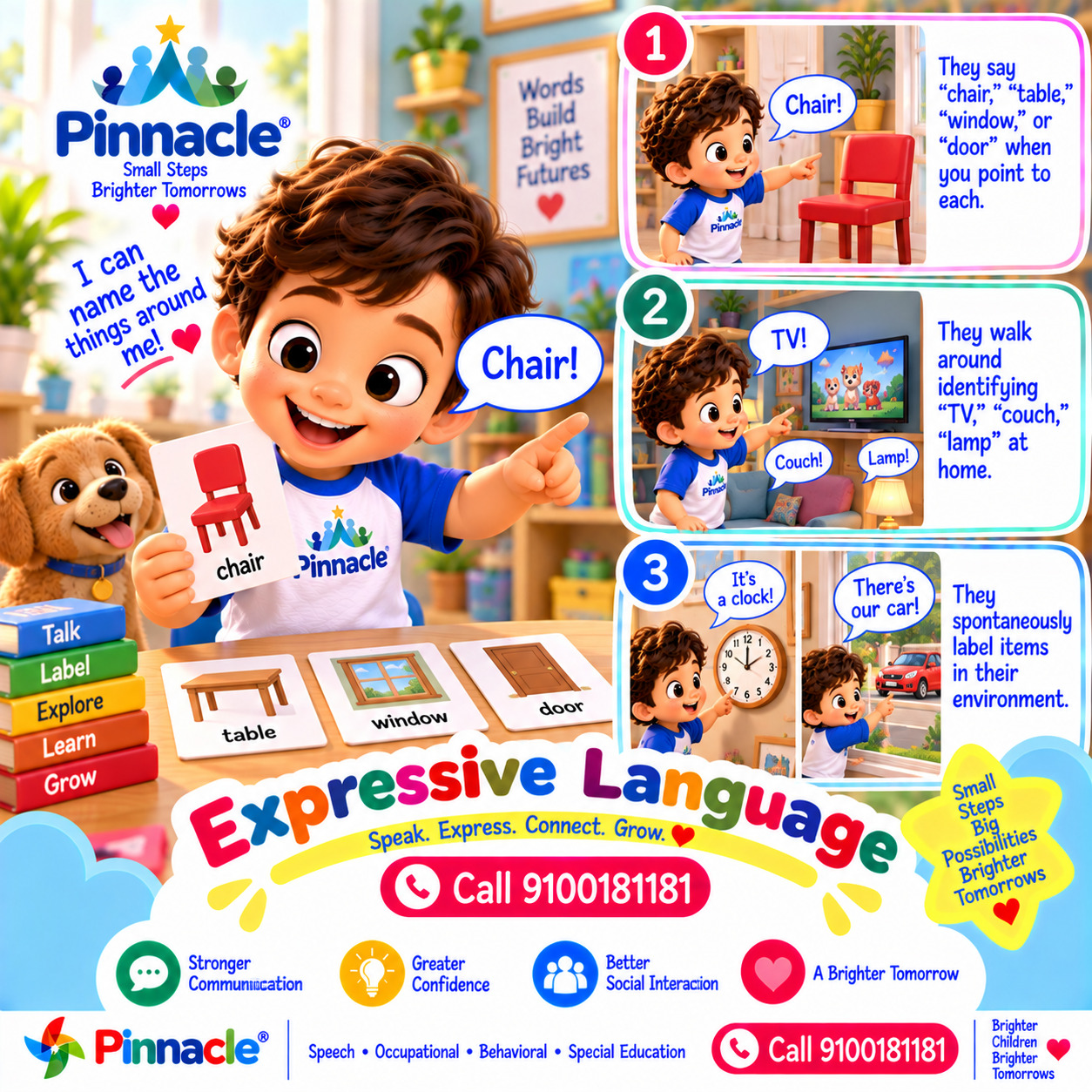
Can the child name familiar objects in their environment?
Topic: Expressive Language
Example 1
They say “chair,” “table,” “window,” or “door” when you point to each.
Example 2
They walk around identifying “TV,” “couch,” “lamp” at home.
Example 3
They spontaneously label items: “It’s a clock!” or “There’s our car!”
Example illustrationQuestion illustration
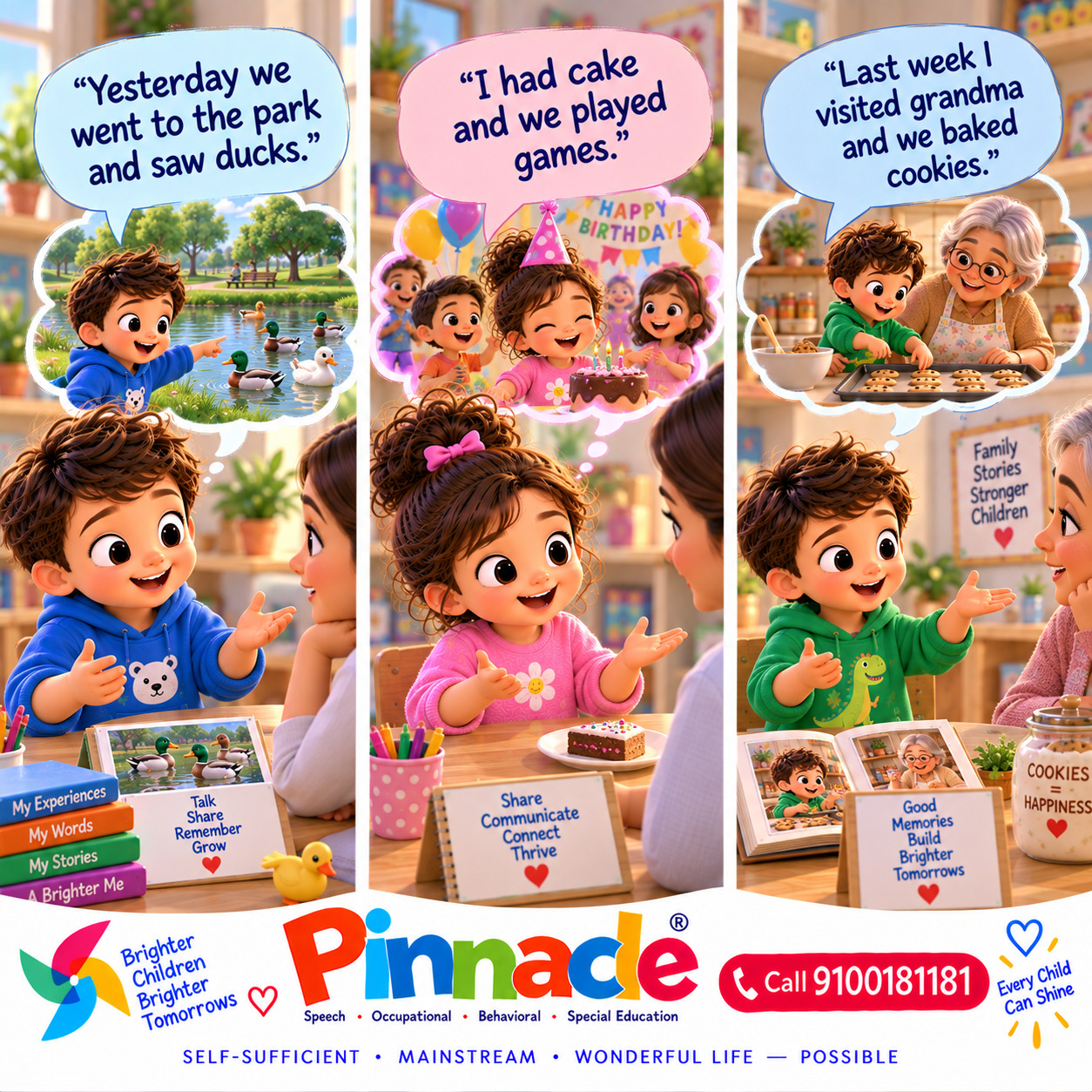
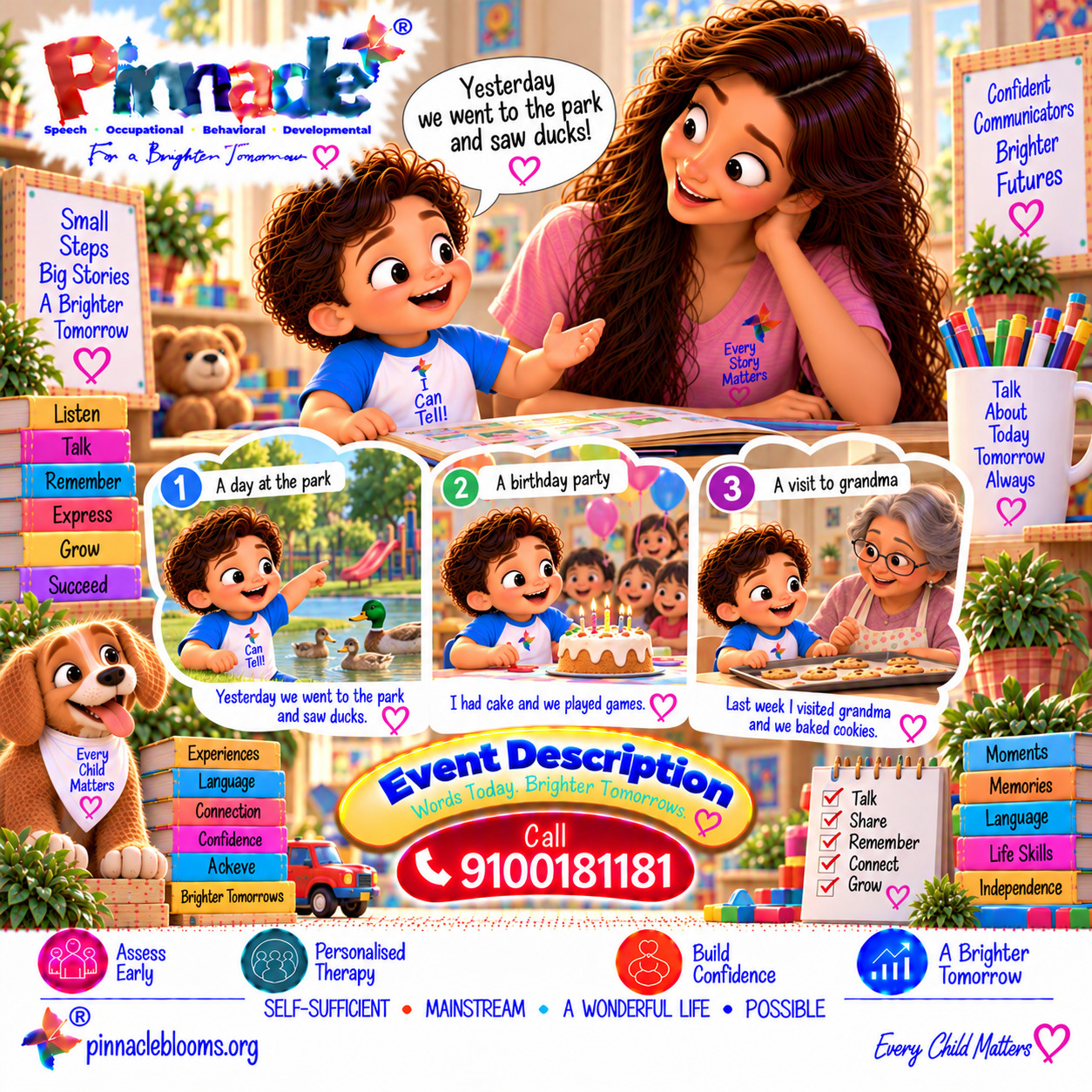
Can the child describe a past event or experience?
Topic: Event Description
Example 1
They say “Yesterday we went to the park and saw ducks.”
Example 2
After a birthday party, they explain “I had cake and we played games.”
Example 3
They recount “Last week I visited grandma and we baked cookies.”
Example illustrationQuestion illustration
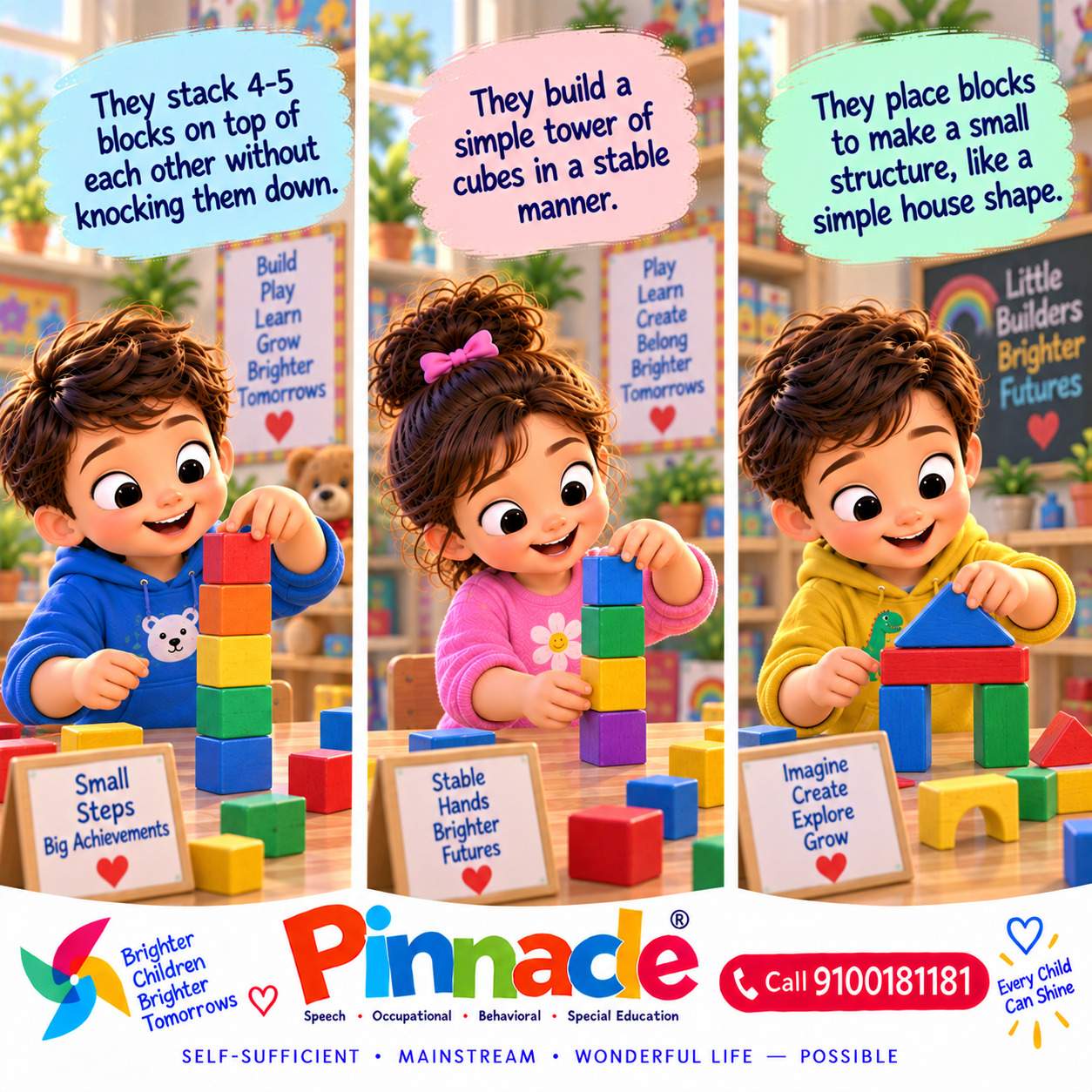
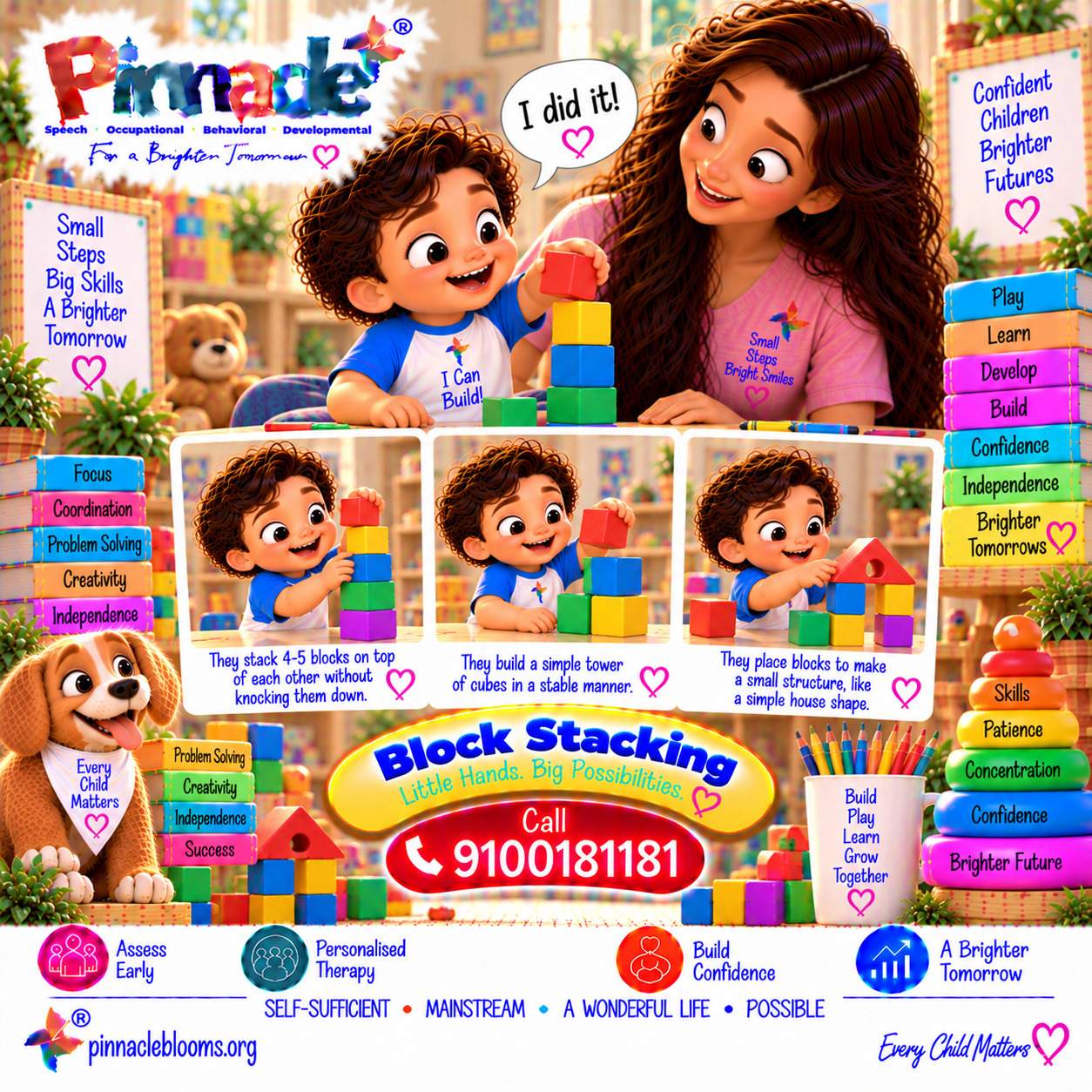
Can the child stack blocks or build simple towers?
Topic: Block Stacking
Example 1
They stack 4-5 blocks on top of each other without knocking them down.
Example 2
They build a simple tower of cubes in a stable manner.
Example 3
They place blocks to make a small structure, like a simple house shape.
Example illustrationQuestion illustration
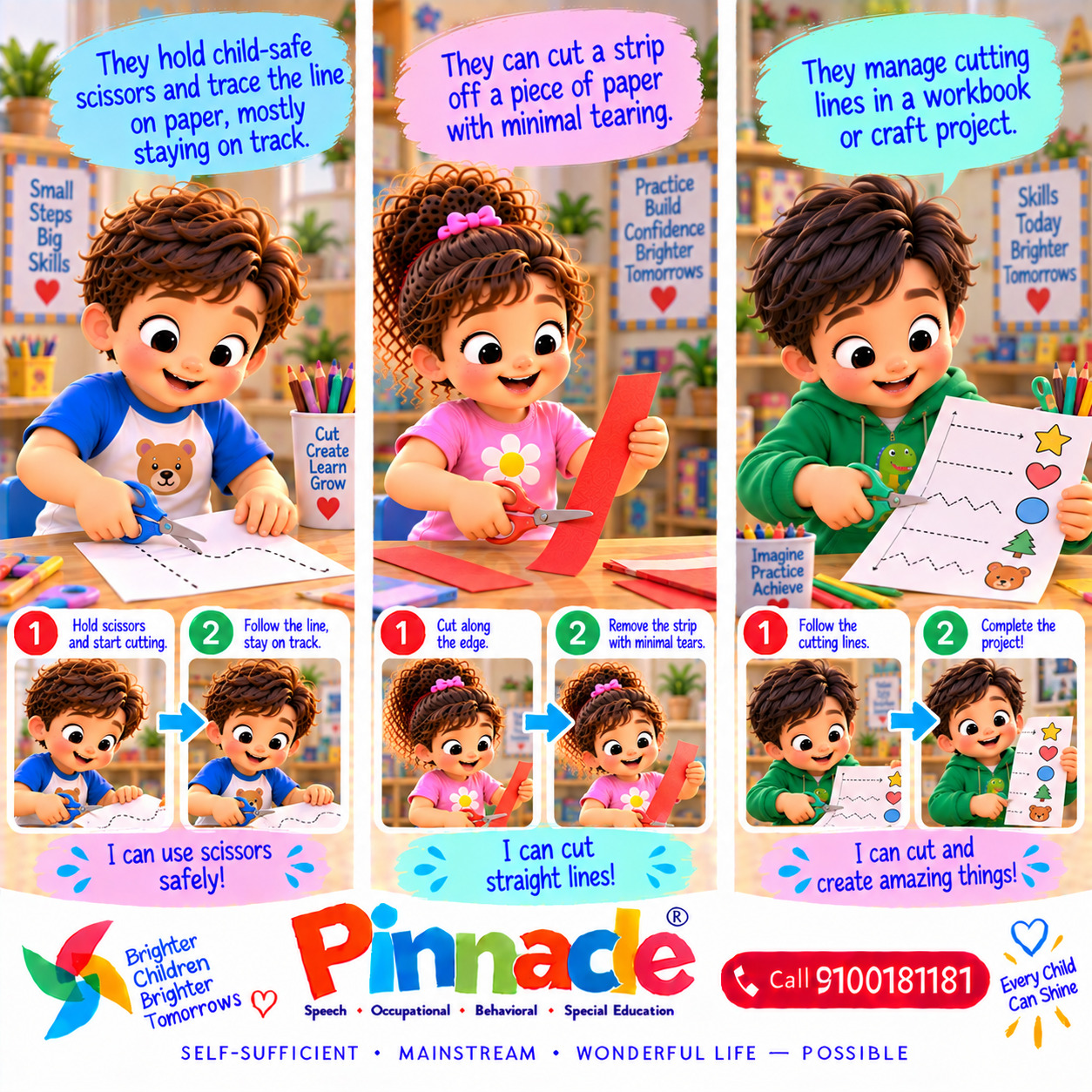
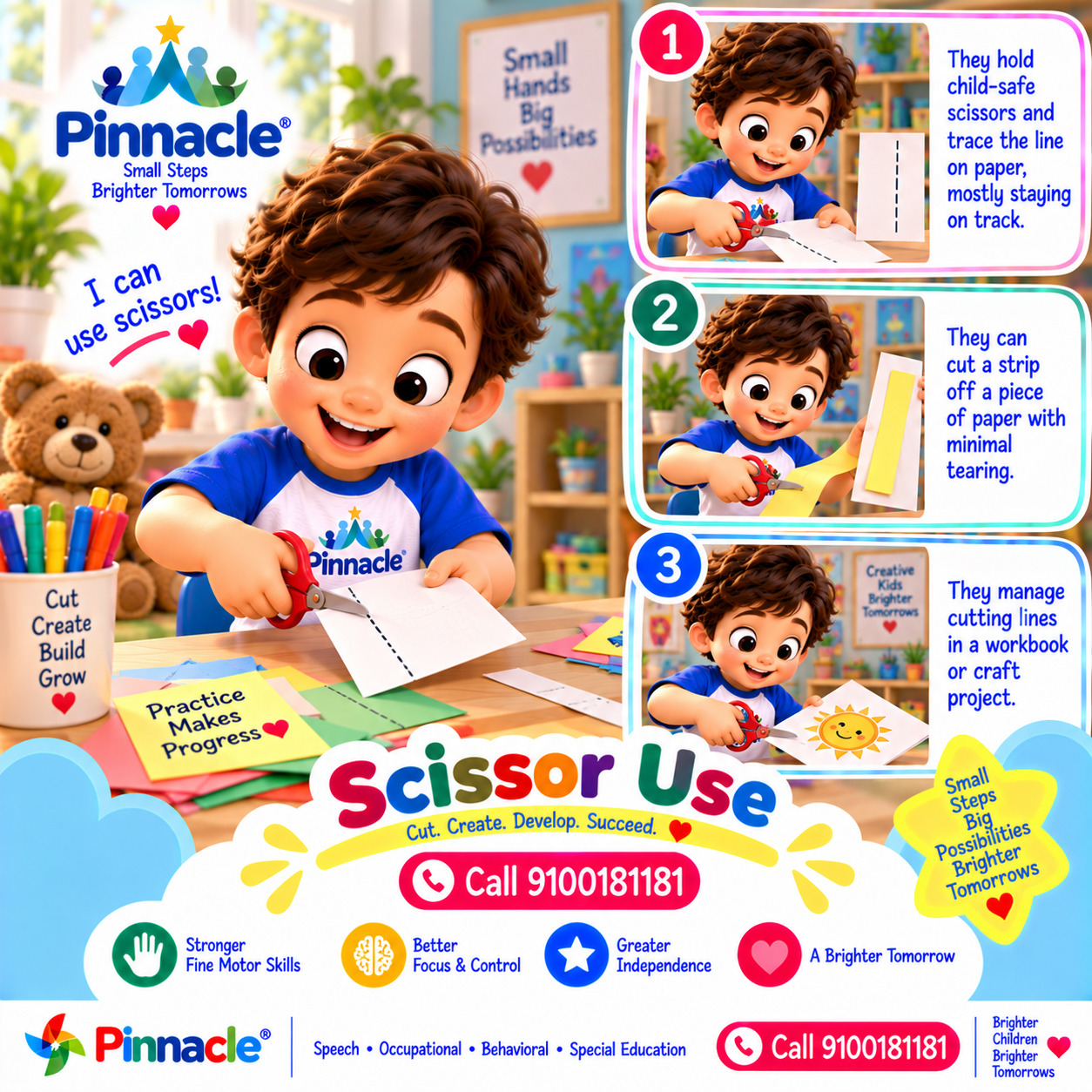
Can the child use scissors to cut along a straight line?
Topic: Scissor Use
Example 1
They hold child-safe scissors and trace the line on paper, mostly staying on track.
Example 2
They can cut a strip off a piece of paper with minimal tearing.
Example 3
They manage cutting lines in a workbook or craft project.
Example illustrationQuestion illustration
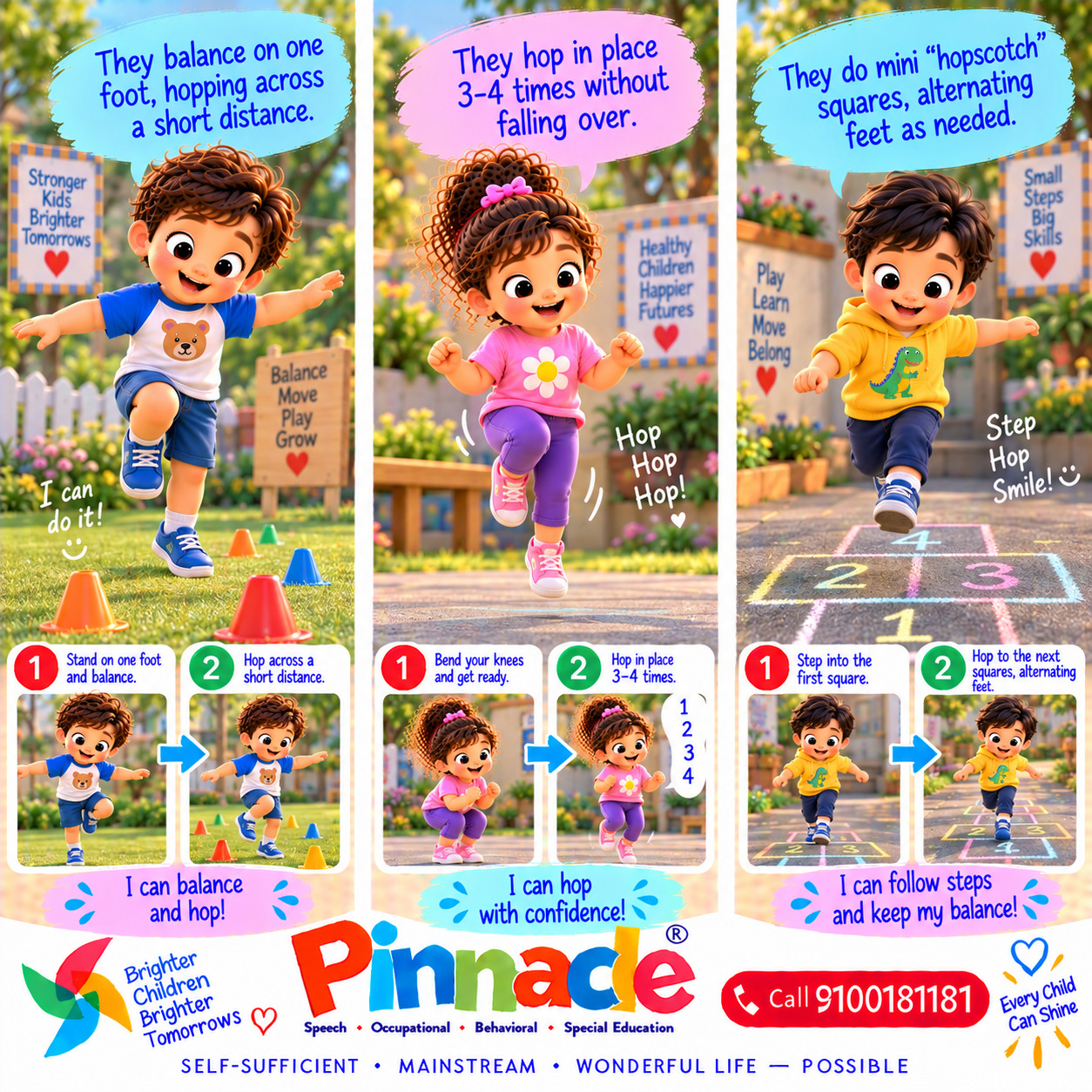
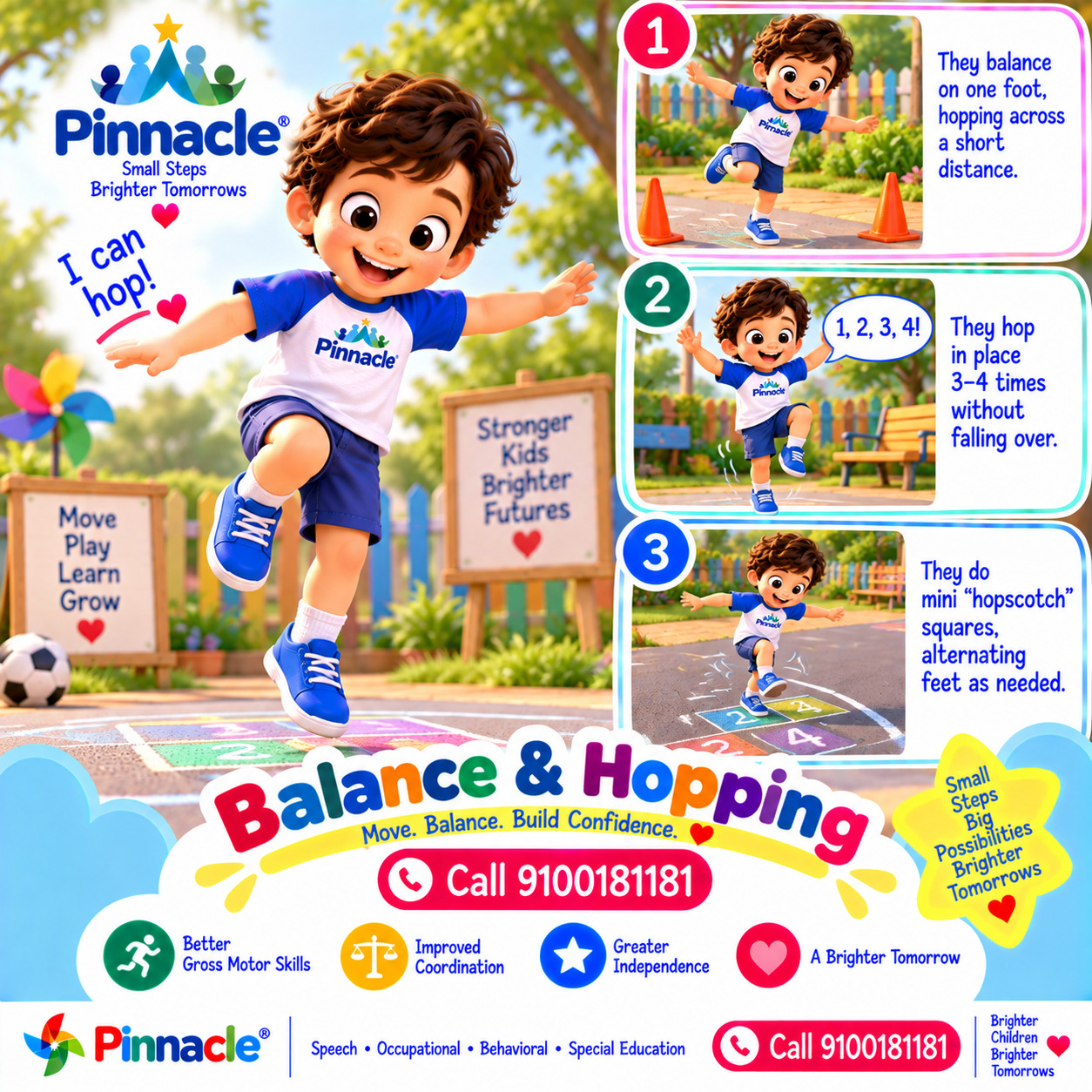
Can the child hop on one foot consistently?
Topic: Balance & Hopping
Example 1
They balance on one foot, hopping across a short distance.
Example 2
They hop in place 3–4 times without falling over.
Example 3
They do mini “hopscotch” squares, alternating feet as needed.
Example illustrationQuestion illustration
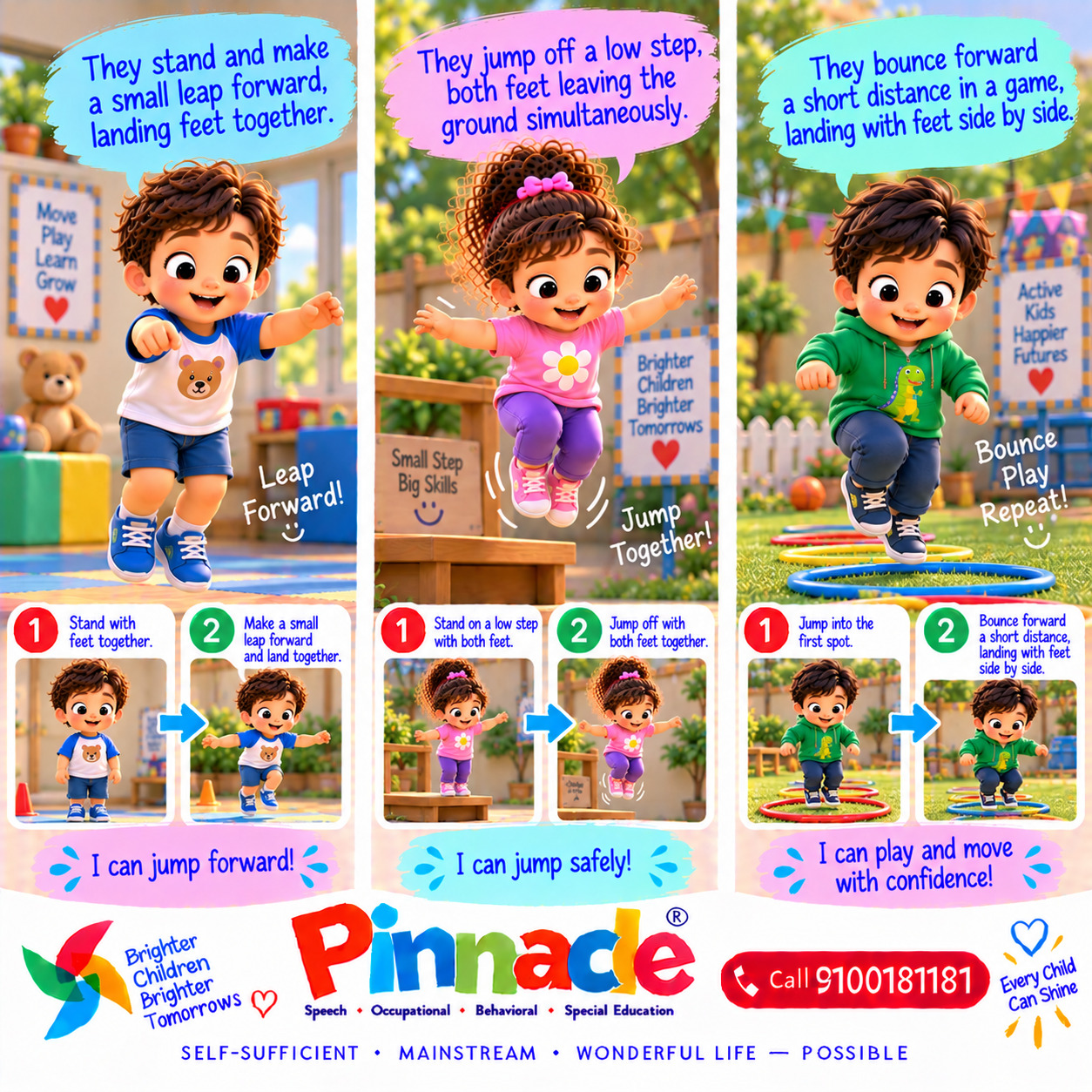
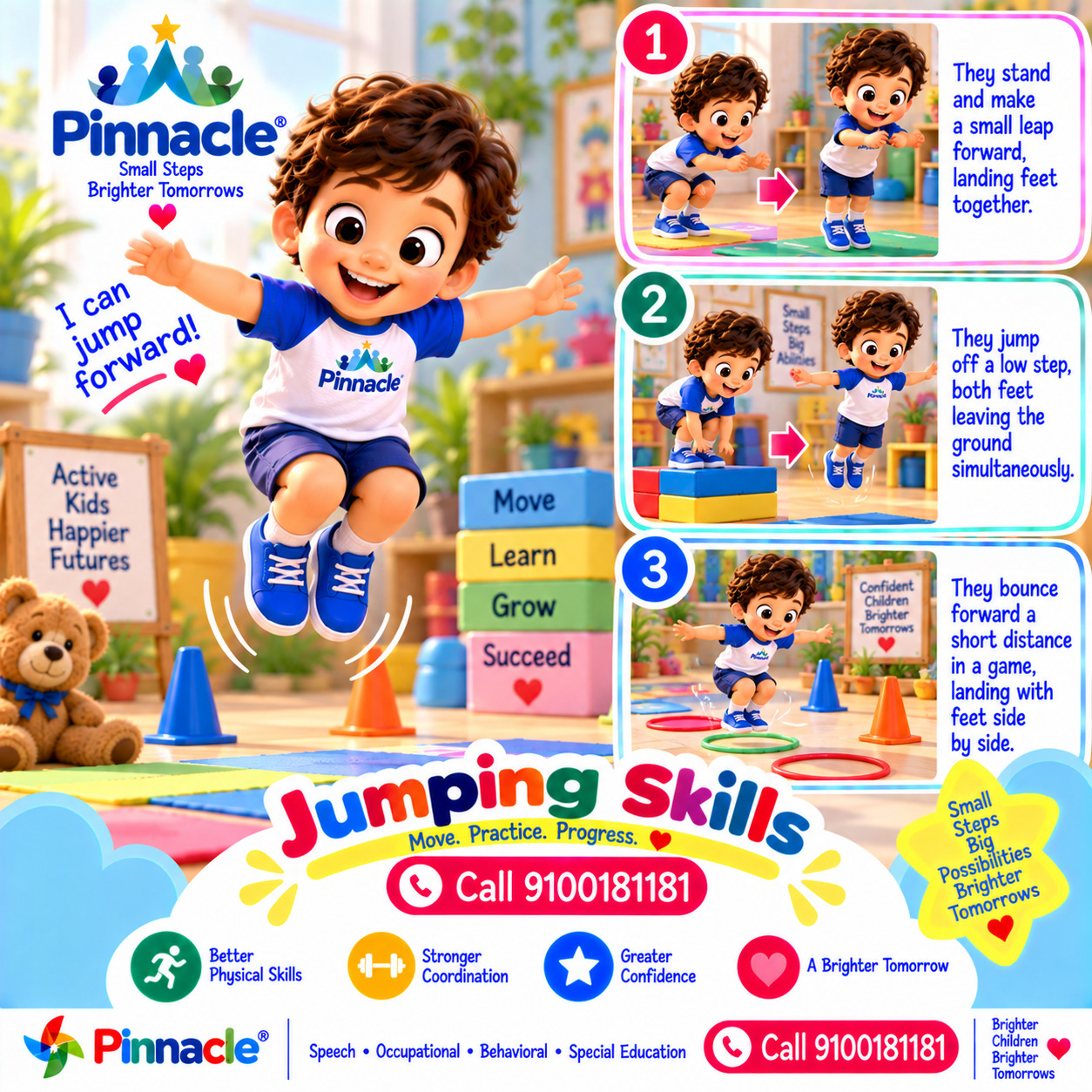
Can the child jump forward with both feet together?
Topic: Jumping Skills
Example 1
They stand and make a small leap forward, landing feet together.
Example 2
They jump off a low step, both feet leaving the ground simultaneously.
Example 3
They bounce forward a short distance in a game, landing with feet side by side.
Example illustrationQuestion illustration
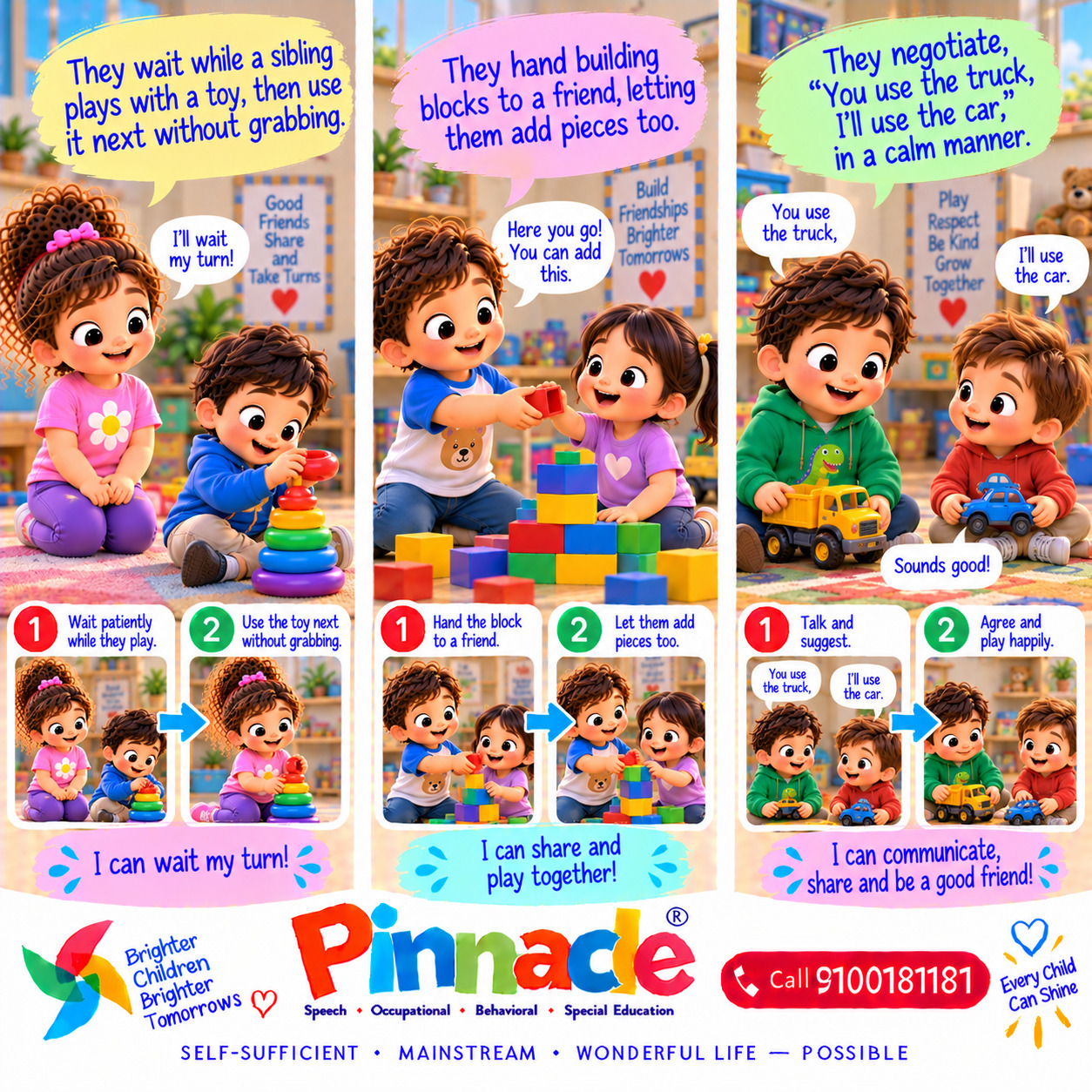
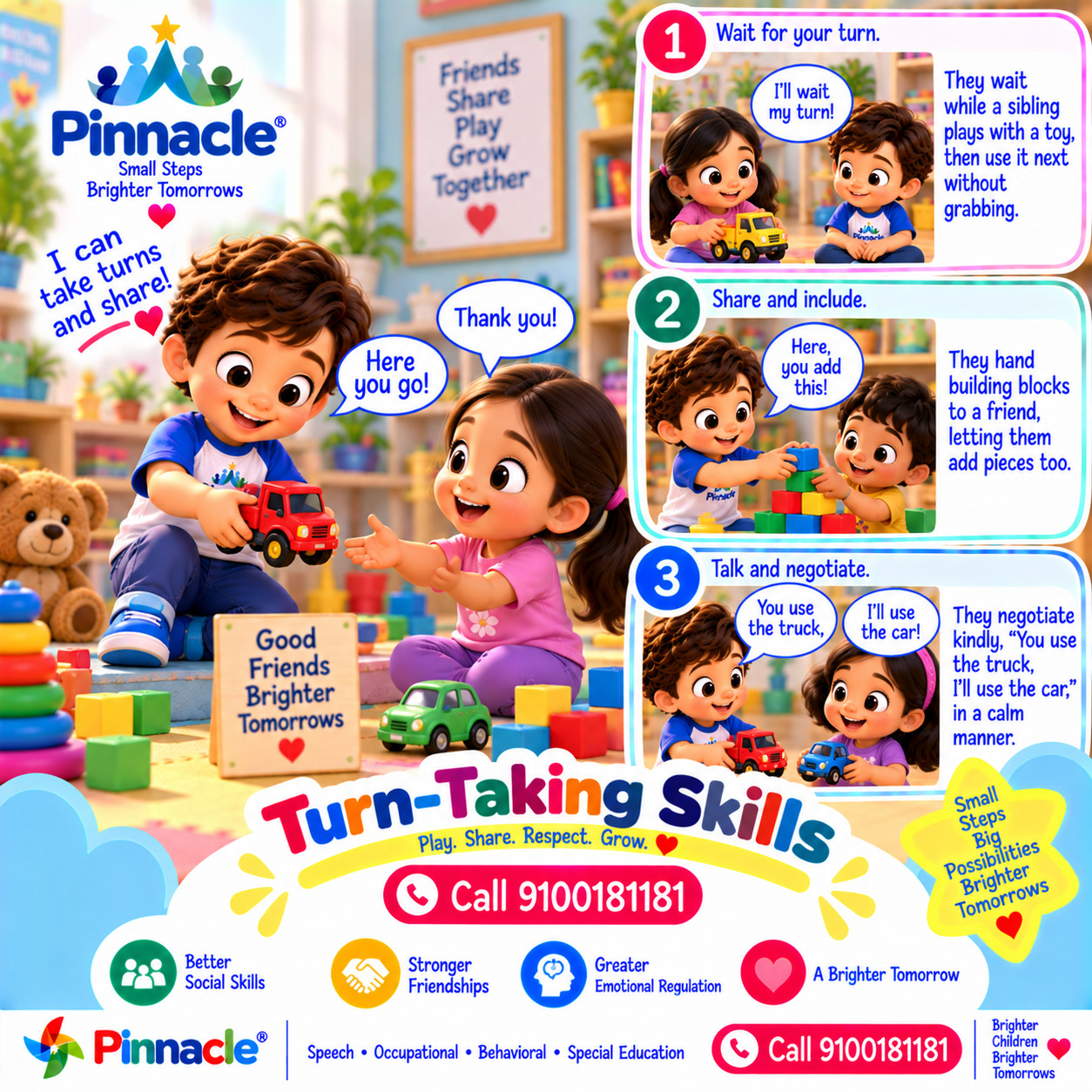
Does the child take turns and share toys with others?
Topic: Turn-Taking Skills
Example 1
They wait while a sibling plays with a toy, then use it next without grabbing.
Example 2
They hand building blocks to a friend, letting them add pieces too.
Example 3
They negotiate, “You use the truck, I’ll use the car,” in a calm manner.
Example illustrationQuestion illustration
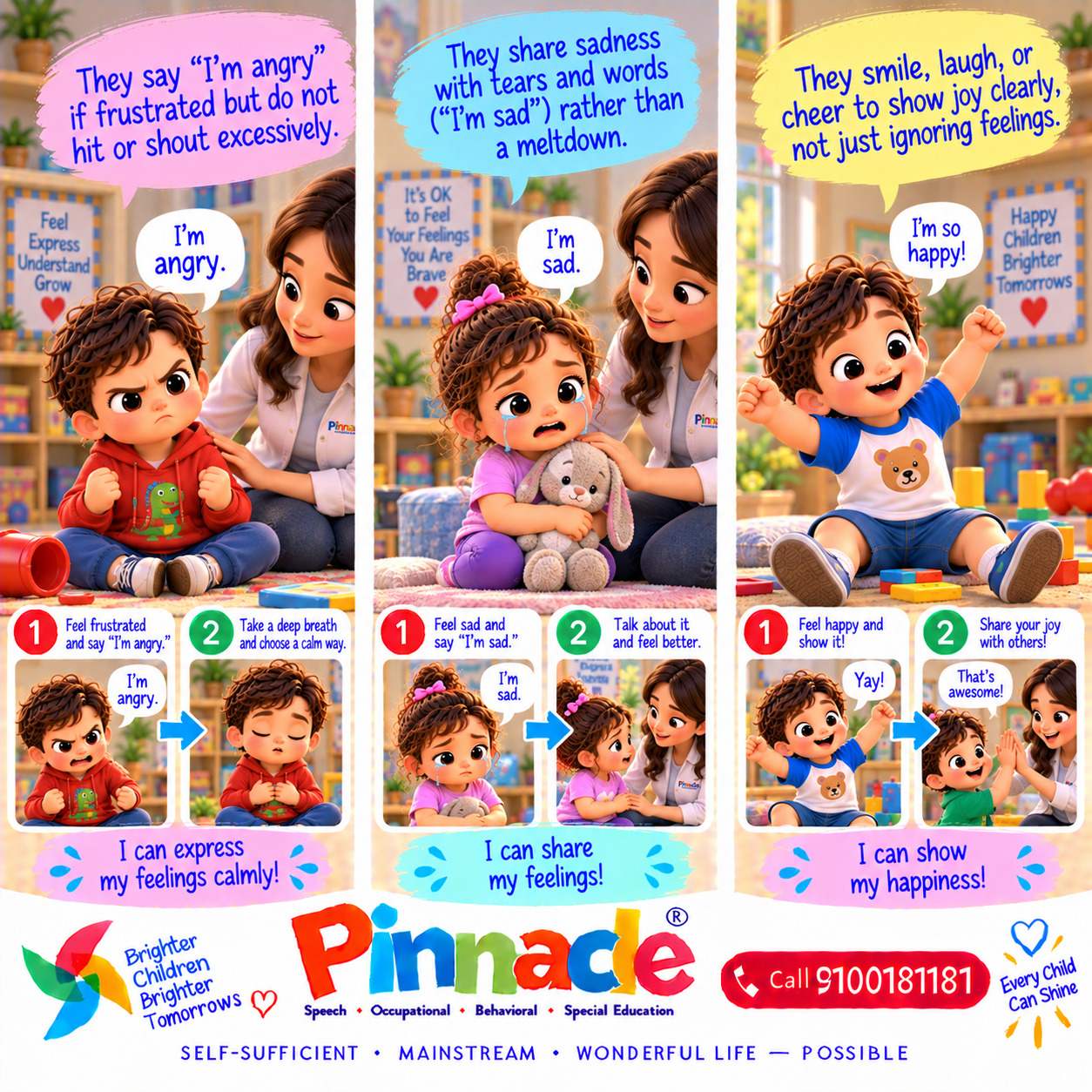
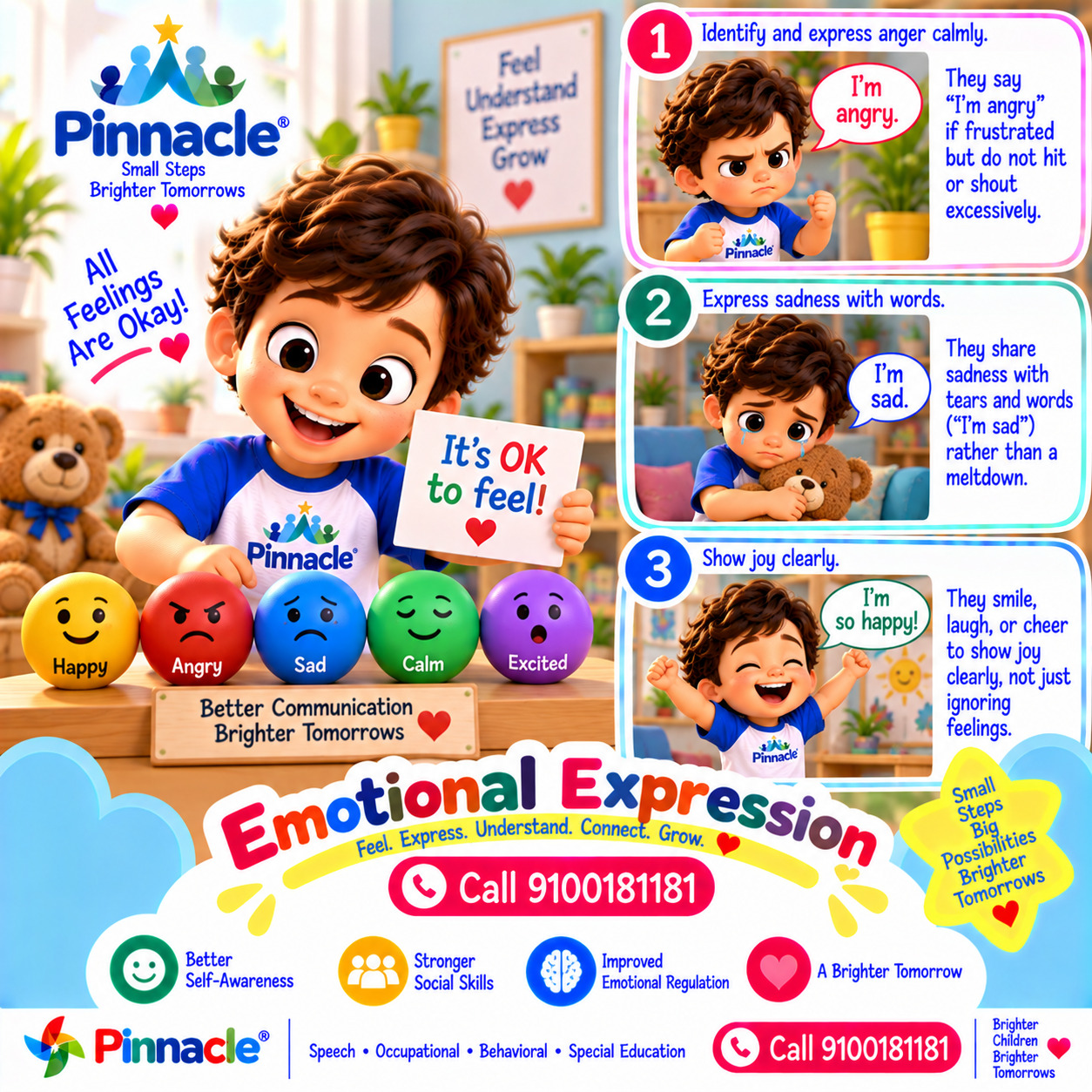
Can the child express their emotions appropriately?
Topic: Emotional Expression
Example 1
They say “I’m angry” if frustrated but do not hit or shout excessively.
Example 2
They share sadness with tears and words (“I’m sad”) rather than a meltdown.
Example 3
They smile, laugh, or cheer to show joy clearly, not just ignoring feelings.
Example illustrationQuestion illustration
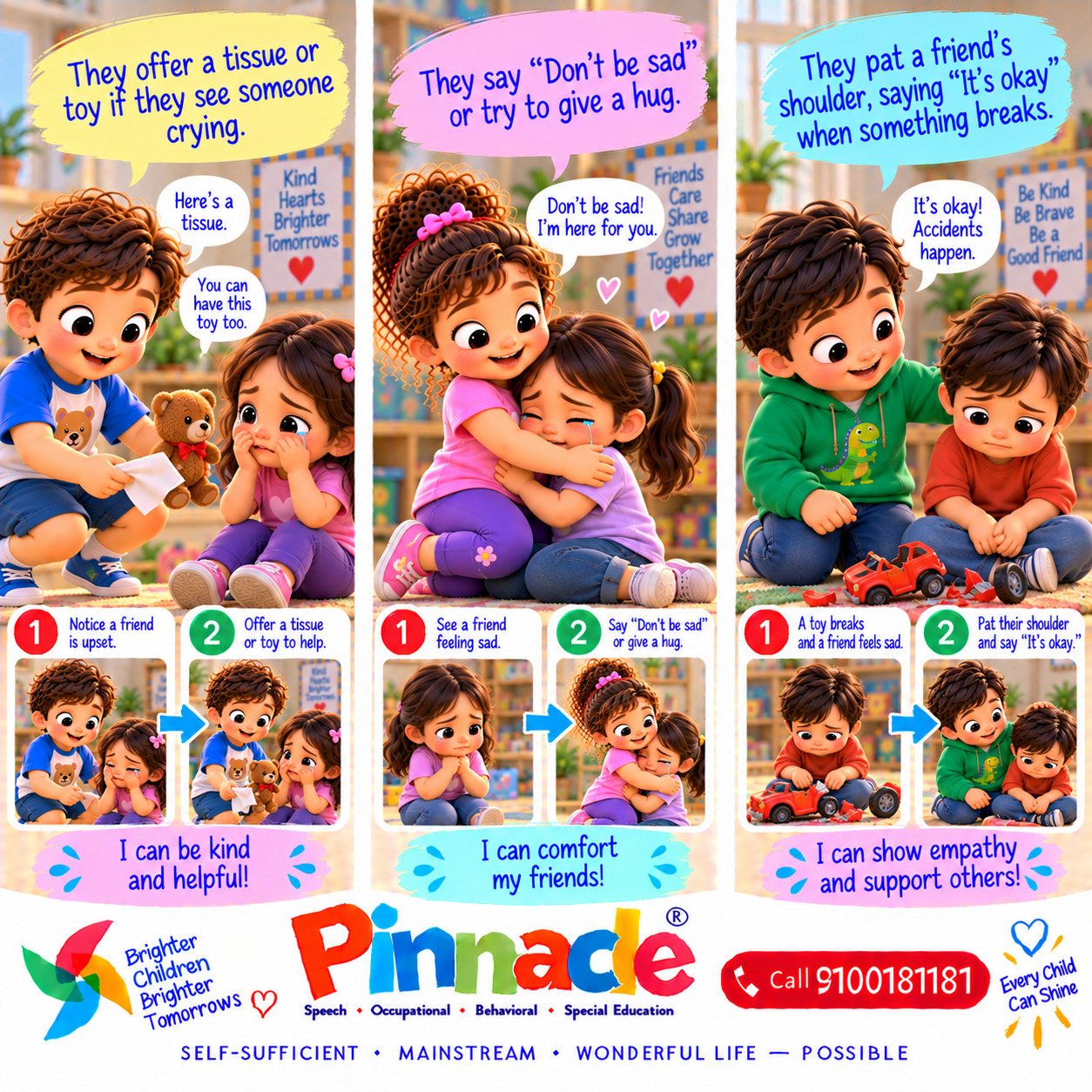
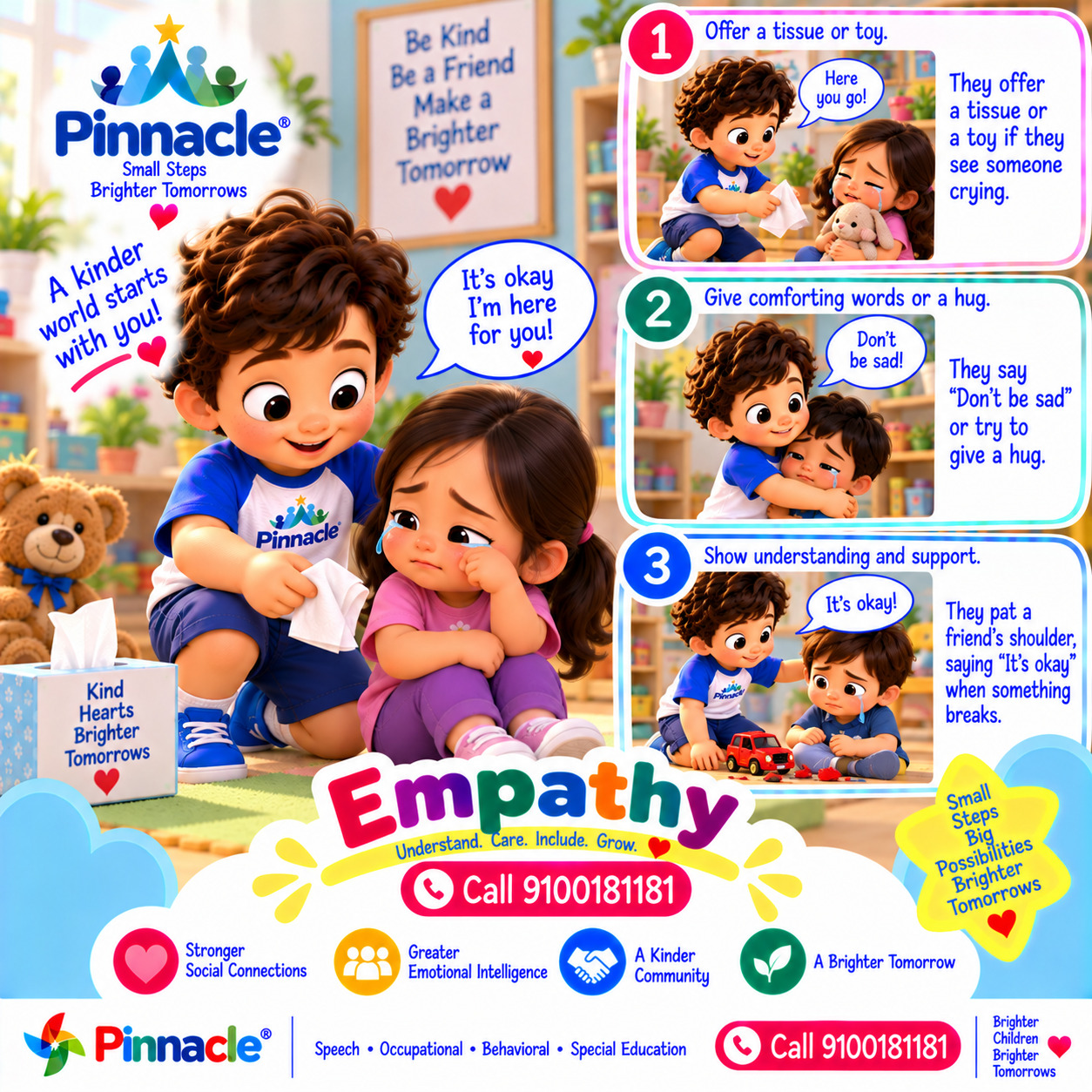
Does the child comfort a peer or sibling when they are upset?
Topic: Empathy
Example 1
They offer a tissue or toy if they see someone crying.
Example 2
They say “Don’t be sad” or try to give a hug.
Example 3
They pat a friend’s shoulder, saying “It’s okay” when something breaks.
Example illustrationQuestion illustration
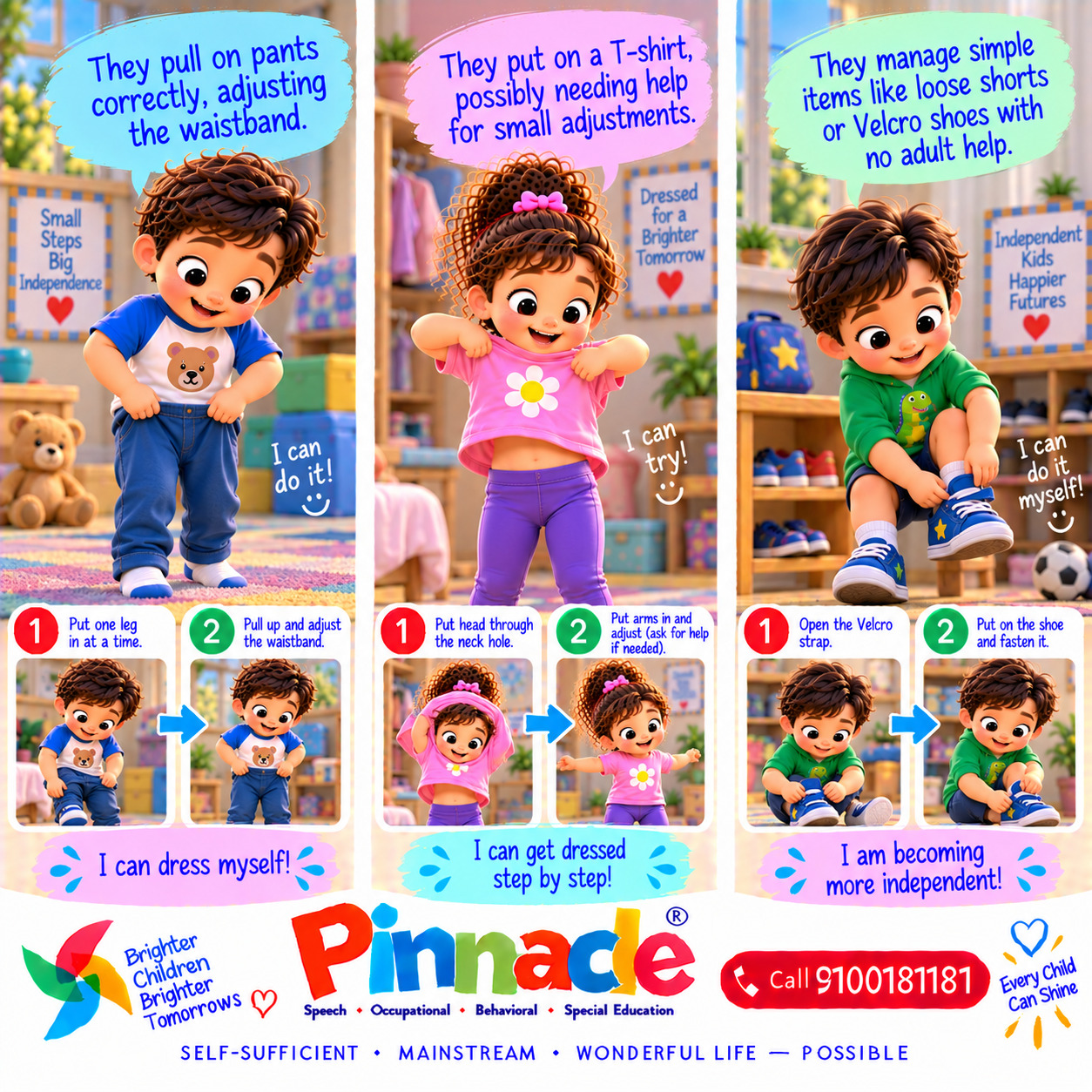
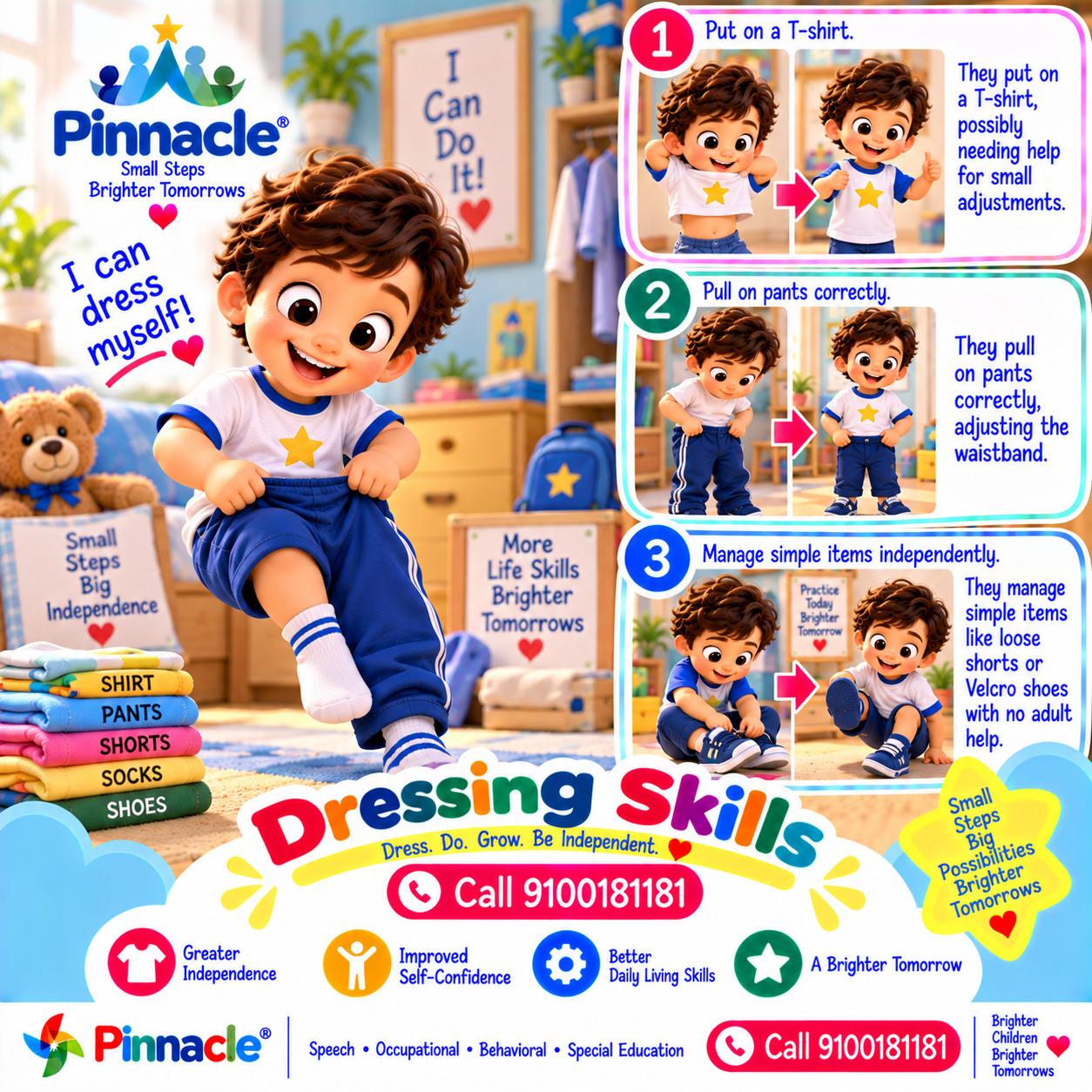
Can the child dress themselves (e.g., putting on a shirt or pants)?
Topic: Dressing Skills
Example 1
They pull on pants correctly, adjusting the waistband.
Example 2
They put on a T-shirt, possibly needing help for small adjustments.
Example 3
They manage simple items like loose shorts or Velcro shoes with no adult help.
Example illustrationQuestion illustration
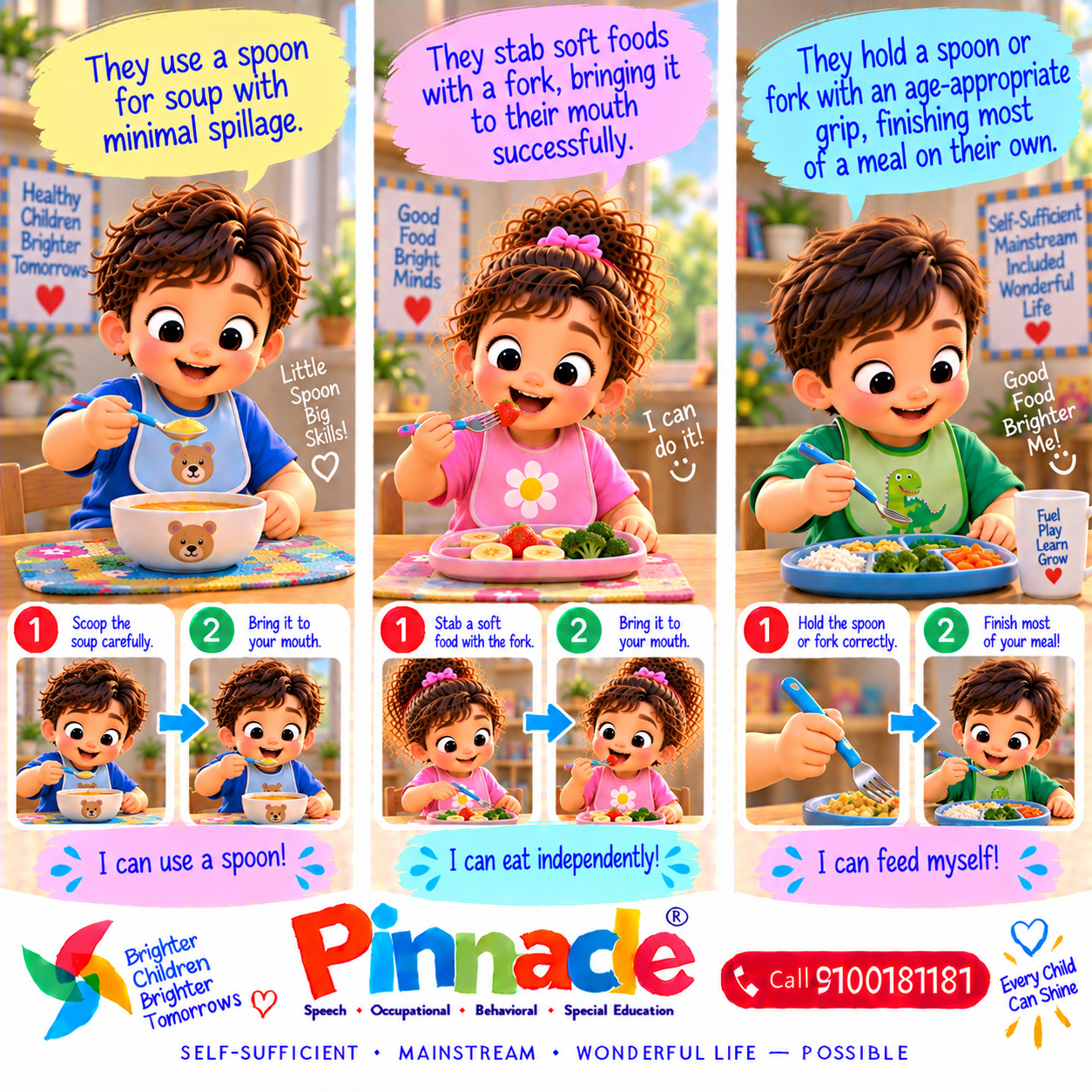
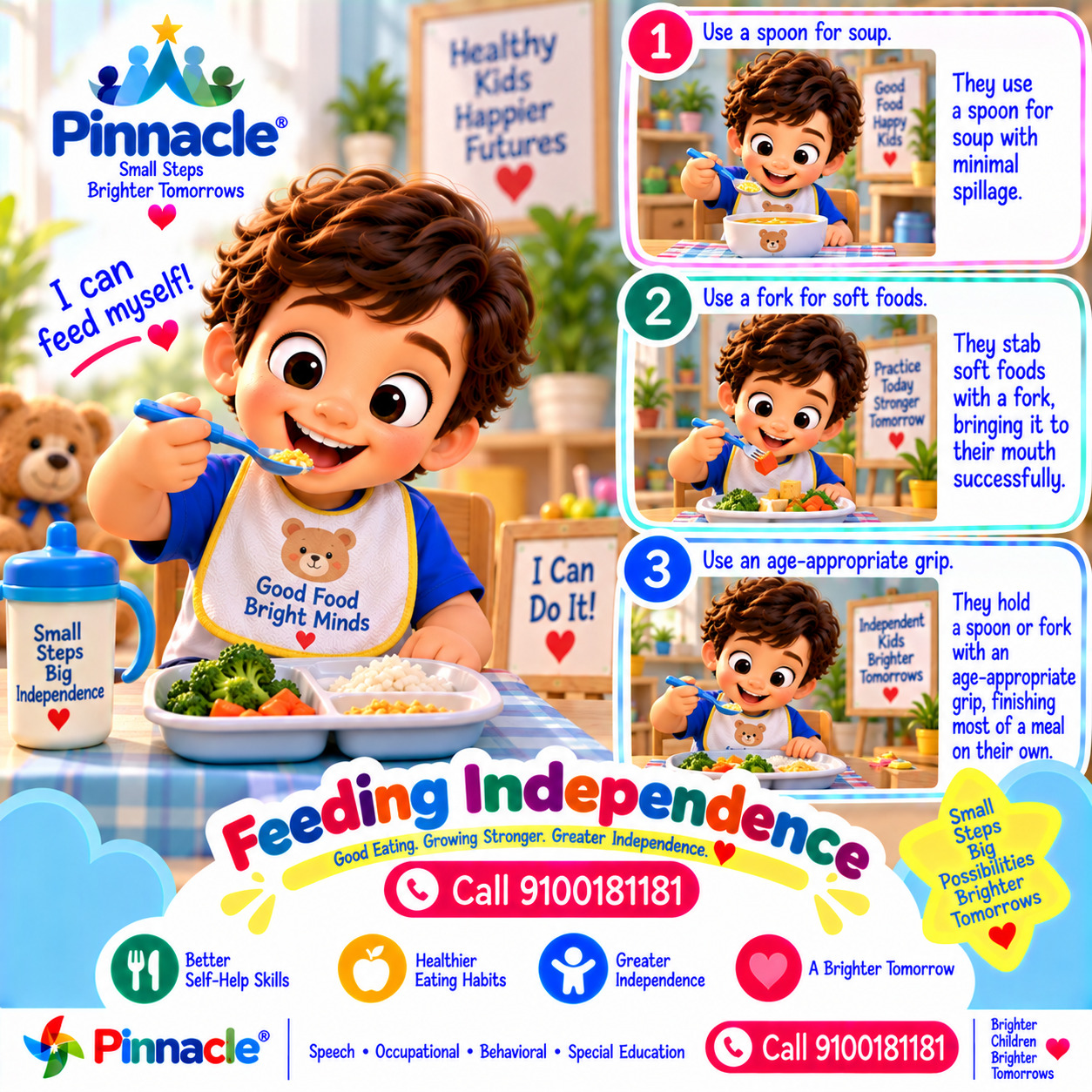
Can the child feed themselves using utensils?
Topic: Feeding Independence
Example 1
They use a spoon for soup with minimal spillage.
Example 2
They stab soft foods with a fork, bringing it to their mouth successfully.
Example 3
They hold a spoon or fork with an age-appropriate grip, finishing most of a meal on their own.
Example illustrationQuestion illustration
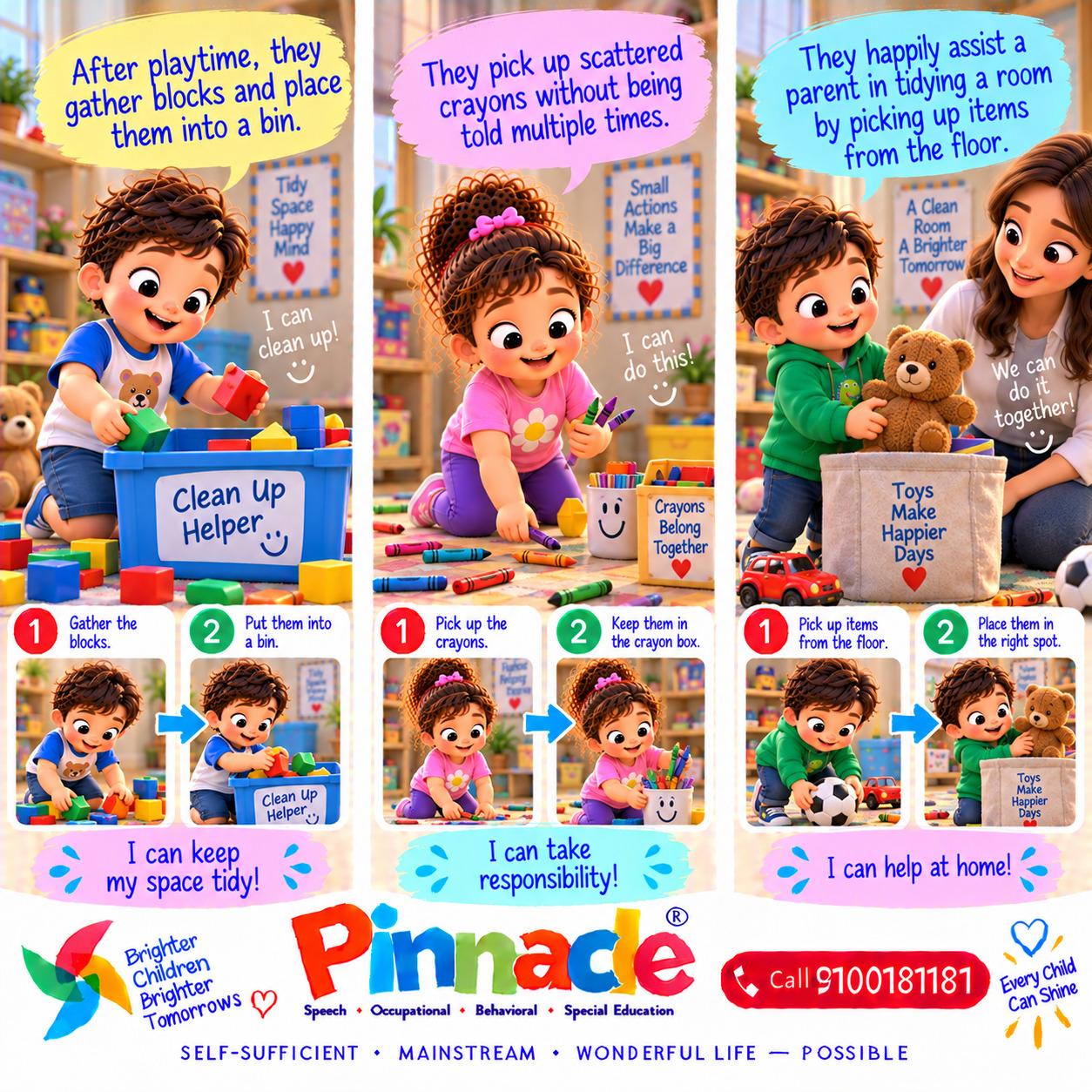
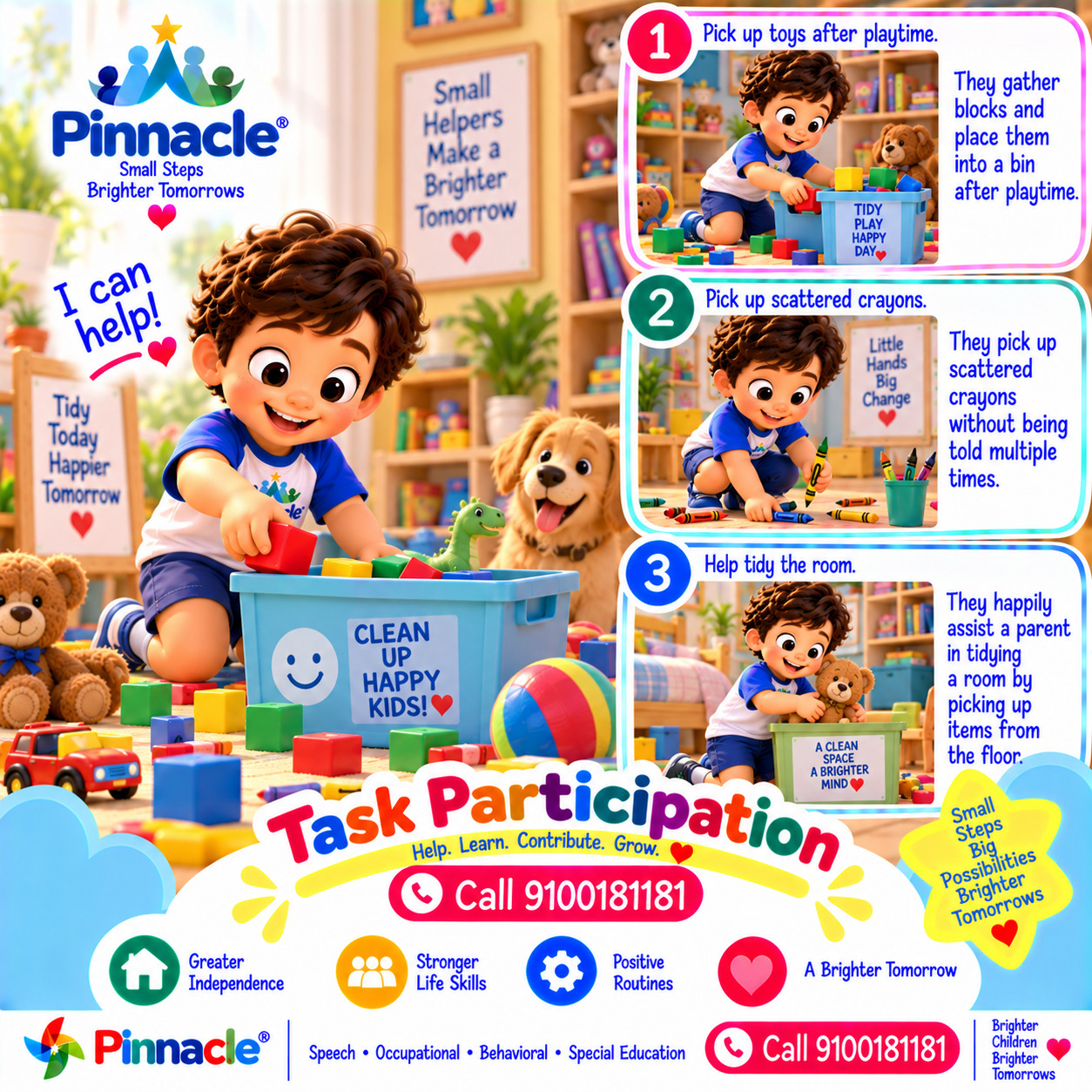
Can the child help with simple chores like picking up toys?
Topic: Task Participation
Example 1
After playtime, they gather blocks and place them into a bin.
Example 2
They pick up scattered crayons without being told multiple times.
Example 3
They happily assist a parent in tidying a room by picking up items from the floor.
Example illustrationQuestion illustration
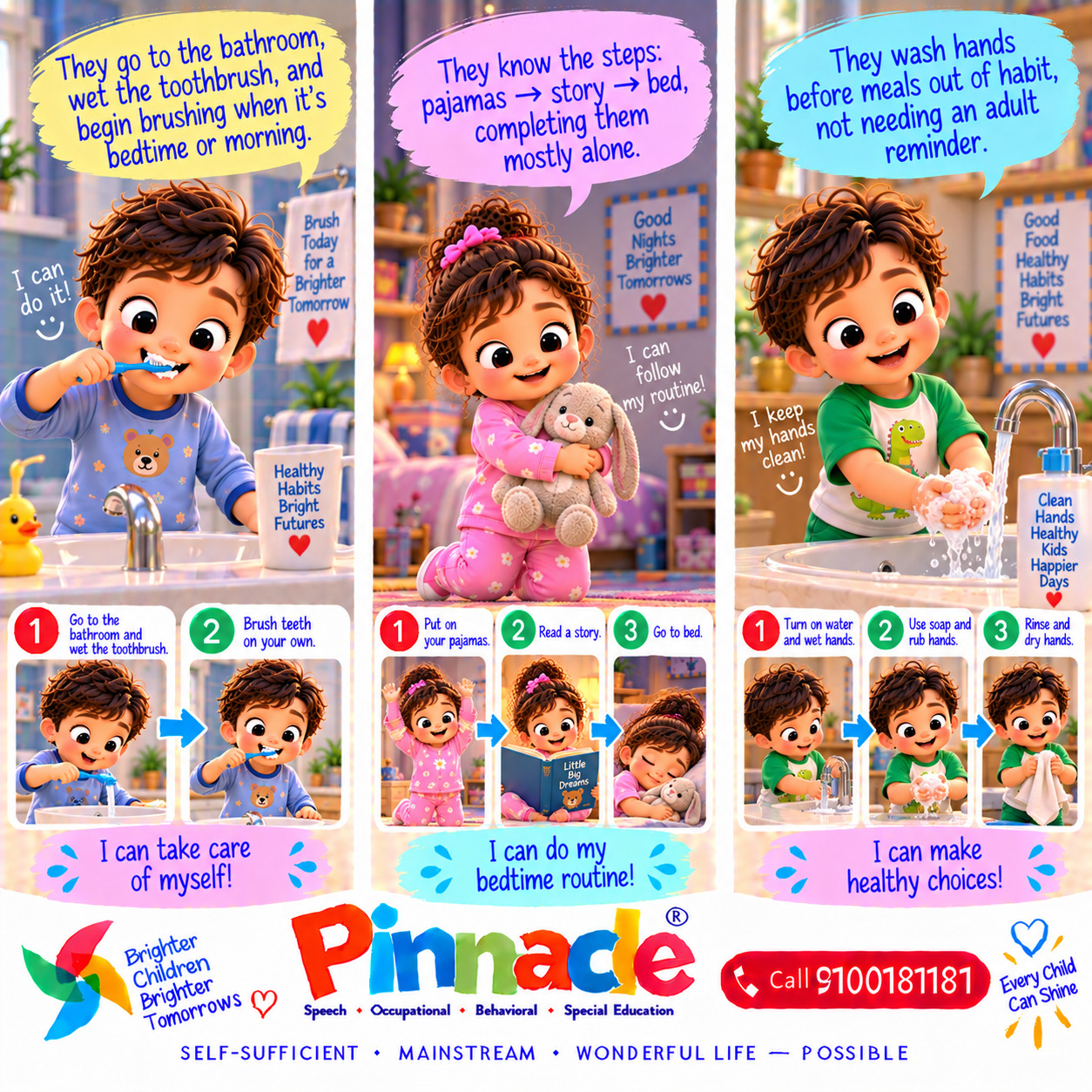
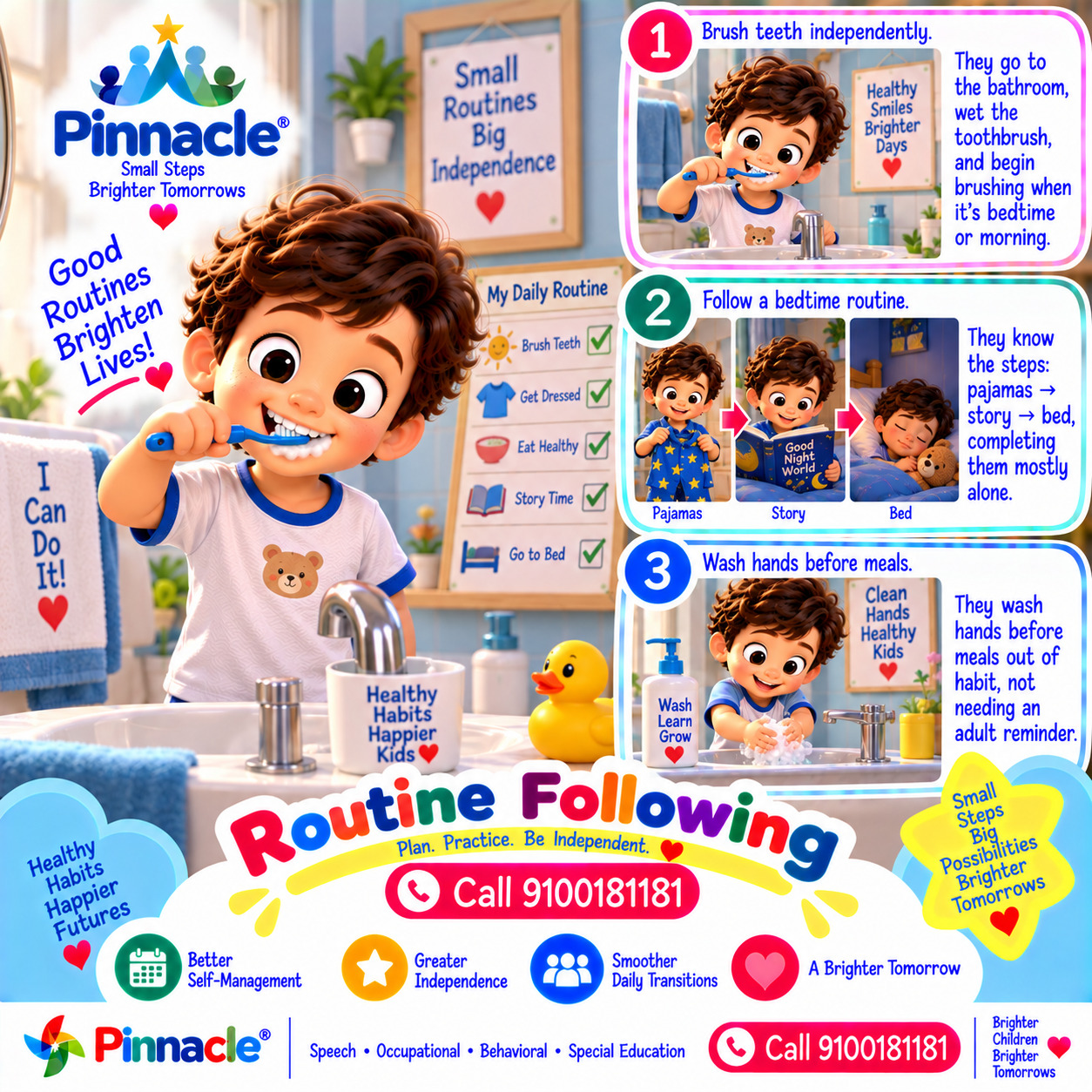
Can the child independently follow a daily routine (e.g., brushing teeth)?
Topic: Routine Following
Example 1
They go to the bathroom, wet the toothbrush, and begin brushing when it’s bedtime or morning.
Example 2
They know the steps: pajamas -> story -> bed, completing them mostly alone.
Example 3
They wash hands before meals out of habit, not needing an adult reminder.
Example illustrationQuestion illustration
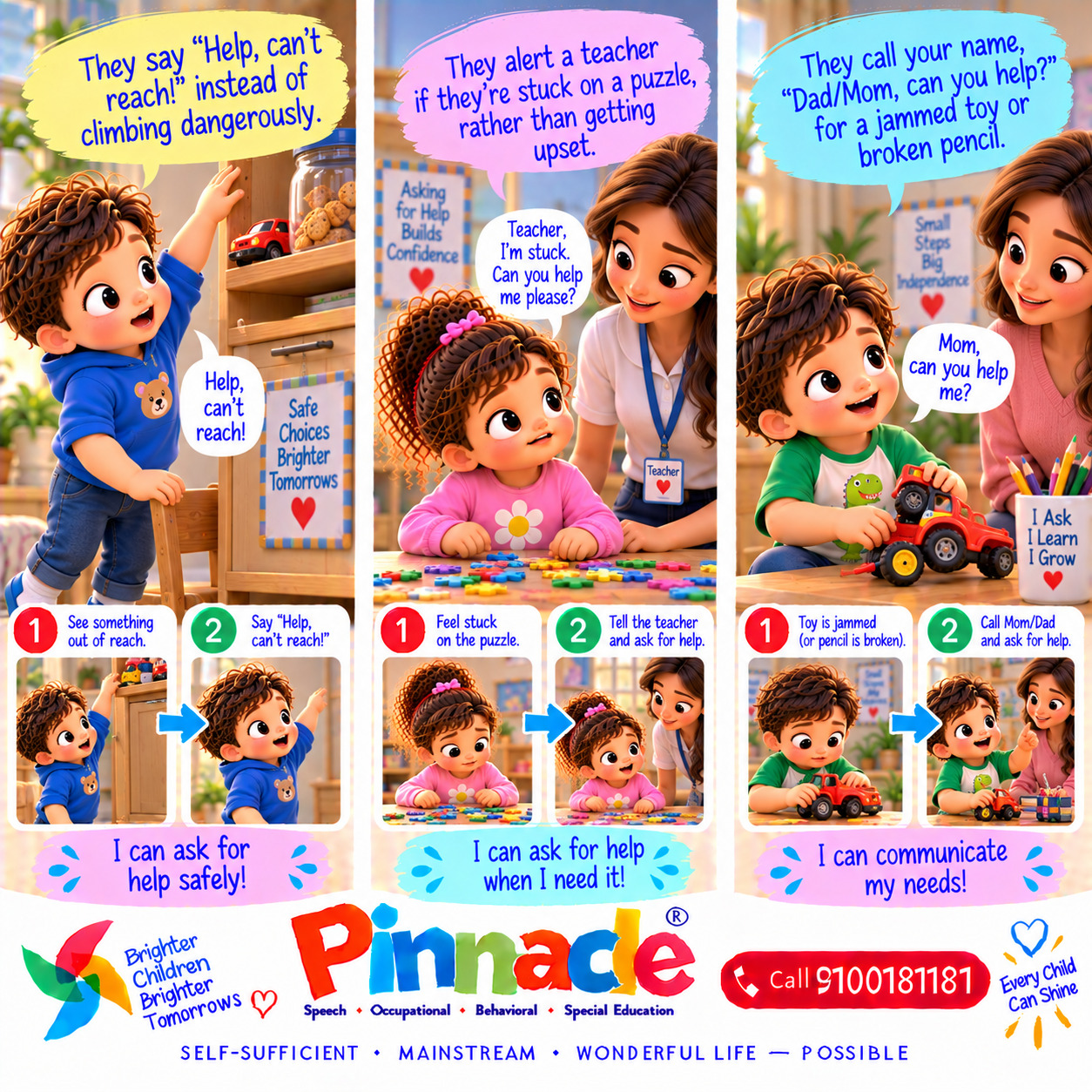
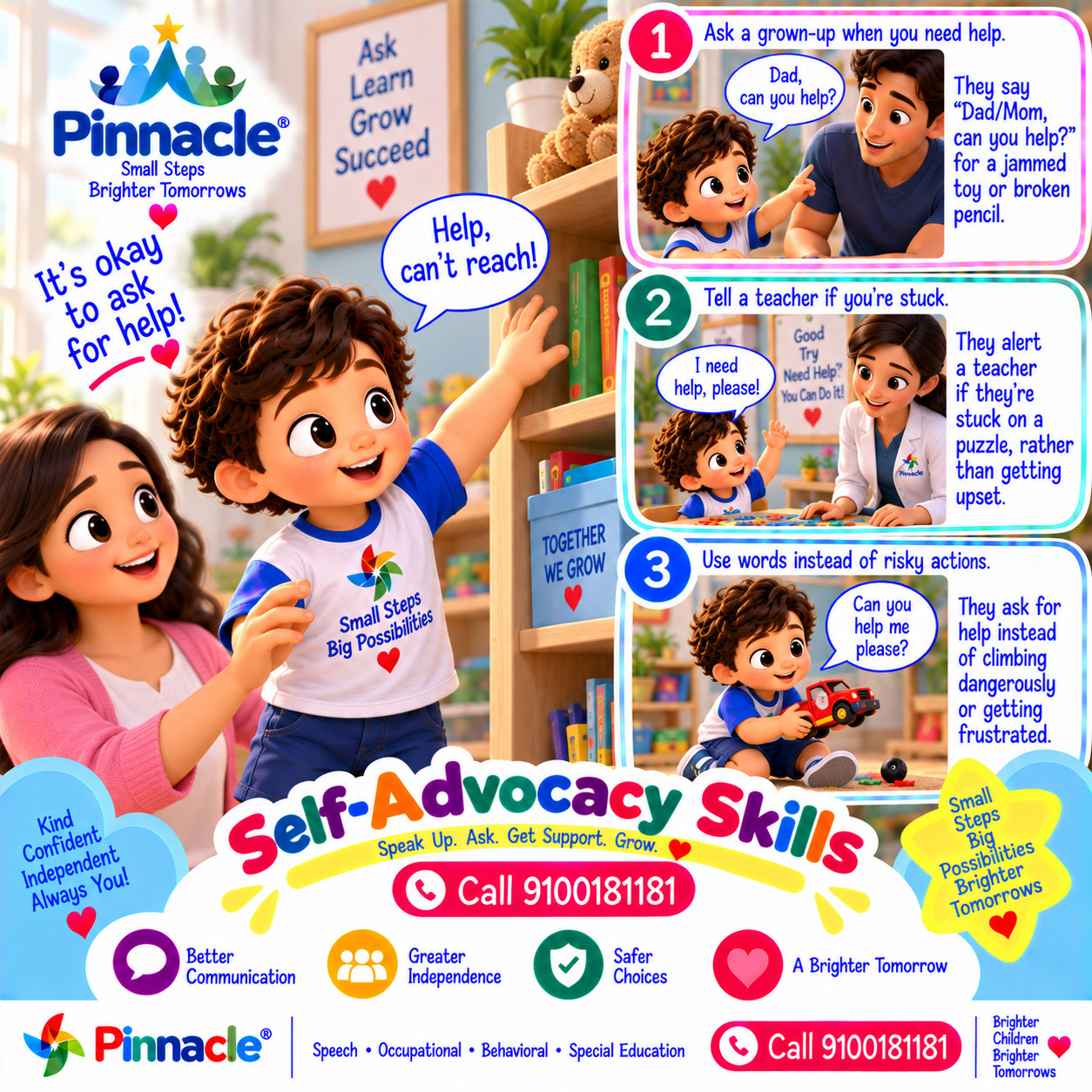
Can the child independently ask for help when needed?
Topic: Self-Advocacy Skills
Example 1
They say “Help, can’t reach!” instead of climbing dangerously.
Example 2
They alert a teacher if they’re stuck on a puzzle, rather than getting upset.
Example 3
They call your name, “Dad/Mom, can you help?” for a jammed toy or broken pencil.