
YOUR QUESTION. A CLEARER NEXT STEP.
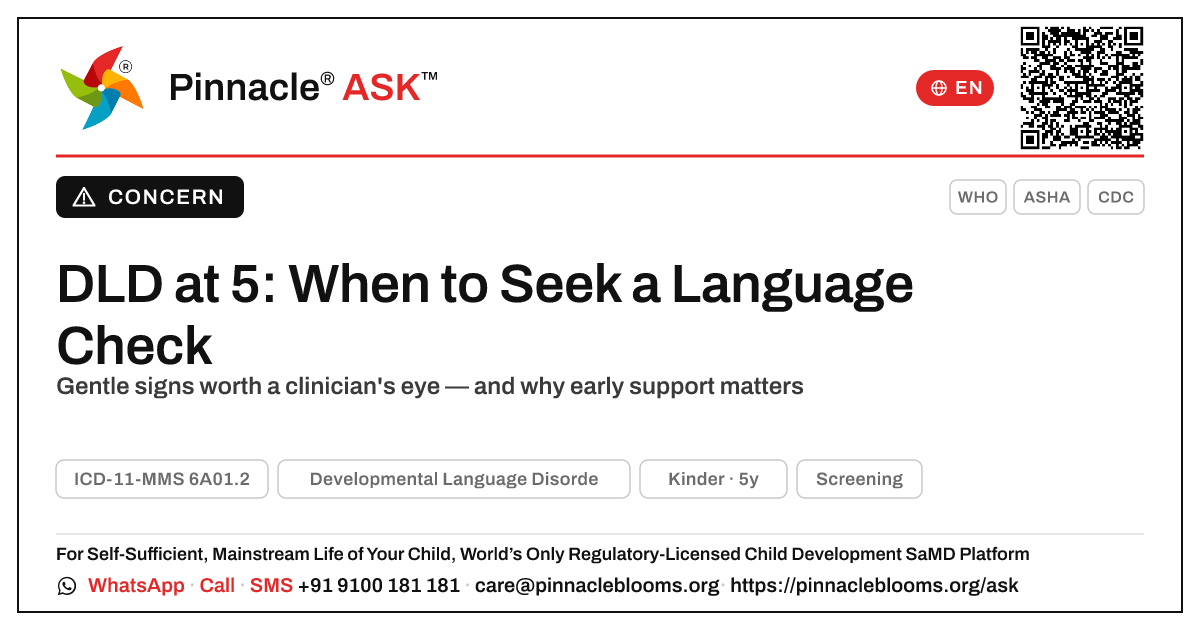
When to Worry About Developmental Language Disorder at Five
At five, consider a language assessment if your child's talking and understanding are clearly behind peers — small vocabulary, short or jumbled sentences, trouble following instructions or being understood by others — and this isn't explained by hearing loss or another condition. This is a reason to check, not a diagnosis, and early support before formal schooling makes a real difference.
In this answer 5 sections
If you're listening closely to how your five-year-old talks and follows conversations, that careful attention is one of the best gifts you can give their development.
In short
At five, it's worth a closer look if your child's talking and understanding seem clearly behind other children their age — and this isn't explained by hearing loss, another condition, or simply learning English as a second language. Signs that warrant a check include a small vocabulary, short or jumbled sentences, trouble following two-step instructions, or difficulty being understood by people outside the family. None of this is a diagnosis — it simply means a language assessment is wise now, because at five, with school approaching, early support makes a real difference.
What to watch at five years
Developmental Language Disorder (DLD) is a persistent difficulty learning and using language that isn't caused by another condition. By five, gentle flags worth a clinician's eye include:
- Vocabulary — a noticeably smaller word bank than peers; often struggling to find the right word, or relying on vague words like "thing" and "stuff".
- Sentences — short, simple or muddled sentences; mixing up word order; leaving out small words ("is", "the") or word endings well past the age peers have settled.
- Understanding — difficulty following two- or three-step instructions, or answering "who, what, where, why" questions.
- Conversation & stories — trouble holding a back-and-forth chat, retelling a simple event, or being understood by teachers and unfamiliar adults.
- Frustration — getting upset, withdrawing or avoiding talking because words won't come out the way they mean.
Importantly, a child with DLD usually understands the world well in non-verbal ways — the difficulty sits specifically with language. A hearing check is always a sensible first step, because even mild, fluctuating hearing loss can mimic these signs.
When to act
If you recognise several of these, if a teacher has raised it, or if you simply feel your child's language is lagging — arrange a speech and language assessment now rather than waiting for school to expose the gap. At five, the runway before formal literacy is precious, and early language support strengthens reading, friendships and confidence.
The Pinnacle way
This is general information, not a diagnosis — a clinical AbilityScore® and any diagnosis are formed only at a Pinnacle Blooms Network centre, under qualified clinician care, never from an online list. Our clinicians rule out hearing and other explanations first, build a full picture of how your child understands and uses language, and shape play-based support around their strengths. If language is the worry, our speech therapy team can begin gentle, structured support, and you can learn more about Developmental Language Disorder and how we follow it over time.
Trusted sources
WHO ICD-11 classification of Developmental Language Disorder; American Speech-Language-Hearing Association (ASHA) guidance on spoken language disorders in young children; CDC developmental milestones and "Learn the Signs, Act Early" resources for the early years.
Next step — Trust what you've noticed. Book a speech and language assessment with a Pinnacle clinician so your child's language is reviewed with clarity and care before school begins.
CONNECT THE ANSWER TO YOUR CHILD’S DAY
Something to notice. Something to discuss.
What to notice
Seek a language check at five if there's a small vocabulary, short or muddled sentences, missing word endings, trouble following two-step instructions, difficulty holding a conversation or being understood by unfamiliar adults — especially if a teacher has raised it or your child gets frustrated trying to talk. Always rule out hearing first.
In everyday life
Keep a short weekly note of new words and how your child joins them into sentences, and during play give them time to find words rather than finishing sentences for them — it builds confidence and becomes a clear record to share with a clinician.
Bring your observations and questions to your child’s professional. Choose activities that suit your child’s comfort, abilities and agreed plan.
Bring your questions to a first visitQuestions families ask
Is Developmental Language Disorder the same as a speech delay?
Not quite. A speech delay often means a child is slow to start but follows the usual path. DLD is a more persistent difficulty learning and using language — understanding and expressing it — that isn't explained by hearing loss or another condition. A clinician's assessment tells them apart.
Could being bilingual cause these language signs at five?
Learning more than one language does not cause DLD, and bilingual children are not at higher risk. A true language difficulty shows across all the languages a child speaks, not just one. A clinician experienced with multilingual children can assess this fairly.
Should I get my child's hearing checked first?
Yes — a hearing check is always a sensible first step, because even mild or fluctuating hearing loss can look like a language difficulty. Once hearing is clear, a speech and language assessment can build the fuller picture.
Will DLD affect my child at school?
Language underpins reading, following instructions and making friends, so support before and during early school years matters. The good news is that at five there is precious time before formal literacy, and early, play-based language support strengthens confidence and learning.
FOLLOW THE SOURCE
References behind this answer.
- Source referenceWHO ICD-11: Developmental Language Disorder (6A01.2)
- Source referenceASHA: spoken language disorders in children
- Source referenceCDC: Learn the Signs, Act Early milestones
References are supplied with this answer. An organisation homepage offers further reading; it does not establish an independent review of this page.
Content attribution: SETU Consortium · Pinnacle Blooms Network.
PEOPLE, TOPICS & DEVELOPMENT
See the connections.
Browse the wider question collections connected with this answer’s audience, developmental area and stage.
FROM UNDERSTANDING TO PURPOSEFUL SUPPORT
One question. Your child’s whole life.
Your child’s self-sufficient, mainstream-included life is the purpose from the beginning. At Pinnacle, that purpose shapes what we understand, the goals we choose, the people we bring together, everyday practice and review.
Connect this question with the right support.
Explore how the relevant service contributes to everyday abilities, then speak with us about your child.
Make the next conversation useful.
Bring the situations you notice at home or school. We’ll explain a suitable service, centre and first visit, including availability and fees, before you decide.
How PinnacleAI® connects the journeyExplore the seven stages
- 1Understand abilities
A starting picture of your child’s capabilities.
- 2Choose meaningful goals
Readiness and a plan shaped around the child.
- 3Bring the right support together
Suitable therapies and people for those goals.
- 4Carry practice into everyday life
Guidance for family, home and school.
- 5Track and correct
Use observations to adjust the plan.
- 6Reassess and review
Decide what to continue, change or do next.
- 7Grow independence and participation
The child’s life gives each step its purpose.
Explore the whole PinnacleAI® system → · Participation at school and in the community →
PINNACLE’S EVIDENCE, OPEN TO YOU
Look at the evidence behind our work.
Read our research, inspect the original regulatory documents and check what each institutional measure means.
General information supports a conversation with an appropriately qualified professional. Advice, goals and support depend on the individual child.