
YOUR QUESTION. A CLEARER NEXT STEP.
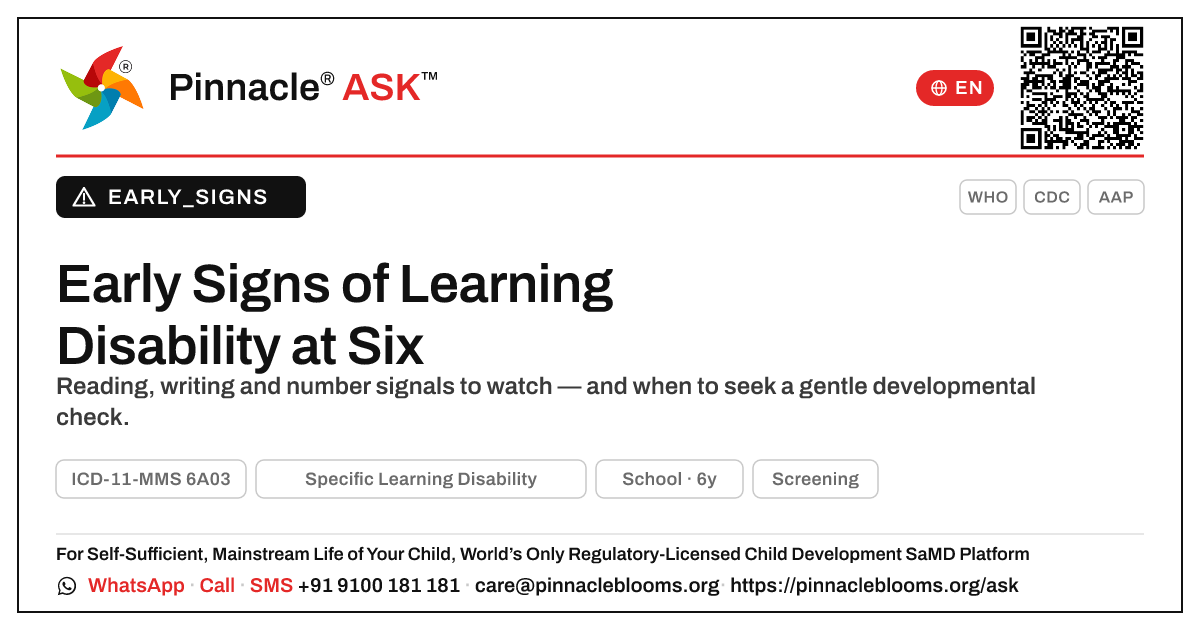
Early Signs of Specific Learning Disability in a 6-Year-Old
At six, watch for unexpected, persistent difficulty with reading, letter-sound links, spelling, untidy effortful writing, letter or number reversals, and number sense — in a child who is otherwise bright and articulate. These are early signals to watch, not a diagnosis; only a qualified clinician can confirm, and early, structured support works well.
In this answer 5 sections
At six, the world becomes a place of letters, numbers and reading aloud — and sometimes a bright, capable child finds those tasks surprisingly hard. Noticing the pattern early is the kindest thing you can do.
In short
A Specific Learning Disability shows when a child of average ability has unexpected, persistent difficulty with reading, writing or maths — out of step with how clever and curious they otherwise are. At six these are early signals to watch, not a verdict; many children simply need more time, and only a qualified team can confirm anything. The good news is that early support works beautifully.
Signs worth watching at six
Reading and letters
- Trouble linking letters to their sounds, or remembering letter names
- Reading much more slowly or hesitantly than classmates
- Frequently guessing words from the first letter or picture
Writing and spelling
- Reversing letters or numbers well past where peers have stopped (b/d, was/saw)
- Untidy, effortful writing; struggling to copy from the board
- Spelling the same word differently within one page
Numbers
- Difficulty learning to count on, or recognising small quantities
- Confusing the order or value of numbers
The everyday pattern
- Bright and articulate in conversation, yet stuck on paper
- Avoiding reading or homework, tiring quickly, or saying "I'm dumb"
- A noticeable gap between effort and result
The science, simply
These difficulties are not about intelligence, effort or laziness — they reflect how the brain processes language and symbols. Under WHO ICD-11 (6A03, Developmental learning disorder), a learning disability is identified only when difficulties are persistent, specific and below age expectation despite good teaching. At six, many skills are still emerging, so we watch and support rather than label. Structured, multisensory teaching changes outcomes — and the earlier it starts, the better.
The Pinnacle way
Developmental measurement supports care planning; diagnosis requires an appropriately qualified healthcare professional., under qualified clinician care — never from a website or a worried afternoon. Our special education team builds gentle, strengths-first learning plans, and the AbilityScore® gives a clear, structured baseline to track your child's growth.
Trusted sources
Aligned with WHO ICD-11 (6A03 Developmental learning disorder), CDC "Learn the Signs. Act Early.", the Indian Academy of Pediatrics, and the American Academy of Pediatrics.
Next step — if several of these signs sound familiar, book a developmental check with Pinnacle Blooms Network on WhatsApp: +91 91001 81181 — early support makes all the difference.
This is general information, not a diagnosis — individual assessment and diagnosis require an appropriately qualified healthcare professional.
CONNECT THE ANSWER TO YOUR CHILD’S DAY
Something to notice. Something to discuss.
What to notice
Watch for a widening gap between a child's bright everyday talk and their struggle on paper, growing avoidance of reading or homework, or self-doubt like 'I'm dumb'. If difficulties persist across home and school for several months despite good teaching, seek a developmental check.
In everyday life
Read together daily for ten minutes with no pressure — let your child point at words, predict, and enjoy the story. Notice patterns calmly rather than correcting every error; warmth keeps confidence intact while you observe.
Bring your observations and questions to your child’s professional. Choose activities that suit your child’s comfort, abilities and agreed plan.
Bring your questions to a first visitQuestions families ask
Can a learning disability really be identified at six?
At six many reading and writing skills are still emerging, so we watch and support rather than label. A formal Specific Learning Disability is usually confirmed a little later, once difficulties prove persistent despite good teaching — but noticing early signs now means support can start sooner.
Is reversing letters like b and d always a sign of a problem?
No — occasional reversals are completely normal at six as children learn to write. It becomes worth a closer look when reversals are frequent, persistent well past peers, and paired with other difficulties in reading or spelling.
Does a learning disability mean my child is not intelligent?
Not at all. A Specific Learning Disability is a difference in how the brain processes language or symbols — it has nothing to do with intelligence or effort. Many children with learning disabilities are bright, creative and capable, and thrive with the right teaching.
What should I do if I notice these signs?
Stay calm and keep notes of what you see across a few weeks, talk with your child's teacher, and book a developmental check with a qualified clinician. Early, structured support is highly effective and protects your child's confidence.
FOLLOW THE SOURCE
References behind this answer.
- Source referenceWHO ICD-11 · Developmental learning disorder
- Source referenceCDC — Learn the Signs. Act Early.
- Organisation website · further readingAmerican Academy of Pediatrics (HealthyChildren.org)
References are supplied with this answer. An organisation homepage offers further reading; it does not establish an independent review of this page.
Content attribution: SETU Consortium · Pinnacle Blooms Network.
PEOPLE, TOPICS & DEVELOPMENT
See the connections.
Browse the wider question collections connected with this answer’s audience, developmental area and stage.
FROM UNDERSTANDING TO PURPOSEFUL SUPPORT
One question. Your child’s whole life.
Your child’s self-sufficient, mainstream-included life is the purpose from the beginning. At Pinnacle, that purpose shapes what we understand, the goals we choose, the people we bring together, everyday practice and review.
Connect this question with the right support.
Explore how the relevant service contributes to everyday abilities, then speak with us about your child.
Make the next conversation useful.
Bring the situations you notice at home or school. We’ll explain a suitable service, centre and first visit, including availability and fees, before you decide.
How PinnacleAI® connects the journeyExplore the seven stages
- 1Understand abilities
A starting picture of your child’s capabilities.
- 2Choose meaningful goals
Readiness and a plan shaped around the child.
- 3Bring the right support together
Suitable therapies and people for those goals.
- 4Carry practice into everyday life
Guidance for family, home and school.
- 5Track and correct
Use observations to adjust the plan.
- 6Reassess and review
Decide what to continue, change or do next.
- 7Grow independence and participation
The child’s life gives each step its purpose.
Explore the whole PinnacleAI® system → · Participation at school and in the community →
PINNACLE’S EVIDENCE, OPEN TO YOU
Look at the evidence behind our work.
Read our research, inspect the original regulatory documents and check what each institutional measure means.
General information supports a conversation with an appropriately qualified professional. Advice, goals and support depend on the individual child.