
YOUR QUESTION. A CLEARER NEXT STEP.
Is Autism Spectrum considered a disability?
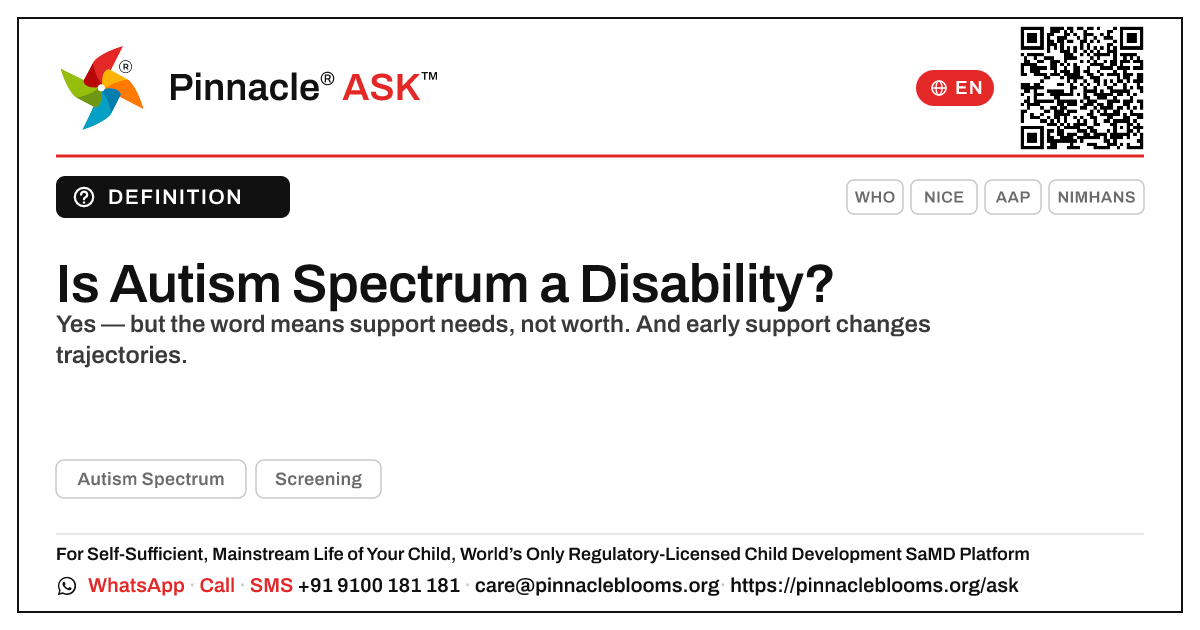
Yes — autism spectrum is recognised as a developmental disability under WHO ICD-11 (6A02), describing lasting differences in communication, social connection and processing. But the term reflects support needs, not worth or potential. With early, well-fitted support, autistic children grow and thrive, and formal recognition unlocks therapy, school accommodations and rights.
In this answer 4 sections
Many parents ask this with worry — but the honest answer is gentler and more empowering than you might expect.
In short
Yes — autism spectrum is formally recognised as a developmental disability under WHO ICD-11 (6A02), meaning it reflects lasting differences in how a child communicates, relates and processes the world. But "disability" here is a description of support needs, not a measure of your child's worth or future. With the right early support, autistic children grow, learn and thrive — many to remarkable independence. The label opens doors to therapy, school accommodations and rights; it does not close them.
What "disability" actually means here
The word can frighten parents, so it helps to understand how clinicians and frameworks use it. The WHO's model of functioning sees disability as the gap between a child's abilities and the demands of their environment — not as something broken inside the child. Autism is a spectrum, so this gap varies hugely: some children need lifelong support, others need focused help in early years and then flourish.
In India, autism is recognised under the Rights of Persons with Disabilities framework, which means a formal recognition can unlock educational support, therapy access and certain entitlements. So the term is, in practice, a key — it gives your child a recognised right to the help that fits them.
Most importantly: a recognition of disability says nothing fixed about ability. Communication, learning and connection all respond to early, consistent support — which is exactly why timing matters more than the label.
The Pinnacle way
Any diagnosis and a clinical AbilityScore® are formed only at a Pinnacle Blooms Network centre, by qualified clinicians — never from an online form or an app. We frame autism by strengths and support needs, not deficits, and build a plan around how your child connects and learns best — often beginning with speech therapy and family coaching. Across 70+ centres and 4.95 lakh+ families served, our experience is consistent: early support changes trajectories.
Trusted sources
WHO ICD-11 (6A02, autism spectrum disorder) and the WHO model of functioning and disability; NICE guidance on autism recognition; the American Academy of Pediatrics via HealthyChildren.org; NIMHANS autism clinical resources.
Next step — If you have any concern about how your child communicates or connects, book a developmental check with a Pinnacle clinician — clarity early is the kindest gift.
This is general information, not a diagnosis — individual assessment and diagnosis require an appropriately qualified healthcare professional.
CONNECT THE ANSWER TO YOUR CHILD’S DAY
Something to notice. Something to discuss.
What to notice
Watch for persistent differences across settings — limited response to name, reduced eye contact, little pointing or showing, delayed or atypical language, strong need for sameness, or any loss of previously gained skills. Persistent parental concern is itself a reason to seek a developmental check.
In everyday life
Follow your child's lead in play and name what they are interested in — connection grows fastest around the things they already love, not the things we wish they would do.
Bring your observations and questions to your child’s professional. Choose activities that suit your child’s comfort, abilities and agreed plan.
Bring your questions to a first visitQuestions families ask
Does calling autism a disability mean my child can't have a normal life?
No. "Disability" describes support needs, not your child's worth or ceiling. Many autistic children, with early and consistent support, grow into independent, capable adults. The term is a key to help, not a verdict on the future.
Why does autism get a disability recognition in India?
Autism is recognised under India's disability framework so children can access educational support, therapy and certain entitlements. Formal recognition is practically a door-opener to the right help, not a stigma.
Is autism a disability or a difference?
Both views are valid and not in conflict. Clinically and legally it is recognised as a developmental disability so support is accessible; at the same time many autistic people experience it as a difference in how they process the world. We frame it by strengths and support needs.
When should I seek an assessment?
If you have any persistent concern about how your child communicates, connects or responds — or notice loss of previously acquired skills at any age — a developmental check is worthwhile. Diagnosis is made only by qualified clinicians at a Pinnacle centre.
FOLLOW THE SOURCE
References behind this answer.
- Source referenceWHO ICD-11 — Autism spectrum disorder
- Source referenceNICE CG128 — Autism recognition & diagnosis
- Organisation website · further readingAmerican Academy of Pediatrics — HealthyChildren.org
- Organisation website · further readingNIMHANS — autism clinical resources
References are supplied with this answer. An organisation homepage offers further reading; it does not establish an independent review of this page.
Content attribution: SETU Consortium · Pinnacle Blooms Network.
PEOPLE, TOPICS & DEVELOPMENT
See the connections.
Browse the wider question collections connected with this answer’s audience, developmental area and stage.
FROM UNDERSTANDING TO PURPOSEFUL SUPPORT
One question. Your child’s whole life.
Your child’s self-sufficient, mainstream-included life is the purpose from the beginning. At Pinnacle, that purpose shapes what we understand, the goals we choose, the people we bring together, everyday practice and review.
Connect this question with the right support.
Explore how the relevant service contributes to everyday abilities, then speak with us about your child.
Make the next conversation useful.
Bring the situations you notice at home or school. We’ll explain a suitable service, centre and first visit, including availability and fees, before you decide.
How PinnacleAI® connects the journeyExplore the seven stages
- 1Understand abilities
A starting picture of your child’s capabilities.
- 2Choose meaningful goals
Readiness and a plan shaped around the child.
- 3Bring the right support together
Suitable therapies and people for those goals.
- 4Carry practice into everyday life
Guidance for family, home and school.
- 5Track and correct
Use observations to adjust the plan.
- 6Reassess and review
Decide what to continue, change or do next.
- 7Grow independence and participation
The child’s life gives each step its purpose.
Explore the whole PinnacleAI® system → · Participation at school and in the community →
PINNACLE’S EVIDENCE, OPEN TO YOU
Look at the evidence behind our work.
Read our research, inspect the original regulatory documents and check what each institutional measure means.
General information supports a conversation with an appropriately qualified professional. Advice, goals and support depend on the individual child.