
YOUR QUESTION. A CLEARER NEXT STEP.
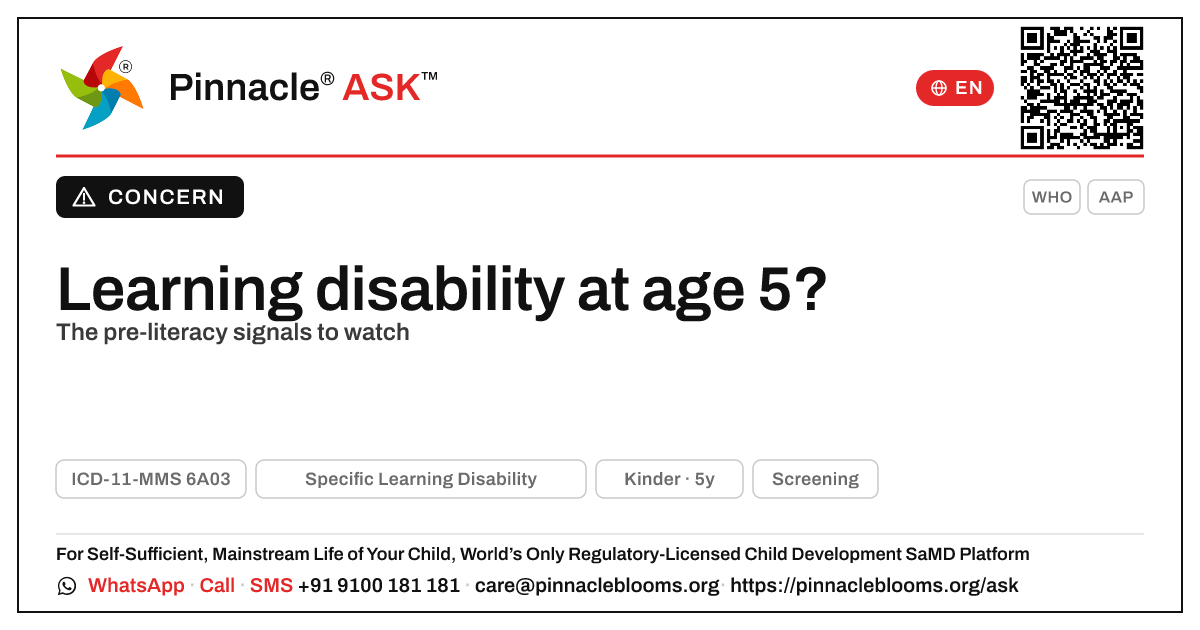
Specific learning disability at age 5: early signals
A specific learning disability is usually identified at 6–8 years or later, once formal instruction reveals a gap. At 5, watch pre-literacy signals — rhyming, letter learning, sequencing, family history — and build foundations. Early support can soften or prevent later difficulty.
In this answer 4 sections
At five, a specific learning disability usually cannot be diagnosed yet — but this is exactly the age to spot the early signals and get ahead of them.
In short
A specific learning disability (such as dyslexia) is typically identified at 6–8 years or later, once formal reading, writing and maths instruction reveals a gap. At age 5, a child is in the pre-literacy window — so rather than diagnosing, we watch the early markers and build the foundations that make later learning easier. Acting on these signals at 5 can soften, and sometimes prevent, later difficulty.
Early signals to watch at age 5
- Trouble with rhyming, or hearing the separate sounds in words.
- Slow letter learning — names and sounds not sticking.
- Difficulty remembering sequences — days, steps, instructions.
- Family history of dyslexia or learning difficulty.
- Avoiding letters, drawing or "school-type" tasks, with frustration.
These are readiness signals, not a diagnosis — and they are highly responsive to early support.
The Pinnacle way
At five we strengthen school readiness, not labels. Our special education teams build phonological awareness, pre-literacy and confidence, a clinician maps strengths and gaps with the AbilityScore®, and if a learning difference becomes clear at school age we are already ahead of it. See specific learning disability support. This is general information, not a diagnosis — individual assessment and diagnosis require an appropriately qualified healthcare professional.
Trusted sources
WHO ICD-11 classifies developmental learning disorder (6A03) and recognises it once academic learning is under way; education guidance supports early pre-literacy work.
Next step — if early signals are present, pre-literacy support now builds the foundation. Book a developmental check.
Questions families ask
Can a 5-year-old be diagnosed with a learning disability?
Usually not. Specific learning disabilities are identified at around 6–8 years, when formal reading, writing and maths instruction reveals a gap. At 5 we watch early signals and build pre-literacy skills.
What helps at age 5?
Phonological awareness, letter-sound work, and confidence with school-type tasks. Early pre-literacy support builds the foundation that makes later learning easier.
FOLLOW THE SOURCE
References behind this answer.
- Source referenceWHO ICD-11 (MMS) 6A03 — developmental learning disorder
- Organisation website · further readingAAP HealthyChildren — school readiness
References are supplied with this answer. An organisation homepage offers further reading; it does not establish an independent review of this page.
Content attribution: SETU Consortium · Pinnacle Blooms Network.
PEOPLE, TOPICS & DEVELOPMENT
See the connections.
Browse the wider question collections connected with this answer’s audience, developmental area and stage.
FROM UNDERSTANDING TO PURPOSEFUL SUPPORT
One question. Your child’s whole life.
Your child’s self-sufficient, mainstream-included life is the purpose from the beginning. At Pinnacle, that purpose shapes what we understand, the goals we choose, the people we bring together, everyday practice and review.
Connect this question with the right support.
Explore how the relevant service contributes to everyday abilities, then speak with us about your child.
Make the next conversation useful.
Bring the situations you notice at home or school. We’ll explain a suitable service, centre and first visit, including availability and fees, before you decide.
How PinnacleAI® connects the journeyExplore the seven stages
- 1Understand abilities
A starting picture of your child’s capabilities.
- 2Choose meaningful goals
Readiness and a plan shaped around the child.
- 3Bring the right support together
Suitable therapies and people for those goals.
- 4Carry practice into everyday life
Guidance for family, home and school.
- 5Track and correct
Use observations to adjust the plan.
- 6Reassess and review
Decide what to continue, change or do next.
- 7Grow independence and participation
The child’s life gives each step its purpose.
Explore the whole PinnacleAI® system → · Participation at school and in the community →
PINNACLE’S EVIDENCE, OPEN TO YOU
Look at the evidence behind our work.
Read our research, inspect the original regulatory documents and check what each institutional measure means.
General information supports a conversation with an appropriately qualified professional. Advice, goals and support depend on the individual child.