
మీ ప్రశ్నకు సమాధానం
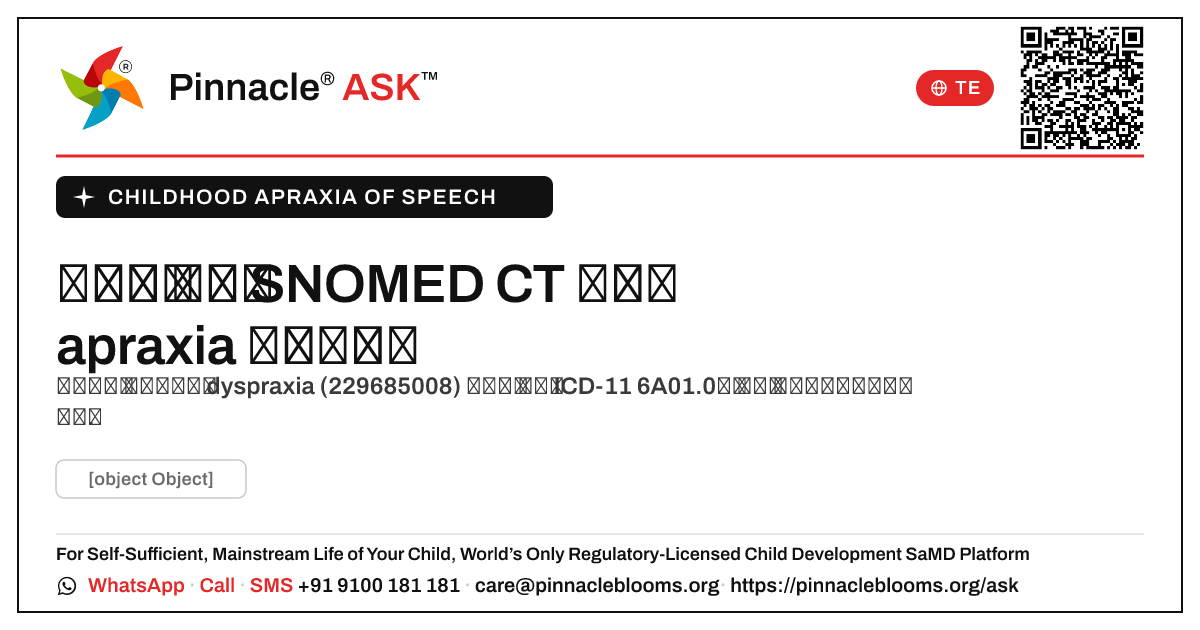
బాల్యం కోసం SNOMED CT భావన apraxia ప్రసంగం
SNOMED CTలో, మాట యొక్క బాల్యం apraxia అనేది 'మాట యొక్క అభివృద్ధి dyspraxiaకి' అనుగుణంగా ఉంటుంది (SCTID 229685008); ICD-11లో దగ్గరి రోగనిర్ధారణ వర్గం 6A01.0, అభివృద్ధి మాట ధ్వని లోపం. EHR సమస్య జాబితా కోసం SNOMEDని మరియు రోగనిర్ధారణ కోడింగ్ కోసం ICD-11ని ఉపయోగించండి, మీ స్థానిక విడుదలకి వ్యతిరేకంగా SCTIDని నిర్ధారించండి.
In this answer 4 sections
సరిగ్గా కోడింగ్ అనేది సరైన ఆలోచనతో ప్రారంభమవుతుంది - మరియు బాల్యం apraxia యొక్క ప్రసంగం వైద్యులు పక్కపక్కనే ఉపయోగించే రెండు వర్గీకరణ వ్యవస్థలలో ఉంటుంది.
సంక్షిప్తంగా
SNOMED CTలో, బాల్యం apraxia యొక్క ప్రసంగం ప్రసంగం యొక్క అభివృద్ధి dyspraxia (SCTID 229685008) అనే భావనకు అనుగుణంగా ఉంటుంది, ఇది ఉచ్చారణ/మోటార్ ప్రసంగం యొక్క రుగ్మతల క్రింద పిల్లల అభివృద్ధికి సంబంధించిన ఒక అంశం. ఇది ICD-11 వర్గీకరణ నుండి భిన్నంగా ఉంటుంది, ఇక్కడ దగ్గరి నిర్మాణం 6A01.0 — అభివృద్ధి ప్రసంగ ధ్వని రుగ్మత, ఇది ఒక భారతీయ వైద్యుడు బిల్లింగ్ మరియు రికార్డుల కోసం కోడ్ చేసే రోగనిర్ధారణ వర్గం. SNOMED CT మీకు EHR సమస్య జాబితా కోసం వివరణాత్మక భావనను ఇస్తుంది; ICD-11 మీకు రోగనిర్ధారణ కోడ్ను ఇస్తుంది - రెండింటినీ ఉద్దేశపూర్వకంగా ఉపయోగించండి.
క్లుప్తంగా సైన్స్
బాల్యం apraxia యొక్క ప్రసంగం (CAS) అనేది ఒక నాడీ సంబంధిత మోటార్-స్పీచ్ రుగ్మత: కండరాల బలహీనత (డిసార్థ్రియా) లేదా ధ్వనిశాస్త్ర నియమాల సముపార్జనలో కాదు, ప్రసంగం కోసం కదలికలను ప్రణాళిక చేయడం మరియు క్రమం చేయడంలో ఇబ్బంది ఉంటుంది. పునరావృత ఉత్పత్తిపై స్థిరత్వం లేని లోపాలు, అంతరాయం కలిగిన ఉచ్చారణ మరియు శబ్దాలు మరియు అక్షరాల మధ్య సున్నితమైన మార్పులతో ఇబ్బంది వంటి ముఖ్య లక్షణాలు - ఇది సాధారణ ధ్వనిశాస్త్ర రుగ్మత నుండి వేరు చేస్తుంది.
ఆచరణలో ముఖ్యమైన మ్యాపింగ్ గమనికలు:
- SNOMED CT 229685008 — అభివృద్ధి dyspraxia యొక్క ప్రసంగం అనేది క్రియాశీల సమస్య జాబితా కోసం సిఫార్సు చేయబడిన పరిభాష భావన; బాల్యం apraxia యొక్క ప్రసంగం అనేది అదే నిర్మాణం కోసం సమకాలీన వివరణగా వైద్యపరంగా విస్తృతంగా ఉపయోగించబడుతుంది.
- ICD-11 6A01.0 — అభివృద్ధి ప్రసంగ ధ్వని రుగ్మత అనేది తల్లిదండ్రుల రోగనిర్ధారణ కోడ్; CAS ఇక్కడ నమోదు చేయబడింది, ఎందుకంటే దీనికి ICD-11లో ప్రత్యేక స్టెమ్ కోడ్ లేదు.
- ఎన్కోడింగ్ చేయడానికి ముందు మీ స్థానిక SNOMED CT విడుదల నుండి ప్రస్తుత SCTIDని నిర్ధారించుకోండి, ఎందుకంటే పరిభాష రిసెట్లు వెర్షన్లో ఉంటాయి.
Pinnacle మార్గం
కోడింగ్ అనేది రికార్డులను భద్రపరిచే ప్రక్రియ; ఒక క్లినికల్ డయాగ్నసిస్ మరియు ఏదైనా AbilityScore® ఒక Pinnacle Blooms Network కేంద్రంలో మాత్రమే, అర్హత కలిగిన వైద్యుల సంరక్షణలో స్థాపించబడతాయి - ఎప్పుడూ పదజాలం వెతకడం ద్వారా లేదా ఒక యాప్ ద్వారా కాదు. మా మోటార్-స్పీచ్ మార్గం ఖచ్చితమైన వర్గీకరణను structured speech therapyతో జత చేస్తుంది, ఇది కాలానుగుణంగా ట్రాక్ చేయబడిన AbilityScore® బేస్లైన్, మరియు 70+ కేంద్రాలలో వైద్యుల పర్యవేక్షణ ఉంటుంది. సహచరుల కోసం, మేము రిఫెరల్ మరియు క్లినికల్ భాగస్వామ్యంను స్వాగతిస్తున్నాము.
విశ్వసనీయ మూలాలు
WHO ICD-11 for Mortality and Morbidity Statistics, category 6A01.0 (developmental speech sound disorder); Childhood apraxia of Speech పై ASHA ప్రాక్టీస్ వనరులు; SNOMED CT International Edition terminology concepts.
తదుపరి దశ — CAS అనుమానిస్తున్న పిల్లవాడిని సిఫారసు చేస్తున్నారా? assessment కోసం మరియు ఒక ఉమ్మడి నిర్వహణ ప్రణాళిక కోసం Pinnacle మోటార్-స్పీచ్ క్లినిషియన్తో (/partner) భాగస్వామ్యం అవ్వండి.
ఇది సాధారణ సమాచారం, రోగ నిర్ధారణ కాదు — ఒక క్లినికల్ AbilityScore® మరియు ఏదైనా రోగ నిర్ధారణ అర్హత కలిగిన వైద్యుల సంరక్షణలో ఒక Pinnacle Blooms Network కేంద్రంలో మాత్రమే ఏర్పడుతుంది.
CONNECT THE ANSWER TO YOUR CHILD’S DAY
Something to notice. Something to discuss.
What to notice
ఒకే పదం కోసం పదే పదే ప్రయత్నించినప్పుడు స్థిరత్వం లేని మాట-ధ్వని లోపాలు, విఘాతం కలిగించే స్వరస్థితి, మరియు ధ్వనులు మరియు అక్షరాలను క్రమం తప్పకుండా ఉచ్చరించడంలో ఇబ్బంది - ఇవి CASను ధ్వని సంబంధిత రుగ్మత లేదా డిసార్థ్రియా నుండి వేరు చేస్తాయి.
In everyday life
EHR సమస్య జాబితాలో, గ్రాన్యులారిటీ కోసం SNOMED CT భావనను మరియు రోగ నిర్ధారణ మరియు రిపోర్టింగ్ కోసం ICD-11 6A01.0 కోడ్ను ఎన్కోడ్ చేయండి - మరియు ఖరారు చేసే ముందు మీ ప్రస్తుత SNOMED విడుదలతో SCTIDని ధృవీకరించండి.
Bring your observations and questions to your child’s professional. Choose activities that suit your child’s comfort, abilities and agreed plan.
Bring your questions to a first visitQuestions families ask
ప్రసంగం యొక్క బాల్యం apraxia కోసం SNOMED CT కాన్సెప్ట్ ID ఏమిటి?
స్పీచ్ యొక్క బాల్యం apraxia అనేది SNOMED CT భావన 'స్పీచ్ యొక్క అభివృద్ధి dyspraxia, SCTID 229685008'కి అనుగుణంగా ఉంటుంది. మీ స్థానిక SNOMED CT విడుదలకి వ్యతిరేకంగా గుర్తింపును నిర్ధారించుకోండి, ఎందుకంటే పదజాలం రిఫిట్లు వెర్షనల్ చేయబడతాయి.
ఇది ICD-11 కోడ్ 6A01.0 నుండి ఎలా భిన్నంగా ఉంటుంది?
ICD-11 6A01.0 అనేది 'డెవలప్మెంటల్ స్పీచ్ సౌండ్ డిజార్డర్', ఇది క్లినికల్ కోడింగ్ మరియు రిపోర్టింగ్ కోసం ఉపయోగించే ప్రధాన రోగనిర్ధారణ వర్గం. CASకు ప్రత్యేక ICD-11 స్టెమ్ కోడ్ లేదు, కాబట్టి ఇది ఇక్కడ నమోదు చేయబడింది. SNOMED CT EHR సమస్య జాబితా కోసం మరింత విశ్లేషణాత్మక భావనను అందిస్తుంది.
కాస్ (CAS) ను డిసార్థ్రియా లేదా ఫోనోలాజికల్ డిజార్డర్ నుండి ఎలా వేరు చేస్తారు?
CAS అనేది మోటార్-స్పీచ్ ప్రణాళిక మరియు సీక్వెన్సింగ్ రుగ్మత, ఇది కండరాల బలహీనత (డిసార్థ్రియా) లేదా నియమం ఆధారిత ధ్వనిశాస్త్రం మాత్రమే కాదు. పునరావృత ఉత్పత్తిపై స్థిరత్వం లేని లోపాలు, అంతరాయం కలిగిన ప్రోసోడీ మరియు శబ్దాలు మరియు అక్షరాల మధ్య మారడంలో ఇబ్బంది దీని ముఖ్య లక్షణాలు.
CAS యొక్క క్లినికల్ నిర్ధారణ ఎక్కడ స్థాపించబడింది?
క్లినికల్ నిర్ధారణ మరియు ఏదైనా AbilityScore® ఒక అర్హత కలిగిన వైద్యురాలి సంరక్షణలో Pinnacle Blooms Network కేంద్రంలో మాత్రమే స్థాపించబడతాయి, పదజాలం వెతకడం ద్వారా లేదా యాప్ ద్వారా కాదు.
FOLLOW THE SOURCE
References behind this answer.
Follow any source links within the explanation above. This record has no separately listed references.
References are supplied with this answer. An organisation homepage offers further reading; it does not establish an independent review of this page.
Content attribution: SETU Consortium · Pinnacle Blooms Network.
PEOPLE, TOPICS & DEVELOPMENT
See the connections.
Browse the wider question collections connected with this answer’s audience, developmental area and stage.
FROM UNDERSTANDING TO PURPOSEFUL SUPPORT
One question. Your child’s whole life.
Your child’s self-sufficient, mainstream-included life is the purpose from the beginning. At Pinnacle, that purpose shapes what we understand, the goals we choose, the people we bring together, everyday practice and review.
Connect this question with the right support.
Explore how the relevant service contributes to everyday abilities, then speak with us about your child.
Make the next conversation useful.
Bring the situations you notice at home or school. We’ll explain a suitable service, centre and first visit, including availability and fees, before you decide.
How PinnacleAI® connects the journeyExplore the seven stages
- 1Understand abilities
A starting picture of your child’s capabilities.
- 2Choose meaningful goals
Readiness and a plan shaped around the child.
- 3Bring the right support together
Suitable therapies and people for those goals.
- 4Carry practice into everyday life
Guidance for family, home and school.
- 5Track and correct
Use observations to adjust the plan.
- 6Reassess and review
Decide what to continue, change or do next.
- 7Grow independence and participation
The child’s life gives each step its purpose.
Explore the whole PinnacleAI® system → · Participation at school and in the community →
PINNACLE’S EVIDENCE, OPEN TO YOU
Look at the evidence behind our work.
Read our research, inspect the original regulatory documents and check what each institutional measure means.
General information supports a conversation with an appropriately qualified professional. Advice, goals and support depend on the individual child.