
Running
Running: Developmental Meaning and When Delay Matters
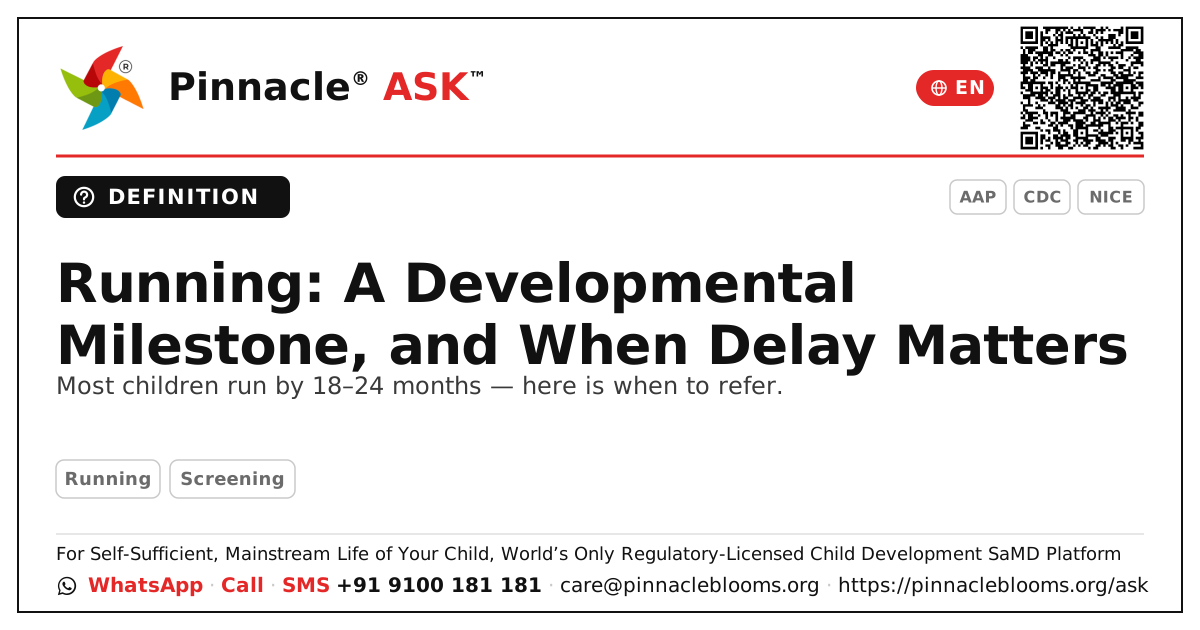
Running is a gross-motor milestone marking the integration of dynamic balance, lower-limb strength, postural control and a flight phase that separates it from fast walking. Most children run by 18–24 months, with smoother coordination by 2–3 years. A delay is clinically significant when a child is not running by around 24 months, or shows gait asymmetry, frequent falls, regression, or co-occurring language or social delays.
A toddler breaking into a run is gross-motor maturity made visible — the moment balance, strength and motor planning converge into propulsion.
In short
Running is a developmental milestone marking the integration of dynamic balance, bilateral lower-limb strength, postural control and a brief flight phase (both feet off the ground) that distinguishes it from fast walking. Most children run by 18–24 months, with smoother, more coordinated running by 2–3 years. A delay becomes clinically significant when a child is not running by ~24 months, shows persistent gait asymmetry, frequent falls, regression of acquired skills, or co-occurring delays in language or social communication.The science
Running requires a true flight phase, single-limb stance stability, reciprocal limb coordination and adequate eccentric strength for deceleration — capacities underpinned by maturing corticospinal and cerebellar pathways. It typically emerges 3–6 months after independent walking. Red flags warranting referral include absent running beyond 24 months, asymmetric or toe-dominant gait, hypotonia or hypertonia, loss of previously acquired motor skills (consider neuromuscular or regressive aetiology), and isolated motor delay flagging possible developmental coordination concerns. Evaluate running within the whole motor and developmental profile, not in isolation.The Pinnacle way
This is general clinical information, not a diagnosis — a clinical AbilityScore®, a clinician-administered structured assessment, and any diagnosis are formed only at a Pinnacle Blooms Network centre under qualified clinician care. Our teams assess gait, strength and motor planning together, drawing on physiotherapy within the wider running motor pathway.Trusted sources
AAP and HealthyChildren guidance on gross-motor milestones; CDC developmental milestone framework; NICE guidance on assessing developmental delay.Next step — For a child not running by ~24 months or with asymmetric gait, refer for a developmental and physiotherapy review to clarify the motor profile and start timely support.
What to watch
Not running by around 24 months, persistent gait asymmetry, toe-dominant or stiff gait, frequent falls, hypotonia or hypertonia, loss of previously acquired motor skills, or running delay alongside language or social-communication delays.
Try this at home
Encourage running play in safe open spaces — chasing games, gentle slopes and stop-start movement build deceleration control, dynamic balance and reciprocal limb coordination naturally.
Trusted sources
Developed by SETU Consortium · Pinnacle Blooms Network · Last reviewed 2026-06-10 · reviewed every 540 days
This is general information, not a diagnosis. A clinical AbilityScore® and any diagnosis are formed only at a Pinnacle Blooms Network centre, under qualified clinician care.
Frequently asked
By what age should a child be running?
Most children run by 18–24 months, typically 3–6 months after independent walking, with smoother coordination emerging by 2–3 years.
When is a running delay clinically significant?
Consider it significant if a child is not running by around 24 months, or shows gait asymmetry, frequent falls, regression of skills, or co-occurring language or social delays.
What distinguishes running from fast walking?
Running has a true flight phase where both feet leave the ground simultaneously, requiring greater dynamic balance, strength and motor planning than walking.