
YOUR QUESTION. A CLEARER NEXT STEP.
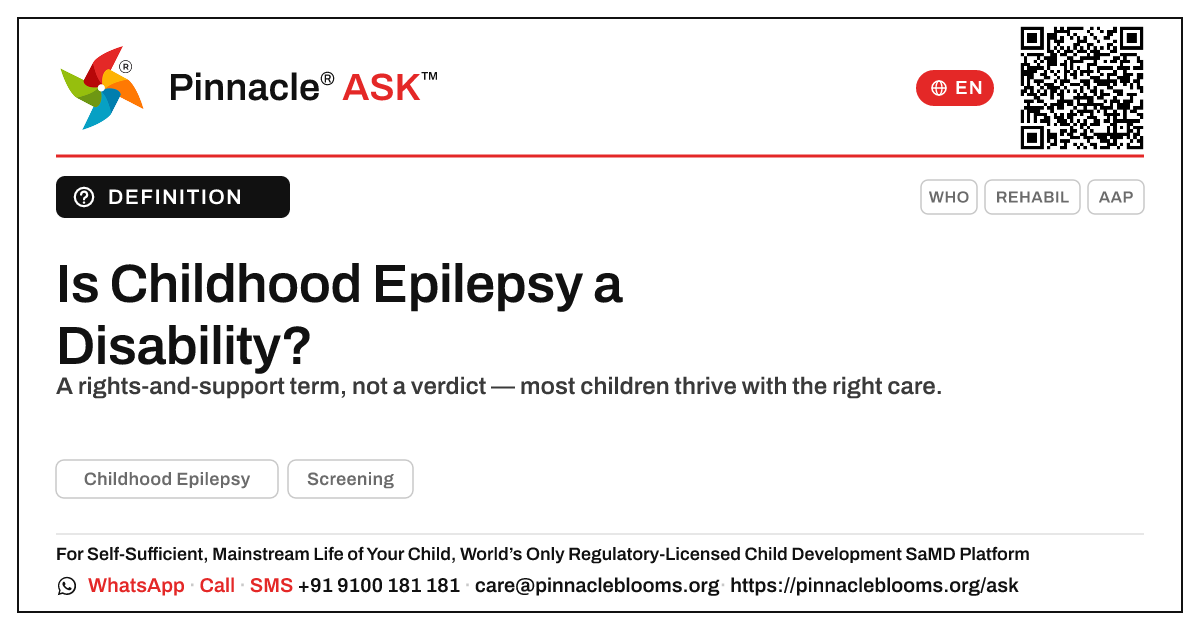
Is Childhood Epilepsy Considered a Disability?
Childhood epilepsy can be recognised as a disability under India's Rights of Persons with Disabilities Act, 2016 and WHO frameworks when it substantially affects daily life — but this is a rights-and-support term, not a verdict. Epilepsy is first a medical condition needing a paediatric neurologist; many children thrive once seizures are controlled.
In this answer 5 sections
Hearing the word "disability" alongside epilepsy can feel heavy — but for most children it describes a recognised condition, not your child's future.
In short
Yes, childhood epilepsy can be recognised as a disability under Indian law and international frameworks — it is listed among the conditions covered by the Rights of Persons with Disabilities Act, 2016 when it substantially affects daily life. But "disability" here is a rights and support term, not a verdict on potential. Many children with epilepsy attend school, play, learn and thrive, especially once seizures are well controlled with the right medical care.
What the word actually means here
The World Health Organization frames disability as the interaction between a child's condition and the world around them — not a fixed quality of the child. Epilepsy becomes a disability in the legal and supportive sense when seizures, their treatment, or associated learning and developmental differences meaningfully affect everyday participation. That recognition is helpful: it can open access to school accommodations, support services, and protections.
Importantly, epilepsy varies enormously. Some children have brief, well-controlled episodes and no lasting effect on development; others may have learning, attention or motor differences that benefit from therapy support alongside neurological care. Each child's picture is different.
When to seek medical care
Epilepsy is first and foremost a medical condition — seizures need a paediatric neurologist's assessment, not therapy alone. Seek prompt medical review for any unexplained staring spells, repetitive jerking, loss of awareness, or a first seizure. Once seizures are managed, developmental and therapy support can help with any associated learning, speech or motor needs.
The Pinnacle way
Developmental measurement supports care planning; diagnosis requires an appropriately qualified healthcare professional., under qualified clinician care — never from an online form. For a child whose epilepsy is medically managed, we focus on building everyday strengths: understanding childhood epilepsy, supporting development through occupational therapy, and mapping a clear starting point with the AbilityScore.
Trusted sources
WHO framing of disability as functioning within an environment (ICF); India's Rights of Persons with Disabilities Act administered via the Rehabilitation Council of India; paediatric guidance from the American Academy of Pediatrics on epilepsy and child development.
Next step — If your child has epilepsy, speak with your paediatric neurologist first, then book a developmental check to support learning and everyday skills.
This is general information, not a diagnosis — individual assessment and diagnosis require an appropriately qualified healthcare professional.
CONNECT THE ANSWER TO YOUR CHILD’S DAY
Something to notice. Something to discuss.
What to notice
Unexplained staring spells, repetitive jerking, loss of awareness, or any first seizure — these need prompt paediatric neurology review, not therapy alone.
In everyday life
Keep a simple seizure diary noting time, duration and what your child was doing. It helps your child's doctor understand patterns and adjust care precisely.
Bring your observations and questions to your child’s professional. Choose activities that suit your child’s comfort, abilities and agreed plan.
Bring your questions to a first visitQuestions families ask
Is epilepsy legally a disability in India?
Childhood epilepsy can be recognised under India's Rights of Persons with Disabilities Act, 2016 when it substantially affects daily functioning. This recognition is about accessing support, accommodations and protections — not a judgement on your child's abilities.
Will my child with epilepsy be able to go to school and learn?
Most children with epilepsy attend school and learn well, especially once seizures are controlled with the right medical care. Some may benefit from accommodations or therapy support for associated learning needs, which a clinician can help identify.
Should I see a neurologist or a therapist first?
A paediatric neurologist first — epilepsy is a medical condition and seizures need proper diagnosis and management. Once seizures are managed, developmental and therapy support can help with any learning, speech or motor needs.
FOLLOW THE SOURCE
References behind this answer.
- Organisation website · further readingRehabilitation Council of India — disability rights and services
- Organisation website · further readingAAP HealthyChildren — epilepsy and child development
References are supplied with this answer. An organisation homepage offers further reading; it does not establish an independent review of this page.
Content attribution: SETU Consortium · Pinnacle Blooms Network.
PEOPLE, TOPICS & DEVELOPMENT
See the connections.
Browse the wider question collections connected with this answer’s audience, developmental area and stage.
FROM UNDERSTANDING TO PURPOSEFUL SUPPORT
One question. Your child’s whole life.
Your child’s self-sufficient, mainstream-included life is the purpose from the beginning. At Pinnacle, that purpose shapes what we understand, the goals we choose, the people we bring together, everyday practice and review.
Connect this question with the right support.
Start with your child’s strengths, your observations and what you want everyday life to become.
Make the next conversation useful.
Bring the situations you notice at home or school. We’ll explain a suitable service, centre and first visit, including availability and fees, before you decide.
How PinnacleAI® connects the journeyExplore the seven stages
- 1Understand abilities
A starting picture of your child’s capabilities.
- 2Choose meaningful goals
Readiness and a plan shaped around the child.
- 3Bring the right support together
Suitable therapies and people for those goals.
- 4Carry practice into everyday life
Guidance for family, home and school.
- 5Track and correct
Use observations to adjust the plan.
- 6Reassess and review
Decide what to continue, change or do next.
- 7Grow independence and participation
The child’s life gives each step its purpose.
Explore the whole PinnacleAI® system → · Participation at school and in the community →
PINNACLE’S EVIDENCE, OPEN TO YOU
Look at the evidence behind our work.
Read our research, inspect the original regulatory documents and check what each institutional measure means.
General information supports a conversation with an appropriately qualified professional. Advice, goals and support depend on the individual child.