
YOUR QUESTION. A CLEARER NEXT STEP.
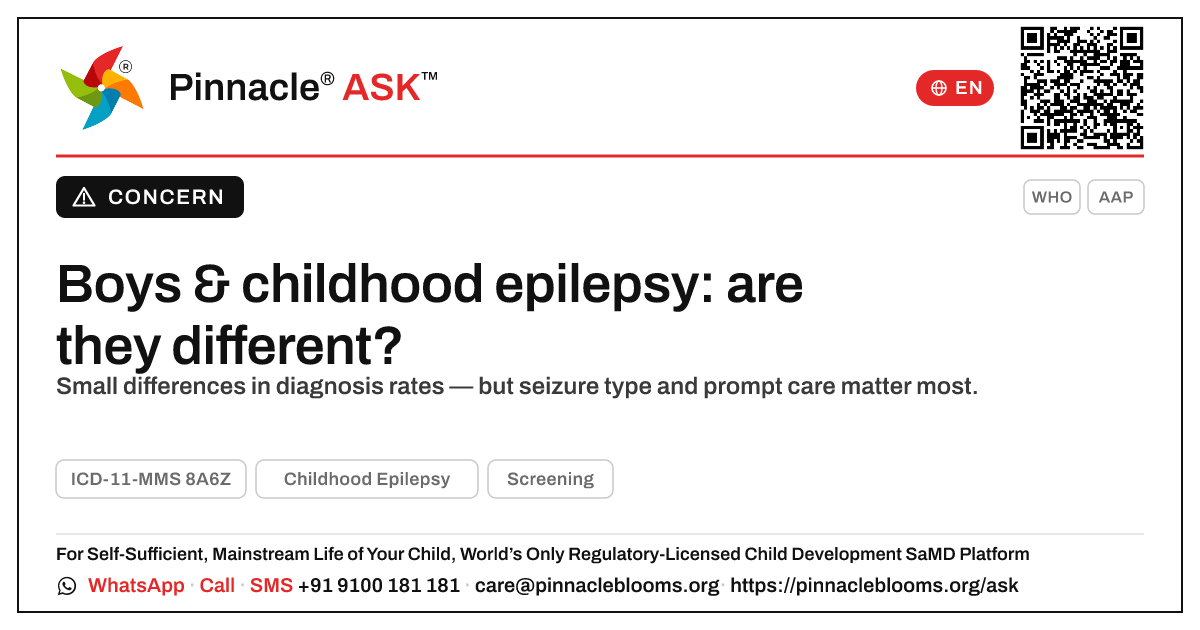
Do boys show childhood epilepsy differently?
Boys are diagnosed with childhood epilepsy a little more often, and some syndrome types lean one way or the other — but these differences are small. Seizure type, cause and prompt medical care matter far more than your child's sex. Epilepsy needs a doctor first, not a therapy form.
In this answer 5 sections
If your son has been diagnosed with epilepsy, it's natural to wonder whether boys experience it differently — here's what's known, gently explained.
In short
Childhood epilepsy can affect boys and girls slightly differently, but the differences are subtle, not dramatic. Boys are diagnosed a little more often overall, and certain epilepsy types — such as some genetic and structural patterns — appear marginally more in boys, while a few specific syndromes lean female. What matters far more than your child's sex is the type of seizures, how often they occur, and prompt, accurate medical care. Epilepsy is a medical condition, so the first step is always a doctor, not a therapy form.
What the patterns actually show
Epilepsy is among the most common neurological conditions of childhood. A few observations parents sometimes hear about:
- Slightly higher rates in boys — across most studies boys are diagnosed a little more often, but the gap is small and both sexes are commonly affected.
- Some types lean one way — certain syndromes are reported a touch more in boys, while a few (such as some absence epilepsies) are noted more in girls. These are tendencies, not rules.
- What's the same — seizure first aid, the importance of an EEG and clinician review, medication response, and the goal of seizure control are not determined by your child's sex.
What truly shapes the picture is the seizure type, the cause, and how early treatment begins — far more than whether your child is a boy or a girl.
When to seek help — promptly
Epilepsy is a medical condition that needs a paediatrician or paediatric neurologist, not a therapy-first approach. Seek medical care if your child has had a seizure, repeated staring spells, sudden jerks, or unexplained loss of awareness. A first seizure, or any seizure lasting more than five minutes, is an emergency — call for medical help immediately. Once seizures are well managed, therapy can then support any associated learning, speech or developmental needs.
The Pinnacle way
No diagnosis or AbilityScore® is ever made from an online form — Developmental measurement supports care planning; diagnosis requires an appropriately qualified healthcare professional., under qualified clinician care, and epilepsy itself is diagnosed and treated by your medical doctor. Where seizures affect a child's speech, attention or development, our team supports the whole child alongside their medical care. Explore our developmental support , speech therapy and how the AbilityScore is formed.
Trusted sources
WHO ICD-11 (8A6Z, epilepsy); World Health Organization epilepsy guidance; American Academy of Pediatrics parent resources on seizures and epilepsy.
Next step — If your son has had a seizure or you're unsure, see a paediatrician or paediatric neurologist first; once care is in place, book a developmental review for any speech or learning support.
This is general information, not a diagnosis — individual assessment and diagnosis require an appropriately qualified healthcare professional.
CONNECT THE ANSWER TO YOUR CHILD’S DAY
Something to notice. Something to discuss.
What to notice
Seek urgent medical care for any seizure lasting over five minutes, repeated seizures, a first-ever seizure, frequent staring spells, sudden jerks, or unexplained loss of awareness — regardless of your child's sex.
In everyday life
Keep a simple seizure diary: note the date, time, how long it lasted and what your child was doing beforehand. This record helps your doctor far more than worrying about whether boys are affected differently.
Bring your observations and questions to your child’s professional. Choose activities that suit your child’s comfort, abilities and agreed plan.
Bring your questions to a first visitQuestions families ask
Are boys more likely to have epilepsy than girls?
Across most studies boys are diagnosed a little more often, but the difference is small and epilepsy is common in both. What matters most is the seizure type and getting prompt, accurate medical care.
Do boys and girls need different epilepsy treatment?
Treatment is guided by the seizure type and cause, not by your child's sex. Seizure first aid, EEG, clinician review and medication choices follow the same medical principles for boys and girls.
Should I take my son to a therapist or a doctor first?
A doctor first. Epilepsy is a medical condition diagnosed and treated by a paediatrician or paediatric neurologist. Therapy can support speech, learning or development once seizures are well managed.
FOLLOW THE SOURCE
References behind this answer.
- Organisation website · further readingWHO ICD-11: epilepsy
- Source referenceWHO epilepsy fact sheet
- Organisation website · further readingAAP HealthyChildren: seizures & epilepsy
References are supplied with this answer. An organisation homepage offers further reading; it does not establish an independent review of this page.
Content attribution: SETU Consortium · Pinnacle Blooms Network.
PEOPLE, TOPICS & DEVELOPMENT
See the connections.
Browse the wider question collections connected with this answer’s audience, developmental area and stage.
FROM UNDERSTANDING TO PURPOSEFUL SUPPORT
One question. Your child’s whole life.
Your child’s self-sufficient, mainstream-included life is the purpose from the beginning. At Pinnacle, that purpose shapes what we understand, the goals we choose, the people we bring together, everyday practice and review.
Connect this question with the right support.
Start with your child’s strengths, your observations and what you want everyday life to become.
Make the next conversation useful.
Bring the situations you notice at home or school. We’ll explain a suitable service, centre and first visit, including availability and fees, before you decide.
How PinnacleAI® connects the journeyExplore the seven stages
- 1Understand abilities
A starting picture of your child’s capabilities.
- 2Choose meaningful goals
Readiness and a plan shaped around the child.
- 3Bring the right support together
Suitable therapies and people for those goals.
- 4Carry practice into everyday life
Guidance for family, home and school.
- 5Track and correct
Use observations to adjust the plan.
- 6Reassess and review
Decide what to continue, change or do next.
- 7Grow independence and participation
The child’s life gives each step its purpose.
Explore the whole PinnacleAI® system → · Participation at school and in the community →
PINNACLE’S EVIDENCE, OPEN TO YOU
Look at the evidence behind our work.
Read our research, inspect the original regulatory documents and check what each institutional measure means.
General information supports a conversation with an appropriately qualified professional. Advice, goals and support depend on the individual child.