
YOUR QUESTION. A CLEARER NEXT STEP.
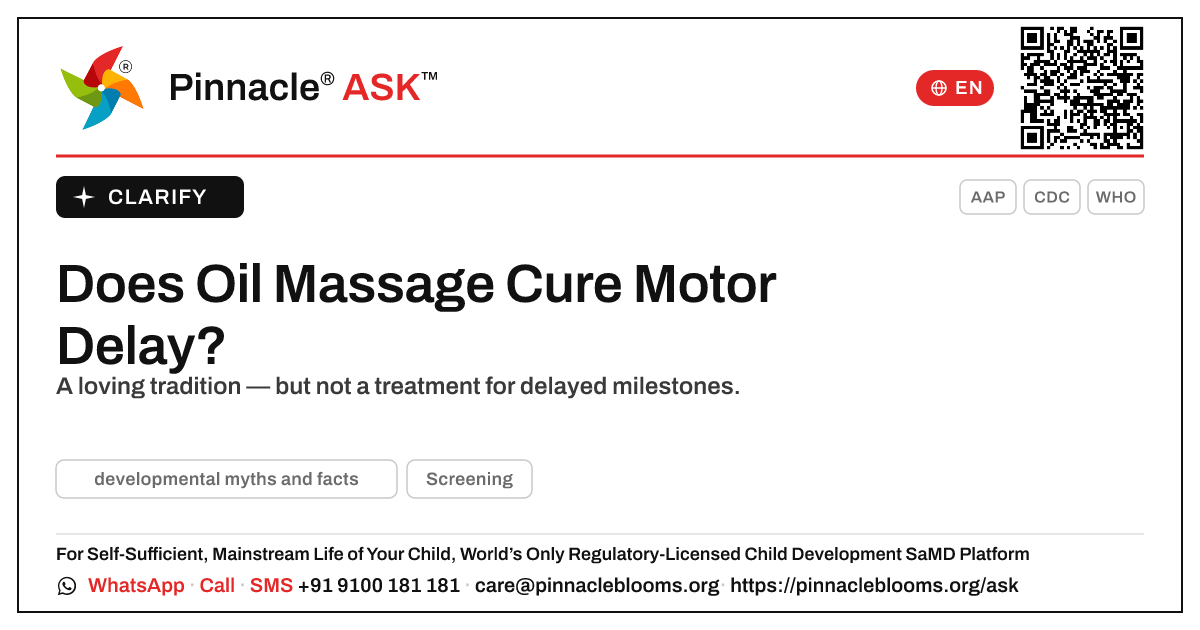
Does oil massage cure motor delay?
No, oil massage does not cure motor delay. It is lovely for bonding, sleep and skin, but it cannot change the muscle tone, strength and brain control behind delayed milestones. Confirmed motor delay improves with physiotherapy and active play — keep the massage alongside, not instead, and have any persistent delay checked early.
In this answer 5 sections
When a little one is slow to roll, sit or walk, loving hands reach for the oil bottle first — and that warm massage is a beautiful thing, just not a cure.
In short
No — oil massage does not cure motor delay. Daily oil massage (a cherished tradition across India) soothes, bonds and may briefly relax muscles, but it does not change the underlying reasons a child is late to roll, sit, crawl or walk. Motor delay deserves a proper developmental check, and the proven path forward is structured physiotherapy and play-based movement practice — massage can sit happily alongside, never instead.
Myth vs fact
The myth: "Massage the legs with warm oil daily and the delay will go away."
The fact: Massage feels wonderful and supports skin, sleep and parent–baby closeness — and a relaxed, securely-bonded baby does move and explore more. But motor milestones depend on muscle tone, strength, coordination and the brain's developing control of movement. None of these is cured by oil. If a real delay exists, time spent waiting for massage to "work" is time a child could be making progress with the right movement-based support.
What genuinely helps motor skills:
- Plenty of supervised tummy time from the early weeks
- Floor play and reaching for toys just out of grasp
- Less time in walkers, bouncers and prolonged carriers
- Targeted physiotherapy when a delay is confirmed
By all means keep the massage — for warmth and bonding. Just don't let it replace a check-up.
When to have it looked at
Have your child seen if you notice: not holding the head steady by around 4 months, not sitting with support by 9 months, not bearing weight on legs, stiffness or floppiness, or a strong preference for using only one side of the body. Any loss of a skill the child already had needs prompt review. Persistent parental worry is itself a good reason to ask.
The Pinnacle way
A clinical AbilityScore® and any diagnosis are formed only at a Pinnacle Blooms Network centre, under the care of a qualified clinician — never from a massage routine or an online checklist. Our therapists draw on 2.5 billion+ data points and 25 million+ therapy sessions across 70+ centres to map exactly where your child is and what will help next. Explore physiotherapy for movement and strength, and browse more developmental myths and facts so you can tell tradition from treatment with confidence.
Trusted sources
Guidance here aligns with the American Academy of Pediatrics and HealthyChildren.org on motor milestones and active play, the CDC "Learn the Signs. Act Early." milestone guidance, and the WHO Nurturing Care framework, which values responsive caregiving (including loving touch) while pointing delayed development toward timely assessment.
Next step — keep enjoying the massage, and book a developmental check so any motor delay gets the right support early. Reach the Pinnacle team on WhatsApp: +91 91001 81181.
This is general information, not a diagnosis — individual assessment and diagnosis require an appropriately qualified healthcare professional.
CONNECT THE ANSWER TO YOUR CHILD’S DAY
Something to notice. Something to discuss.
What to notice
Seek prompt review if your child does not hold the head steady by ~4 months, does not sit with support by 9 months, will not bear weight on the legs, feels stiff or floppy, strongly favours one side, or loses a skill already gained.
In everyday life
Keep the massage for warmth and bonding, then add a few minutes of tummy time and floor play each day, with a favourite toy placed just out of reach to invite reaching and rolling.
Bring your observations and questions to your child’s professional. Choose activities that suit your child’s comfort, abilities and agreed plan.
Bring your questions to a first visitQuestions families ask
Is oil massage bad for my baby then?
Not at all. Massage supports bonding, sleep and skin, and a relaxed, securely-attached baby tends to explore and move more. The only caution is to not rely on it as a treatment for a real motor delay — keep it alongside proper assessment and physiotherapy, not instead.
What actually helps a baby reach motor milestones?
Supervised tummy time from the early weeks, plenty of floor play, reaching for toys just out of grasp, and limiting time in walkers and bouncers. If a delay is confirmed, targeted physiotherapy is the proven path forward.
At what age should I get motor delay checked?
Have it reviewed if your child is not holding the head steady by around 4 months, not sitting with support by 9 months, not bearing weight on the legs, or feels stiff or floppy. Any loss of a skill already gained needs prompt attention.
FOLLOW THE SOURCE
References behind this answer.
- Organisation website · further readingAAP HealthyChildren.org — motor milestones and active play
- Source referenceCDC Learn the Signs. Act Early. — developmental milestones
- Organisation website · further readingWHO Nurturing Care Framework — responsive caregiving
References are supplied with this answer. An organisation homepage offers further reading; it does not establish an independent review of this page.
Content attribution: SETU Consortium · Pinnacle Blooms Network.
PEOPLE, TOPICS & DEVELOPMENT
See the connections.
Browse the wider question collections connected with this answer’s audience, developmental area and stage.
FROM UNDERSTANDING TO PURPOSEFUL SUPPORT
One question. Your child’s whole life.
Your child’s self-sufficient, mainstream-included life is the purpose from the beginning. At Pinnacle, that purpose shapes what we understand, the goals we choose, the people we bring together, everyday practice and review.
Connect this question with the right support.
Explore how the relevant service contributes to everyday abilities, then speak with us about your child.
Make the next conversation useful.
Bring the situations you notice at home or school. We’ll explain a suitable service, centre and first visit, including availability and fees, before you decide.
How PinnacleAI® connects the journeyExplore the seven stages
- 1Understand abilities
A starting picture of your child’s capabilities.
- 2Choose meaningful goals
Readiness and a plan shaped around the child.
- 3Bring the right support together
Suitable therapies and people for those goals.
- 4Carry practice into everyday life
Guidance for family, home and school.
- 5Track and correct
Use observations to adjust the plan.
- 6Reassess and review
Decide what to continue, change or do next.
- 7Grow independence and participation
The child’s life gives each step its purpose.
Explore the whole PinnacleAI® system → · Participation at school and in the community →
PINNACLE’S EVIDENCE, OPEN TO YOU
Look at the evidence behind our work.
Read our research, inspect the original regulatory documents and check what each institutional measure means.
General information supports a conversation with an appropriately qualified professional. Advice, goals and support depend on the individual child.