
YOUR QUESTION. A CLEARER NEXT STEP.
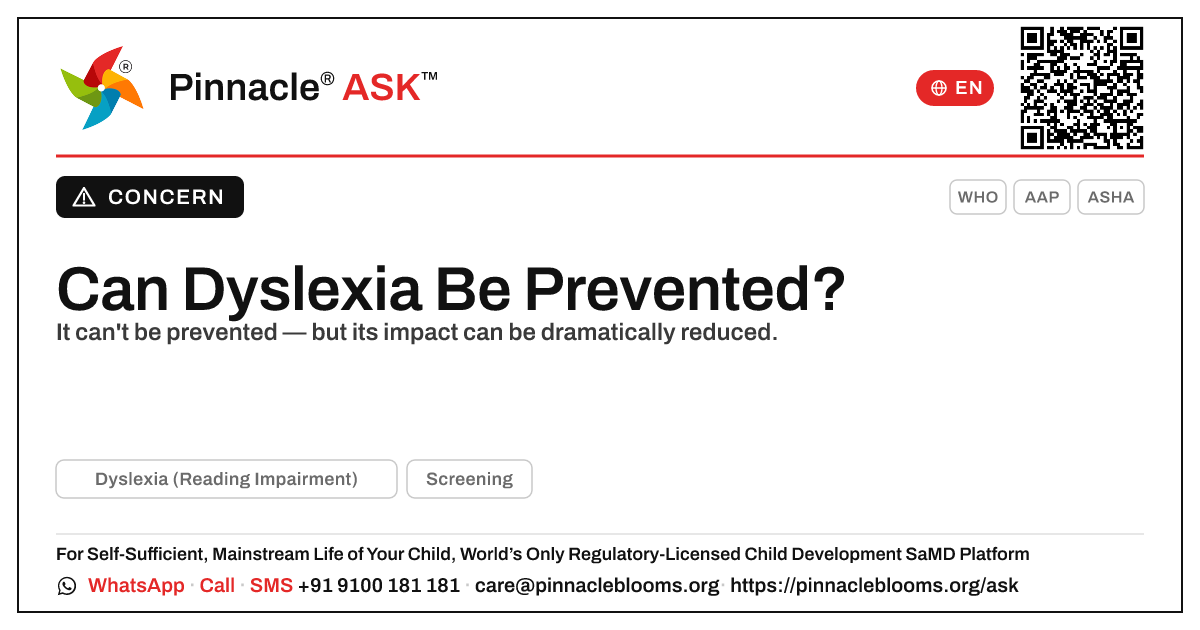
Can dyslexia be prevented?
Dyslexia itself cannot be prevented — it is a brain-based reading difference, often genetic, not caused by parenting. But its impact can be greatly reduced through early language-rich experiences, strong phonics and early identification. Only a clinician can confirm it.
In this answer 5 sections
If reading runs in the family — or you've simply wondered whether you can stop dyslexia before it starts — that question comes from love. Here's the honest, hopeful answer.
In short
Strictly speaking, dyslexia cannot be prevented — it is a brain-based difference in how the reading network develops, often with a genetic thread, not something caused by parenting or schooling. But here is the hopeful part: its impact can be dramatically reduced. Early language-rich experiences, strong phonics teaching and early identification mean many children learn to read fluently and confidently, even when the underlying difference is present.
What actually helps
You can't change the wiring, but you can build the strongest possible foundation:
- Talk, sing and read together daily — nursery rhymes and rhyming games build the sound-awareness (phonological skills) that reading sits upon.
- Watch the family pattern — if a parent or sibling has dyslexia, the chance is higher, so observe early literacy more closely.
- Notice the early signs — trouble learning letter sounds, rhyming, or remembering letter names around ages 4–6.
- Act early, not anxiously — structured, systematic phonics and targeted support work best when they begin early, before a child decides reading is "not for me".
Dyslexia is not a sign of low intelligence — many children with dyslexia are bright, creative thinkers. What changes the story is timing and the right support, not blame.
When to seek a check
If, by around age 6–7, your child still struggles to connect letters with sounds, blend simple words, or read at a pace close to their classmates — despite good teaching — that is a sensible time to ask for a structured assessment. Earlier worry is fine to raise too; the aim is to support, never to label prematurely.
The Pinnacle way
No online form can confirm dyslexia. A clinical AbilityScore® and any diagnosis are formed only at a Pinnacle Blooms Network centre, under qualified clinician care, after looking at your child's full picture against their own baseline. From there, targeted special education and literacy support builds reading skill step by step — turning early concern into early confidence.
Trusted sources
WHO ICD-11 developmental learning disorder framework; American Academy of Pediatrics guidance on early literacy and reading difficulty; ASHA on language and literacy; Pinnacle Blooms Network clinical studies.
Next step — You can't prevent dyslexia, but you can change its course. Book an early literacy assessment with a Pinnacle clinician.
This is general information, not a diagnosis — individual assessment and diagnosis require an appropriately qualified healthcare professional.
CONNECT THE ANSWER TO YOUR CHILD’S DAY
Something to notice. Something to discuss.
What to notice
Seek a check sooner if, by age 6–7, your child still cannot link letters to sounds or blend simple words despite good teaching — or if reading sparks real distress, avoidance or falling confidence.
In everyday life
Play sound games daily — clap out syllables, find words that rhyme, or hunt for things that start with the same sound. Five fun minutes builds the phonological foundation reading depends on.
Bring your observations and questions to your child’s professional. Choose activities that suit your child’s comfort, abilities and agreed plan.
Bring your questions to a first visitQuestions families ask
If dyslexia runs in our family, can we stop it in our child?
You can't change whether the underlying difference develops, but you can powerfully shape the outcome. With a higher family chance, watch early literacy more closely, fill your child's days with talk, rhymes and shared reading, and seek a structured check early if difficulties persist around age 6–7. Early support changes the story.
Did I cause my child's dyslexia by not reading enough?
No. Dyslexia is a brain-based difference in how the reading network develops, often with a genetic thread — it is not caused by parenting choices, screen time or how much you read together. What you do now still matters enormously, because rich language and early support reduce its impact.
Is it too early to worry before my child starts reading?
Early worry is fine to raise — but it isn't a diagnosis. Before formal reading, focus on sound-awareness games and shared books. Trouble learning letter sounds, rhyming or remembering letter names around ages 4–6 is worth noting and discussing at a developmental check.
FOLLOW THE SOURCE
References behind this answer.
- Organisation website · further readingWHO ICD-11 — developmental learning disorder framework
- Organisation website · further readingAAP HealthyChildren — early literacy and reading difficulty
- Organisation website · further readingASHA — language and literacy development
References are supplied with this answer. An organisation homepage offers further reading; it does not establish an independent review of this page.
Content attribution: SETU Consortium · Pinnacle Blooms Network.
PEOPLE, TOPICS & DEVELOPMENT
See the connections.
Browse the wider question collections connected with this answer’s audience, developmental area and stage.
FROM UNDERSTANDING TO PURPOSEFUL SUPPORT
One question. Your child’s whole life.
Your child’s self-sufficient, mainstream-included life is the purpose from the beginning. At Pinnacle, that purpose shapes what we understand, the goals we choose, the people we bring together, everyday practice and review.
Connect this question with the right support.
Start with your child’s strengths, your observations and what you want everyday life to become.
Make the next conversation useful.
Bring the situations you notice at home or school. We’ll explain a suitable service, centre and first visit, including availability and fees, before you decide.
How PinnacleAI® connects the journeyExplore the seven stages
- 1Understand abilities
A starting picture of your child’s capabilities.
- 2Choose meaningful goals
Readiness and a plan shaped around the child.
- 3Bring the right support together
Suitable therapies and people for those goals.
- 4Carry practice into everyday life
Guidance for family, home and school.
- 5Track and correct
Use observations to adjust the plan.
- 6Reassess and review
Decide what to continue, change or do next.
- 7Grow independence and participation
The child’s life gives each step its purpose.
Explore the whole PinnacleAI® system → · Participation at school and in the community →
PINNACLE’S EVIDENCE, OPEN TO YOU
Look at the evidence behind our work.
Read our research, inspect the original regulatory documents and check what each institutional measure means.
General information supports a conversation with an appropriately qualified professional. Advice, goals and support depend on the individual child.