
YOUR QUESTION. A CLEARER NEXT STEP.
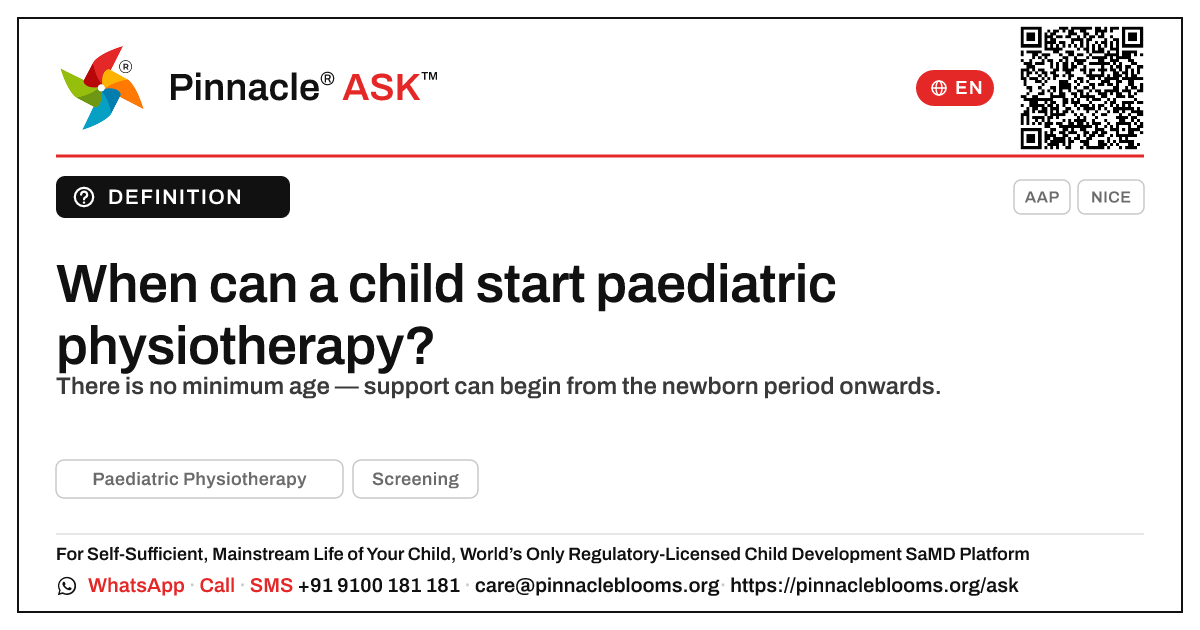
At what age can a child start paediatric physiotherapy?
Paediatric physiotherapy has no minimum age — it can begin from the newborn period onwards. Tiny babies, infants with tone or movement differences, toddlers learning to sit, crawl or walk, and older children recovering from injury can all benefit. What changes with age is how therapy is delivered: play-based, parent-guided handling for babies, and active, goal-led movement work for older children. Earlier support, when needed, makes the most of a young child's natural readiness to grow.
In this answer 5 sections
The wonderful truth is that paediatric physiotherapy has no minimum age — it can begin in the very first days of life when a baby needs it.
In short
Paediatric physiotherapy can begin at any age — from the newborn period right through to adolescence. There is no lower age limit: tiny babies in neonatal care, infants with movement or tone differences, toddlers learning to sit, crawl or walk, and older children needing support after injury or with coordination can all benefit. What changes with age is how therapy is delivered — for a baby it is play-based, parent-guided handling and positioning; for an older child it becomes active, goal-led movement work. The key is that earlier support, when needed, makes the most of a young brain and body's natural readiness to grow.
When physiotherapy helps at each stage
Physiotherapy works with how a child moves, balances and builds strength — and the body's foundations are laid remarkably early. In the newborn and infant months, a physiotherapist may support babies with tone differences (too floppy or too stiff), torticollis (a tilted head preference), delays in head control or rolling, or babies who have spent time in neonatal intensive care. From 6 months to 2 years, support often focuses on the milestones of sitting, crawling, pulling to stand and walking. In the toddler and preschool years, therapy may address gait, balance, coordination and confidence in movement and play. For school-age children, it supports recovery from injury, coordination difficulties, posture and participation in sport and daily life. At every stage, the family is the heart of the plan — much of what helps is woven into everyday play and routines at home.
When to seek a review
There is no need to wait. Consider a physiotherapy review if your baby has a strong head-turn preference or flat-head shape, seems unusually floppy or stiff, is not meeting movement milestones at the expected window, walks on tiptoe well past age 2, falls far more than peers, or is recovering from an injury or surgery. When in doubt, a gentle developmental check brings either early support or simple reassurance — both are wins.
The Pinnacle way
This is general information, not a diagnosis — a clinical AbilityScore® and any diagnosis are formed only at a Pinnacle Blooms Network centre, under qualified clinician care, never from an app or form. Our therapists meet your child exactly where they are developmentally, building an individualised, play-led physiotherapy plan, and partnering with you so support continues warmly at home.
Trusted sources
The American Academy of Pediatrics and HealthyChildren on early motor development and movement milestones; NICE guidance on assessing developmental and movement concerns in children.
Next step — If you have any question about how your child is moving — at any age — book a developmental and physiotherapy review for the right early support or reassurance.
CONNECT THE ANSWER TO YOUR CHILD’S DAY
Something to notice. Something to discuss.
What to notice
A strong head-turn preference or flat-head shape, a baby who seems unusually floppy or stiff, missed movement milestones such as head control, sitting or walking, toe-walking past age 2, frequent falls, or recovery needs after injury or surgery.
In everyday life
Give your baby plenty of supervised tummy time from the early weeks — it naturally builds the head, neck and shoulder strength that underpins rolling, sitting and crawling, and it is gentle physiotherapy woven into daily play.
Bring your observations and questions to your child’s professional. Choose activities that suit your child’s comfort, abilities and agreed plan.
Bring your questions to a first visitQuestions families ask
Is my baby too young for physiotherapy?
No baby is too young. Paediatric physiotherapy can begin in the newborn period — for example, supporting babies with tone differences, a head-turn preference, or those who have spent time in neonatal care. For infants it is gentle, play-based handling and positioning guided by you, the parent.
Does early physiotherapy mean something is seriously wrong?
Not at all. A review often brings simple reassurance, and where support is needed, starting early makes the most of a young child's natural readiness to grow. It is a positive, empowering step, not a sign of a problem.
How is physiotherapy different for a baby versus an older child?
For a baby it looks like guided play, positioning and gentle handling that you can continue at home. For an older child it becomes more active and goal-led — building strength, balance, coordination and confidence through movement and games.
FOLLOW THE SOURCE
References behind this answer.
- Organisation website · further readingHealthyChildren (AAP) — motor development and milestones
- Organisation website · further readingAmerican Academy of Pediatrics — early childhood development
- Organisation website · further readingNICE — assessing developmental and movement concerns
References are supplied with this answer. An organisation homepage offers further reading; it does not establish an independent review of this page.
Content attribution: SETU Consortium · Pinnacle Blooms Network.
PEOPLE, TOPICS & DEVELOPMENT
See the connections.
Browse the wider question collections connected with this answer’s audience, developmental area and stage.
FROM UNDERSTANDING TO PURPOSEFUL SUPPORT
One question. Your child’s whole life.
Your child’s self-sufficient, mainstream-included life is the purpose from the beginning. At Pinnacle, that purpose shapes what we understand, the goals we choose, the people we bring together, everyday practice and review.
Connect this question with the right support.
Start with your child’s strengths, your observations and what you want everyday life to become.
Make the next conversation useful.
Bring the situations you notice at home or school. We’ll explain a suitable service, centre and first visit, including availability and fees, before you decide.
How PinnacleAI® connects the journeyExplore the seven stages
- 1Understand abilities
A starting picture of your child’s capabilities.
- 2Choose meaningful goals
Readiness and a plan shaped around the child.
- 3Bring the right support together
Suitable therapies and people for those goals.
- 4Carry practice into everyday life
Guidance for family, home and school.
- 5Track and correct
Use observations to adjust the plan.
- 6Reassess and review
Decide what to continue, change or do next.
- 7Grow independence and participation
The child’s life gives each step its purpose.
Explore the whole PinnacleAI® system → · Participation at school and in the community →
PINNACLE’S EVIDENCE, OPEN TO YOU
Look at the evidence behind our work.
Read our research, inspect the original regulatory documents and check what each institutional measure means.
General information supports a conversation with an appropriately qualified professional. Advice, goals and support depend on the individual child.