
YOUR QUESTION. A CLEARER NEXT STEP.
At What Age Can a Child Start Occupational Therapy?
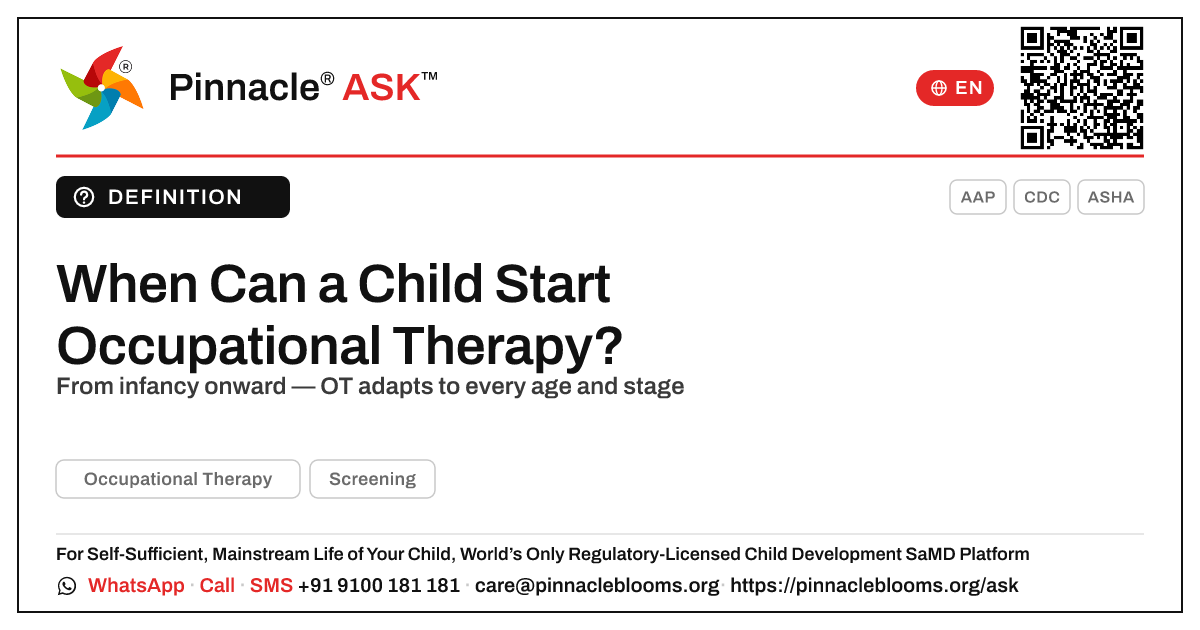
There is no minimum age for occupational therapy — it can begin in infancy and continue through the school years. For babies, OT is play- and routine-based, supporting feeding, early motor milestones and sensory comfort; for older children it focuses on fine-motor, self-care and school skills. The best time to start is whenever a developmental concern is noticed, because early support builds on a young child's natural capacity to adapt.
In this answer 5 sections
The moment a small hand fumbles with a spoon or a little one melts down at a busy playground, parents often wonder — is it too soon for help? The reassuring answer is, almost never.
In short
There is no minimum age to begin occupational therapy — it can start in infancy, from the first months of life, right through toddlerhood, the school years and beyond. What changes with age is not whether a child can benefit, but how support is delivered: for babies it is play- and routine-based and woven through caregiving; for older children it looks more like guided activities for daily living, fine-motor and sensory skills. The right starting point is whenever a developmental concern is noticed — earlier support builds on a young brain's natural ability to adapt.
When occupational therapy fits each age
Occupational therapy (OT) helps children build the everyday 'occupations' of childhood — playing, feeding, dressing, holding a crayon, managing sensory experiences and joining in. Because these skills emerge across the whole of early childhood, OT meets a child wherever they are:
- Infants (birth–12 months): support for feeding difficulties, early motor milestones, tummy-time tolerance, and gentle sensory and regulation needs — often coaching parents within daily routines.
- Toddlers (1–3 years): fine-motor play, self-feeding, early dressing, sensory comfort, and calm participation in family life.
- Preschool & early school (3–8 years): pencil grip, scissor skills, attention to tasks, handwriting readiness, and managing busy classroom environments.
- Older children: independence in daily living, organisation, and confidence in school and social settings.
The earlier a difference is gently reviewed, the more naturally OT can support a child's growth — there is genuinely no 'too young' to begin.
When to consider a review
Consider a developmental review at any age if you notice persistent feeding or oral difficulties, very delayed motor milestones, strong over- or under-reactions to touch, sound or movement, difficulty with everyday self-care expected for the age, or trouble with the fine-motor tasks of play and early writing. A friendly assessment often brings reassurance — and where support is helpful, an early start matters.
The Pinnacle way
This is general information, not a diagnosis — a clinical AbilityScore® and any diagnosis are formed only at a Pinnacle Blooms Network centre, under qualified clinician care, never from an app or form. Across 70+ centres, our therapists tailor occupational therapy to your child's exact age and stage, beginning at home with a warm conversation about what you are seeing day to day.
Trusted sources
The American Occupational Therapy guidance via ASHA partners and AAP/HealthyChildren on early developmental support both affirm that occupational therapy can begin in infancy and is shaped to a child's developmental stage; CDC milestone resources help parents know when to seek a review.
Next step — If something about your child's play, feeding or everyday skills is on your mind, book a gentle developmental screen — at any age, the right time to ask is now.
CONNECT THE ANSWER TO YOUR CHILD’S DAY
Something to notice. Something to discuss.
What to notice
Persistent feeding or oral difficulties, very delayed motor milestones, strong over- or under-reactions to touch, sound or movement, difficulty with age-expected self-care, or trouble with the fine-motor tasks of play and early writing.
In everyday life
Build everyday skills through play: let your baby explore safe textures during tummy time, offer toddlers chunky crayons and finger foods, and give older children small daily 'jobs' like buttoning or pouring — these natural moments are occupational therapy in disguise.
Bring your observations and questions to your child’s professional. Choose activities that suit your child’s comfort, abilities and agreed plan.
Bring your questions to a first visitQuestions families ask
Is my baby too young for occupational therapy?
No — occupational therapy can begin in infancy. For babies it is gentle, play- and routine-based, supporting feeding, early motor milestones, tummy-time and sensory comfort, often by coaching parents within daily caregiving. There is no minimum age to start.
How is occupational therapy different for a toddler versus an older child?
For toddlers, OT focuses on fine-motor play, self-feeding, early dressing and sensory comfort through guided play. For older children, it shifts towards handwriting, attention, organisation and independence in daily living — always matched to the child's stage.
How do I know if my child needs occupational therapy?
Consider a friendly review if you notice persistent feeding difficulties, delayed motor milestones, strong reactions to touch, sound or movement, or trouble with self-care and fine-motor tasks expected for the age. An assessment often brings reassurance, and where helpful, an early start matters.
FOLLOW THE SOURCE
References behind this answer.
- Organisation website · further readingAAP HealthyChildren — early development and milestones
- Source referenceCDC — developmental milestones and acting early
- Organisation website · further readingASHA — early intervention and developmental support
References are supplied with this answer. An organisation homepage offers further reading; it does not establish an independent review of this page.
Content attribution: SETU Consortium · Pinnacle Blooms Network.
PEOPLE, TOPICS & DEVELOPMENT
See the connections.
Browse the wider question collections connected with this answer’s audience, developmental area and stage.
FROM UNDERSTANDING TO PURPOSEFUL SUPPORT
One question. Your child’s whole life.
Your child’s self-sufficient, mainstream-included life is the purpose from the beginning. At Pinnacle, that purpose shapes what we understand, the goals we choose, the people we bring together, everyday practice and review.
Connect this question with the right support.
Explore how the relevant service contributes to everyday abilities, then speak with us about your child.
Make the next conversation useful.
Bring the situations you notice at home or school. We’ll explain a suitable service, centre and first visit, including availability and fees, before you decide.
How PinnacleAI® connects the journeyExplore the seven stages
- 1Understand abilities
A starting picture of your child’s capabilities.
- 2Choose meaningful goals
Readiness and a plan shaped around the child.
- 3Bring the right support together
Suitable therapies and people for those goals.
- 4Carry practice into everyday life
Guidance for family, home and school.
- 5Track and correct
Use observations to adjust the plan.
- 6Reassess and review
Decide what to continue, change or do next.
- 7Grow independence and participation
The child’s life gives each step its purpose.
Explore the whole PinnacleAI® system → · Participation at school and in the community →
PINNACLE’S EVIDENCE, OPEN TO YOU
Look at the evidence behind our work.
Read our research, inspect the original regulatory documents and check what each institutional measure means.
General information supports a conversation with an appropriately qualified professional. Advice, goals and support depend on the individual child.