
YOUR QUESTION. A CLEARER NEXT STEP.
When to Worry About Vision in Your 9–12-Month-Old
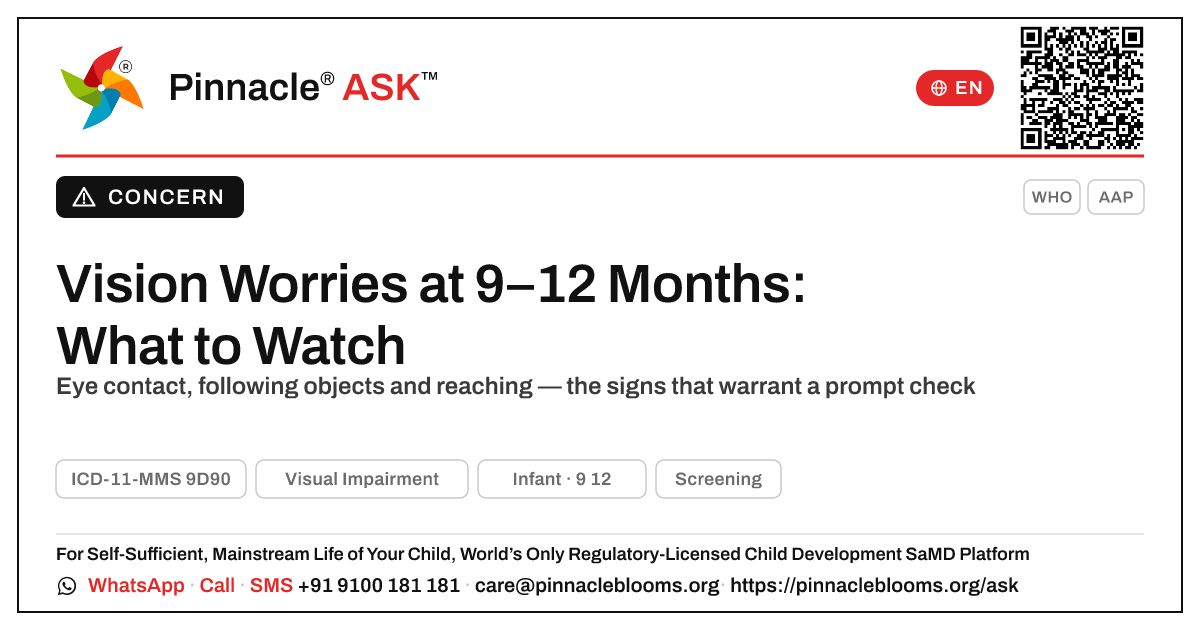
By 9–12 months babies should make eye contact, follow faces and moving objects, and reach accurately for toys. Worry signs include no eye contact, not following objects, wandering or misaligned eyes, a white or cloudy pupil reflection, or not reaching for things they can see. These warrant a prompt paediatric and eye check — vision develops fast in the first year, so early action protects it. Only a Pinnacle clinician can assess; never an online form.
In this answer 5 sections
If you've noticed your baby doesn't seem to follow your face or reach for toys the way you'd expect, your watchful eye is exactly the right instinct.
In short
By 9 to 12 months, a baby's vision is becoming a busy explorer — following moving objects, spotting tiny crumbs, recognising faces across a room and reaching accurately for toys. You'd want a prompt check if your baby consistently does not make eye contact, doesn't follow objects or faces, doesn't reach for things they can see, has eyes that wander or don't move together, or shows a white or cloudy reflection in a photo. These are signs to act on, not to panic over — and they are observations for a clinician, never a diagnosis you make at home.
What healthy vision looks like at 9–12 months — and what to watch
At this age most babies will:
- Make and hold eye contact and smile back when you smile
- Follow a moving toy or your face smoothly across their field of view
- Spot and reach for small objects accurately, even tiny ones on the floor
- Look towards a sound or a person entering the room
- Show curiosity about new faces, lights and patterns
Reasons to seek a check sooner rather than later:
- Little or no eye contact, or eyes that don't seem to fix on faces
- Not following objects or turning towards light by this age
- Eyes that constantly wander, jiggle, or one eye that turns in or out
- A white, cloudy or unusual reflection in the pupil (especially in flash photos)
- Frequent rubbing, squinting, or holding objects very close
- Not reaching for toys they can clearly see
Many of these have simple, treatable causes — and early sight matters enormously because the brain's visual pathways are developing fast in the first year. Acting early protects that window.
When to refer
Visual concerns at this age warrant a prompt review — first with your paediatrician, who can examine the eyes and arrange a paediatric ophthalmology check if needed. A white pupil reflection, eyes that don't move together, or sudden loss of an ability your baby once had should be seen quickly. This is a medical-first pathway: confirming the eyes and visual system come first, with developmental and therapy support layered alongside.
The Pinnacle way
A clinical AbilityScore® and any diagnosis are formed only at a Pinnacle Blooms Network centre, under qualified clinician care — never from an online form or a checklist. For a baby with confirmed visual impairment, our therapists weave vision into everyday play and movement, building on sound, touch and the strengths your child already has, and working hand-in-hand with your eye specialist. Early occupational therapy helps your little one explore the world confidently through every sense.
Trusted sources
WHO ICD-11 (9D90, vision impairment); American Academy of Pediatrics infant vision and developmental surveillance guidance (healthychildren.org); WHO Nurturing Care Framework on early development.
Next step — If any of these signs feel familiar, see your paediatrician promptly for an eye check, and book a developmental check with a Pinnacle clinician for whole-child support.
This is general information, not a diagnosis — individual assessment and diagnosis require an appropriately qualified healthcare professional.
CONNECT THE ANSWER TO YOUR CHILD’S DAY
Something to notice. Something to discuss.
What to notice
Watch for little or no eye contact, not following faces or moving objects, eyes that wander or don't move together, a white or cloudy reflection in the pupil, not reaching for toys they can see, or frequent rubbing and squinting. Any of these warrant a prompt paediatric and eye check.
In everyday life
Play simple tracking games: slowly move a brightly coloured toy or your own face across your baby's view and watch whether their eyes follow smoothly. Notice if they reach accurately for small objects and turn towards you across the room — these everyday moments tell you a lot.
Bring your observations and questions to your child’s professional. Choose activities that suit your child’s comfort, abilities and agreed plan.
Bring your questions to a first visitQuestions families ask
Is it normal for my 9-month-old's eyes to cross sometimes?
Occasional brief crossing in very early infancy can be normal, but by 9–12 months the eyes should move together and stay aligned. If one eye regularly turns in or out, or the eyes constantly wander or jiggle, see your paediatrician for an eye check — this is treatable and best addressed early.
Why does my baby's pupil look white in photos?
A white, cloudy or unusual reflection in the pupil — instead of the normal red-eye in flash photos — should always be checked promptly by a doctor. It can have several causes, and early review is important. Bring the photo to your paediatrician or eye specialist.
My baby doesn't reach for toys — should I worry?
By 9–12 months most babies reach accurately for objects they can see, including small ones. If your baby consistently doesn't reach for toys in clear view, it's worth a prompt check of both vision and overall development with your paediatrician.
FOLLOW THE SOURCE
References behind this answer.
- Source referenceWHO ICD-11 (vision impairment)
- Organisation website · further readingAAP — infant vision and developmental surveillance
- Organisation website · further readingWHO Nurturing Care Framework
References are supplied with this answer. An organisation homepage offers further reading; it does not establish an independent review of this page.
Content attribution: SETU Consortium · Pinnacle Blooms Network.
PEOPLE, TOPICS & DEVELOPMENT
See the connections.
Browse the wider question collections connected with this answer’s audience, developmental area and stage.
FROM UNDERSTANDING TO PURPOSEFUL SUPPORT
One question. Your child’s whole life.
Your child’s self-sufficient, mainstream-included life is the purpose from the beginning. At Pinnacle, that purpose shapes what we understand, the goals we choose, the people we bring together, everyday practice and review.
Connect this question with the right support.
Start with your child’s strengths, your observations and what you want everyday life to become.
Make the next conversation useful.
Bring the situations you notice at home or school. We’ll explain a suitable service, centre and first visit, including availability and fees, before you decide.
How PinnacleAI® connects the journeyExplore the seven stages
- 1Understand abilities
A starting picture of your child’s capabilities.
- 2Choose meaningful goals
Readiness and a plan shaped around the child.
- 3Bring the right support together
Suitable therapies and people for those goals.
- 4Carry practice into everyday life
Guidance for family, home and school.
- 5Track and correct
Use observations to adjust the plan.
- 6Reassess and review
Decide what to continue, change or do next.
- 7Grow independence and participation
The child’s life gives each step its purpose.
Explore the whole PinnacleAI® system → · Participation at school and in the community →
PINNACLE’S EVIDENCE, OPEN TO YOU
Look at the evidence behind our work.
Read our research, inspect the original regulatory documents and check what each institutional measure means.
General information supports a conversation with an appropriately qualified professional. Advice, goals and support depend on the individual child.