
YOUR QUESTION. A CLEARER NEXT STEP.
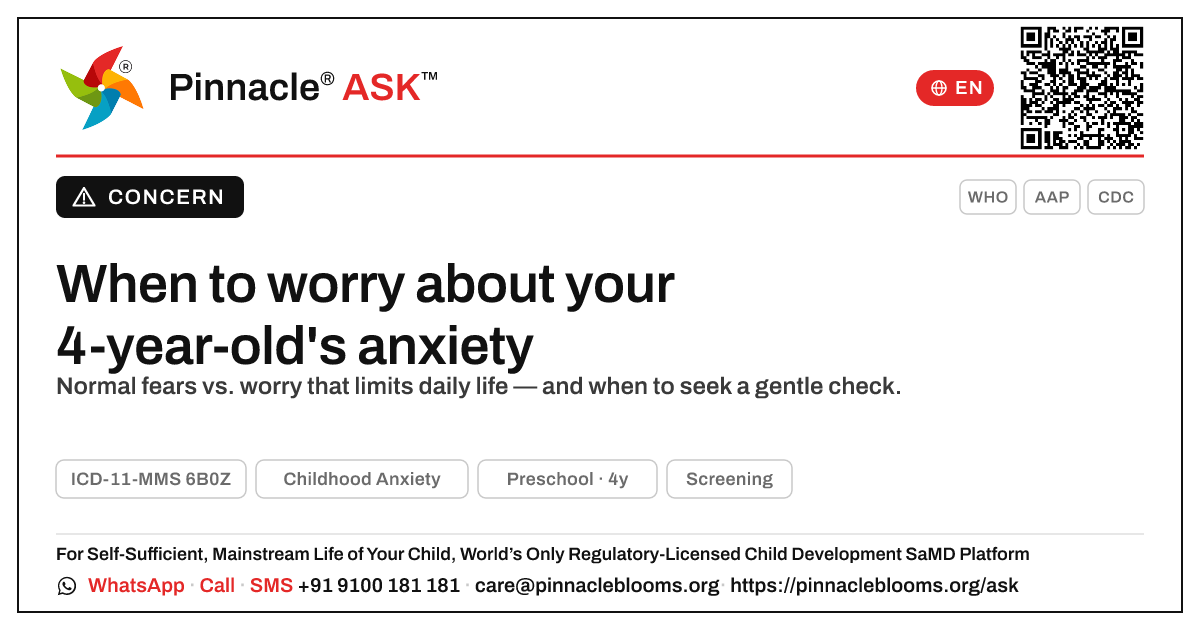
When to worry about anxiety in your 4-year-old
Fear, clinginess and big feelings are normal at four. Begin to take a closer look when worry is intense, lasts beyond a few weeks, and stops your child playing, sleeping, eating or going to nursery. A pattern across weeks and settings — not a single hard week — is the signal for a gentle developmental check, never alarm.
In this answer 5 sections
If your bright, busy four-year-old seems gripped by worries that don't quite settle, your noticing is the most useful thing you can offer them.
In short
Some fear and clinginess is completely normal at four — separation worries, fear of the dark, shyness with strangers and big feelings at bedtime are all part of healthy development. You'd begin to take a closer look when the worry is intense, lasts for weeks, and stops your child doing everyday things — playing, sleeping, eating, going to nursery or being with people they love. That tipping point, from passing fears to a worry that shrinks their world, is when a gentle developmental check is wise — not alarm.
What's typical at four — and what to watch
At four, a child's imagination is racing ahead of their understanding, so fears are common and usually pass. The question is never "does my child worry?" but "how much is the worry costing them?"
Lean towards a check if, over several weeks, you notice:
- It's persistent — the same fears most days, not fading as you'd expect.
- It limits life — refusing nursery, play, sleep alone, or familiar activities they once enjoyed.
- It overwhelms them — frequent meltdowns, panic, or being inconsolable beyond what the situation calls for.
- It shows in the body — repeated tummy aches, headaches, poor sleep, or clinging with no medical cause.
- It's spreading — more and more situations start triggering distress.
A single hard week after a house move, a new sibling or starting nursery is usually settling, not a disorder. It's the pattern across weeks and across settings that matters.
When to seek a check
If these patterns persist beyond three to four weeks, or if your child's worry is clearly stealing their joy and daily routine, that's the moment for a friendly developmental conversation. Earlier is always easier — at four, gentle, play-based support works beautifully because little ones are wonderfully responsive.
The Pinnacle way
This is general information, not a diagnosis — a clinical AbilityScore® and any diagnosis are formed only at a Pinnacle Blooms Network centre, under qualified clinician care, never from an online description. Our clinicians build your child's own emotional baseline, look for what sits beneath the worry, and shape support around their strengths — drawing on childhood anxiety expertise and, where helpful, our behavioural therapy team. The goal is a calmer, more confident child — not a label.
Trusted sources
WHO ICD-11 framework for anxiety and fear-related disorders; American Academy of Pediatrics guidance on early childhood emotional development; CDC developmental and social-emotional milestone resources.
Next step — Trust what you've seen. Book a developmental assessment so a persistent worry can be understood gently and early.
CONNECT THE ANSWER TO YOUR CHILD’S DAY
Something to notice. Something to discuss.
What to notice
Seek a check if, over several weeks, worry is persistent most days, stops your child playing, sleeping or going to nursery, brings frequent panic or meltdowns, shows as repeated tummy aches or headaches with no medical cause, or starts spreading to more situations. A single hard week after a big change usually settles on its own.
In everyday life
Keep a simple worry diary for two weeks — note what frightened your child, how long it lasted, and whether it stopped an activity. If the same fears keep recurring and limiting their day, you'll have a clear, useful record to share with a clinician.
Bring your observations and questions to your child’s professional. Choose activities that suit your child’s comfort, abilities and agreed plan.
Bring your questions to a first visitQuestions families ask
Isn't it normal for a 4-year-old to be scared of the dark or clingy?
Yes — fear of the dark, separation worries, shyness with strangers and big bedtime feelings are all part of healthy development at four. These usually fade with reassurance and time. It's only when the fear is intense, lasts for weeks, and stops your child doing everyday things that it's worth a closer look.
How long should I wait before seeking help?
A single hard week after a big change like a new sibling or starting nursery usually settles on its own. If the same worries persist most days beyond about three to four weeks and clearly limit play, sleep or nursery, that's the moment for a gentle developmental conversation. Earlier is always easier.
Can anxiety in a 4-year-old really be helped?
Yes — little ones are wonderfully responsive to gentle, play-based support. At four, a clinician can build your child's emotional baseline and shape support around their strengths, helping them feel calmer and more confident without any frightening labels.
FOLLOW THE SOURCE
References behind this answer.
- Source referenceWHO ICD-11: anxiety and fear-related disorders
- Organisation website · further readingAAP HealthyChildren: early emotional development
- Source referenceCDC: preschooler development and social-emotional milestones
References are supplied with this answer. An organisation homepage offers further reading; it does not establish an independent review of this page.
Content attribution: SETU Consortium · Pinnacle Blooms Network.
PEOPLE, TOPICS & DEVELOPMENT
See the connections.
Browse the wider question collections connected with this answer’s audience, developmental area and stage.
FROM UNDERSTANDING TO PURPOSEFUL SUPPORT
One question. Your child’s whole life.
Your child’s self-sufficient, mainstream-included life is the purpose from the beginning. At Pinnacle, that purpose shapes what we understand, the goals we choose, the people we bring together, everyday practice and review.
Connect this question with the right support.
Start with your child’s strengths, your observations and what you want everyday life to become.
Make the next conversation useful.
Bring the situations you notice at home or school. We’ll explain a suitable service, centre and first visit, including availability and fees, before you decide.
How PinnacleAI® connects the journeyExplore the seven stages
- 1Understand abilities
A starting picture of your child’s capabilities.
- 2Choose meaningful goals
Readiness and a plan shaped around the child.
- 3Bring the right support together
Suitable therapies and people for those goals.
- 4Carry practice into everyday life
Guidance for family, home and school.
- 5Track and correct
Use observations to adjust the plan.
- 6Reassess and review
Decide what to continue, change or do next.
- 7Grow independence and participation
The child’s life gives each step its purpose.
Explore the whole PinnacleAI® system → · Participation at school and in the community →
PINNACLE’S EVIDENCE, OPEN TO YOU
Look at the evidence behind our work.
Read our research, inspect the original regulatory documents and check what each institutional measure means.
General information supports a conversation with an appropriately qualified professional. Advice, goals and support depend on the individual child.