
YOUR QUESTION. A CLEARER NEXT STEP.
When to Worry About Rett Syndrome in a 2-Year-Old
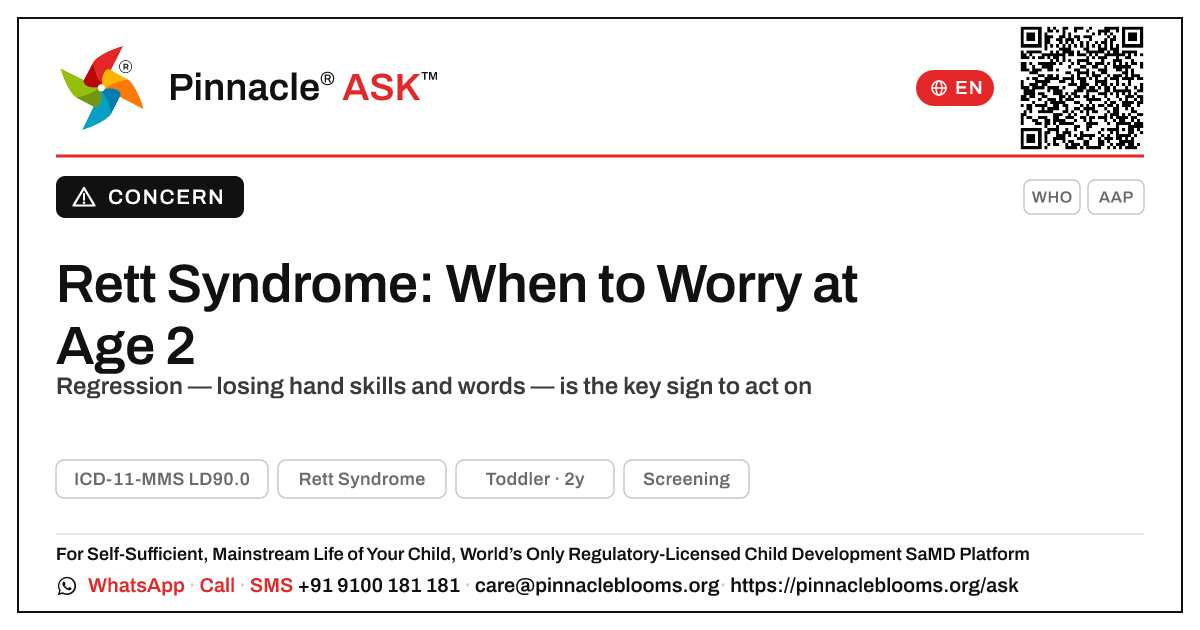
Rett Syndrome (ICD-11 LD90.0) is a rare genetic condition seen mostly in girls. Its hallmark is regression — losing skills already gained, especially purposeful hand use and spoken words, usually between 6 and 18 months — often with repetitive hand movements and slowing head growth. By age two, any clear loss of established skills warrants a prompt paediatric review and genetic testing. Diagnosis is medical and is never made from a checklist.
In this answer 5 sections
If your bright, chatty toddler suddenly seems to be slipping backwards — losing words or hand skills she once had — your worry deserves a calm, clear answer.
In short
Rett Syndrome (ICD-11 LD90.0) is a rare genetic condition that affects girls far more often than boys. The single most important sign to act on is regression — a child who was developing typically begins to lose skills she already had, especially purposeful use of her hands and spoken words, usually between about 6 and 18 months. By age two, the key thing that warrants a prompt check is this loss of previously gained abilities, often alongside repetitive hand movements (wringing, washing or mouthing motions) and slowing head growth. These are reasons to seek assessment, not a diagnosis you can make at home.
What to watch for at this age
Most developmental conditions involve a child being slower to gain skills. Rett Syndrome is different — its hallmark is losing skills that were already there. By two years, signs that should prompt a clinical conversation include:
- Loss of purposeful hand use — she no longer reaches, grasps or points as she once did
- Repetitive hand movements — wringing, clapping, washing-like motions, or hand-to-mouth movements that replace useful hand skills
- Loss of spoken words or babble she previously used
- Slowing head growth (your paediatrician may note this on the growth chart)
- Problems with walking or balance, or a stiff, unsteady gait
- Withdrawal of social engagement that had previously been present
A single trait in isolation is rarely cause for alarm — many toddlers go through quiet phases or hand habits. It is the pattern of regression, the loss of established skills, that makes Rett different and worth checking promptly.
When to act
Because Rett Syndrome is genetic and confirmed by a specific gene test (most often MECP2), any clear regression — losing words, losing hand skills, or a noticeable slowing of head growth — is a reason to see your paediatrician without delay rather than waiting. Early identification opens the door to therapy that supports communication, movement and daily living. This is a medical pathway first: your doctor can arrange the right specialist referral and genetic testing.
The Pinnacle way
A clinical AbilityScore® and any diagnosis are formed only at a Pinnacle Blooms Network centre, under qualified clinician care — never from an online form or a checklist. Once a medical diagnosis is in hand, our therapists build a warm, ability-first plan around your daughter — supporting communication through speech therapy, and hand use, posture and movement through occupational therapy. You can read more about the condition itself on our Rett Syndrome page.
Trusted sources
WHO ICD-11 (LD90.0, Rett Syndrome); American Academy of Pediatrics developmental-surveillance guidance (healthychildren.org); WHO Nurturing Care Framework for early childhood development.
Next step — If your daughter has lost words or hand skills she once had, see your paediatrician promptly, and book a developmental check with a Pinnacle clinician to plan supportive therapy.
CONNECT THE ANSWER TO YOUR CHILD’S DAY
Something to notice. Something to discuss.
What to notice
Watch for regression — losing skills she already had, especially purposeful hand use and spoken words — usually between 6 and 18 months. Repetitive hand movements (wringing, washing, hand-to-mouth), slowing head growth, and unsteady walking are also signs. Any clear loss of established abilities warrants a prompt paediatric review.
In everyday life
Keep a simple month-by-month note or short videos of your toddler's hand skills and words. If you ever notice she has lost something she could do before, that record helps your doctor act quickly and confidently.
Bring your observations and questions to your child’s professional. Choose activities that suit your child’s comfort, abilities and agreed plan.
Bring your questions to a first visitQuestions families ask
What is the earliest sign of Rett Syndrome?
The hallmark is regression — losing skills already gained rather than being slow to gain them. Most often this is a loss of purposeful hand use and spoken words, alongside repetitive hand movements, usually appearing between about 6 and 18 months.
Is Rett Syndrome more common in girls?
Yes. Rett Syndrome affects girls far more often than boys. It is a genetic condition most commonly linked to changes in the MECP2 gene, confirmed by a specific genetic test arranged through your doctor.
My 2-year-old has hand habits but hasn't lost skills — should I worry?
A single hand habit without any loss of established skills is rarely a sign of Rett Syndrome. What distinguishes Rett is regression — losing words or hand use that were previously present. If you're unsure, a calm developmental check can reassure you.
How is Rett Syndrome diagnosed?
It is a medical diagnosis confirmed through clinical assessment and genetic testing, usually arranged by your paediatrician or a specialist. It cannot be diagnosed from an online checklist.
FOLLOW THE SOURCE
References behind this answer.
- Organisation website · further readingWHO ICD-11: Rett Syndrome
- Organisation website · further readingAAP developmental surveillance (HealthyChildren.org)
- Organisation website · further readingWHO Nurturing Care Framework
References are supplied with this answer. An organisation homepage offers further reading; it does not establish an independent review of this page.
Content attribution: SETU Consortium · Pinnacle Blooms Network.
PEOPLE, TOPICS & DEVELOPMENT
See the connections.
Browse the wider question collections connected with this answer’s audience, developmental area and stage.
FROM UNDERSTANDING TO PURPOSEFUL SUPPORT
One question. Your child’s whole life.
Your child’s self-sufficient, mainstream-included life is the purpose from the beginning. At Pinnacle, that purpose shapes what we understand, the goals we choose, the people we bring together, everyday practice and review.
Connect this question with the right support.
Start with your child’s strengths, your observations and what you want everyday life to become.
Make the next conversation useful.
Bring the situations you notice at home or school. We’ll explain a suitable service, centre and first visit, including availability and fees, before you decide.
How PinnacleAI® connects the journeyExplore the seven stages
- 1Understand abilities
A starting picture of your child’s capabilities.
- 2Choose meaningful goals
Readiness and a plan shaped around the child.
- 3Bring the right support together
Suitable therapies and people for those goals.
- 4Carry practice into everyday life
Guidance for family, home and school.
- 5Track and correct
Use observations to adjust the plan.
- 6Reassess and review
Decide what to continue, change or do next.
- 7Grow independence and participation
The child’s life gives each step its purpose.
Explore the whole PinnacleAI® system → · Participation at school and in the community →
PINNACLE’S EVIDENCE, OPEN TO YOU
Look at the evidence behind our work.
Read our research, inspect the original regulatory documents and check what each institutional measure means.
General information supports a conversation with an appropriately qualified professional. Advice, goals and support depend on the individual child.