
YOUR QUESTION. A CLEARER NEXT STEP.
Strengths a child with Developmental Language Disorder can have
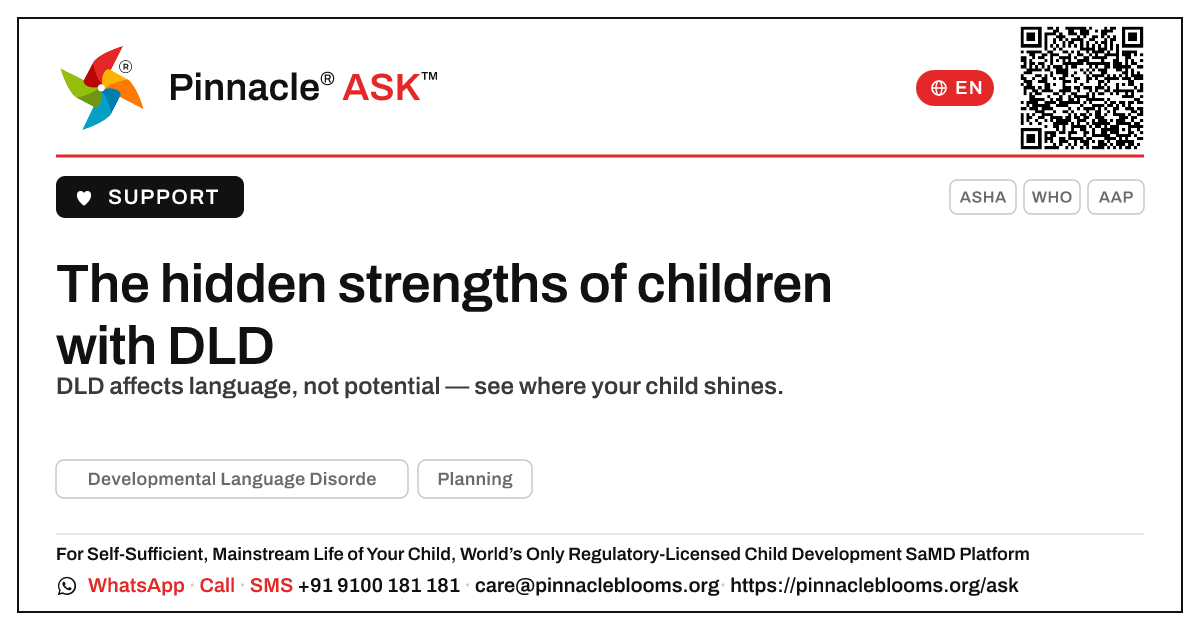
Developmental Language Disorder affects spoken language, not intelligence or potential. Children with DLD often show real strengths in visual thinking, problem-solving, creativity, hands-on skill, empathy and persistence. Building therapy around these strengths helps language and confidence grow together.
In this answer 4 sections
Children with Developmental Language Disorder are far more than the words they struggle to find — their strengths are real, and they matter.
In short
Developmental Language Disorder (DLD) affects how a child understands and uses spoken language, but it does not touch their overall intelligence, creativity or potential. Many children with DLD show genuine strengths — in visual thinking, problem-solving, art, building, kindness, persistence and practical hands-on skill. Knowing where your child shines is not a feel-good extra; it is the most powerful foundation for therapy that actually works.
Strengths children with DLD often show
Every child is different, but families and clinicians frequently notice:
- Visual and spatial thinking — puzzles, building, drawing, finding their way, noticing patterns others miss.
- Non-verbal problem-solving — working things out by doing, not by talking.
- Creativity and imagination — rich pretend play, art, music, design.
- Practical, hands-on ability — sport, dance, construction, caring for animals, cooking.
- Social warmth and empathy — many are deeply caring, loyal and attuned to how others feel.
- Determination and resilience — children who work hard to be understood often develop remarkable persistence.
- Memory for the visual and the routine — strong recall of places, faces, sequences and how things work.
DLD is a difference in the language system, not a ceiling on the whole child. When we build communication support around these strengths — using a child's love of drawing, building or play as the bridge — language grows faster and confidence stays intact.
The Pinnacle way
A clinical AbilityScore® and any diagnosis are formed only at a Pinnacle Blooms Network centre, under qualified clinician care — never from an app or an online form. Our approach to Developmental Language Disorder maps your child's strengths alongside their language needs, so speech therapy is built on what your child already does brilliantly. That is how support feels less like fixing and more like flourishing.
Trusted sources
American Speech-Language-Hearing Association (ASHA) guidance on language disorders; WHO ICD-11 framework for developmental speech and language disorders; AAP healthychildren.org developmental guidance.
Next step — Want to see your child's full picture — strengths and all? Book a Pinnacle assessment and let us start from what your child does best.
This is general information, not a diagnosis — individual assessment and diagnosis require an appropriately qualified healthcare professional.
CONNECT THE ANSWER TO YOUR CHILD’S DAY
Something to notice. Something to discuss.
What to notice
Notice where your child naturally lights up — building, drawing, play, sport, helping others. These are not just hobbies; they are doorways your child's speech therapy can use to grow language and confidence together.
In everyday life
Follow your child's lead in play. If they love building blocks, narrate it warmly and simply — 'tall tower, up, up!' Pairing words with what already fascinates them makes language feel rewarding, not like a test.
Bring your observations and questions to your child’s professional. Choose activities that suit your child’s comfort, abilities and agreed plan.
Bring your questions to a first visitQuestions families ask
Does DLD mean my child is less intelligent?
No. Developmental Language Disorder affects how a child understands and uses spoken language, but it does not affect overall intelligence. Many children with DLD have average or above-average ability in non-verbal thinking, creativity and problem-solving.
Can focusing on strengths really help with language?
Yes. When therapy is built around what a child already loves and does well — drawing, building, play — language learning feels rewarding rather than stressful, and skills tend to grow faster while confidence stays protected.
When should I have my child assessed for DLD?
If you notice persistent difficulty understanding or using words compared with peers, it is worth a developmental check. A Pinnacle clinician can establish a clear picture of both strengths and needs and recommend the right support.
FOLLOW THE SOURCE
References behind this answer.
- Source referenceASHA: Developmental Language Disorder
- Organisation website · further readingWHO ICD-11 developmental language framework
- Organisation website · further readingAAP HealthyChildren: language development
References are supplied with this answer. An organisation homepage offers further reading; it does not establish an independent review of this page.
Content attribution: SETU Consortium · Pinnacle Blooms Network.
PEOPLE, TOPICS & DEVELOPMENT
See the connections.
Browse the wider question collections connected with this answer’s audience, developmental area and stage.
FROM UNDERSTANDING TO PURPOSEFUL SUPPORT
One question. Your child’s whole life.
Your child’s self-sufficient, mainstream-included life is the purpose from the beginning. At Pinnacle, that purpose shapes what we understand, the goals we choose, the people we bring together, everyday practice and review.
Connect this question with the right support.
Explore how the relevant service contributes to everyday abilities, then speak with us about your child.
Make the next conversation useful.
Bring the situations you notice at home or school. We’ll explain a suitable service, centre and first visit, including availability and fees, before you decide.
How PinnacleAI® connects the journeyExplore the seven stages
- 1Understand abilities
A starting picture of your child’s capabilities.
- 2Choose meaningful goals
Readiness and a plan shaped around the child.
- 3Bring the right support together
Suitable therapies and people for those goals.
- 4Carry practice into everyday life
Guidance for family, home and school.
- 5Track and correct
Use observations to adjust the plan.
- 6Reassess and review
Decide what to continue, change or do next.
- 7Grow independence and participation
The child’s life gives each step its purpose.
Explore the whole PinnacleAI® system → · Participation at school and in the community →
PINNACLE’S EVIDENCE, OPEN TO YOU
Look at the evidence behind our work.
Read our research, inspect the original regulatory documents and check what each institutional measure means.
General information supports a conversation with an appropriately qualified professional. Advice, goals and support depend on the individual child.