
YOUR QUESTION. A CLEARER NEXT STEP.
Progress with behaviour therapy for childhood sleep difficulties
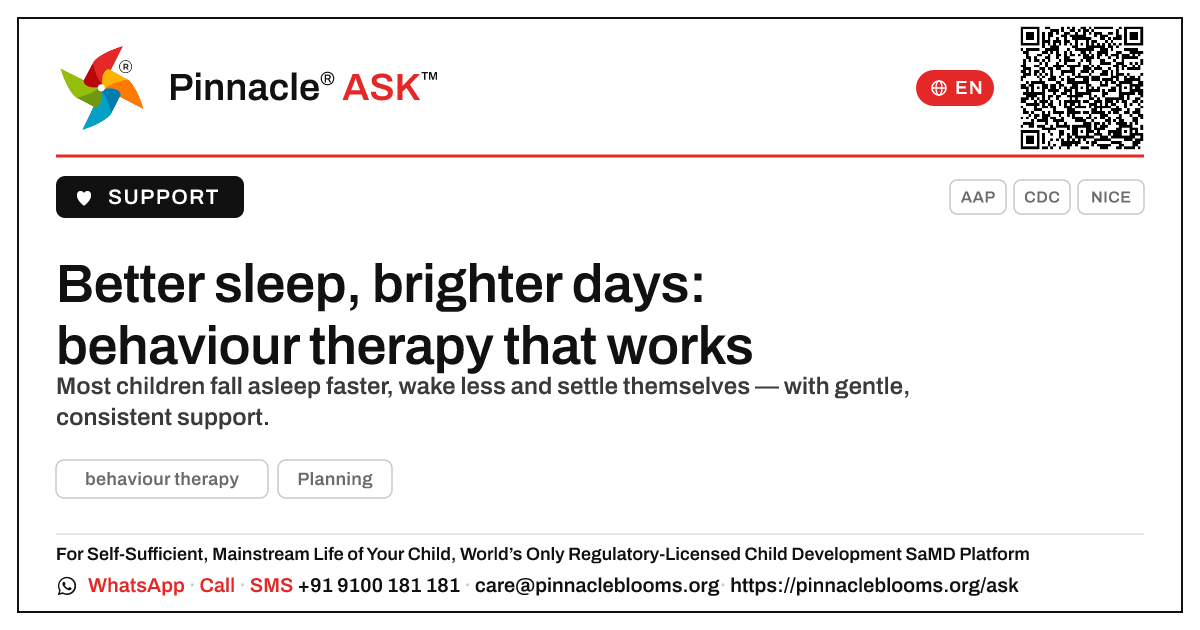
Children with sleep difficulties can make real, lasting progress with behaviour therapy, usually within weeks — falling asleep faster, waking less, self-settling, and showing calmer, happier days. Progress is gradual but steady. AbilityScore® is part of Pinnacle’s developmental assessment. Diagnosis, where needed, requires an appropriately qualified healthcare professional.
In this answer 5 sections
When bedtime stops being a struggle, the whole family begins to rest — and a well-rested child blooms by day.
In short
Children with sleep difficulties can make real, lasting progress with behaviour therapy — often within a few weeks. With consistent, gentle bedtime routines, settling strategies and parent coaching, most children fall asleep faster, wake less often through the night, and learn to settle themselves back to sleep. Better sleep then lifts daytime mood, attention, behaviour and learning. The pace varies child to child, but steady improvement is the usual story.
The progress you can expect
Behaviour therapy for sleep works by gently reshaping habits and the cues around bedtime — not by leaving a child to cope alone. Common gains include:
- Falling asleep faster — a calm, predictable wind-down routine helps the body learn it is time to rest, so bedtime resistance and the long battle to settle gradually ease.
- Fewer and shorter night wakings — children learn to self-settle, so a brief stir no longer becomes a full waking that needs a parent each time.
- A steadier sleep–wake rhythm — consistent sleep and wake times, daylight and activity by day, and a screen-free wind-down strengthen the natural body clock.
- Calmer, happier days — as sleep improves, parents often notice better mood, focus, appetite and behaviour, and fewer meltdowns.
- A calmer family — parents gain practical, repeatable strategies and the confidence that comes with rest, which lowers stress for everyone.
Progress is usually gradual and not perfectly linear — some nights will be easier than others. With patient consistency, most families see meaningful change, and the new habits tend to hold.
When to seek a check
Seek a check if sleep problems are persistent or distressing, if your child snores loudly, gasps, pauses in breathing or sleeps very restlessly (which needs a medical review of breathing first), if daytime sleepiness or behaviour is markedly affected, or if sleep difficulties sit alongside other developmental concerns. A short professional assessment helps tailor the right plan for your child.
The Pinnacle way
AbilityScore® is part of Pinnacle’s developmental assessment. Diagnosis, where needed, requires an appropriately qualified healthcare professional — never from an app or online form. From there your child receives a precise developmental profile and a sleep plan built around your family's routine and your child's needs, with behaviour therapy and ongoing parent coaching. Explore how we support children and families across our network.
Trusted sources
American Academy of Pediatrics (HealthyChildren.org) guidance on healthy sleep and bedtime routines; CDC guidance on children's sleep needs; NICE guidance on sleep difficulties in children.
Next step — Ready for calmer, more restful nights? Book a developmental assessment with a Pinnacle clinician.
This is general information, not a diagnosis — individual assessment and diagnosis require an appropriately qualified healthcare professional.
CONNECT THE ANSWER TO YOUR CHILD’S DAY
Something to notice. Something to discuss.
What to notice
Watch for persistent bedtime resistance, frequent night wakings, loud snoring, gasping or breathing pauses in sleep, very restless sleep, and daytime sleepiness or behaviour changes — snoring or breathing pauses need a medical review first.
In everyday life
Keep a steady, screen-free wind-down for 30–45 minutes before bed — same order, same time each night (bath, story, lights low) — so your child's body learns the cues that it is time to sleep.
Bring your observations and questions to your child’s professional. Choose activities that suit your child’s comfort, abilities and agreed plan.
Bring your questions to a first visitQuestions families ask
How long before behaviour therapy improves my child's sleep?
Many families notice change within a few weeks of consistent routines and strategies, though the pace varies and some nights are easier than others. Steady, patient consistency is what makes the gains hold.
Does behaviour therapy mean leaving my child to cry alone?
No. Modern behaviour therapy for sleep is gentle and supportive — it reshapes bedtime habits and cues and coaches parents, helping a child learn to settle while feeling safe and supported.
Will better sleep help my child's daytime behaviour?
Often yes. As sleep improves, parents frequently notice better mood, attention, appetite and behaviour, and fewer meltdowns during the day.
FOLLOW THE SOURCE
References behind this answer.
- Organisation website · further readingAAP HealthyChildren.org — healthy sleep and bedtime routines
- Organisation website · further readingCDC — children's sleep needs
- Organisation website · further readingNICE — sleep difficulties in children
References are supplied with this answer. An organisation homepage offers further reading; it does not establish an independent review of this page.
Content attribution: SETU Consortium · Pinnacle Blooms Network.
PEOPLE, TOPICS & DEVELOPMENT
See the connections.
Browse the wider question collections connected with this answer’s audience, developmental area and stage.
FROM UNDERSTANDING TO PURPOSEFUL SUPPORT
One question. Your child’s whole life.
Your child’s self-sufficient, mainstream-included life is the purpose from the beginning. At Pinnacle, that purpose shapes what we understand, the goals we choose, the people we bring together, everyday practice and review.
Connect this question with the right support.
Explore how the relevant service contributes to everyday abilities, then speak with us about your child.
Make the next conversation useful.
Bring the situations you notice at home or school. We’ll explain a suitable service, centre and first visit, including availability and fees, before you decide.
How PinnacleAI® connects the journeyExplore the seven stages
- 1Understand abilities
A starting picture of your child’s capabilities.
- 2Choose meaningful goals
Readiness and a plan shaped around the child.
- 3Bring the right support together
Suitable therapies and people for those goals.
- 4Carry practice into everyday life
Guidance for family, home and school.
- 5Track and correct
Use observations to adjust the plan.
- 6Reassess and review
Decide what to continue, change or do next.
- 7Grow independence and participation
The child’s life gives each step its purpose.
Explore the whole PinnacleAI® system → · Participation at school and in the community →
PINNACLE’S EVIDENCE, OPEN TO YOU
Look at the evidence behind our work.
Read our research, inspect the original regulatory documents and check what each institutional measure means.
General information supports a conversation with an appropriately qualified professional. Advice, goals and support depend on the individual child.