
YOUR QUESTION. A CLEARER NEXT STEP.
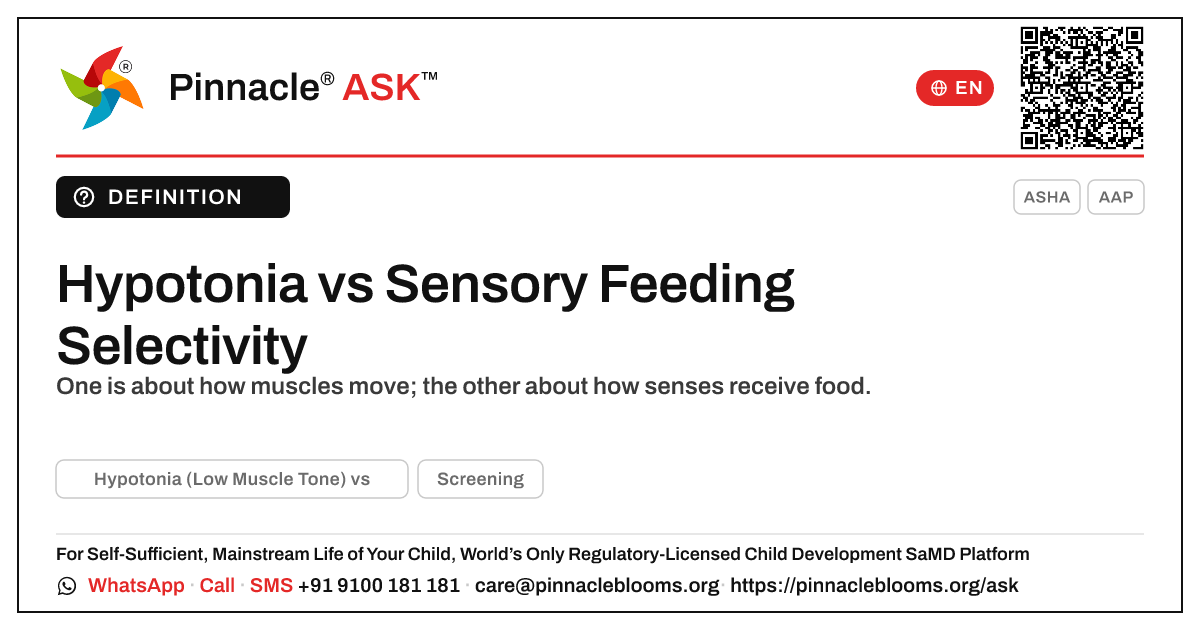
Hypotonia vs Sensory-Based Feeding Selectivity in Young Children
Hypotonia (low muscle tone) and sensory-based feeding selectivity can both make mealtimes difficult, but they are different. Hypotonia is a motor difference — the muscles are softer and need more effort, affecting posture, head control and the physical work of chewing and swallowing. Sensory-based feeding selectivity is a sensory processing difference — the muscles work fine, but the look, smell, feel or taste of food feels overwhelming, so the child refuses certain textures or food groups. They can look alike at the table and sometimes overlap, so a clinician's careful look matters.
In this answer 5 sections
Both can make mealtimes hard — but one is about how the muscles hold and move, and the other is about how the senses receive food.
In short
Hypotonia means low muscle tone — your child's muscles feel softer or 'floppier' and need more effort to hold steady, which can affect sitting, head control, chewing and the physical work of eating. Sensory-based feeding selectivity is different: the muscles work fine, but your child's senses react strongly to how food looks, smells, feels or tastes, so they refuse certain textures or whole food groups. In short — hypotonia is a motor (movement and strength) difference; sensory feeding selectivity is a sensory processing difference. The two can look similar at the table, and sometimes they overlap.
How they differ in everyday life
With hypotonia, feeding difficulty comes from the body's stability and oral muscle work. You might notice a weak or tiring suck in babies, food pocketed in the cheeks, difficulty chewing tougher textures, slow eating, drooling, or a slumped posture that makes it hard to coordinate eating and breathing safely. The child often wants the food but struggles with the mechanics.
With sensory-based feeding selectivity, the mouth and body are physically capable, but the experience of the food is overwhelming. A child may gag at the sight of a new texture, eat only crunchy or only smooth foods, refuse foods that touch each other, insist on a tiny set of 'safe' foods, or become distressed by smells. The refusal is about the sensory experience, not the strength to chew.
Because both can lead to fussy eating, weight worries or stressful mealtimes, a careful look matters — and sometimes a child has a little of both, where low tone makes chewing harder and certain textures feel unpleasant.
When to seek a look
Do reach out if your child is losing weight or not gaining, gags or chokes often, eats fewer than a handful of foods, tires quickly during meals, or if mealtimes have become a daily battle. These are signals to have development gently checked — not causes for alarm, but worth a clinician's eyes.
The Pinnacle way
This is general information, not a diagnosis — a clinical AbilityScore® and any diagnosis are formed only at a Pinnacle Blooms Network centre, under qualified clinician care, never from an app or form. Our team observes posture, oral movement and how your child responds to different foods, then blends the right support — occupational therapy for sensory and oral-motor work, with guidance drawn from our understanding of hypotonia and low muscle tone. Explore more across our services.
Trusted sources
The American Speech-Language-Hearing Association on paediatric feeding and swallowing; the American Academy of Pediatrics and HealthyChildren on muscle tone, feeding development and supporting fussy eaters.
Next step — If mealtimes feel hard or worrying, book a developmental screening and let a clinician tell you whether the picture is motor, sensory, or both — and exactly how to help.
CONNECT THE ANSWER TO YOUR CHILD’S DAY
Something to notice. Something to discuss.
What to notice
Watch for a child who tires or pockets food while eating, gags or chokes often, has a weak or slumped posture (more likely hypotonia), or who eats only a few textures, refuses foods that touch, or is distressed by smells and looks (more likely sensory feeding selectivity). Poor weight gain or daily mealtime battles in either case warrant a gentle developmental check.
In everyday life
Make mealtimes calm and low-pressure: seat your child well-supported with feet flat, offer one new food beside a familiar 'safe' food, and praise touching or smelling — not just eating. Small, repeated, no-pressure exposures help both motor confidence and sensory comfort.
Bring your observations and questions to your child’s professional. Choose activities that suit your child’s comfort, abilities and agreed plan.
Bring your questions to a first visitQuestions families ask
Can a child have both hypotonia and sensory feeding selectivity?
Yes. Low muscle tone can make chewing harder while certain textures also feel unpleasant, so the two can overlap. A clinician's careful look helps untangle which factor is driving mealtime difficulty and how to support each one.
How can I tell if my child's fussy eating is sensory or muscle-related?
If your child wants the food but tires, pockets it or struggles to chew, that points more toward motor or low-tone difficulty. If they refuse based on look, smell, feel or texture even when capable of eating it, that suggests a sensory basis. Often a professional assessment is the clearest way to know.
When should I seek help for feeding difficulties?
Reach out if your child is not gaining weight, gags or chokes often, eats only a handful of foods, tires quickly during meals, or if mealtimes have become a daily battle. These are signals to have development gently checked, not causes for alarm.
FOLLOW THE SOURCE
References behind this answer.
- Source referenceASHA — paediatric feeding and swallowing
- Source referenceHealthyChildren (AAP) — feeding and fussy eaters
- Organisation website · further readingAmerican Academy of Pediatrics
References are supplied with this answer. An organisation homepage offers further reading; it does not establish an independent review of this page.
Content attribution: SETU Consortium · Pinnacle Blooms Network.
PEOPLE, TOPICS & DEVELOPMENT
See the connections.
Browse the wider question collections connected with this answer’s audience, developmental area and stage.
FROM UNDERSTANDING TO PURPOSEFUL SUPPORT
One question. Your child’s whole life.
Your child’s self-sufficient, mainstream-included life is the purpose from the beginning. At Pinnacle, that purpose shapes what we understand, the goals we choose, the people we bring together, everyday practice and review.
Connect this question with the right support.
Explore how the relevant service contributes to everyday abilities, then speak with us about your child.
Make the next conversation useful.
Bring the situations you notice at home or school. We’ll explain a suitable service, centre and first visit, including availability and fees, before you decide.
How PinnacleAI® connects the journeyExplore the seven stages
- 1Understand abilities
A starting picture of your child’s capabilities.
- 2Choose meaningful goals
Readiness and a plan shaped around the child.
- 3Bring the right support together
Suitable therapies and people for those goals.
- 4Carry practice into everyday life
Guidance for family, home and school.
- 5Track and correct
Use observations to adjust the plan.
- 6Reassess and review
Decide what to continue, change or do next.
- 7Grow independence and participation
The child’s life gives each step its purpose.
Explore the whole PinnacleAI® system → · Participation at school and in the community →
PINNACLE’S EVIDENCE, OPEN TO YOU
Look at the evidence behind our work.
Read our research, inspect the original regulatory documents and check what each institutional measure means.
General information supports a conversation with an appropriately qualified professional. Advice, goals and support depend on the individual child.