
YOUR QUESTION. A CLEARER NEXT STEP.
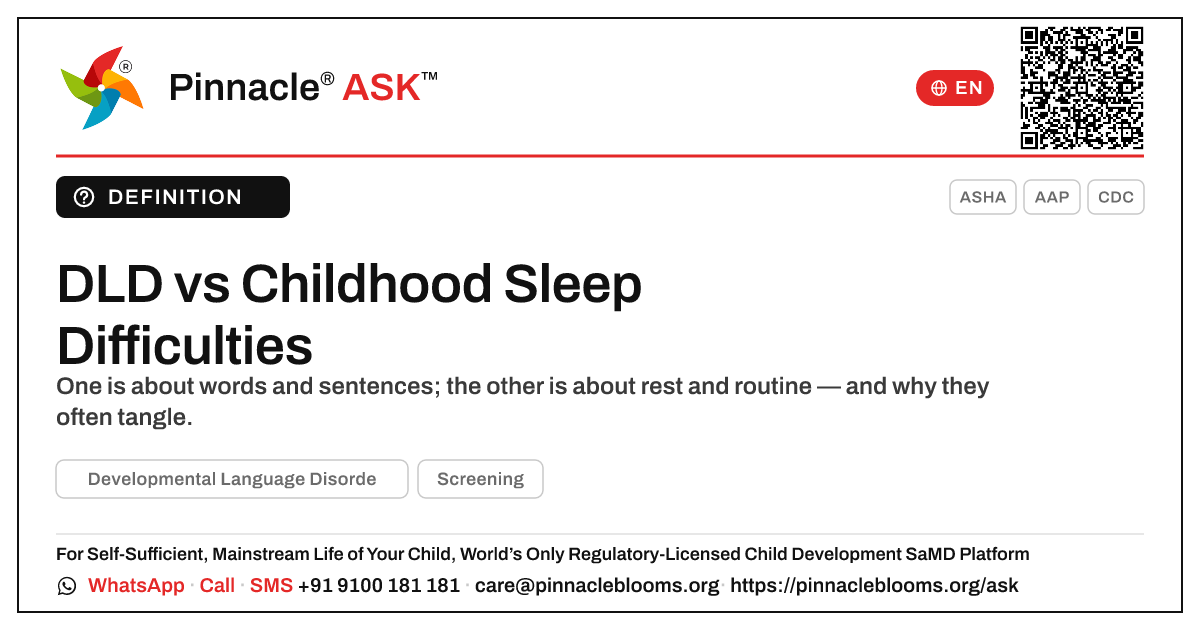
Developmental Language Disorder vs Childhood Sleep Difficulties
Developmental Language Disorder (DLD) is a lasting difficulty understanding and using spoken language — words, sentences, following instructions — that shows up steadily across the day. Childhood sleep difficulties are problems with settling, waking and bedtime resistance that mainly affect the night and cause daytime tiredness. They are different things, but poor sleep can make language look weaker than it is, so the two are often tangled. A simple test: if difficulties appear even when your child is rested, think language; if they ease after good nights, think sleep. A clinician can untangle which is which.
In this answer 5 sections
One is about how words come together; the other is about how the night settles down — and telling them apart changes everything you do next.
In short
Developmental Language Disorder (DLD) is a lasting difficulty with understanding and using spoken language — learning words, putting sentences together, following what others say — that isn't explained by hearing loss, another condition or lack of opportunity. Childhood sleep difficulties are problems with settling, staying asleep, night waking or bedtime resistance. They are completely different things: DLD lives in communication, sleep difficulties live in rest and routine. The catch is that poor sleep can make a child's language look weaker than it is — a tired child speaks and listens less well — so the two are often tangled together.
How they differ in everyday life
Developmental Language Disorder shows up across the day, wherever talking happens. You might notice your child has fewer words than other children their age, struggles to join words into sentences, mixes up word order, finds it hard to follow simple instructions, or seems to lose the thread of a story. These patterns are steady — they show up at home, at play and at nursery, not just when your child is sleepy or upset.
Childhood sleep difficulties show up around bedtime and the night. You might see long battles to settle, frequent waking, early rising, nightmares or restless sleep — and then a knock-on effect during the day: a child who is cranky, less focused, more emotional, or simply too tired to chat and play at their best. Crucially, when sleep improves, those daytime wobbles usually ease; a true language difficulty does not.
A simple way to hold them apart: ask when the difficulty appears. If your child finds words and sentences hard even when rested and happy, that points toward language. If your child communicates well on good days but falls apart when tired or after broken nights, sleep is the thread to pull first. Often both deserve attention — settling the sleep helps you see the language clearly.
When to seek a look
If your child is well-rested but still has noticeably fewer words, struggles to be understood, or finds following instructions hard, a developmental and speech check is wise. If the main story is bedtime battles, frequent waking and daytime tiredness, start with sleep routines and a chat with your paediatrician. When you're unsure which is which, a clinician can untangle them gently and in the right order.
The Pinnacle way
This is general information, not a diagnosis — a clinical AbilityScore® and any diagnosis are formed only at a Pinnacle Blooms Network centre, under qualified clinician care, never from an app or form. Our team listens to how your child understands and uses language, and looks at sleep, routine and daytime energy together, so we treat the real cause — not just the surface. Learn more about Developmental Language Disorder and how speech therapy supports growing communicators.
Trusted sources
The American Speech-Language-Hearing Association on language disorders in children; the American Academy of Pediatrics and HealthyChildren on healthy sleep and language milestones in early childhood.
Next step — Not sure whether it's words or sleep? Book a developmental screening and let a clinician untangle the two and guide your next step.
CONNECT THE ANSWER TO YOUR CHILD’S DAY
Something to notice. Something to discuss.
What to notice
Language difficulty shows up steadily across the day even when your child is rested: fewer words, trouble joining sentences, hard to follow simple instructions. Sleep difficulty centres on bedtime battles, frequent waking and daytime tiredness, with communication usually fine on well-rested days.
In everyday life
Keep a one-week note of your child's bedtime and waking, alongside how their talking went each day. If chatty days follow good nights, sleep may be the thread to pull first; if words stay hard even after rest, ask for a language check.
Bring your observations and questions to your child’s professional. Choose activities that suit your child’s comfort, abilities and agreed plan.
Bring your questions to a first visitQuestions families ask
Can poor sleep cause language delay in young children?
Poor sleep doesn't cause a true language disorder, but it can make a child's language look weaker than it is. A tired child listens, speaks and learns less well, so settling sleep first often helps you see the real picture of their communication.
How do I tell if it's a language problem or just tiredness?
Ask when the difficulty appears. If your child struggles with words and sentences even when well-rested and happy, that points toward language. If they communicate well on good days but wobble after broken nights, sleep is likely the main thread.
Should I see a speech therapist or my paediatrician first?
If the main story is bedtime battles, night waking and daytime tiredness, start with sleep routines and your paediatrician. If your rested child still has noticeably fewer words or is hard to understand, a developmental and speech check is wise. When unsure, a clinician can untangle both.
FOLLOW THE SOURCE
References behind this answer.
- Source referenceASHA — language development in children
- Source referenceHealthyChildren (AAP) — healthy sleep
- Source referenceCDC — child development
References are supplied with this answer. An organisation homepage offers further reading; it does not establish an independent review of this page.
Content attribution: SETU Consortium · Pinnacle Blooms Network.
PEOPLE, TOPICS & DEVELOPMENT
See the connections.
Browse the wider question collections connected with this answer’s audience, developmental area and stage.
FROM UNDERSTANDING TO PURPOSEFUL SUPPORT
One question. Your child’s whole life.
Your child’s self-sufficient, mainstream-included life is the purpose from the beginning. At Pinnacle, that purpose shapes what we understand, the goals we choose, the people we bring together, everyday practice and review.
Connect this question with the right support.
Explore how the relevant service contributes to everyday abilities, then speak with us about your child.
Make the next conversation useful.
Bring the situations you notice at home or school. We’ll explain a suitable service, centre and first visit, including availability and fees, before you decide.
How PinnacleAI® connects the journeyExplore the seven stages
- 1Understand abilities
A starting picture of your child’s capabilities.
- 2Choose meaningful goals
Readiness and a plan shaped around the child.
- 3Bring the right support together
Suitable therapies and people for those goals.
- 4Carry practice into everyday life
Guidance for family, home and school.
- 5Track and correct
Use observations to adjust the plan.
- 6Reassess and review
Decide what to continue, change or do next.
- 7Grow independence and participation
The child’s life gives each step its purpose.
Explore the whole PinnacleAI® system → · Participation at school and in the community →
PINNACLE’S EVIDENCE, OPEN TO YOU
Look at the evidence behind our work.
Read our research, inspect the original regulatory documents and check what each institutional measure means.
General information supports a conversation with an appropriately qualified professional. Advice, goals and support depend on the individual child.