
YOUR QUESTION. A CLEARER NEXT STEP.
Childhood Epilepsy vs Fetal Alcohol Spectrum Disorder
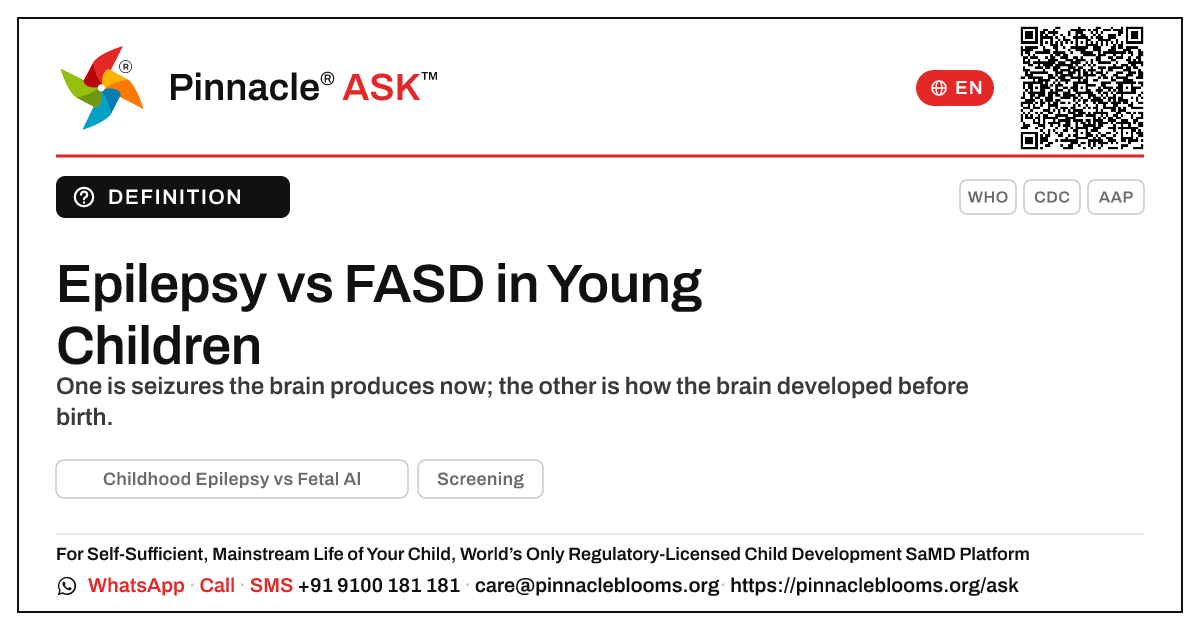
Childhood epilepsy and Fetal Alcohol Spectrum Disorder are very different. Epilepsy is a neurological condition causing recurrent seizures that the brain produces now, and it needs prompt medical review and often an EEG. FASD is a lifelong condition caused by alcohol exposure during pregnancy, affecting how the brain and body developed before birth, with possible difficulties in attention, learning, memory and behaviour. One is about seizures; the other is about prenatal brain development. Both can affect learning, and therapy supports developmental needs alongside medical care.
In this answer 5 sections
Both can affect how a young child learns and grows — but one is a brain that sometimes misfires, and the other begins before birth.
In short
Childhood epilepsy is a neurological condition where the brain has a tendency to produce recurrent seizures — sudden bursts of electrical activity that can cause staring spells, jerking, stiffening or brief loss of awareness. Fetal Alcohol Spectrum Disorder (FASD) is a lifelong condition caused by alcohol exposure during pregnancy, affecting how the brain and body developed before birth. In short: epilepsy is about seizures the brain has now; FASD is about how the brain was built earlier. They are completely different in cause, though both can affect learning, attention and behaviour.
How they differ
Childhood epilepsy is defined by seizures that recur. Some are dramatic; many in young children are subtle — a few seconds of "switching off", eye-fluttering, sudden head drops, or repetitive movements. Epilepsy is a medical condition first: it needs prompt assessment by a paediatrician or paediatric neurologist, and often an EEG. Seizures can usually be well controlled with medication, and therapy then supports any learning or developmental needs alongside.
FASD is not a seizure disorder. It comes from alcohol crossing the placenta during pregnancy, which can affect brain development, growth, and sometimes facial features. Children with FASD may show difficulties with attention, memory, impulse control, learning, motor coordination and managing emotions. It is present from birth, even when recognised only later as developmental differences emerge. (FASD can sometimes co-occur with seizures, but the two are separate diagnoses.)
When to seek help
Any suspected seizure — staring spells you cannot interrupt, unexplained jerking, stiffening, or sudden falls — needs prompt medical review, not a wait-and-watch approach. For a child with known or suspected prenatal alcohol exposure who is showing delays in speech, attention, learning or behaviour, a structured developmental assessment guides the right support early.
The Pinnacle way
This is general information, not a diagnosis — a clinical AbilityScore® and any diagnosis are formed only at a Pinnacle Blooms Network centre, under qualified clinician care, never from an app or form. If seizures are suspected, our team will guide you straight to medical care first; for the learning, attention and developmental side of either condition, we draw on behavioural therapy and individualised support. Learn more about childhood epilepsy and our wider services.
Trusted sources
The World Health Organization and CDC on epilepsy in children and on the effects of alcohol use in pregnancy; the American Academy of Pediatrics and HealthyChildren on recognising seizures and supporting developmental differences.
Next step — If your child has had any episode that looks like a seizure, seek prompt medical review today; for developmental or learning concerns, book a developmental screening with our team.
CONNECT THE ANSWER TO YOUR CHILD’S DAY
Something to notice. Something to discuss.
What to notice
Suspected seizures — staring spells you cannot interrupt, unexplained jerking, stiffening or sudden falls — need prompt medical review. For a child with known prenatal alcohol exposure, watch for difficulties with attention, memory, learning, coordination or managing emotions.
In everyday life
Keep a short note of any unusual episodes — what your child was doing, how long it lasted, and how they recovered. A brief phone video can help a doctor enormously, but never delay calling for help if a seizure is long or your child seems unwell.
Bring your observations and questions to your child’s professional. Choose activities that suit your child’s comfort, abilities and agreed plan.
Bring your questions to a first visitQuestions families ask
Is FASD a type of epilepsy?
No. FASD is a lifelong condition caused by alcohol exposure during pregnancy, affecting how the brain developed. Epilepsy is a tendency to recurrent seizures. They are separate conditions, though a child can occasionally have both.
Can a young child have both epilepsy and FASD?
Yes, the two can co-occur, since prenatal brain differences can sometimes raise seizure risk. But each is diagnosed separately, and each needs its own care plan — medical management for seizures, developmental support for learning and behaviour.
What should I do if I think my child has had a seizure?
Seek prompt medical review with a paediatrician or paediatric neurologist. Suspected seizures need a medical assessment first, often including an EEG, before any therapy planning.
FOLLOW THE SOURCE
References behind this answer.
- Source referenceWHO — Epilepsy fact sheet
- Source referenceCDC — About Fetal Alcohol Spectrum Disorders
- Source referenceHealthyChildren (AAP) — Seizures in children
References are supplied with this answer. An organisation homepage offers further reading; it does not establish an independent review of this page.
Content attribution: SETU Consortium · Pinnacle Blooms Network.
PEOPLE, TOPICS & DEVELOPMENT
See the connections.
Browse the wider question collections connected with this answer’s audience, developmental area and stage.
FROM UNDERSTANDING TO PURPOSEFUL SUPPORT
One question. Your child’s whole life.
Your child’s self-sufficient, mainstream-included life is the purpose from the beginning. At Pinnacle, that purpose shapes what we understand, the goals we choose, the people we bring together, everyday practice and review.
Connect this question with the right support.
Start with your child’s strengths, your observations and what you want everyday life to become.
Make the next conversation useful.
Bring the situations you notice at home or school. We’ll explain a suitable service, centre and first visit, including availability and fees, before you decide.
How PinnacleAI® connects the journeyExplore the seven stages
- 1Understand abilities
A starting picture of your child’s capabilities.
- 2Choose meaningful goals
Readiness and a plan shaped around the child.
- 3Bring the right support together
Suitable therapies and people for those goals.
- 4Carry practice into everyday life
Guidance for family, home and school.
- 5Track and correct
Use observations to adjust the plan.
- 6Reassess and review
Decide what to continue, change or do next.
- 7Grow independence and participation
The child’s life gives each step its purpose.
Explore the whole PinnacleAI® system → · Participation at school and in the community →
PINNACLE’S EVIDENCE, OPEN TO YOU
Look at the evidence behind our work.
Read our research, inspect the original regulatory documents and check what each institutional measure means.
General information supports a conversation with an appropriately qualified professional. Advice, goals and support depend on the individual child.