
YOUR QUESTION. A CLEARER NEXT STEP.
Best age to start therapy for Sensory Processing Differences
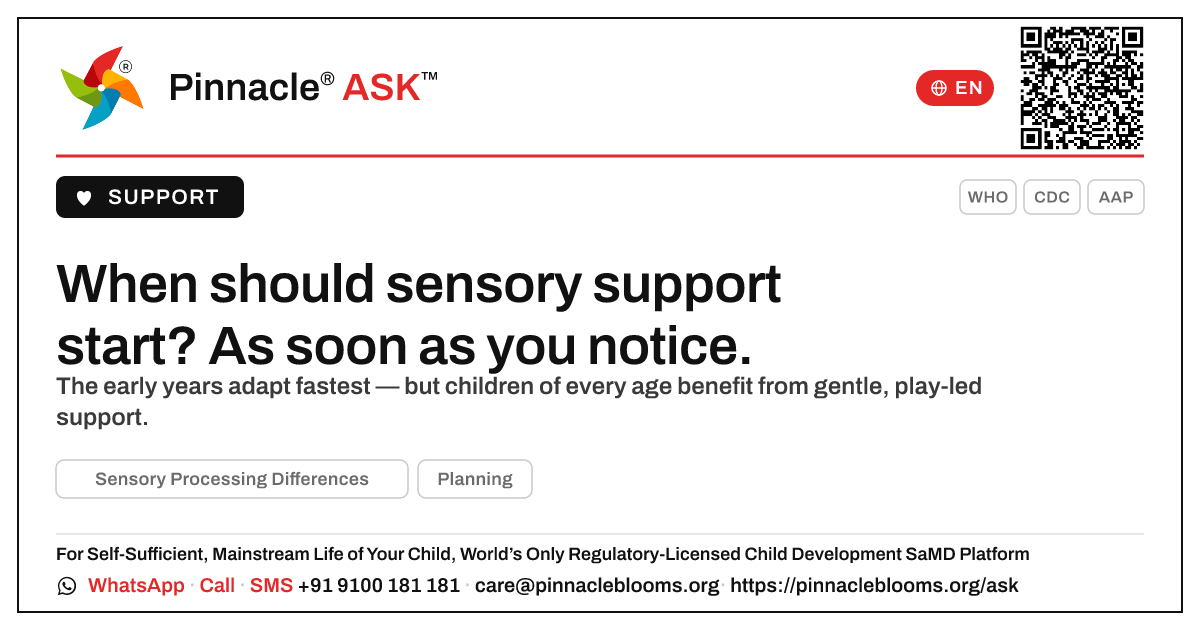
There is no single best age to begin support for sensory processing differences — the right time is as soon as you notice it affecting everyday life, play or sleep. The early years are especially powerful because young brains adapt quickly, but children of every age benefit. AbilityScore® is part of Pinnacle’s developmental assessment. Diagnosis, where needed, requires an appropriately qualified healthcare professional.
In this answer 5 sections
The question isn't really "what age" — it's "as soon as you notice your child is struggling," because young brains are wonderfully ready to learn.
In short
There is no single magic age to start support for sensory processing differences — the best time is as soon as you notice that how your child reacts to sounds, textures, movement, lights or touch is getting in the way of everyday life, play or sleep. The early years (roughly toddler through preschool) are especially powerful because young brains adapt and learn quickly, but children of every age make meaningful gains. You don't need a diagnosis or a milestone deadline to begin — gentle, play-based support helps at whatever age you start.
Why earlier helps — and why later still helps
In the early years a child's nervous system is highly adaptable, so playful, repeated experiences can reshape how they take in and respond to the world. This is why noticing and acting early — rather than waiting to "see if they grow out of it" — tends to ease distress sooner and protect a child's confidence, sleep, mealtimes and friendships.
That said, sensory differences are not a window that closes. School-age children, and even older children, benefit greatly when support is matched to their daily life and given in ways that feel respectful and fun. The goal is always the same: help your child feel regulated, comfortable and able to join in — at whatever age you begin.
When to begin
Consider a developmental check if your child often:
- becomes very upset by everyday sounds, textures, clothing tags, lights or messy play;
- seeks constant movement, spinning or crashing, or seems unusually clumsy;
- struggles to settle, sleep or sit through meals because of how things feel;
- avoids playgrounds, group play or new experiences because they feel overwhelming.
You do not need to wait for these to worsen. A general developmental check can clarify what's happening and whether tailored support would help.
The Pinnacle way
AbilityScore® is part of Pinnacle’s developmental assessment. Diagnosis, where needed, requires an appropriately qualified healthcare professional — never from an app or online form. Our therapists build a clinician-administered profile of your child's strengths and needs and shape a gentle, play-led plan through occupational therapy that supports sensory regulation in everyday routines. You're always welcome to start with us to understand the right next step for your child's age and stage.
Trusted sources
WHO ICD-11 describes how sensory and developmental differences present across childhood. The CDC's Learn the Signs. Act Early. programme encourages acting on developmental concerns early rather than waiting. The Indian Academy of Pediatrics and the American Academy of Pediatrics (HealthyChildren.org) both support timely developmental review when everyday functioning is affected.
Next step — Noticing your child struggles with sounds, textures or movement? Book a developmental assessment with a Pinnacle clinician.
This is general information, not a diagnosis — individual assessment and diagnosis require an appropriately qualified healthcare professional.
CONNECT THE ANSWER TO YOUR CHILD’S DAY
Something to notice. Something to discuss.
What to notice
Watch for strong upset at everyday sounds, textures, tags, lights or messy play; constant movement-seeking, crashing or clumsiness; trouble settling, sleeping or sitting at meals; and avoidance of playgrounds or group play because it feels overwhelming.
In everyday life
Build a few calm, predictable sensory moments into the day — like firm bear hugs, slow rocking, or a quiet corner with soft textures — so your child has reliable ways to feel settled before they become overwhelmed.
Bring your observations and questions to your child’s professional. Choose activities that suit your child’s comfort, abilities and agreed plan.
Bring your questions to a first visitQuestions families ask
Is there an age that's too late to start sensory support?
No. While the early years are especially powerful because young brains adapt quickly, children of every age — including school-age and older — make meaningful gains when support is matched to their daily life and given in a respectful, playful way.
Do I need a diagnosis before starting?
No. You don't need a diagnosis or a milestone deadline to begin. If you've noticed sensory reactions getting in the way of play, sleep, meals or friendships, a developmental check can clarify what's happening and whether tailored support would help.
Should I wait to see if my child grows out of it?
It's better to seek a check than to wait. Acting early tends to ease distress sooner and protects a child's confidence, sleep and social life. A clinician can reassure you or guide gentle next steps.
FOLLOW THE SOURCE
References behind this answer.
- Source referenceWHO ICD-11
- Source referenceCDC — Learn the Signs. Act Early.
- Organisation website · further readingAmerican Academy of Pediatrics (HealthyChildren.org)
References are supplied with this answer. An organisation homepage offers further reading; it does not establish an independent review of this page.
Content attribution: SETU Consortium · Pinnacle Blooms Network.
PEOPLE, TOPICS & DEVELOPMENT
See the connections.
Browse the wider question collections connected with this answer’s audience, developmental area and stage.
FROM UNDERSTANDING TO PURPOSEFUL SUPPORT
One question. Your child’s whole life.
Your child’s self-sufficient, mainstream-included life is the purpose from the beginning. At Pinnacle, that purpose shapes what we understand, the goals we choose, the people we bring together, everyday practice and review.
Connect this question with the right support.
Explore how the relevant service contributes to everyday abilities, then speak with us about your child.
Make the next conversation useful.
Bring the situations you notice at home or school. We’ll explain a suitable service, centre and first visit, including availability and fees, before you decide.
How PinnacleAI® connects the journeyExplore the seven stages
- 1Understand abilities
A starting picture of your child’s capabilities.
- 2Choose meaningful goals
Readiness and a plan shaped around the child.
- 3Bring the right support together
Suitable therapies and people for those goals.
- 4Carry practice into everyday life
Guidance for family, home and school.
- 5Track and correct
Use observations to adjust the plan.
- 6Reassess and review
Decide what to continue, change or do next.
- 7Grow independence and participation
The child’s life gives each step its purpose.
Explore the whole PinnacleAI® system → · Participation at school and in the community →
PINNACLE’S EVIDENCE, OPEN TO YOU
Look at the evidence behind our work.
Read our research, inspect the original regulatory documents and check what each institutional measure means.
General information supports a conversation with an appropriately qualified professional. Advice, goals and support depend on the individual child.