
YOUR QUESTION. A CLEARER NEXT STEP.
An Everyday Therapy activity for multi-step tasks
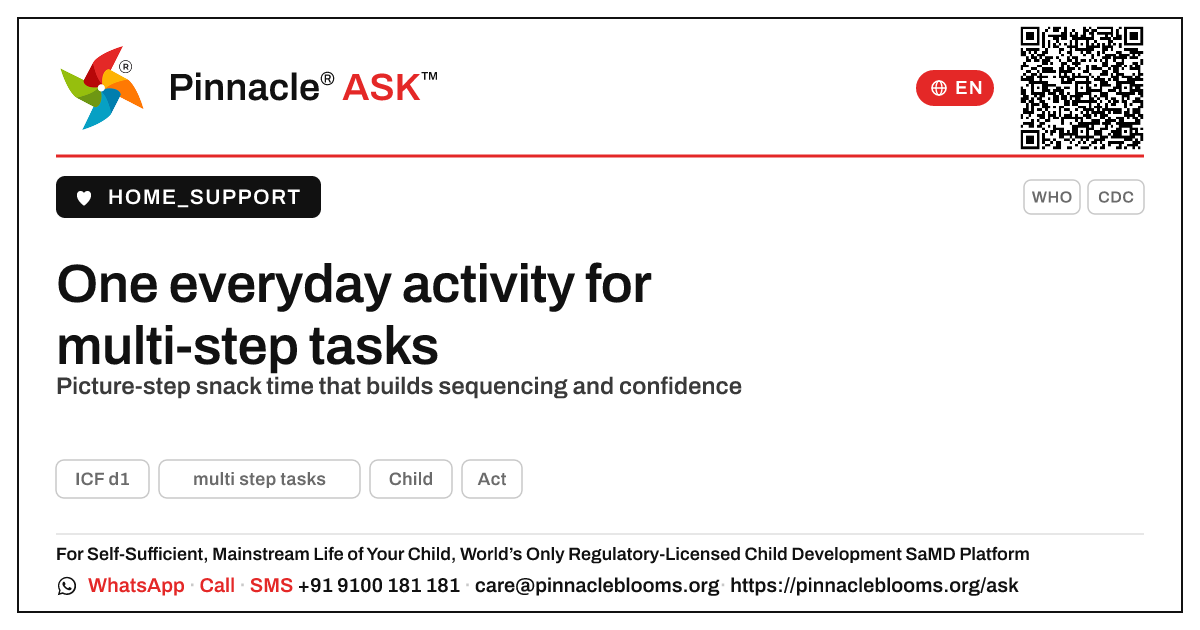
One easy home activity for multi-step tasks is a "picture-step" snack or recipe — break a simple snack into 3–4 picture cards your child follows in order, flipping each as it's done. This builds executive sequencing, working memory and the pride of finishing, then you add steps and fade cues over time.
In this answer 5 sections
The morning rush, the bedtime routine, packing a bag — every day is full of little chains of steps your child is learning to hold in mind. One playful activity can build that skill beautifully.
In short
Try a simple "recipe" cooking activity — like making a fruit chaat or a sandwich together — broken into a small picture sequence your child follows step by step. This builds executive sequencing: holding several steps in mind, doing them in order, and feeling the pride of finishing. Aim for three to four steps for a young child, and grow from there.
The everyday activity
Picture-Step Snack Time (10–15 minutes):
- Draw or print 3–4 picture cards for a simple snack — wash fruit, peel, cut (or tear) into a bowl, sprinkle a little salt, mix, serve.
- Lay the cards in order, left to right. Let your child "read" the plan aloud with you.
- Do one card at a time, flipping it over once done — this gives a visible sense of progress.
- At the end, celebrate: "You did all four steps yourself!"
Keep instructions short and concrete. If a step feels hard, do it together, then let them try the next one alone. Over weeks, add a step, fade the picture cues, and try the same approach for multi step tasks like getting dressed or tidying toys.
The science
Multi-step tasks draw on working memory, sequencing and self-monitoring — core parts of executive function (ICF d1, Learning and applying knowledge). External supports like picture sequences reduce the mental load of remembering what comes next, so the child can focus on doing. As the routine becomes familiar, you gradually remove the cues — a method that helps skills stick for real life.
The Pinnacle way
Developmental measurement supports care planning; diagnosis requires an appropriately qualified healthcare professional. under qualified clinician care — this home activity is for everyday support, not assessment. Our therapists weave sequencing practice into play through occupational therapy, and you can learn how baselines are measured at the AbilityScore®.
Trusted sources
Aligned with WHO ICF activity-and-participation framing (icf code d1) and CDC developmental guidance on building everyday skills through routines and play.
Next step — try Picture-Step Snack Time this week, and for a tailored home plan reach the Pinnacle team on WhatsApp: +91 91001 81181.
This is general information, not a diagnosis — individual assessment and diagnosis require an appropriately qualified healthcare professional.
CONNECT THE ANSWER TO YOUR CHILD’S DAY
Something to notice. Something to discuss.
What to notice
Watch whether your child can hold 2–3 steps in mind once cues are faded. If they consistently lose track, get stuck mid-task, or seem far behind peers in following everyday routines, raise it at a developmental check.
In everyday life
Use 3–4 picture cards for a simple snack and let your child flip each card as it's done — the visible 'progress bar' keeps them on track and motivated.
Bring your observations and questions to your child’s professional. Choose activities that suit your child’s comfort, abilities and agreed plan.
Bring your questions to a first visitQuestions families ask
How many steps should I start with for a young child?
Begin with three to four short, concrete steps for a child aged three to seven. Once they manage that smoothly, add one more step and gradually remove the picture cues so they hold the sequence in mind themselves.
My child gets frustrated halfway through — what can I do?
Shorten the chain. Do the first steps together, then hand over just the final step so they finish on a win. Keep instructions short, celebrate completion, and slowly increase how much they do alone.
Is this a substitute for therapy?
No — it is everyday home support, not assessment or treatment. If you have ongoing concerns about your child's sequencing or learning, a clinician-led developmental check at a Pinnacle Blooms Network centre can give clarity.
FOLLOW THE SOURCE
References behind this answer.
- Organisation website · further readingWHO ICF — activity and participation framework
- Source referenceCDC — supporting child development through routines
References are supplied with this answer. An organisation homepage offers further reading; it does not establish an independent review of this page.
Content attribution: SETU Consortium · Pinnacle Blooms Network.
PEOPLE, TOPICS & DEVELOPMENT
See the connections.
Browse the wider question collections connected with this answer’s audience, developmental area and stage.
FROM UNDERSTANDING TO PURPOSEFUL SUPPORT
One question. Your child’s whole life.
Your child’s self-sufficient, mainstream-included life is the purpose from the beginning. At Pinnacle, that purpose shapes what we understand, the goals we choose, the people we bring together, everyday practice and review.
Connect this question with the right support.
Start with your child’s strengths, your observations and what you want everyday life to become.
Make the next conversation useful.
Bring the situations you notice at home or school. We’ll explain a suitable service, centre and first visit, including availability and fees, before you decide.
How PinnacleAI® connects the journeyExplore the seven stages
- 1Understand abilities
A starting picture of your child’s capabilities.
- 2Choose meaningful goals
Readiness and a plan shaped around the child.
- 3Bring the right support together
Suitable therapies and people for those goals.
- 4Carry practice into everyday life
Guidance for family, home and school.
- 5Track and correct
Use observations to adjust the plan.
- 6Reassess and review
Decide what to continue, change or do next.
- 7Grow independence and participation
The child’s life gives each step its purpose.
Explore the whole PinnacleAI® system → · Participation at school and in the community →
PINNACLE’S EVIDENCE, OPEN TO YOU
Look at the evidence behind our work.
Read our research, inspect the original regulatory documents and check what each institutional measure means.
General information supports a conversation with an appropriately qualified professional. Advice, goals and support depend on the individual child.