
YOUR QUESTION. A CLEARER NEXT STEP.
What are the types of Down syndrome?
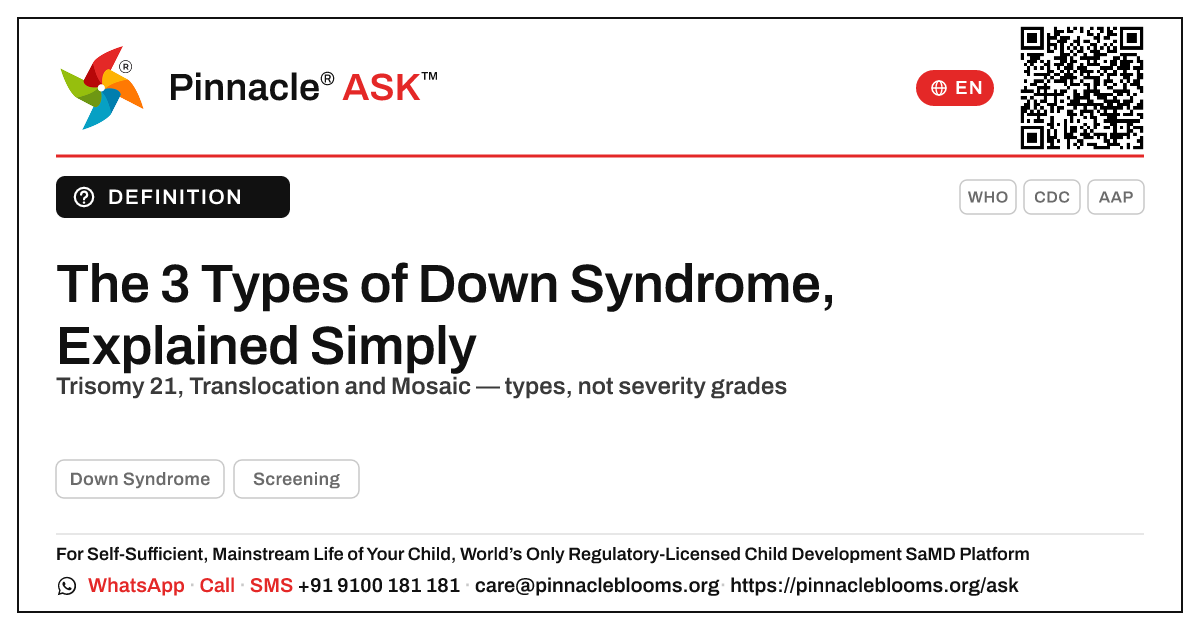
Down syndrome has three biological types defined by how the extra chromosome 21 appears: Trisomy 21 (~95%), Translocation (~3–4%), and Mosaic (~1–2%). These are types, not severity grades — Down syndrome is not classed as mild or severe, and a child's abilities vary individually. A karyotype blood test confirms the type.
In this answer 4 sections
When a doctor mentions "types" of Down syndrome, parents often wonder what it means for their child — here is the gentle, clear explanation.
In short
Down syndrome has three recognised types, all defined by how an extra copy of chromosome 21 appears: Trisomy 21 (by far the most common, around 95% of cases), Translocation (about 3–4%), and Mosaic Down syndrome (about 1–2%). These are biological types, not "severity levels" — Down syndrome is not graded as mild or severe in the way some conditions are. Every child is an individual, and abilities vary widely whatever the type.
The three types, simply explained
Trisomy 21 (Nondisjunction). The most common form. Every cell carries three copies of chromosome 21 instead of two, because the chromosome did not separate properly before or at conception.
Translocation Down syndrome. Here the extra chromosome 21 material is attached to another chromosome. The total amount of genetic material is similar to Trisomy 21, but because it can occasionally be inherited, genetic counselling for the family is especially helpful.
Mosaic Down syndrome. Some cells have the extra chromosome 21 and some do not — a "mosaic" mix. Some children with mosaicism may show fewer features, though this varies greatly and cannot be assumed.
A blood test called a karyotype confirms which type a child has. Importantly, the type does not neatly predict a child's communication, learning, motor or social development — that comes from understanding your individual child and supporting them early.
The Pinnacle way
Down syndrome is usually identified by paediatricians and genetic testing around birth; what shapes a child's future is early, consistent developmental support. At Pinnacle, a clinical AbilityScore® and any diagnosis are formed only at a Pinnacle Blooms Network centre, under qualified clinician care — never from an app or online form. From there we build a strengths-first plan for your child's communication, movement and independence. Learn more about Down syndrome support and how early intervention therapy makes the difference.
Trusted sources
WHO ICD-11 classification of chromosomal conditions; CDC developmental milestone guidance; Indian Academy of Pediatrics; American Academy of Pediatrics (HealthyChildren.org).
Next step — Want a clear picture of your child's starting point and strengths? Book a developmental check with a Pinnacle clinician.
This is general information, not a diagnosis — individual assessment and diagnosis require an appropriately qualified healthcare professional.
CONNECT THE ANSWER TO YOUR CHILD’S DAY
Something to notice. Something to discuss.
What to notice
Whatever the type, watch your child's developmental milestones — feeding, head control, babble, sitting, first words and social smiles — and share any concern with your paediatrician for a developmental check.
In everyday life
Talk, sing and name everyday objects with your child throughout the day. Rich, warm language exposure supports communication regardless of which type of Down syndrome your child has.
Bring your observations and questions to your child’s professional. Choose activities that suit your child’s comfort, abilities and agreed plan.
Bring your questions to a first visitQuestions families ask
Are the types of Down syndrome the same as severity levels?
No. The three types — Trisomy 21, Translocation and Mosaic — describe how the extra chromosome 21 material appears genetically, not how mild or severe the condition is. Down syndrome is not graded as mild or severe; every child develops as an individual.
Which type of Down syndrome is most common?
Trisomy 21 (also called nondisjunction) is by far the most common, accounting for around 95% of cases. Translocation makes up about 3–4% and Mosaic about 1–2%.
How is the type of Down syndrome confirmed?
A blood test called a karyotype examines the chromosomes and shows which type a child has. This is usually arranged by a paediatrician around birth, often alongside genetic counselling.
Does the type affect how my child will develop?
The type does not neatly predict a child's communication, learning, motor or social abilities. What matters most is understanding your individual child and beginning early, consistent developmental support.
FOLLOW THE SOURCE
References behind this answer.
- Source referenceWHO ICD-11
- Source referenceCDC — Down Syndrome
- Organisation website · further readingAmerican Academy of Pediatrics (HealthyChildren.org)
References are supplied with this answer. An organisation homepage offers further reading; it does not establish an independent review of this page.
Content attribution: SETU Consortium · Pinnacle Blooms Network.
PEOPLE, TOPICS & DEVELOPMENT
See the connections.
Browse the wider question collections connected with this answer’s audience, developmental area and stage.
FROM UNDERSTANDING TO PURPOSEFUL SUPPORT
One question. Your child’s whole life.
Your child’s self-sufficient, mainstream-included life is the purpose from the beginning. At Pinnacle, that purpose shapes what we understand, the goals we choose, the people we bring together, everyday practice and review.
Connect this question with the right support.
Start with your child’s strengths, your observations and what you want everyday life to become.
Make the next conversation useful.
Bring the situations you notice at home or school. We’ll explain a suitable service, centre and first visit, including availability and fees, before you decide.
How PinnacleAI® connects the journeyExplore the seven stages
- 1Understand abilities
A starting picture of your child’s capabilities.
- 2Choose meaningful goals
Readiness and a plan shaped around the child.
- 3Bring the right support together
Suitable therapies and people for those goals.
- 4Carry practice into everyday life
Guidance for family, home and school.
- 5Track and correct
Use observations to adjust the plan.
- 6Reassess and review
Decide what to continue, change or do next.
- 7Grow independence and participation
The child’s life gives each step its purpose.
Explore the whole PinnacleAI® system → · Participation at school and in the community →
PINNACLE’S EVIDENCE, OPEN TO YOU
Look at the evidence behind our work.
Read our research, inspect the original regulatory documents and check what each institutional measure means.
General information supports a conversation with an appropriately qualified professional. Advice, goals and support depend on the individual child.