
YOUR QUESTION. A CLEARER NEXT STEP.
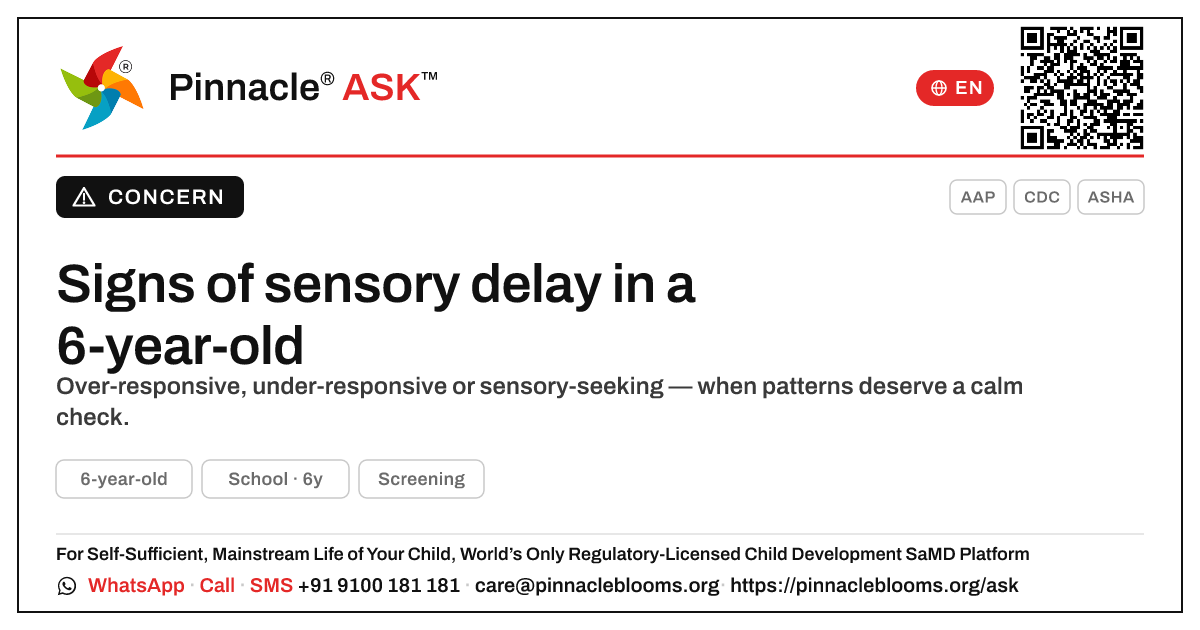
Signs of sensory delay in a 6-year-old
By six, most children manage everyday sensory experiences well enough to learn and play. A sensory processing difference is worth a clinician's look when strong reactions to sound, texture, movement or touch are frequent, intense and genuinely disrupt school, friendships, eating, dressing or sleep. Watch for over-responsiveness (covering ears, distress at clothing tags), under-responsiveness (not noticing being called or hurt) or sensory-seeking (constant crashing, chewing, craving movement). This is a reason to assess early — not a diagnosis — because support at this age works beautifully.
In this answer 5 sections
Every six-year-old has their own way of meeting the world — some seek movement and noise, others retreat from it, and noticing how your child responds is thoughtful, loving parenting.
In short
By six, most children handle everyday sensory experiences — bright lights, busy classrooms, clothing textures, playground noise — well enough to learn and play. A possible sensory processing difference is worth a clinician's look when strong reactions to sounds, textures, movement or touch are frequent, intense, and genuinely get in the way of school, friendships, dressing, eating or sleep. This is not a diagnosis — it simply means a calm, structured check is wise, because support at this age works beautifully.
What to watch at six years
Sensory differences show up as patterns, not one-off moments. Gentle flags that deserve a clinician's eye include:
- Over-responsive — covers ears at ordinary sounds, melts down in busy or noisy places, deeply distressed by clothing tags, seams, socks or hair-washing, gags on many food textures, dislikes being touched unexpectedly.
- Under-responsive — doesn't seem to notice being called, messy or hurt, slow to react to pain, cold or heat, seems "switched off" or in their own world.
- Sensory-seeking — constantly on the move, crashes, jumps and bumps into things on purpose, mouths or chews objects, craves spinning or rough play far beyond peers.
- Getting in the way — these reactions crowd out classroom learning, sitting for meals, joining friends in play, or settling to sleep.
- Travelling with other differences — alongside difficulties with speech, coordination, handwriting, attention or managing big emotions.
The aim is not alarm — many children simply have strong preferences. It's the frequency, intensity and impact on daily life that tip a quirk into a reason for a friendly assessment.
When to act
If sensory reactions are intense and regularly disrupt school, eating, dressing, sleep or friendships, arrange a developmental check now rather than waiting to "see if it passes". Trust your instinct — what you and the teacher notice every day is valuable information.
The Pinnacle way
A clinical AbilityScore® and any diagnosis are formed only at a Pinnacle Blooms Network centre, under qualified clinician care — never from an online list. Our clinicians watch how your child responds across senses, when and why reactions happen, and build support around play and everyday routines. Our occupational therapy team specialises in sensory regulation, and you can explore more about how we screen and support development at every age.
Trusted sources
American Academy of Pediatrics (healthychildren.org) guidance on sensory differences and developmental monitoring in school-age children; CDC developmental milestones and "Learn the Signs, Act Early" resources; ASHA (asha.org) guidance on sensory and feeding-related processing in children.
Next step — Trust what you've noticed. Book a developmental assessment with a Pinnacle clinician for a calm, clear review of your child's sensory responses and daily routines.
This is general information, not a diagnosis — individual assessment and diagnosis require an appropriately qualified healthcare professional.
CONNECT THE ANSWER TO YOUR CHILD’S DAY
Something to notice. Something to discuss.
What to notice
Seek a check if sensory reactions are frequent and intense — covering ears at ordinary sounds, meltdowns in busy places, distress at clothing tags or food textures, OR not noticing being called, hurt or messy, OR constant crashing, chewing and movement-craving — especially when these disrupt school, eating, dressing, sleep or friendships, or travel with difficulties in speech, coordination, handwriting, attention or emotions.
In everyday life
Keep a short phone note for a week of when big sensory reactions happen — noisy classroom, mealtime, getting dressed, bedtime? Noting the trigger and how it affects the day gives a clinician a clear, useful picture.
Bring your observations and questions to your child’s professional. Choose activities that suit your child’s comfort, abilities and agreed plan.
Bring your questions to a first visitQuestions families ask
Is being a 'picky eater' a sign of sensory difference at six?
It can be, but most picky eating is typical. A clinician's look is wise when your child gags on or refuses many textures, eats only a very narrow range of foods, or mealtimes are regularly distressing — especially alongside other strong sensory reactions.
My six-year-old covers their ears at loud noises. Should I worry?
Many children dislike sudden loud sounds. The flag is when it happens at ordinary everyday noise, causes meltdowns, or keeps your child from joining classrooms, assemblies or busy places. If it's frequent and disruptive, a calm developmental check is worth arranging.
Can sensory differences affect schoolwork?
Yes — a child who is overwhelmed by classroom noise, struggles to sit still, or finds handwriting and fine-motor tasks hard may find learning tiring. An occupational therapy assessment can identify supports that help them settle and focus.
FOLLOW THE SOURCE
References behind this answer.
- Organisation website · further readingAAP HealthyChildren — sensory differences and developmental monitoring
- Source referenceCDC Learn the Signs, Act Early — developmental milestones
- Organisation website · further readingASHA — sensory and feeding-related processing in children
References are supplied with this answer. An organisation homepage offers further reading; it does not establish an independent review of this page.
Content attribution: SETU Consortium · Pinnacle Blooms Network.
PEOPLE, TOPICS & DEVELOPMENT
See the connections.
Browse the wider question collections connected with this answer’s audience, developmental area and stage.
FROM UNDERSTANDING TO PURPOSEFUL SUPPORT
One question. Your child’s whole life.
Your child’s self-sufficient, mainstream-included life is the purpose from the beginning. At Pinnacle, that purpose shapes what we understand, the goals we choose, the people we bring together, everyday practice and review.
Connect this question with the right support.
Explore how the relevant service contributes to everyday abilities, then speak with us about your child.
Make the next conversation useful.
Bring the situations you notice at home or school. We’ll explain a suitable service, centre and first visit, including availability and fees, before you decide.
How PinnacleAI® connects the journeyExplore the seven stages
- 1Understand abilities
A starting picture of your child’s capabilities.
- 2Choose meaningful goals
Readiness and a plan shaped around the child.
- 3Bring the right support together
Suitable therapies and people for those goals.
- 4Carry practice into everyday life
Guidance for family, home and school.
- 5Track and correct
Use observations to adjust the plan.
- 6Reassess and review
Decide what to continue, change or do next.
- 7Grow independence and participation
The child’s life gives each step its purpose.
Explore the whole PinnacleAI® system → · Participation at school and in the community →
PINNACLE’S EVIDENCE, OPEN TO YOU
Look at the evidence behind our work.
Read our research, inspect the original regulatory documents and check what each institutional measure means.
General information supports a conversation with an appropriately qualified professional. Advice, goals and support depend on the individual child.