
YOUR QUESTION. A CLEARER NEXT STEP.
Early Signs of Feeding & Eating Difficulties in a Newborn
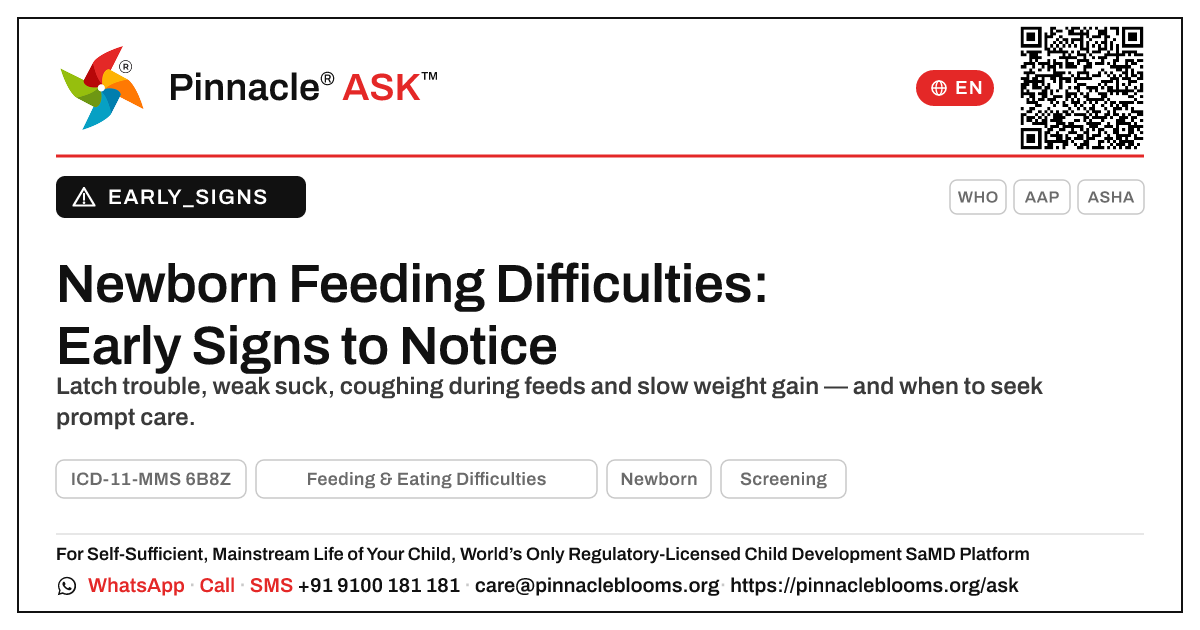
Early signs of feeding difficulties in a newborn include trouble latching, a weak or tiring suck, coughing or colour change during feeds, very long exhausting feeds, and slow weight gain. Some early wobbles are normal as you both learn — but any choking, blueness or breathing concern during feeds needs prompt medical review. Only a clinician can confirm.
In this answer 5 sections
Feeding a newborn is one of the tenderest things you'll ever do — so when it feels hard, your worry is real, and noticing early helps you act gently and soon.
In short
In a newborn, feeding difficulties show up as trouble latching or sustaining a suck, frequent coughing, gagging or colour change during feeds, very long or exhausting feeds, and not gaining weight as expected. Some early wobbles are common in the first days as you and your baby learn together — but persistent struggles, or any choking, blueness or breathing concern during feeds, need prompt medical review, not waiting. Only a qualified clinician can tell apart a settling-in phase from a difficulty that needs support.
Early signs to watch for
Around latch and suck
- Difficulty latching on, or a latch that keeps slipping
- A weak, uncoordinated or tiring suck — unable to keep going through a feed
- Trouble coordinating suck–swallow–breathe (pulling off, gulping, gasping)
Around safety during feeds
- Coughing, choking, spluttering or a wet, gurgly sound during or after feeds
- Milk spilling from the mouth or nose
- Colour change (pale or bluish around the lips), or breathing that seems hard work while feeding
Around feeding pattern and growth
- Feeds that take very long (well beyond 30–40 minutes) and leave baby exhausted
- Falling asleep very quickly at the breast or bottle without taking enough
- Very few wet or dirty nappies, or slow weight gain / weight loss beyond the first days
- Frequent strong vomiting, arching or distress linked with feeds
Feeding is a complex skill — it blends oral-motor coordination, breathing, comfort and closeness. Early difficulty does not mean you have done anything wrong.
When to seek a check
Any coughing, choking, colour change or breathing concern during feeds needs prompt medical review — these are urgent and come before any therapy step. Likewise, see your paediatrician quickly if your baby is not gaining weight, has very few wet nappies, or is too sleepy to feed enough. For a persistently weak or uncoordinated suck without those red flags, a gentle feeding and developmental check is wise. Persistent parental worry is itself a good reason to ask.
The Pinnacle way
At Pinnacle Blooms Network, newborn feeding support blends gentle oral-motor and family-coaching approaches, often alongside speech therapy where suck, chew and swallow skills are involved — always after any medical concern is checked first. A clinical AbilityScore® and any diagnosis are formed only at a Pinnacle Blooms Network centre under qualified clinician care — never from an online list. With 2.5 billion+ data points and 25 million+ therapy sessions behind our approach, we focus on building what your baby can do next, feed by feed.
Trusted sources
Aligned with WHO ICD-11 (6B8Z, feeding or eating disorders), American Academy of Pediatrics and HealthyChildren.org guidance on newborn feeding and growth, and ASHA resources on paediatric feeding and swallowing.
Next step — if feeds feel like a struggle, or you notice any coughing or colour change during feeds, speak with your paediatrician promptly and book a gentle feeding screen with the Pinnacle team on WhatsApp: +91 91001 81181.
This is general information, not a diagnosis — individual assessment and diagnosis require an appropriately qualified healthcare professional.
CONNECT THE ANSWER TO YOUR CHILD’S DAY
Something to notice. Something to discuss.
What to notice
Seek prompt medical review for any coughing, choking, colour change (pale or bluish lips) or breathing difficulty during feeds, or for slow weight gain, very few wet nappies, or a baby too sleepy to feed enough — these are urgent and come before any therapy step.
In everyday life
Keep feeds calm and unhurried in a quiet, dim space: hold baby skin-to-skin, pace the feed with pauses to breathe, watch for early hunger cues rather than waiting for crying, and let your paediatrician know if feeds keep tiring your baby out.
Bring your observations and questions to your child’s professional. Choose activities that suit your child’s comfort, abilities and agreed plan.
Bring your questions to a first visitQuestions families ask
Is it normal for a newborn to struggle with feeding in the first few days?
Yes — many babies and parents take a little time to learn latching and rhythm in the first days. Brief, settling wobbles are common. What needs attention is a struggle that persists, affects weight or nappies, or involves coughing, choking or colour change during feeds.
When should I see a doctor about my newborn's feeding?
See your paediatrician promptly if your baby coughs, chokes or changes colour during feeds, has very few wet nappies, is not gaining weight, or is too sleepy to feed enough. Any breathing or colour concern during feeds is urgent.
Does feeding difficulty in a newborn mean something is wrong developmentally?
Not necessarily. Feeding is a complex early skill, and many difficulties are practical and resolve with support. A clinician can check feeding, growth and coordination, and guide gentle support where needed — a diagnosis is never made from a list.
FOLLOW THE SOURCE
References behind this answer.
- Source referenceWHO ICD-11: Feeding or eating disorders
- Organisation website · further readingAAP HealthyChildren.org — newborn feeding and growth
- Organisation website · further readingASHA — paediatric feeding and swallowing
References are supplied with this answer. An organisation homepage offers further reading; it does not establish an independent review of this page.
Content attribution: SETU Consortium · Pinnacle Blooms Network.
PEOPLE, TOPICS & DEVELOPMENT
See the connections.
Browse the wider question collections connected with this answer’s audience, developmental area and stage.
FROM UNDERSTANDING TO PURPOSEFUL SUPPORT
One question. Your child’s whole life.
Your child’s self-sufficient, mainstream-included life is the purpose from the beginning. At Pinnacle, that purpose shapes what we understand, the goals we choose, the people we bring together, everyday practice and review.
Connect this question with the right support.
Explore how the relevant service contributes to everyday abilities, then speak with us about your child.
Make the next conversation useful.
Bring the situations you notice at home or school. We’ll explain a suitable service, centre and first visit, including availability and fees, before you decide.
How PinnacleAI® connects the journeyExplore the seven stages
- 1Understand abilities
A starting picture of your child’s capabilities.
- 2Choose meaningful goals
Readiness and a plan shaped around the child.
- 3Bring the right support together
Suitable therapies and people for those goals.
- 4Carry practice into everyday life
Guidance for family, home and school.
- 5Track and correct
Use observations to adjust the plan.
- 6Reassess and review
Decide what to continue, change or do next.
- 7Grow independence and participation
The child’s life gives each step its purpose.
Explore the whole PinnacleAI® system → · Participation at school and in the community →
PINNACLE’S EVIDENCE, OPEN TO YOU
Look at the evidence behind our work.
Read our research, inspect the original regulatory documents and check what each institutional measure means.
General information supports a conversation with an appropriately qualified professional. Advice, goals and support depend on the individual child.