
YOUR QUESTION. A CLEARER NEXT STEP.
Speaking more than one language at home — is it a problem?
Growing up with more than one language does not cause speech delay, disorder or confusion — bilingual children reach communication milestones on a similar timeline and mixing languages is normal. Genuine communication concerns show up across all of a child's languages, not just one. AbilityScore® is part of Pinnacle’s developmental assessment. Diagnosis, where needed, requires an appropriately qualified healthcare professional.
In this answer 5 sections
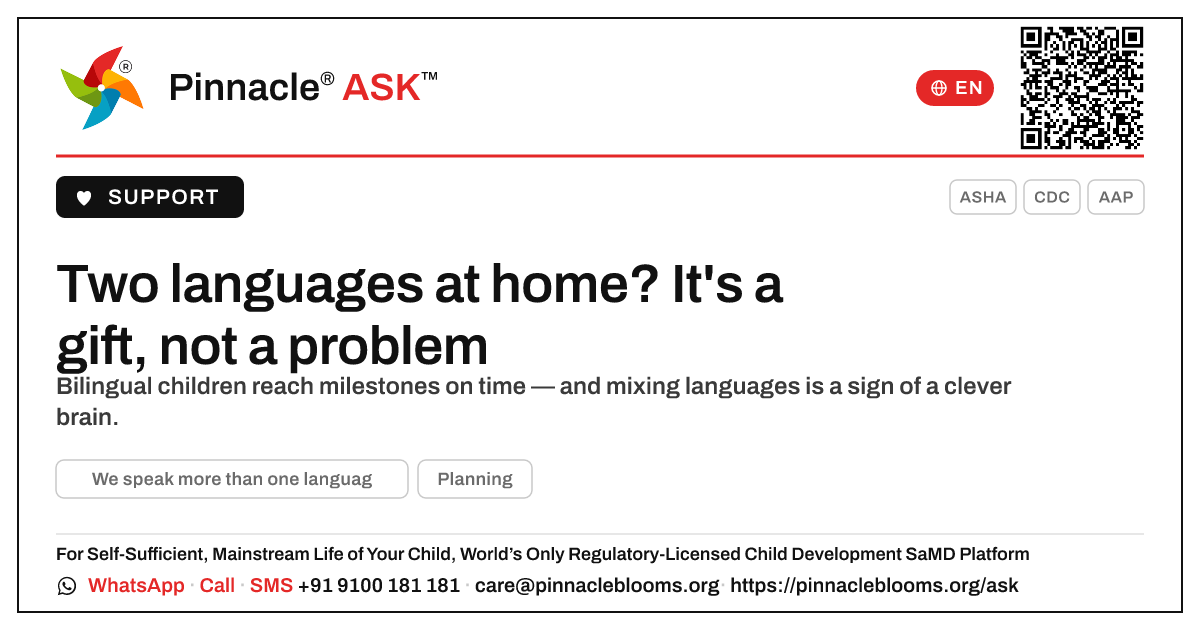
Speaking two, three or more languages at home is a gift to your child — not a problem, and not a cause of delay.
In short
No — growing up with more than one language does not cause speech delay, language disorders or confusion. Decades of research show that children's brains are beautifully built to learn several languages at once, and bilingual children reach the big communication milestones — first words, first sentences — on much the same timeline as single-language children. If you ever have a genuine worry about your child's communication, it would show up in every language they hear, not just one — and that is worth a check, but multilingualism itself is a strength to celebrate.
What bilingual children actually do
- They mix languages — and that's normal. "Code-switching" (using words from two languages in one sentence) is a sign of a clever, flexible brain, not confusion. It fades naturally as vocabulary grows.
- Total words matter, not words-per-language. A bilingual two-year-old may know fewer words in each language but a similar — often larger — total. Count across all their languages when you think about progress.
- A quiet "settling-in" phase can happen when a new language is introduced (say, at preschool). This is normal adjustment, not regression.
- Real benefits build over time — stronger attention-switching, closeness with family and culture, and an easier path to literacy later.
The single most helpful thing you can do is speak each language richly and warmly — read, sing, narrate your day, name what your child sees. Children learn best from loving, talkative people, not from screens.
When a check is still worth it
A developmental check helps if your child shows few or no words by around 18 months, isn't combining two words by about two years, rarely makes eye contact or shares attention, or seems to be losing words they once had — across all their languages. These signs point to communication itself, not to bilingualism, and early support always helps most.
The Pinnacle way
This is general information, not a diagnosis — a clinical AbilityScore® and any diagnosis are formed only at a Pinnacle Blooms Network centre, under qualified clinician care, never from an app or online form. Our therapists assess and support children in their home languages wherever possible. Explore how we support communication, understand how the AbilityScore® is formed, or start at our home page.
Trusted sources
American Speech-Language-Hearing Association guidance on bilingual and multilingual development; CDC "Learn the Signs. Act Early." milestone resources; American Academy of Pediatrics (HealthyChildren.org) on raising bilingual children.
Next step — Curious where your child stands across all their languages? Book a developmental assessment with a Pinnacle clinician.
CONNECT THE ANSWER TO YOUR CHILD’S DAY
Something to notice. Something to discuss.
What to notice
Watch for few or no words by ~18 months, no two-word combinations by ~2 years, little eye contact or shared attention, or loss of words once known — and crucially, whether this appears across ALL the languages your child hears, not just one.
In everyday life
Speak each language richly and warmly every day — read, sing and narrate your routine. Children learn language best from loving, talkative people, so count your child's words across all their languages, not one at a time.
Bring your observations and questions to your child’s professional. Choose activities that suit your child’s comfort, abilities and agreed plan.
Bring your questions to a first visitQuestions families ask
Will speaking two languages delay my child's speech?
No. Research consistently shows bilingual children reach key milestones like first words and first sentences on much the same timeline as children raised with one language. Multilingualism does not cause delay.
My child mixes both languages in one sentence — should I worry?
Not at all. Mixing languages, called code-switching, is a normal and clever feature of a bilingual brain. It reflects flexibility, not confusion, and settles naturally as vocabulary grows.
How do I know if my child has a real language difficulty?
A genuine communication difficulty shows up across all the languages your child hears — not just one. Signs like few words by 18 months or no two-word phrases by two years are worth a developmental check, regardless of how many languages you speak.
Should we drop one language to help my child catch up?
Generally no. Dropping a home language can weaken family bonds and rarely helps communication. It's usually best to keep speaking the languages you know richly and warmly, and seek a clinician's view if you have concerns.
FOLLOW THE SOURCE
References behind this answer.
- Source referenceASHA — Learning two languages
- Source referenceCDC — Learn the Signs. Act Early. milestones
- Organisation website · further readingAAP — HealthyChildren.org
References are supplied with this answer. An organisation homepage offers further reading; it does not establish an independent review of this page.
Content attribution: SETU Consortium · Pinnacle Blooms Network.
PEOPLE, TOPICS & DEVELOPMENT
See the connections.
Browse the wider question collections connected with this answer’s audience, developmental area and stage.
FROM UNDERSTANDING TO PURPOSEFUL SUPPORT
One question. Your child’s whole life.
Your child’s self-sufficient, mainstream-included life is the purpose from the beginning. At Pinnacle, that purpose shapes what we understand, the goals we choose, the people we bring together, everyday practice and review.
Connect this question with the right support.
Explore how the relevant service contributes to everyday abilities, then speak with us about your child.
Make the next conversation useful.
Bring the situations you notice at home or school. We’ll explain a suitable service, centre and first visit, including availability and fees, before you decide.
How PinnacleAI® connects the journeyExplore the seven stages
- 1Understand abilities
A starting picture of your child’s capabilities.
- 2Choose meaningful goals
Readiness and a plan shaped around the child.
- 3Bring the right support together
Suitable therapies and people for those goals.
- 4Carry practice into everyday life
Guidance for family, home and school.
- 5Track and correct
Use observations to adjust the plan.
- 6Reassess and review
Decide what to continue, change or do next.
- 7Grow independence and participation
The child’s life gives each step its purpose.
Explore the whole PinnacleAI® system → · Participation at school and in the community →
PINNACLE’S EVIDENCE, OPEN TO YOU
Look at the evidence behind our work.
Read our research, inspect the original regulatory documents and check what each institutional measure means.
General information supports a conversation with an appropriately qualified professional. Advice, goals and support depend on the individual child.