
Developmental Coordination Disorder
When to worry about DCD in a newborn
Developmental Coordination Disorder cannot be identified in a newborn — it concerns practised skilled movements that simply haven't developed yet, and is only meaningful after about age 5. In the first months, watch general signs instead: varied symmetrical movement, settling tone and emerging head control. Any persistent floppiness, stiffness, asymmetry or missed milestone deserves a prompt general developmental check, not a DCD label. Only a Pinnacle clinician can assess, never an online form.
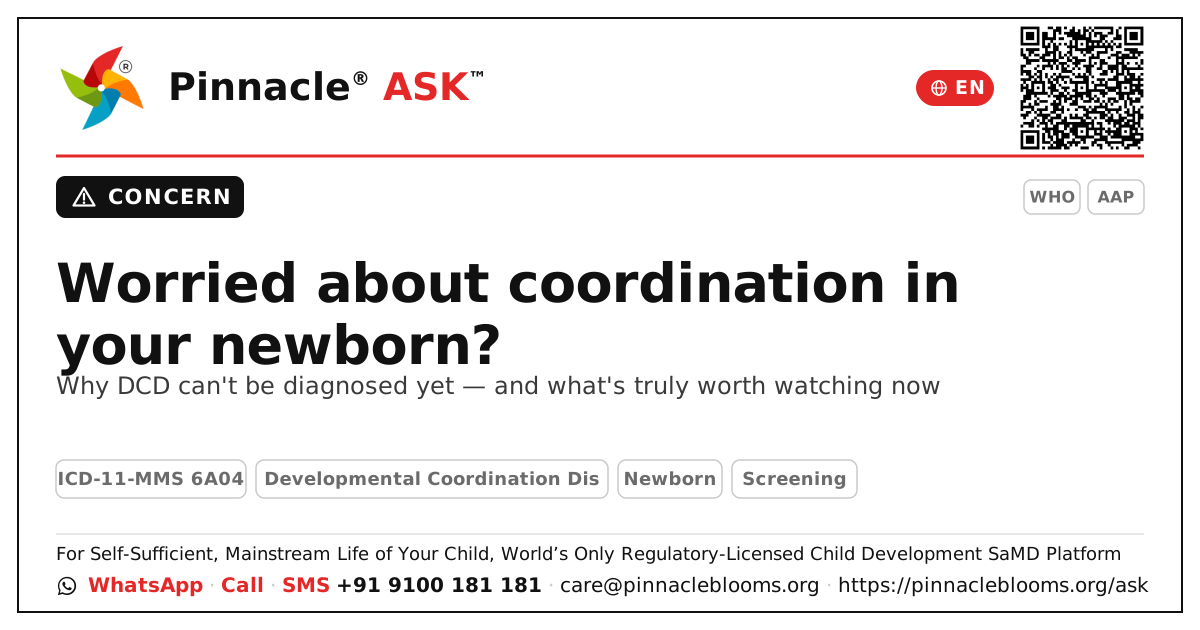
If you're watching your newborn's tiny movements and wondering whether clumsiness now means a coordination disorder later — take a slow breath. This is a loving question, and the reassuring answer is: not yet.
In short
You cannot identify Developmental Coordination Disorder (ICD-11 6A04) in a newborn — and you do not need to worry about it now. DCD is about how a child learns practised, skilled movements like running, drawing, dressing or using cutlery, and these skills simply haven't begun to develop in the first few months of life. A diagnosis is only meaningful once a child is expected to have mastered age-appropriate motor skills and clearly hasn't — usually after age 5. For now, the kindest thing you can do is enjoy your baby and watch the normal early milestones.What is actually worth observing in a newborn
In the first three months, you're not looking for "coordination" in the DCD sense — you're watching healthy, general movement and tone. Reassuring early signs include:- Spontaneous, varied movements of arms and legs when awake
- Symmetry — both sides of the body moving roughly equally
- Gradual head control beginning during tummy time
- Settling tone — not persistently floppy, and not constantly stiff
- Bright, responsive engagement — looking at faces, calming to your voice
These are general developmental signs, not a coordination test. A baby's movements are meant to look jerky and unpolished — that is exactly how the nervous system is supposed to begin.
When a coordination concern becomes meaningful
DCD is recognised in later childhood, when a child struggles with motor skills well below what's expected for their age, in a way that affects daily life — and only once other causes are ruled out. The watchful path is simple: attend your routine well-baby checks, and if you ever notice persistent floppiness or stiffness, strong asymmetry (one side much stronger), missed motor milestones, or loss of a skill once gained, raise it promptly — that points to a general developmental review now, not a DCD label. Coordination itself becomes a fair question around the preschool and early-school years.The Pinnacle way
A clinical AbilityScore® and any diagnosis are formed only at a Pinnacle Blooms Network centre, under qualified clinician care — never from an online checklist or from a worry alone. With 4.95 lakh+ families supported across 70+ centres, our approach is always to meet your baby where they are: in these early months that means a gentle general developmental check rather than chasing a label. If movement or tone ever feels off, our occupational therapy team can guide play that nurtures strength and coordination as your child grows.Trusted sources
WHO ICD-11 places Developmental Coordination Disorder (6A04) among neurodevelopmental disorders identified in childhood, not infancy. The American Academy of Pediatrics (healthychildren.org) outlines age-appropriate motor milestones, and the WHO Nurturing Care Framework emphasises responsive early care over early labelling.Next step — If your baby's movements or muscle tone ever worry you, don't wait on a specific label — book a gentle developmental check with a Pinnacle clinician.
This is general information, not a diagnosis — a clinical AbilityScore® and any diagnosis are formed only at a Pinnacle Blooms Network centre under qualified clinician care.
What to watch
In the first three months, watch general movement rather than coordination: spontaneous varied limb movements, rough symmetry between both sides, emerging head control during tummy time, and settling muscle tone. Raise concerns promptly if you notice persistent floppiness or stiffness, one side much stronger than the other, missed early milestones, or loss of a skill once gained.
Try this at home
Give your baby short, supervised tummy-time sessions several times a day during awake, content moments. This builds the neck, shoulder and trunk strength that lays the foundation for all later coordinated movement — and it's lovely connection time too.
Trusted sources
Developed by SETU Consortium · Pinnacle Blooms Network · Last reviewed 2026-06-10
This is general information, not a diagnosis. A clinical AbilityScore® and any diagnosis are formed only at a Pinnacle Blooms Network centre, under qualified clinician care.
Frequently asked
Can Developmental Coordination Disorder be diagnosed in a newborn?
No. DCD concerns practised, skilled movements like drawing, dressing or using cutlery, which haven't begun to develop in a newborn. It is only meaningfully assessed once a child is expected to have mastered age-appropriate motor skills, usually after age 5, and only by a qualified clinician.
What movement signs should I actually watch for in my newborn?
Watch general signs rather than coordination: spontaneous varied movement of arms and legs, rough symmetry between both sides, emerging head control during tummy time, and tone that is neither persistently floppy nor constantly stiff. Jerky, unpolished movements are completely normal at this age.
When should I see someone about my baby's movements?
Raise it promptly at a well-baby check if you notice persistent floppiness or stiffness, one side much stronger than the other, missed early milestones, or loss of a skill once gained. This points to a general developmental review now — not a DCD diagnosis.