
Developmental Coordination Disorder
Worrying about DCD in a 6-to-9-month-old
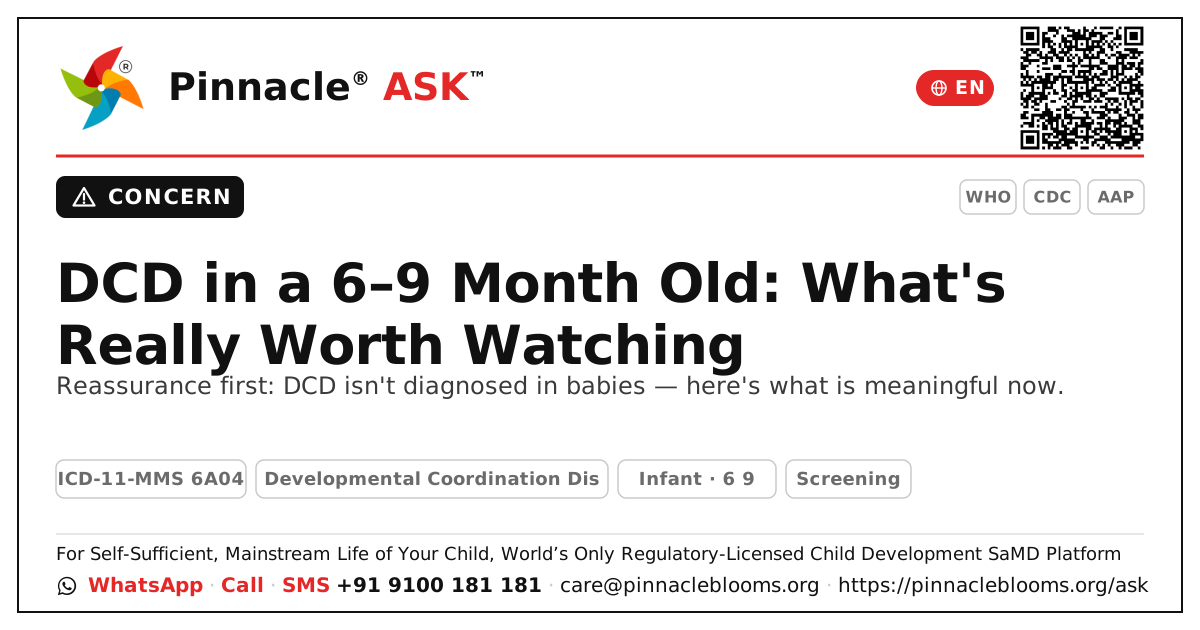
Developmental Coordination Disorder cannot be diagnosed in a 6-to-9-month-old — it concerns skilled motor movements that emerge later, usually identified after age 5. At this age, simply watch broad gross-motor milestones like sitting, rolling and reaching, and enjoy milestone-rich play. A persistent concern such as very stiff or floppy tone deserves a calm paediatric check, not a DCD worry. Only a Pinnacle clinician can assess, never an online form.
If you are watching your 6-to-9-month-old's wobbles and wondering whether something is wrong, that careful love is exactly the right instinct — and here is the honest, reassuring picture.
In short
Developmental Coordination Disorder (ICD-11 [6A04](https://icd.who.int/)) is not something that can be diagnosed in a 6-to-9-month-old baby — and it is not something to worry about at this age. DCD is a difficulty with learning and coordinating skilled motor movements (like buttoning, writing or catching), and it can only be meaningfully identified once a child is older — usually around age 5 and above — when those skills are expected to emerge. At your baby's age, the kindest and most useful thing is simply to watch broad early movement milestones and enjoy the play that builds them.What is actually meaningful to watch at 6–9 months
Rather than looking for DCD, this is the window to gently notice your baby's gross motor milestones — the big, whole-body movements:- By around 6 months — rolling both ways, pushing up on the arms during tummy time, reaching for and grasping toys, beginning to sit with support
- By around 9 months — sitting steadily without support, passing a toy from hand to hand, starting to bear weight on the legs, perhaps beginning to creep or shuffle
Babies vary enormously in their timing, and a baby who is a little behind on one milestone but thriving elsewhere is usually following their own healthy rhythm. What is worth a calm word with your paediatrician is a persistent pattern — for example, very stiff or very floppy muscle tone, a strong preference for using only one side of the body, not reaching for objects, or no head control by this age. These are general developmental signposts, not signs of DCD.
When motor-coordination assessment becomes meaningful
The specific skilled-movement difficulties that define DCD become observable as your child grows into running, climbing, dressing, drawing and self-feeding — typically from the preschool years onward, with formal identification usually after age 5. So for now, there is no DCD watch-list for a baby; there is simply joyful, milestone-rich play and a routine developmental check if anything feels off.The Pinnacle way
A clinical AbilityScore® and any diagnosis are formed only at a Pinnacle Blooms Network centre, under qualified clinician care — never from an online form or a checklist. If your baby's movements concern you, our team offers warm, play-based occupational and physiotherapy support and a gentle developmental review that looks at your child's whole picture — never a label. You can also read more about Developmental Coordination Disorder and how it is understood at the right age.Trusted sources
WHO ICD-11 places DCD (6A04) within neurodevelopmental disorders, defined by difficulty acquiring and executing coordinated motor skills relative to age. The CDC and AAP (healthychildren.org) describe expected gross-motor milestones across the first year, emphasising the wide range of normal infant development.Next step — If any of your baby's movements feel off, the calm next move is a routine developmental check. Book a developmental review with a Pinnacle clinician for warm, expert reassurance.
This is general information, not a diagnosis — a clinical AbilityScore® and any diagnosis are formed only at a Pinnacle Blooms Network centre under qualified clinician care.
What to watch
DCD is not assessable in a baby this age. Instead, watch broad gross-motor milestones: rolling, tummy-time push-ups and reaching by ~6 months; steady sitting and hand-to-hand transfer by ~9 months. Seek a calm paediatric check for persistent very stiff or very floppy tone, no head control, strong one-sided preference, or no reaching for objects.
Try this at home
Make tummy time playful and frequent — place a favourite toy just out of reach to invite rolling, pushing up and reaching. These everyday movements build the foundations for all the coordination that comes later.
Trusted sources
Developed by SETU Consortium · Pinnacle Blooms Network · Last reviewed 2026-06-10 · reviewed every 365 days
This is general information, not a diagnosis. A clinical AbilityScore® and any diagnosis are formed only at a Pinnacle Blooms Network centre, under qualified clinician care.
Frequently asked
Can a baby be diagnosed with Developmental Coordination Disorder?
No. DCD concerns the learning and coordination of skilled motor movements — like dressing, drawing or catching — which emerge later in childhood. It cannot be meaningfully diagnosed in a baby, and formal identification usually happens after age 5.
What movement milestones should I watch at 6 to 9 months?
By around 6 months, look for rolling, pushing up during tummy time and reaching for toys. By around 9 months, look for steady sitting without support and passing a toy from hand to hand. Babies vary widely, so a small delay alongside overall thriving is usually fine.
When should I speak to a doctor about my baby's movements?
Have a calm word with your paediatrician if you notice a persistent pattern such as very stiff or very floppy muscle tone, no head control by this age, a strong preference for using only one side, or no reaching for objects. These are general developmental signposts, not signs of DCD.