
Down Syndrome
Worrying about Down syndrome in your 6-to-9-month-old
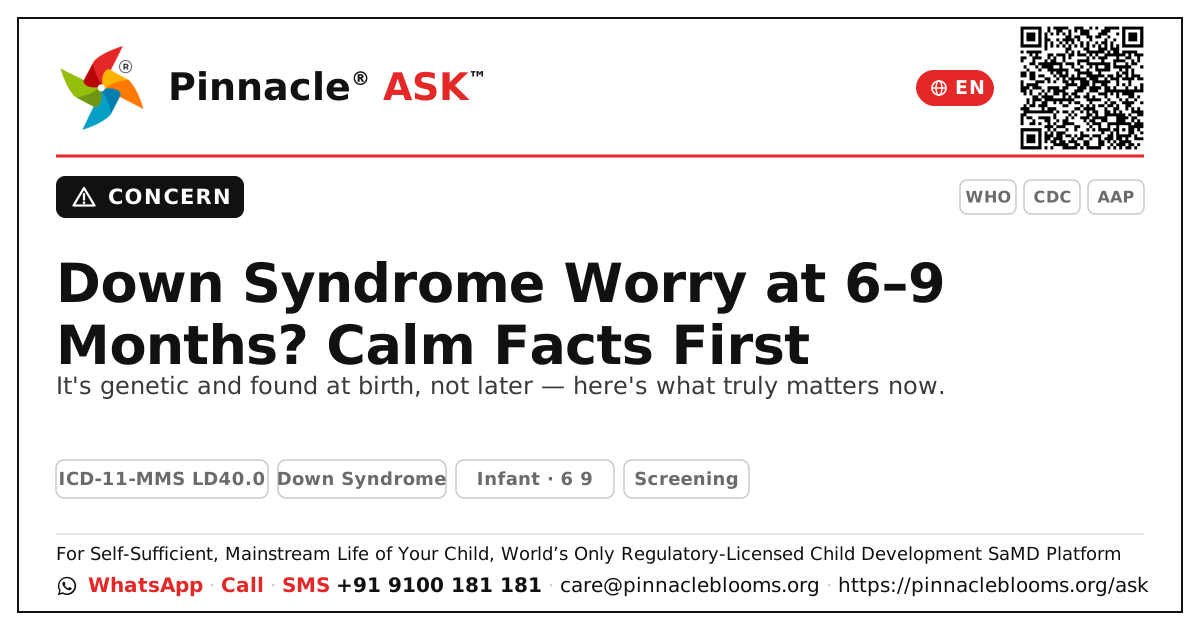
Down syndrome is genetic and almost always identified at or soon after birth via a blood test — not something that newly appears at 6–9 months. If your baby was checked at birth with no concern, the chance now is very low. Track healthy milestones, and ask for a developmental check if anything worries you. Only a clinician can confirm anything.
If a worry has settled in your heart about your baby, you deserve clear, calm facts — not fear. Here is what is actually true about Down syndrome at this age.
In short
Down syndrome is almost always recognised at or very soon after birth — not something that newly appears between 6 and 9 months. It is a genetic condition (an extra copy of chromosome 21) confirmed by a simple blood test (karyotype), not by watching for signs at home. If your baby was checked at birth and your paediatrician had no concern, the chance of it emerging now is very low. What matters at this age is simply tracking healthy development — and any one worry is a reason to ask, never to panic.What is actually appropriate to watch at 6–9 months
Rather than hunting for a label, watch your baby's overall progress:- Around 6 months — turns to your voice, smiles and babbles, brings hands to mouth, begins to sit with support
- Around 9 months — sits without support, passes objects hand to hand, responds to their name, shows interest in faces and play
If your baby was diagnosed with Down syndrome at birth, you may notice softer, more relaxed muscle tone (hypotonia) and milestones arriving at their own pace — all of which early support helps beautifully. If milestones are not appearing as expected, that is a reason for a general developmental check, whatever the cause.
The science, briefly
Down syndrome (ICD-11 LD40.0) is confirmed genetically, typically detected through newborn examination and a chromosome test — it is not diagnosed by milestone-watching in infancy. The reassuring truth: early, loving developmental support measurably improves communication, movement and learning for children with Down syndrome.The Pinnacle way
A clinical AbilityScore® and any diagnosis are formed only at a Pinnacle Blooms Network centre, under the care of a qualified clinician — never from an online form or a worry. If you'd like clarity, our team can map your baby's strengths and guide gentle next steps through special education and early intervention and, where helpful, support for Down syndrome. Across 70+ centres, our approach is always strengths-first.Trusted sources
WHO ICD-11 (LD40.0); CDC Learn the Signs. Act Early. milestone guidance; Indian Academy of Pediatrics; American Academy of Pediatrics (HealthyChildren.org).Next step — Turn worry into clarity. Book a developmental check with a Pinnacle clinician for calm, expert reassurance.
This is general information, not a diagnosis — a clinical AbilityScore® and any diagnosis are formed only at a Pinnacle Blooms Network centre under qualified clinician care.
What to watch
Ask for a developmental check if, around 9 months, your baby is not sitting at all, not responding to their name, not babbling or making eye contact, or shows very floppy or very stiff muscle tone — whatever the cause, early support helps.
Try this at home
Spend ten minutes daily on face-to-face play: talk, sing, pause, and wait for your baby to babble or smile back. This gentle back-and-forth builds communication and lets you notice your baby's growing strengths.
Trusted sources
Developed by SETU Consortium · Pinnacle Blooms Network · Last reviewed 2026-06-10 · reviewed every 365 days
This is general information, not a diagnosis. A clinical AbilityScore® and any diagnosis are formed only at a Pinnacle Blooms Network centre, under qualified clinician care.
Frequently asked
Can Down syndrome appear suddenly at 6 to 9 months?
No. Down syndrome is a genetic condition present from conception and almost always recognised at or soon after birth. It does not newly develop in later infancy. If your baby was examined at birth without concern, the likelihood now is very low.
How is Down syndrome actually diagnosed?
It is confirmed by a chromosome blood test (karyotype), usually prompted by newborn examination findings — not by watching for signs at home. Only a clinician can confirm or rule it out.
My baby's milestones seem slow — should I worry?
Many babies develop at their own pace. If milestones around 9 months (sitting, responding to name, babbling) are clearly not appearing, that is a reason for a general developmental check, whatever the cause — not necessarily Down syndrome.
What helps a child with Down syndrome most?
Early, loving developmental support — speech, movement and play-based learning — measurably improves communication, motor skills and learning. A strengths-first plan from a qualified clinician makes a real difference.