
vocalization development
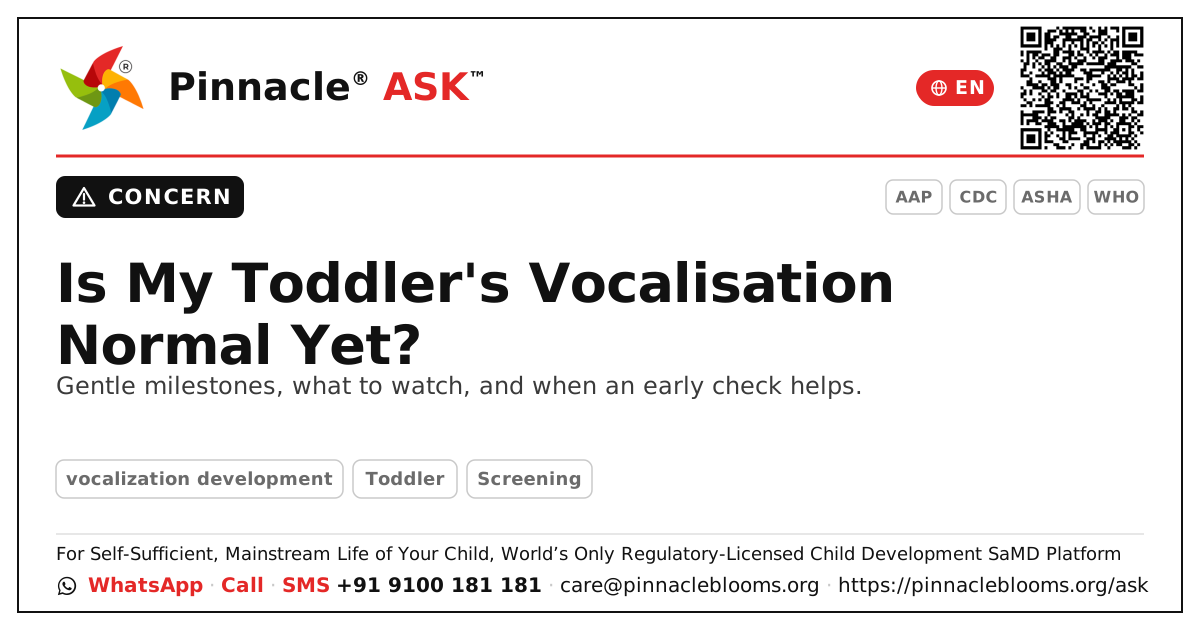
Is It Normal That My Toddler Isn't Vocalising Yet?
Vocalisation develops across a wide normal range. As a guide: babble and a word or two by ~12 months, several words by 18 months, dozens of words and two-word phrases by 24 months. Some variation is fine, but if your toddler is well below this for their age, isn't pointing or sharing, or has lost skills, a developmental check is wise now — not a diagnosis, just earlier opportunity, because early support works best.
Listening for your toddler's voice — those babbles, words and joyful sounds — and wondering if enough is coming is one of the most loving things a parent does.
In short
Vocalisation develops along a wide, normal range, so a little variation is usually fine. As a gentle guide: by around 12 months most toddlers babble and may have one or two words; by 18 months, several single words; and by 24 months, dozens of words often joining into two-word phrases. If your toddler is well below these by their actual age, or you simply feel something is off, a developmental check is wise now — not because it means a diagnosis, but because early support works beautifully when started early.What to watch (12–36 months)
Vocalisation is more than words — it is sounds, turn-taking and the desire to communicate. Gentle flags worth a clinician's eye include:- Sound & babble — little or no babbling by ~12 months; very few speech sounds.
- Words — no clear words by ~18 months; fewer than around 50 words or no two-word combinations by 24 months.
- Communication intent — not pointing, gesturing, or trying to share things with you; not responding to their name.
- Any regression — losing sounds, words or gestures they clearly had before. This always deserves prompt review.
Hearing is the foundation of vocalisation, so a hearing check matters too. Remember: a quiet talker who understands you, points, makes eye contact and plays is often simply on their own gentle timeline.
When to act
If you recognise several of these for your toddler's age, or your instinct nudges you, arrange a developmental check now rather than waiting. Parent observation is good clinical data.The Pinnacle way
A clinical AbilityScore® and any diagnosis are formed only at a Pinnacle Blooms Network centre, under qualified clinician care — never from an online list. Our clinicians build your child's own developmental baseline and shape play-based support around strengths. If sounds and early words are the worry, our speech therapy team can begin gently, and you can learn more about vocalisation development and how we follow it over time.Trusted sources
WHO and the Nurturing Care framework on early childhood development; American Academy of Pediatrics (healthychildren.org) communication milestones; CDC "Learn the Signs, Act Early" resources; ASHA guidance on early speech and language.Next step — Trust what you've noticed. Book a developmental assessment with a Pinnacle clinician so your toddler's communication is reviewed with clarity and care.
This is general information, not a diagnosis — a clinical AbilityScore® and any diagnosis are formed only at a Pinnacle Blooms Network centre under qualified clinician care.
What to watch
By your toddler's actual age, seek a check if there is little or no babble by ~12 months, no clear words by ~18 months, fewer than ~50 words or no two-word phrases by 24 months, no pointing or sharing, no response to name — or any loss of sounds, words or gestures once present. A hearing check matters too.
Try this at home
Narrate your day in short, clear sentences — name what you both see and do, then pause and wait. That pause invites your toddler to take a turn with a sound or word. Keep a weekly note of new sounds and words to share with a clinician.
Trusted sources
Developed by SETU Consortium · Pinnacle Blooms Network · Last reviewed 2026-06-10 · reviewed every 540 days
This is general information, not a diagnosis. A clinical AbilityScore® and any diagnosis are formed only at a Pinnacle Blooms Network centre, under qualified clinician care.
Frequently asked
At what age should my toddler start saying words?
Most toddlers babble and may have one or two words by around 12 months, several single words by 18 months, and dozens of words often joining into two-word phrases by 24 months. There is a wide normal range, so some variation is fine — but if your child is well below this for their age, a developmental check is wise.
My toddler understands me but says little — should I worry?
A child who understands you, points, makes eye contact and plays is often on their own gentle timeline. Still, if spoken words are well behind expectations for their age, a clinician's view brings clarity and, if helpful, early play-based support.
Could a hearing problem affect vocalisation?
Yes. Hearing is the foundation of speech and sound development, so a hearing check is an important early step if you have concerns about your toddler's vocalisation.
Does seeing a clinician mean my child has a diagnosis?
No. A developmental check is simply an early opportunity to understand your child's communication. A clinical AbilityScore® and any diagnosis are formed only at a Pinnacle Blooms Network centre under qualified clinician care.