
Group Therapy
Is group therapy backed by research evidence?
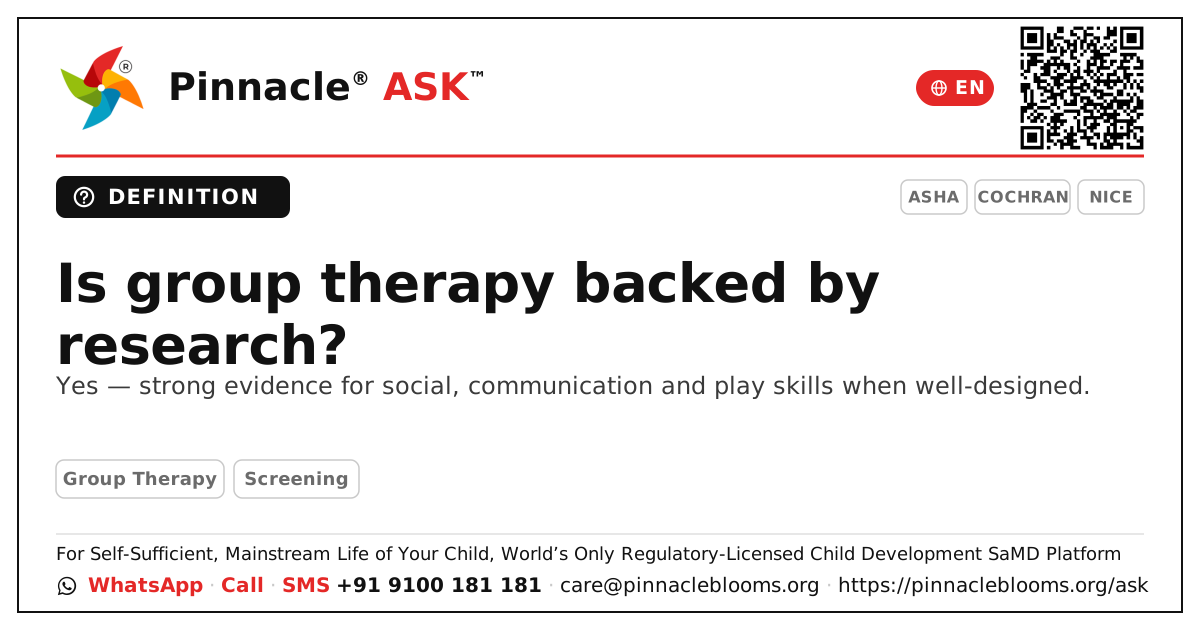
Yes — group therapy is backed by solid research evidence, particularly for social communication, peer interaction, play and confidence. When groups are small, goal-led and ability-matched, the gains can match or complement one-to-one therapy because children practise real-life social skills with real peers. It is not a budget substitute for individual work but a purposeful, different tool, best chosen with a clinician and often used alongside individual sessions.
Wondering whether learning alongside other children is a sound choice — not just a friendly one? It is, and the research agrees.
In short
Yes — group therapy is well supported by research evidence across communication, social and behavioural development. Studies show that, for the right goals, practising new skills with peers can be as effective as one-to-one work — and sometimes better for the very skills that only show up around other children, such as turn-taking, conversation and play. It is not a cheaper substitute for individual therapy; it is a different, purposeful tool, often used alongside it.What the science says
Group therapy creates a small, supported social world where a child can rehearse real-life skills with real peers. Research in speech-language and developmental therapy shows meaningful gains in social communication, peer interaction, play skills and confidence when groups are well-designed — meaning they are small, goal-led, age- and ability-matched, and run by trained therapists. The strength comes from naturalistic practice: a child waits for a turn, reads another child's cues, shares attention and recovers from small social bumps, all in the moment. These are precisely the abilities that are hard to build in isolation and easiest to generalise when practised with others. Evidence is strongest when group work targets clearly defined social and communication goals, and when families reinforce the same skills at home.How it is used well
Group therapy works best as part of a thoughtful plan rather than a stand-alone fix. Many children benefit from individual sessions to build a foundational skill, then a group to practise and generalise it. The fit depends on each child's goals, temperament and current stage — which is why the decision is made with a clinician, not by default. Quality matters far more than the format itself: the size of the group, the matching of children, the training of the therapist and the clarity of the goals all shape the outcome.The Pinnacle way
This is general information, not a diagnosis — a clinical AbilityScore® and any diagnosis are formed only at a Pinnacle Blooms Network centre, under qualified clinician care, never from an app or form. Across [70+ centres](/) and 25 million+ therapy sessions, our team decides whether group work, speech therapy one-to-one, or a blend best fits your child's goals, and reviews the plan as they grow.Trusted sources
ASHA on evidence-based and group intervention approaches in speech-language therapy; Cochrane reviews on social and communication interventions; NICE guidance on developmental support planning.Next step — Book a developmental screen to find out whether group therapy, individual sessions, or a combination is the right next step for your child.
What to watch
Whether your child is gaining real social skills — taking turns, joining play, starting conversations — that they then use outside the group. Watch that the group is small, well-matched in age and ability, and led by a trained therapist with clear goals, and that progress is reviewed regularly rather than the format being assumed to suit every child.
Try this at home
Bring the group's goals home: set up simple turn-taking games with siblings or at the park — rolling a ball back and forth, a shared puzzle, or 'your turn, my turn' — so the social skills practised in therapy get rehearsed in everyday life.
Trusted sources
Developed by SETU Consortium · Pinnacle Blooms Network · Last reviewed 2026-06-10 · reviewed every 365 days
This is general information, not a diagnosis. A clinical AbilityScore® and any diagnosis are formed only at a Pinnacle Blooms Network centre, under qualified clinician care.
Frequently asked
Is group therapy as effective as one-to-one therapy?
For certain goals — especially social communication, turn-taking, play and peer interaction — well-designed group therapy can be as effective as one-to-one work, and sometimes better, because those skills only truly show up around other children. For building a brand-new foundational skill, individual sessions are often the starting point. The two are frequently combined, and the right balance is decided with a clinician based on your child's goals.
Is group therapy just a cheaper option?
No. Group therapy is a distinct, purposeful approach chosen for the skills it builds — practising real social and communication skills with real peers — not a budget substitute for individual therapy. Many children do best with a thoughtful blend of both.
What makes a group therapy session effective?
Quality matters more than the format. The strongest results come when groups are small, children are matched by age and ability, goals are clear and specific, the therapist is trained, and families reinforce the same skills at home.