
social greeting
When to escalate if a child isn't greeting at the expected age
Social greeting — waving, smiling back, saying hi or bye — usually appears across the first and second year, with most toddlers waving by 12–15 months. A frontline health worker should watch and review in 4–6 weeks if greeting is the only concern and the child is otherwise connecting, but refer for a developmental check now when absent greeting comes with red flags such as no response to name, little eye contact, no pointing, few words — or any loss of a skill. It is a reason to assess early, never a diagnosis.
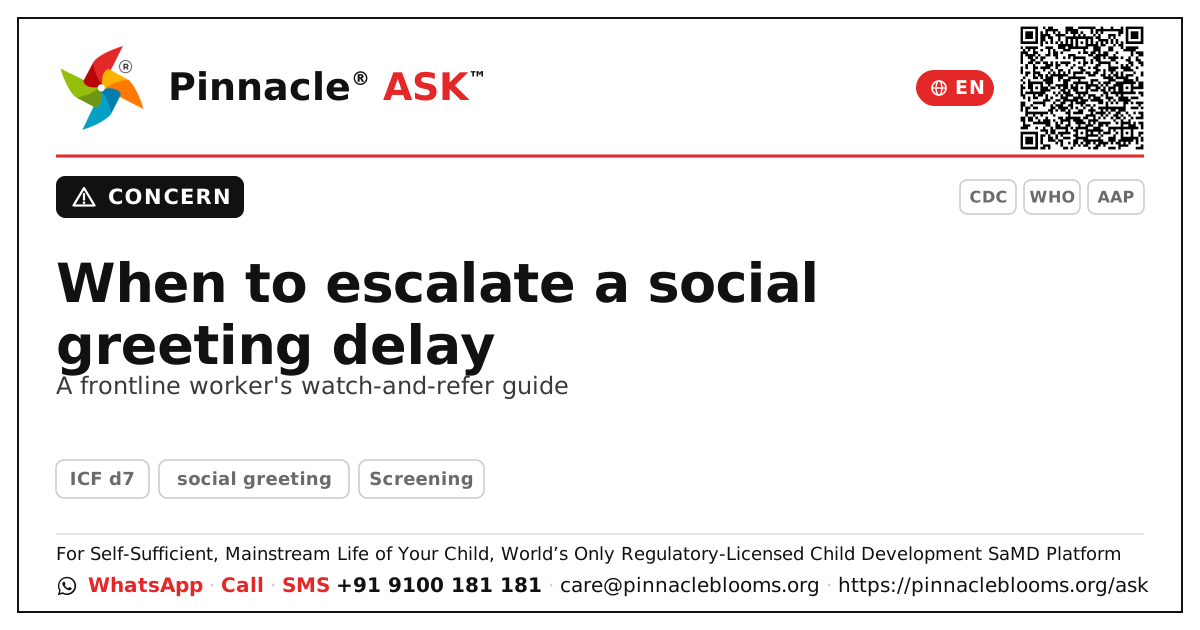
A child who waves bye-bye, smiles back or says hello in their own way is showing us their social world is opening — when that's slow to come, a calm, timely look is exactly the right response.
In short
Social greeting — waving, smiling in return, saying or gesturing "hi" and "bye" — usually emerges across the first and second year, with most toddlers waving by around 12–15 months. As a frontline health worker, escalate to a developmental check when greeting is clearly absent for age AND travels with other red flags: no response to name, little eye contact or shared smiling, no pointing or showing, few or no words, or loss of a skill once present. One isolated delay is a reason to watch and review; a cluster, or any regression, is a reason to refer now — not to wait.When to escalate
Use a simple watch-and-refer approach at each contact:- Watch and review in 4–6 weeks — if greeting is the only concern, the child is otherwise connecting (eye contact, shared smiles, responding to name), and there's no regression.
- Refer for a developmental check now when absent greeting comes with any of: not responding to name by 12 months, no waving/pointing/showing by 15–18 months, little or no babble or words, minimal eye contact or social smiling, or no interest in people.
- Refer promptly regardless of age if a child has lost greeting, words or social skills once present, or if a parent feels something has changed — parent instinct is valuable screening information.
Greeting is a single ICF activity (d7, interpersonal interactions). It is one data point, never a diagnosis — your job is to spot the pattern and route the family kindly and early.
The Pinnacle way
A clinical AbilityScore® and any diagnosis are formed only at a Pinnacle Blooms Network centre, under qualified clinician care — never from a checklist or a single missed milestone. Our clinicians build a full picture of how a child connects, plays and communicates. You can read more about social greeting and how we support early social communication, and our speech therapy team works closely with families once a referral arrives.Trusted sources
WHO ICF framework (interpersonal interactions, chapter d7); CDC "Learn the Signs, Act Early" developmental milestones and act-early guidance; American Academy of Pediatrics (healthychildren.org) on developmental surveillance and when to refer in primary care.Next step — When you see absent greeting plus other flags, route the family today. Book a developmental assessment with a Pinnacle clinician for a calm, clear review.
This is general information, not a diagnosis — a clinical AbilityScore® and any diagnosis are formed only at a Pinnacle Blooms Network centre under qualified clinician care.
What to watch
Escalate when absent greeting travels with red flags: no response to name by 12 months, no waving, pointing or showing by 15–18 months, little eye contact or social smiling, few or no words, or no interest in people. Refer promptly if a child has lost greeting, words or social skills once present, or if a parent senses a change. A single isolated delay is a watch-and-review; a cluster or any regression is a refer-now.
Try this at home
At each contact, watch a quick greeting in action — say hi and wave, then see if the child looks, smiles or gestures back. A short note of what you see and the parent's own observations gives the assessing clinician a clear, useful picture.
Trusted sources
Developed by SETU Consortium · Pinnacle Blooms Network · Last reviewed 2026-06-10 · reviewed every 540 days
This is general information, not a diagnosis. A clinical AbilityScore® and any diagnosis are formed only at a Pinnacle Blooms Network centre, under qualified clinician care.
Frequently asked
By what age should a child usually wave or greet?
Most toddlers wave bye-bye and respond to a greeting by around 12–15 months, with social smiling appearing much earlier. Greeting can take different forms — a wave, a smile, a sound or a word. A single delay alone is a reason to watch and review, not to alarm a family.
Is absent greeting on its own a reason to refer?
Usually not on its own. If greeting is the only concern and the child otherwise connects — eye contact, shared smiles, responding to name — a watch-and-review in 4–6 weeks is reasonable. Refer when it clusters with other flags or when there is any loss of skills.
What makes a referral urgent?
Any regression — losing greeting, words or social skills once present — warrants prompt referral regardless of age, as does a parent's strong sense that something has changed. Trust that observation and route the family without delay.