
YOUR QUESTION. A CLEARER NEXT STEP.
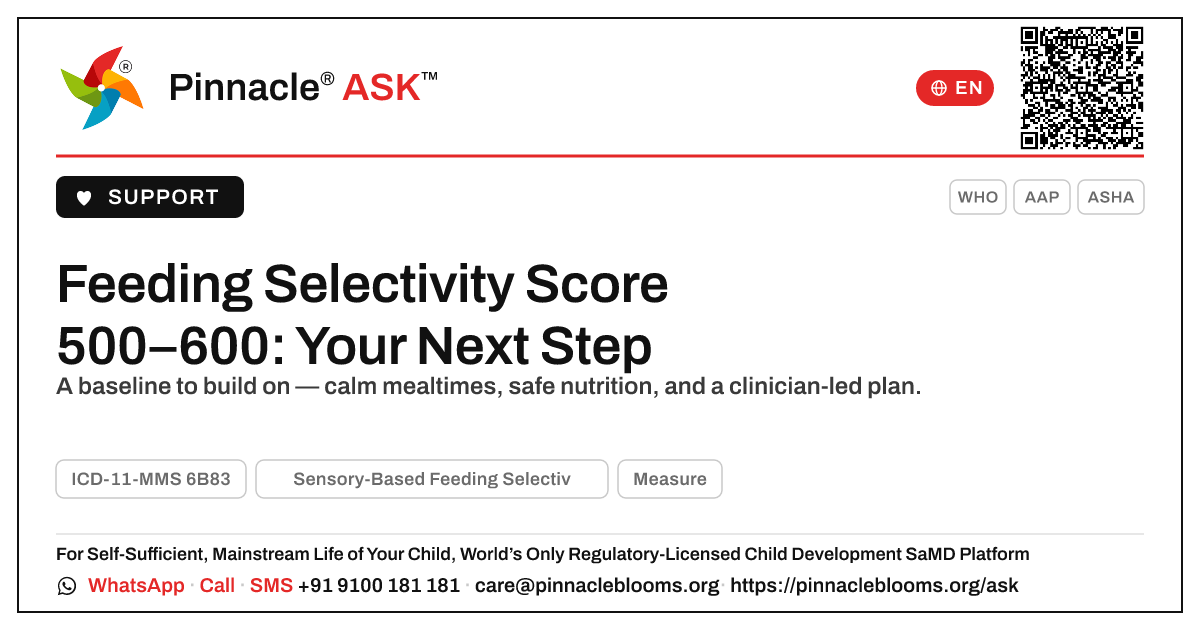
Next Steps for a 500–600 AbilityScore in Feeding Selectivity
A 500–600 AbilityScore for Sensory-Based Feeding Selectivity is a baseline, not a verdict. Confirm growth and nutrition are safe, build calm pressure-free mealtimes, and turn the band into a structured feeding and sensory plan with a clinician who re-measures progress against your child's own baseline.
In this answer 5 sections
An AbilityScore in the 500–600 band is a clear starting line — not a verdict. Here is exactly what to do next.
In short
A score in the 500–600 band for Sensory-Based Feeding Selectivity tells you where your child is right now with how they accept food, textures and the whole sensory experience of eating — it is your child's own baseline, not a label or a limit. The next step is simple and hopeful: turn that baseline into a plan with a clinician, who will confirm what's driving the selectivity and start gentle, structured feeding support. Progress is real and measurable from here.
What this band usually means
Sensory-based feeding selectivity (within ICD-11 6B83) is when a child limits foods strongly by how they feel, look, smell or sound — not simply by preference. A 500–600 baseline typically reflects meaningful selectivity that benefits from structured support, while leaving a great deal of room to grow. What matters now:
- Safety first — check that growth, weight and nutrition are on track; flag any choking, gagging, pain or weight loss to your paediatrician promptly.
- Build the eating environment — calm, predictable mealtimes, no pressure, the same table and seat, your child eating with you.
- Widen gently — let your child touch, smell and play with new foods with zero expectation to eat them; tolerance comes before tasting.
When to act, and how
Because feeding touches nutrition and growth, this is worth acting on sooner rather than later. A clinician will look at sensory processing, oral-motor skills and mealtime patterns together, then shape a feeding and sensory therapy plan tailored to your child — and re-measure against this same baseline so you can see the band move.
The Pinnacle way
Developmental measurement supports care planning; diagnosis requires an appropriately qualified healthcare professional., under the care of a qualified clinician — never from an online figure alone. Our therapists work across feeding and sensory support and pair it with speech and oral-motor therapy where helpful, tracking change against your child's own AbilityScore baseline. With 25 million+ therapy sessions and 4.95 lakh+ families served across 70+ centres, the path from this band is well-walked and hopeful.
Trusted sources
WHO ICD-11 (6B83, feeding disorder); American Academy of Pediatrics guidance on feeding and growth (healthychildren.org); American Speech-Language-Hearing Association on paediatric feeding and swallowing.
Next step — Turn this baseline into a plan: book a feeding and sensory assessment with a Pinnacle clinician.
This is general information, not a diagnosis — individual assessment and diagnosis require an appropriately qualified healthcare professional.
CONNECT THE ANSWER TO YOUR CHILD’S DAY
Something to notice. Something to discuss.
What to notice
Act sooner if you notice weight loss or poor growth, frequent gagging or choking, fewer than ~10–15 accepted foods, distress or vomiting at meals, or whole food groups (e.g. all proteins) being refused.
In everyday life
Put one tiny new food on your child's plate with zero pressure to eat it — just to look at, touch or smell. Eat it yourself and stay relaxed. Repeated calm exposure, not coaxing, is what slowly widens the menu.
Bring your observations and questions to your child’s professional. Choose activities that suit your child’s comfort, abilities and agreed plan.
Bring your questions to a first visitQuestions families ask
Is a 500–600 AbilityScore band a diagnosis of a feeding disorder?
No. It is a structured snapshot of where your child is now with feeding selectivity — their own baseline. A diagnosis is made only by a qualified clinician at a Pinnacle Blooms Network centre, after a full assessment that considers sensory, oral-motor and growth factors together.
Should I worry about my child's nutrition at this band?
It's worth checking, not panicking. Ask your paediatrician to confirm growth and weight are on track, and flag any choking, gagging, pain or weight loss promptly. Many children in this band eat enough to grow well while still needing support to widen their range.
How quickly can the band improve with therapy?
Feeding progress moves in small, real-life steps — tolerating a food nearby, then touching it, then tasting it. Your clinician re-measures against this same baseline so even gradual gains become visible. The aim is steady, lasting change rather than a quick fix.
FOLLOW THE SOURCE
References behind this answer.
- Organisation website · further readingWHO ICD-11 — feeding/eating disorder
- Organisation website · further readingAAP — feeding and growth guidance
- Organisation website · further readingASHA — paediatric feeding and swallowing
References are supplied with this answer. An organisation homepage offers further reading; it does not establish an independent review of this page.
Content attribution: SETU Consortium · Pinnacle Blooms Network.
PEOPLE, TOPICS & DEVELOPMENT
See the connections.
Browse the wider question collections connected with this answer’s audience, developmental area and stage.
FROM UNDERSTANDING TO PURPOSEFUL SUPPORT
One question. Your child’s whole life.
Your child’s self-sufficient, mainstream-included life is the purpose from the beginning. At Pinnacle, that purpose shapes what we understand, the goals we choose, the people we bring together, everyday practice and review.
Connect this question with the right support.
Explore how the relevant service contributes to everyday abilities, then speak with us about your child.
Make the next conversation useful.
Bring the situations you notice at home or school. We’ll explain a suitable service, centre and first visit, including availability and fees, before you decide.
How PinnacleAI® connects the journeyExplore the seven stages
- 1Understand abilities
A starting picture of your child’s capabilities.
- 2Choose meaningful goals
Readiness and a plan shaped around the child.
- 3Bring the right support together
Suitable therapies and people for those goals.
- 4Carry practice into everyday life
Guidance for family, home and school.
- 5Track and correct
Use observations to adjust the plan.
- 6Reassess and review
Decide what to continue, change or do next.
- 7Grow independence and participation
The child’s life gives each step its purpose.
Explore the whole PinnacleAI® system → · Participation at school and in the community →
PINNACLE’S EVIDENCE, OPEN TO YOU
Look at the evidence behind our work.
Read our research, inspect the original regulatory documents and check what each institutional measure means.
General information supports a conversation with an appropriately qualified professional. Advice, goals and support depend on the individual child.