
YOUR QUESTION. A CLEARER NEXT STEP.
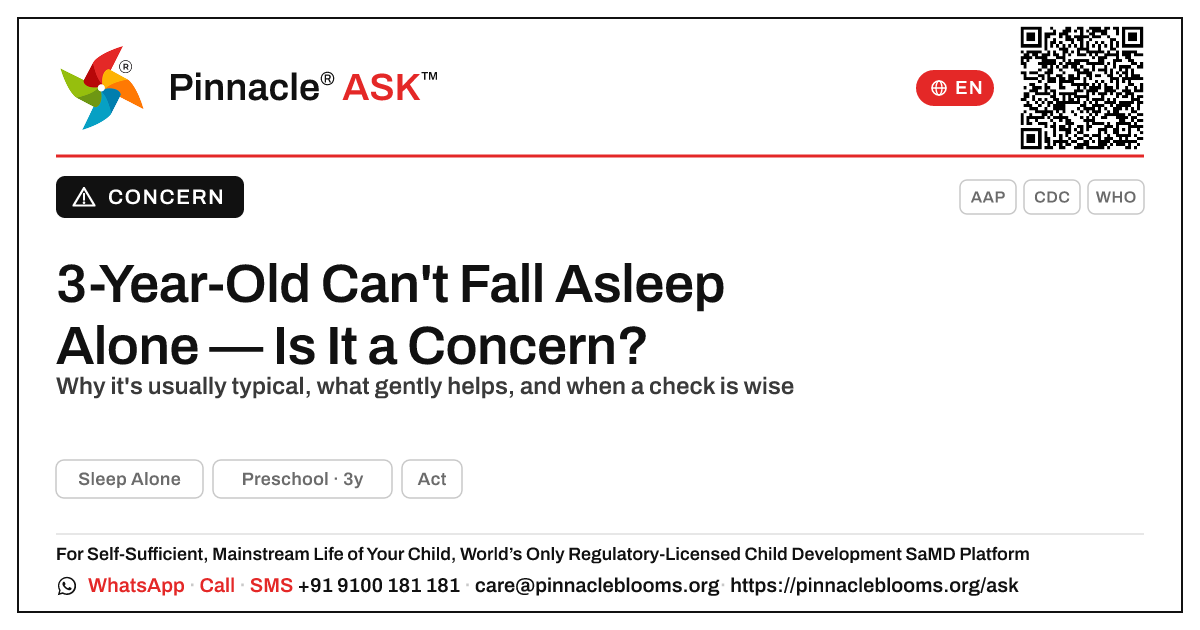
Is It a Concern If My 3-Year-Old Can't Fall Asleep Alone?
At three, needing a parent's presence to fall asleep is developmentally typical and very common — self-settling is a learned skill that is still emerging at this age. A calm, predictable routine and a gradual hand-back usually help it grow over the coming months. A wider check is only worth considering if poor sleep comes with loud snoring or breathing pauses, severe nightly distress, daytime exhaustion, or concerns about speech, attention or behaviour.
In this answer 5 sections
Bedtime tears and a small hand reaching for yours at three are some of the most ordinary, loving moments of early childhood.
In short
No — a 3-year-old needing your presence to fall asleep is developmentally typical and very common. At this age, the ability to self-settle is still emerging, and many preschoolers genuinely prefer company at bedtime. It usually settles gently over the coming months with a calm, predictable routine. A developmental check is only worth considering if poor sleep travels alongside daytime concerns about talking, attention, behaviour or breathing.
What's typical at 3 years
Falling asleep independently is a learned life skill, not an automatic milestone — and three is right in the middle of learning it. Many preschoolers still want a parent nearby, a hand to hold, or one more cuddle, and that is healthy attachment, not a problem.
Gentle things that help self-settling grow:
- A predictable wind-down — the same calm sequence (bath, teeth, two stories, lights low) tells the body sleep is coming.
- Consistent timing — roughly the same bedtime and wake time, even at weekends, steadies the body clock.
- A gradual hand-back — sit by the bed, then a little further each few nights, so your child learns to drift off with less and less help.
- A comfort object — a soft toy or blanket can stand in for your presence as confidence grows.
- Screen-free last hour — bright screens delay the sleepy signal.
When a check is worth it
Speak to a clinician if your child snores loudly, gasps or stops breathing in sleep, is extremely difficult to settle every single night with major distress, seems exhausted or very irritable by day, or if sleep worries sit alongside concerns about speech, social connection, attention or behaviour. These point to a wider review rather than a bedtime problem alone.
The Pinnacle way
A clinical AbilityScore® and any diagnosis are formed only at a Pinnacle Blooms Network centre, under qualified clinician care — never from an online list. If bedtime worries sit beside other developmental questions, our team can take a calm, whole-child look at routines, regulation and milestones. Explore our occupational therapy support for self-regulation and sleep routines, and start anytime at Pinnacle Blooms Network.
Trusted sources
American Academy of Pediatrics guidance (healthychildren.org) on healthy sleep habits and bedtime routines for preschoolers; CDC resources on recommended sleep duration for young children; WHO nurturing-care framework on responsive caregiving and child wellbeing.
Next step — Trust your instincts and keep the bedtime routine warm and steady. If you'd like a calm, whole-child review, book a developmental assessment with a Pinnacle clinician.
This is general information, not a diagnosis — individual assessment and diagnosis require an appropriately qualified healthcare professional.
CONNECT THE ANSWER TO YOUR CHILD’S DAY
Something to notice. Something to discuss.
What to notice
Seek a check if your child snores loudly, gasps or stops breathing in sleep, is extremely distressed at every bedtime, seems exhausted or very irritable by day, or if sleep worries sit alongside concerns about speech, social connection, attention or behaviour.
In everyday life
Keep one calm, repeatable wind-down sequence each night, then gradually move your spot a little further from the bed every few nights — so your child slowly learns to drift off with less and less help.
Bring your observations and questions to your child’s professional. Choose activities that suit your child’s comfort, abilities and agreed plan.
Bring your questions to a first visitQuestions families ask
At what age do most children fall asleep on their own?
There is wide normal variation. Many children begin self-settling reliably somewhere between three and five years, but plenty of three-year-olds still need a parent's presence — this is healthy attachment, not a delay. A steady routine and a gentle, gradual hand-back help the skill grow over months.
How can I help my 3-year-old learn to fall asleep alone?
Use the same calm wind-down each night, keep bedtime and wake time consistent, offer a comfort object, and avoid screens in the last hour. Then gradually reduce your help — sit by the bed, then a little further each few nights — so your child learns to drift off with less support.
When should I be worried about my child's sleep?
Speak to a clinician if your child snores loudly or gasps or stops breathing in sleep, is severely distressed at every bedtime, seems exhausted or very irritable by day, or if sleep worries come alongside concerns about talking, attention, social connection or behaviour.
FOLLOW THE SOURCE
References behind this answer.
- Organisation website · further readingAAP healthychildren.org — healthy sleep habits for young children
- Organisation website · further readingCDC — recommended sleep for children
- Organisation website · further readingWHO Nurturing Care Framework — responsive caregiving
References are supplied with this answer. An organisation homepage offers further reading; it does not establish an independent review of this page.
Content attribution: SETU Consortium · Pinnacle Blooms Network.
PEOPLE, TOPICS & DEVELOPMENT
See the connections.
Browse the wider question collections connected with this answer’s audience, developmental area and stage.
FROM UNDERSTANDING TO PURPOSEFUL SUPPORT
One question. Your child’s whole life.
Your child’s self-sufficient, mainstream-included life is the purpose from the beginning. At Pinnacle, that purpose shapes what we understand, the goals we choose, the people we bring together, everyday practice and review.
Connect this question with the right support.
Start with your child’s strengths, your observations and what you want everyday life to become.
Make the next conversation useful.
Bring the situations you notice at home or school. We’ll explain a suitable service, centre and first visit, including availability and fees, before you decide.
How PinnacleAI® connects the journeyExplore the seven stages
- 1Understand abilities
A starting picture of your child’s capabilities.
- 2Choose meaningful goals
Readiness and a plan shaped around the child.
- 3Bring the right support together
Suitable therapies and people for those goals.
- 4Carry practice into everyday life
Guidance for family, home and school.
- 5Track and correct
Use observations to adjust the plan.
- 6Reassess and review
Decide what to continue, change or do next.
- 7Grow independence and participation
The child’s life gives each step its purpose.
Explore the whole PinnacleAI® system → · Participation at school and in the community →
PINNACLE’S EVIDENCE, OPEN TO YOU
Look at the evidence behind our work.
Read our research, inspect the original regulatory documents and check what each institutional measure means.
General information supports a conversation with an appropriately qualified professional. Advice, goals and support depend on the individual child.