
YOUR QUESTION. A CLEARER NEXT STEP.
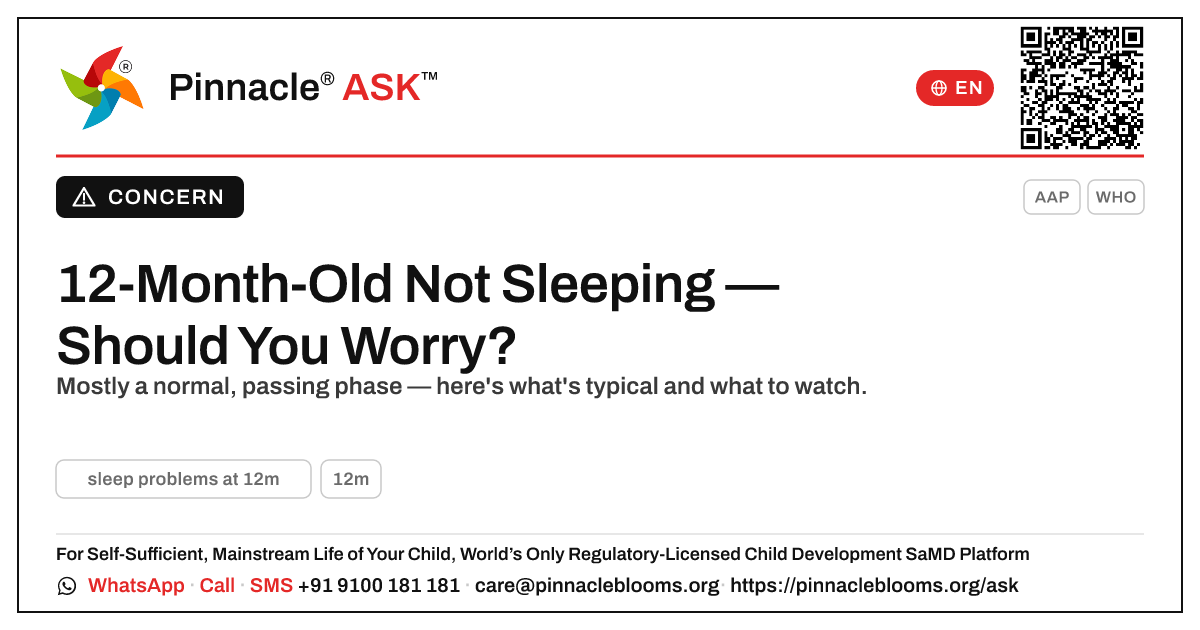
My 12-month-old won't sleep well — should I worry?
Unsettled sleep at 12 months is very common and usually a passing, normal phase linked to developmental leaps, teething or a settling routine — not a warning sign. Watch the body first: snoring or breathing pauses, poor weight gain, or daytime effects deserve a doctor's check. A calm bedtime routine helps most one-year-olds.
In this answer 5 sections
Broken nights at one year old can leave the whole family exhausted — but for most 12-month-olds, this is a normal, passing phase, not a warning sign.
In short
At 12 months, unsettled sleep is extremely common and usually not a cause for worry. Many one-year-olds wake several times a night, resist bedtime, or shift their nap pattern — this often reflects big developmental leaps (crawling, standing, first words), teething, or simply a sleep routine that is still settling. What matters more than perfect nights is whether your child is feeding, growing, playing and connecting well during the day.
What's normal — and what's worth a closer look
Most 12-month-olds need roughly 11–14 hours of sleep across a day, including one or two daytime naps. Night-waking, separation protest at bedtime, and shorter naps during a developmental burst are all typical and tend to ease within weeks.
It is worth a gentle word with your doctor if you notice:
- Loud snoring, gasping, or long pauses in breathing during sleep
- Not gaining weight or appearing unwell, very irritable or floppy through the day
- Sleep so disrupted it's affecting daytime alertness, feeding or your child's mood
- A sudden change from previously settled sleep with no obvious cause
These point to checking the body first (breathing, ears, reflux, iron) — not to a developmental concern.
Simple steps that often help
A calm, predictable wind-down — dim lights, a bath, a story, the same few minutes every night — helps a one-year-old's body learn when sleep is coming. Keep daytime naps from creeping too late, and let your child practise settling in their cot while drowsy but still awake.
The Pinnacle way
Poor sleep at 12 months is, on its own, almost never a developmental red flag — but if you'd like reassurance, Developmental measurement supports care planning; diagnosis requires an appropriately qualified healthcare professional., under qualified clinician care, never from an online form. If sleep sits alongside other worries about how your child is communicating, moving or connecting, a calm developmental check can give you clarity. Understanding how we measure your child's starting point and our gentle occupational-therapy approach to routines and regulation can help you decide your next step.
Trusted sources
American Academy of Pediatrics guidance on healthy infant sleep and safe sleep environments; WHO guidance on early childhood development and nurturing care.
Next step — Persistent broken nights deserve a quick check with your paediatrician first; if you'd also like a developmental view, a Pinnacle clinician can guide you.
This is general information, not a diagnosis — individual assessment and diagnosis require an appropriately qualified healthcare professional.
CONNECT THE ANSWER TO YOUR CHILD’S DAY
Something to notice. Something to discuss.
What to notice
Loud snoring, gasping or breathing pauses in sleep; not gaining weight or seeming unwell or floppy by day; or a sudden, unexplained change from previously settled sleep — these warrant a prompt word with your paediatrician.
In everyday life
Build the same short wind-down every night — dim lights, bath, one story — and place your baby in the cot drowsy but still awake, so they practise settling themselves.
Bring your observations and questions to your child’s professional. Choose activities that suit your child’s comfort, abilities and agreed plan.
Bring your questions to a first visitQuestions families ask
Is it normal for my 12-month-old to wake several times a night?
Yes. Frequent night-waking at one year is very common and often coincides with big developmental leaps like crawling, standing or first words, or with teething. It usually settles within weeks as routines mature.
How much sleep does a 12-month-old need?
Most one-year-olds need roughly 11 to 14 hours across the whole day, including one or two daytime naps. Every child varies, so look at your child's daytime mood and alertness rather than chasing an exact number.
When should poor sleep make me see a doctor?
See your paediatrician if you notice loud snoring or breathing pauses during sleep, poor weight gain, your child seeming unwell, very irritable or floppy by day, or a sudden unexplained change from previously settled sleep.
Does poor sleep mean my baby has a developmental problem?
Almost never on its own. Sleep difficulty becomes more meaningful only if it sits alongside other concerns about communication, movement or connection. If you're unsure, a calm developmental check can give you clarity.
FOLLOW THE SOURCE
References behind this answer.
- Organisation website · further readingAAP HealthyChildren: infant sleep guidance
- Organisation website · further readingAmerican Academy of Pediatrics: safe sleep
- Organisation website · further readingWHO Nurturing Care Framework
References are supplied with this answer. An organisation homepage offers further reading; it does not establish an independent review of this page.
Content attribution: SETU Consortium · Pinnacle Blooms Network.
PEOPLE, TOPICS & DEVELOPMENT
See the connections.
Browse the wider question collections connected with this answer’s audience, developmental area and stage.
FROM UNDERSTANDING TO PURPOSEFUL SUPPORT
One question. Your child’s whole life.
Your child’s self-sufficient, mainstream-included life is the purpose from the beginning. At Pinnacle, that purpose shapes what we understand, the goals we choose, the people we bring together, everyday practice and review.
Connect this question with the right support.
Start with your child’s strengths, your observations and what you want everyday life to become.
Make the next conversation useful.
Bring the situations you notice at home or school. We’ll explain a suitable service, centre and first visit, including availability and fees, before you decide.
How PinnacleAI® connects the journeyExplore the seven stages
- 1Understand abilities
A starting picture of your child’s capabilities.
- 2Choose meaningful goals
Readiness and a plan shaped around the child.
- 3Bring the right support together
Suitable therapies and people for those goals.
- 4Carry practice into everyday life
Guidance for family, home and school.
- 5Track and correct
Use observations to adjust the plan.
- 6Reassess and review
Decide what to continue, change or do next.
- 7Grow independence and participation
The child’s life gives each step its purpose.
Explore the whole PinnacleAI® system → · Participation at school and in the community →
PINNACLE’S EVIDENCE, OPEN TO YOU
Look at the evidence behind our work.
Read our research, inspect the original regulatory documents and check what each institutional measure means.
General information supports a conversation with an appropriately qualified professional. Advice, goals and support depend on the individual child.