
YOUR QUESTION. A CLEARER NEXT STEP.
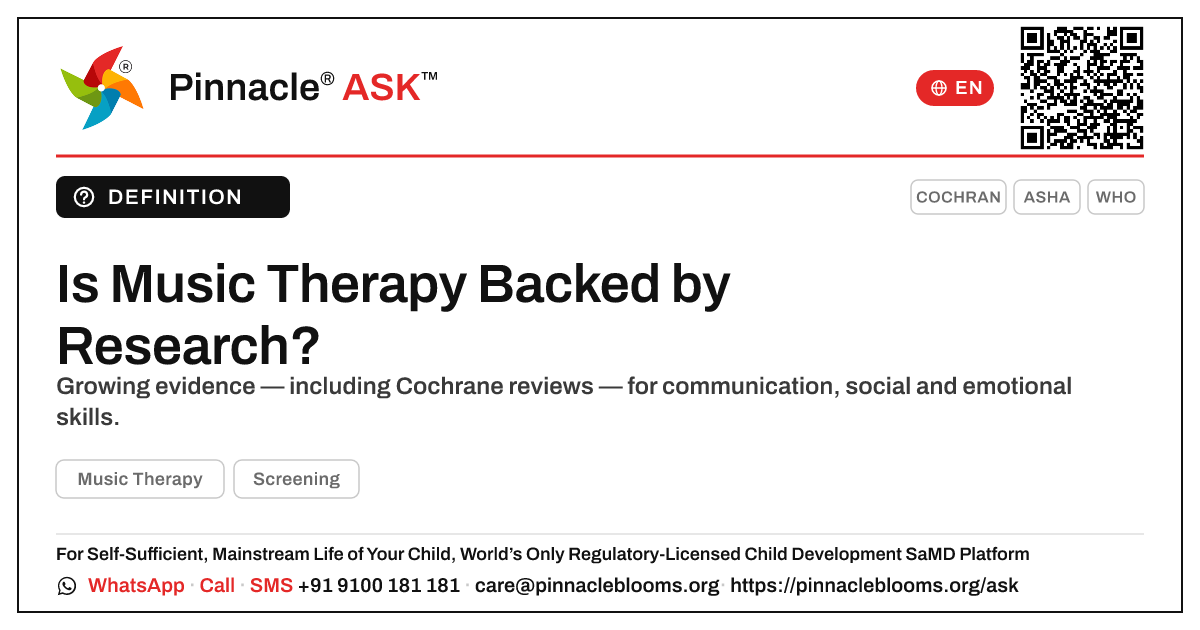
Is music therapy backed by research evidence?
Music therapy is backed by a growing research base, including Cochrane systematic reviews, particularly for communication, social interaction and emotional regulation in children. It is a structured, goal-directed therapy delivered by trained professionals, not simply playing songs. Evidence is strongest when music therapy is individualised and combined with a wider developmental plan rather than used alone.
In this answer 5 sections
When a child who barely speaks suddenly hums along to a familiar tune, you glimpse music's quiet power — and yes, the research is catching up to what parents have long sensed.
In short
Yes — music therapy is supported by a growing body of research evidence, including systematic reviews, for several areas of child development such as communication, social engagement and emotional regulation. It is recognised as a structured, goal-directed therapy delivered by trained professionals, not simply playing songs. The evidence is strongest when music therapy is individualised and woven into a wider developmental plan, rather than used alone — and quality of studies continues to improve year on year.
What the science says
Music therapy uses rhythm, melody, singing and instrument play as deliberate tools to build skills — turn-taking, joint attention, shared eye contact, vocalisation, motor coordination and self-regulation. Because music activates many brain networks at once (movement, language, emotion, reward), it can offer a gentle, motivating bridge into skills a child finds hard through words alone.
For autistic children, reviews — including Cochrane evidence — suggest music therapy can help social interaction, communication initiation and parent–child connection compared with no therapy or placebo activities. There is also encouraging research in areas such as emotional regulation, attention and quality of family interaction. As with most developmental therapies, studies vary in size and design, so clinicians read the evidence thoughtfully and set realistic, measurable goals rather than promising fixed outcomes.
When music therapy helps most
Music therapy tends to add the most value when it has clear developmental targets, is delivered by a qualified therapist, and complements — rather than replaces — speech, occupational or behavioural support where those are indicated. A good plan names what you are hoping to grow (for example, more shared moments, more sounds, calmer transitions) and reviews progress over time.
The Pinnacle way
This is general information, not a diagnosis — a clinical AbilityScore® and any diagnosis are formed only at a Pinnacle Blooms Network centre, under qualified clinician care, never from an app or form. Our therapists consider whether music therapy fits your child's individual profile and combine it sensitively with speech therapy and broader developmental support, with a free screening to map the right starting point.
Trusted sources
Cochrane reviews on music therapy for autism; the American Speech-Language-Hearing Association on communication-focused interventions; WHO guidance on nurturing care and child development. All paraphrased.
Next step — Curious whether music therapy could help your child? Book a free developmental screening and let our clinicians map a personalised plan.
CONNECT THE ANSWER TO YOUR CHILD’S DAY
Something to notice. Something to discuss.
What to notice
Look for music therapy that has clear, individualised developmental goals, is delivered by a trained therapist, and forms part of a wider plan — rather than generic 'music classes' promised as a cure or used in place of indicated speech, occupational or behavioural support.
In everyday life
Weave musical turn-taking into daily life: sing a simple call-and-response song, pause expectantly for your child to fill in a word or sound, and use a steady rhythm to make transitions (tidy-up, bath, sleep) calmer and more predictable.
Bring your observations and questions to your child’s professional. Choose activities that suit your child’s comfort, abilities and agreed plan.
Bring your questions to a first visitQuestions families ask
Is music therapy the same as music lessons?
No. Music lessons teach a child to play an instrument. Music therapy uses rhythm, song and instrument play as deliberate tools, guided by a trained therapist, to build developmental skills like communication, social connection and self-regulation against clear goals.
Does research show music therapy works for autistic children?
Reviews, including Cochrane evidence, suggest music therapy can support social interaction, communication initiation and parent–child connection in autistic children compared with no therapy or placebo activities. Outcomes vary by child, so clinicians set individual, measurable goals.
Can music therapy replace speech therapy?
Generally no. The evidence is strongest when music therapy complements rather than replaces therapies like speech, occupational or behavioural support. A clinician helps decide the right blend for your child's individual profile.
FOLLOW THE SOURCE
References behind this answer.
- Organisation website · further readingCochrane — reviews of music therapy for autism
- Organisation website · further readingASHA — communication-focused interventions
- Organisation website · further readingWHO Nurturing Care Framework — child development
References are supplied with this answer. An organisation homepage offers further reading; it does not establish an independent review of this page.
Content attribution: SETU Consortium · Pinnacle Blooms Network.
PEOPLE, TOPICS & DEVELOPMENT
See the connections.
Browse the wider question collections connected with this answer’s audience, developmental area and stage.
FROM UNDERSTANDING TO PURPOSEFUL SUPPORT
One question. Your child’s whole life.
Your child’s self-sufficient, mainstream-included life is the purpose from the beginning. At Pinnacle, that purpose shapes what we understand, the goals we choose, the people we bring together, everyday practice and review.
Connect this question with the right support.
Start with your child’s strengths, your observations and what you want everyday life to become.
Make the next conversation useful.
Bring the situations you notice at home or school. We’ll explain a suitable service, centre and first visit, including availability and fees, before you decide.
How PinnacleAI® connects the journeyExplore the seven stages
- 1Understand abilities
A starting picture of your child’s capabilities.
- 2Choose meaningful goals
Readiness and a plan shaped around the child.
- 3Bring the right support together
Suitable therapies and people for those goals.
- 4Carry practice into everyday life
Guidance for family, home and school.
- 5Track and correct
Use observations to adjust the plan.
- 6Reassess and review
Decide what to continue, change or do next.
- 7Grow independence and participation
The child’s life gives each step its purpose.
Explore the whole PinnacleAI® system → · Participation at school and in the community →
PINNACLE’S EVIDENCE, OPEN TO YOU
Look at the evidence behind our work.
Read our research, inspect the original regulatory documents and check what each institutional measure means.
General information supports a conversation with an appropriately qualified professional. Advice, goals and support depend on the individual child.