
YOUR QUESTION. A CLEARER NEXT STEP.
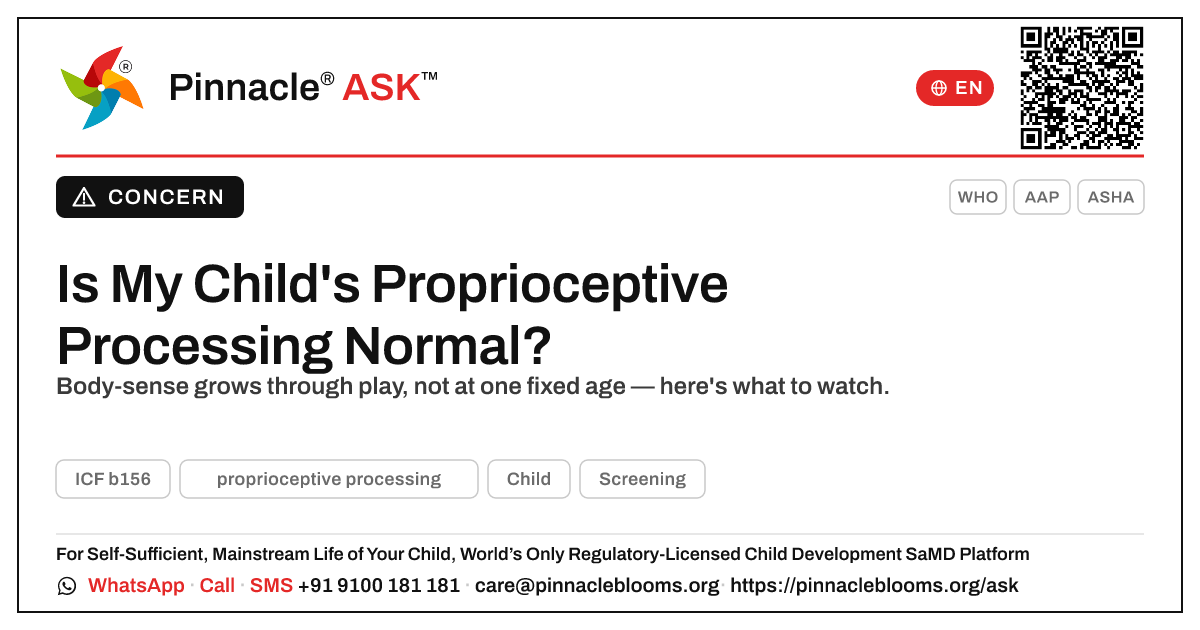
Is it normal that my child isn't yet showing proprioceptive processing?
Proprioceptive processing — the body's inner sense of position and force — doesn't appear at one fixed age; it grows gradually between 3 and 7 through climbing, carrying and active play. Rather than a single milestone, look for how your child grades pressure, manages their body and joins physical play. Seek a calm occupational-therapy screen if they seem very clumsy, crash about, or press far too hard or soft — this is early support, not a diagnosis.
In this answer 5 sections
You won't see proprioception as a single "milestone" — it's the quiet body-sense that grows with every climb, carry and cuddle.
In short
Proprioceptive processing — your child's inner sense of where their body is in space and how much force to use — isn't something that switches on at one age, so there's no single moment when it should "show up". Between 3 and 7 years it develops gradually through everyday rough-and-tumble, climbing, carrying and play. What you'd notice instead are signs that this body-sense is settling well, or small clues that it may need a little support. If your child seems unusually clumsy, crashes about, presses too hard or too softly, a calm occupational-therapy screen is the wise next step — not a diagnosis.
What to watch at 3–7 years
Proprioception shows itself indirectly, through how your child moves and handles things. Reassuring signs include managing stairs, climbing play equipment, sitting reasonably still for a story, and using roughly the right pressure when colouring or hugging. Gentle flags worth a clinician's eye:
- Force grading — pressing so hard pencils snap, or so lightly writing is faint; hugging or playing too roughly without meaning to.
- Body awareness — frequently bumping into furniture, tripping, or seeming unsure where their limbs are without looking.
- Seeking or avoiding — constantly crashing, jumping and leaning into things, or the opposite — avoiding climbing and physical play.
- Travelling with other differences — alongside delays in talking, attention or coordination.
This is about noticing patterns over weeks, not one wobbly afternoon.
The science
Proprioceptive processing (ICF b156, sensory functions) is the brain's reading of signals from muscles and joints. It matures with rich movement experience and underpins coordination, handwriting and self-regulation. A structured screen such as the Sensory Profile 2 helps a clinician see the whole sensory picture rather than one behaviour in isolation.
The Pinnacle way
A clinical AbilityScore® and any diagnosis are formed only at a Pinnacle Blooms Network centre, under qualified clinician care — never from an online list. Our occupational therapy team uses playful, body-based activities to strengthen proprioceptive processing, shaping support around your child's strengths.
Trusted sources
WHO ICF framework on sensory functions (b156); American Occupational Therapy guidance via ASHA and AAP (healthychildren.org) on sensory development and everyday movement play in young children.
Next step — Trust what you notice day to day. Book a developmental screen with a Pinnacle occupational therapist for a calm, clear look at your child's sensory and motor strengths.
CONNECT THE ANSWER TO YOUR CHILD’S DAY
Something to notice. Something to discuss.
What to notice
Watch how your child grades force (pressing too hard or too soft), their body awareness (frequent bumping, tripping, unsure of limb position), and whether they constantly crash and lean into things or avoid physical play. A gentle OT screen is wise if these patterns persist over weeks or travel with delays in talking, attention or coordination.
In everyday life
Build in 'heavy work' daily — let your child carry the grocery bag, push a laundry basket, do animal-walks or wall-pushes. These give muscles and joints rich feedback and strengthen body-sense naturally through play.
Bring your observations and questions to your child’s professional. Choose activities that suit your child’s comfort, abilities and agreed plan.
Bring your questions to a first visitQuestions families ask
At what age should proprioceptive processing 'develop' in a child?
There's no single switch-on age. Proprioception matures gradually from toddlerhood through the early school years, refined by climbing, carrying, rough-and-tumble and everyday active play. We look at patterns of body-awareness and force-grading rather than one milestone moment.
How can I tell if my child's body-sense is developing well?
Reassuring signs include managing stairs and climbing frames, sitting reasonably still for a story, using roughly the right pressure when colouring or hugging, and joining physical play with confidence. These show proprioception is settling nicely.
When should I seek a check?
Consider a calm occupational-therapy screen if your child often presses far too hard or too soft, bumps into things frequently, crashes about or avoids physical play — especially if alongside delays in talking, attention or coordination. This is early support, not a diagnosis.
FOLLOW THE SOURCE
References behind this answer.
- Organisation website · further readingWHO ICF — sensory functions (b156)
- Organisation website · further readingAAP HealthyChildren — sensory development in children
- Organisation website · further readingASHA — sensory and motor development guidance
References are supplied with this answer. An organisation homepage offers further reading; it does not establish an independent review of this page.
Content attribution: SETU Consortium · Pinnacle Blooms Network.
PEOPLE, TOPICS & DEVELOPMENT
See the connections.
Browse the wider question collections connected with this answer’s audience, developmental area and stage.
FROM UNDERSTANDING TO PURPOSEFUL SUPPORT
One question. Your child’s whole life.
Your child’s self-sufficient, mainstream-included life is the purpose from the beginning. At Pinnacle, that purpose shapes what we understand, the goals we choose, the people we bring together, everyday practice and review.
Connect this question with the right support.
Start with your child’s strengths, your observations and what you want everyday life to become.
Make the next conversation useful.
Bring the situations you notice at home or school. We’ll explain a suitable service, centre and first visit, including availability and fees, before you decide.
How PinnacleAI® connects the journeyExplore the seven stages
- 1Understand abilities
A starting picture of your child’s capabilities.
- 2Choose meaningful goals
Readiness and a plan shaped around the child.
- 3Bring the right support together
Suitable therapies and people for those goals.
- 4Carry practice into everyday life
Guidance for family, home and school.
- 5Track and correct
Use observations to adjust the plan.
- 6Reassess and review
Decide what to continue, change or do next.
- 7Grow independence and participation
The child’s life gives each step its purpose.
Explore the whole PinnacleAI® system → · Participation at school and in the community →
PINNACLE’S EVIDENCE, OPEN TO YOU
Look at the evidence behind our work.
Read our research, inspect the original regulatory documents and check what each institutional measure means.
General information supports a conversation with an appropriately qualified professional. Advice, goals and support depend on the individual child.