
YOUR QUESTION. A CLEARER NEXT STEP.
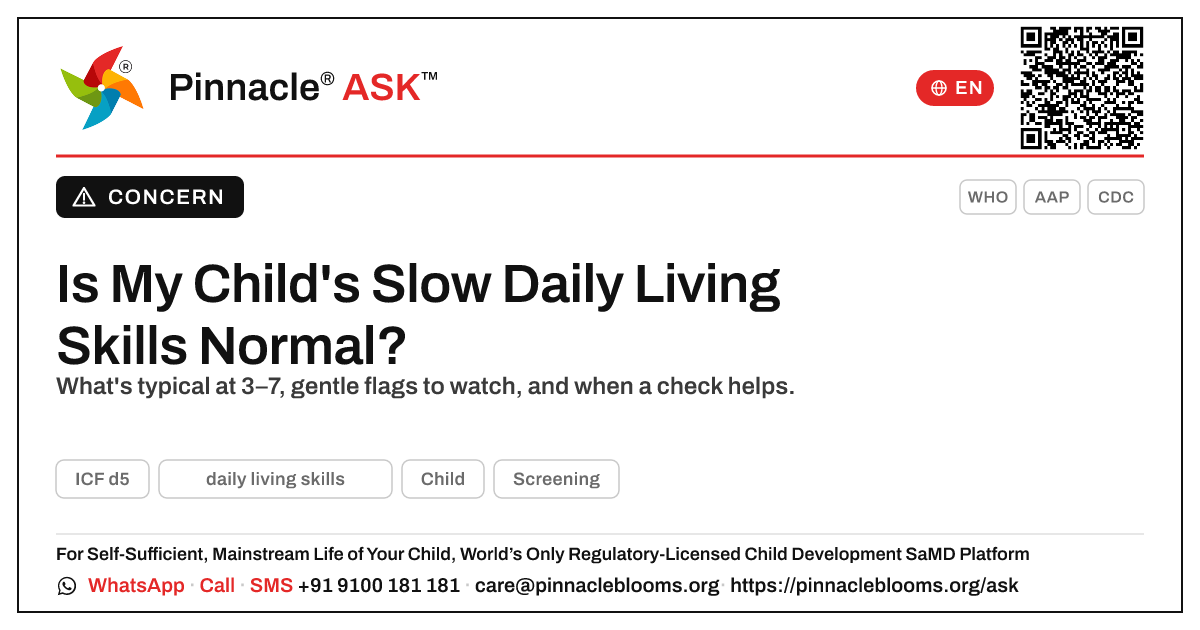
Is it normal my child isn't showing daily living skills yet?
Between 3 and 7, daily living skills like dressing, feeding and toileting emerge gradually and at very different paces, so a child taking longer is often perfectly normal. Watch the direction of travel — small steps forward over time. Seek a developmental check if there's little progress across several skills, your child can't manage tasks within their age range, or has lost a skill once mastered. This is reason to assess, not a diagnosis, because early support works best.
In this answer 4 sections
If you're watching your child take their time with everyday skills like dressing or feeding, that gentle attention is exactly what helps them grow.
In short
Between 3 and 7 years, daily living skills — dressing, feeding, toileting, washing hands, tidying up — emerge gradually and at a wide range of paces, so a child taking longer with some of these is very often perfectly normal. What matters is the direction of travel: small steps forward over the months, plenty of trying, and growing independence. If your child shows little progress over time, can't manage skills well within their age range, or has lost a skill they once had, a developmental check is wise — not because something is wrong, but because early support works beautifully.
What to watch (ages 3–7)
Daily living skills (the ICF calls this domain self-care and daily activities) build on attention, motor coordination, language and confidence, so they ripen unevenly. Reassuring signs of normal progress include trying to help with dressing, holding a spoon or cup, washing hands with reminders, and using the toilet with support. Gentle flags worth a clinician's eye:
- No independent feeding or dressing attempts well beyond when peers are managing them.
- Toileting not progressing at all by around age 4, with no forward steps.
- Strong frustration or avoidance with everyday tasks — possibly a motor, sensory or planning difficulty rather than unwillingness.
- Loss of a self-care skill your child clearly had before — this always deserves prompt review.
Remember: a single slower skill is rarely a worry; a pattern across several areas is the cue to check.
The Pinnacle way
A clinical AbilityScore® and any diagnosis are formed only at a Pinnacle Blooms Network centre, under qualified clinician care — never from an online list. Our therapists build a strengths-based picture of where your child is and shape playful, practical support so daily living skills grow step by step. Where coordination or planning needs a boost, our occupational therapy team can help.
Trusted sources
WHO ICF self-care domain (d5); American Academy of Pediatrics (healthychildren.org) on self-help milestones; CDC "Learn the Signs, Act Early" developmental guidance.
Next step — Trust what you've noticed. Book a developmental check with a Pinnacle clinician for clear, caring guidance on your child's everyday skills.
This is general information, not a diagnosis — individual assessment and diagnosis require an appropriately qualified healthcare professional.
CONNECT THE ANSWER TO YOUR CHILD’S DAY
Something to notice. Something to discuss.
What to notice
Between 3 and 7, seek a check if there's little forward progress across several self-care skills over months, no independent dressing or feeding attempts well beyond peers, toileting not progressing at all by around age 4, strong frustration or avoidance with everyday tasks, or any loss of a skill your child once had.
In everyday life
Turn one daily task into shared play — let your child pull on a sock, scoop their own food, or press the soap pump while you cheer each try. Keep a short note of new things they manage each week; small wins add up and make a clear record to share with a clinician.
Bring your observations and questions to your child’s professional. Choose activities that suit your child’s comfort, abilities and agreed plan.
Bring your questions to a first visitQuestions families ask
At what age should my child manage daily living skills on their own?
These skills emerge across a wide range. Many children begin trying to dress, feed and wash with help between 3 and 4, and grow more independent through 5 to 7. Pace varies hugely, so look for steady forward steps rather than a fixed deadline.
Is slow self-care a sign of a problem?
Usually not on its own. A single slower skill is rarely a worry. A pattern across several areas, no progress over months, or loss of a skill once mastered is the cue for a developmental check — to guide support, not to label.
How can I help build these skills at home?
Make tasks playful and break them into small steps your child can succeed at, offering plenty of try-it-yourself chances with gentle support. Praise effort, not just success, and keep routines consistent so skills become familiar.
FOLLOW THE SOURCE
References behind this answer.
- Organisation website · further readingWHO ICF self-care and daily activities domain (d5)
- Organisation website · further readingAAP healthychildren.org — self-help and developmental milestones
- Organisation website · further readingCDC — Learn the Signs, Act Early
References are supplied with this answer. An organisation homepage offers further reading; it does not establish an independent review of this page.
Content attribution: SETU Consortium · Pinnacle Blooms Network.
PEOPLE, TOPICS & DEVELOPMENT
See the connections.
Browse the wider question collections connected with this answer’s audience, developmental area and stage.
FROM UNDERSTANDING TO PURPOSEFUL SUPPORT
One question. Your child’s whole life.
Your child’s self-sufficient, mainstream-included life is the purpose from the beginning. At Pinnacle, that purpose shapes what we understand, the goals we choose, the people we bring together, everyday practice and review.
Connect this question with the right support.
Start with your child’s strengths, your observations and what you want everyday life to become.
Make the next conversation useful.
Bring the situations you notice at home or school. We’ll explain a suitable service, centre and first visit, including availability and fees, before you decide.
How PinnacleAI® connects the journeyExplore the seven stages
- 1Understand abilities
A starting picture of your child’s capabilities.
- 2Choose meaningful goals
Readiness and a plan shaped around the child.
- 3Bring the right support together
Suitable therapies and people for those goals.
- 4Carry practice into everyday life
Guidance for family, home and school.
- 5Track and correct
Use observations to adjust the plan.
- 6Reassess and review
Decide what to continue, change or do next.
- 7Grow independence and participation
The child’s life gives each step its purpose.
Explore the whole PinnacleAI® system → · Participation at school and in the community →
PINNACLE’S EVIDENCE, OPEN TO YOU
Look at the evidence behind our work.
Read our research, inspect the original regulatory documents and check what each institutional measure means.
General information supports a conversation with an appropriately qualified professional. Advice, goals and support depend on the individual child.