
problem solving
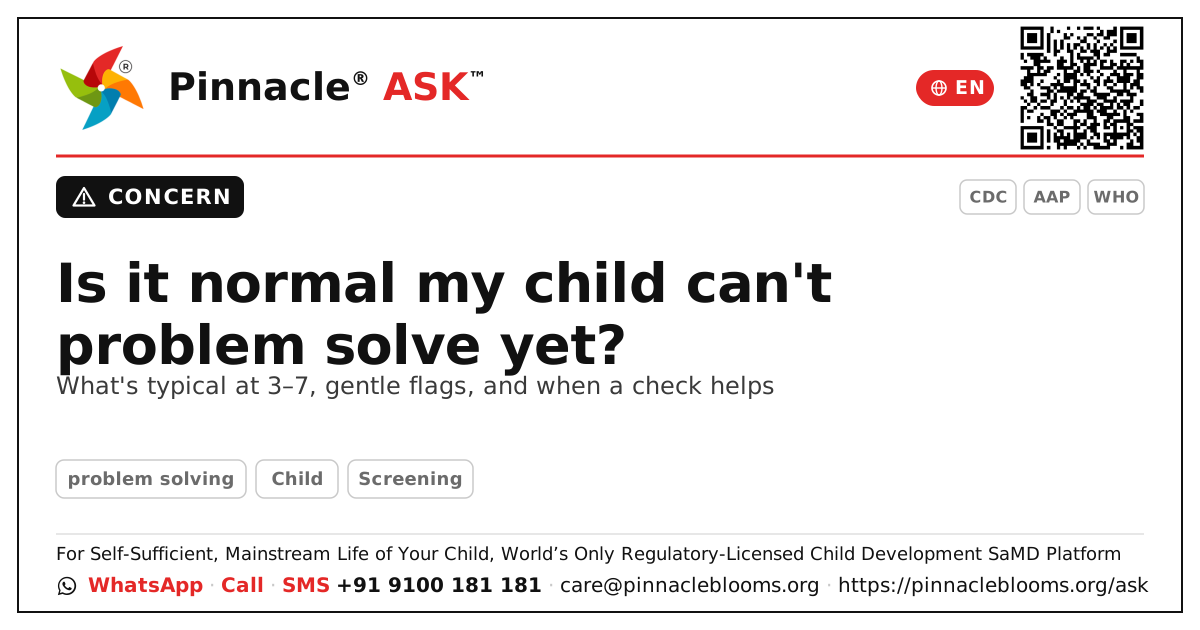
Is it normal that my child cannot problem solve yet?
For most children aged 3 to 7, problem-solving is still developing and varies hugely from child to child, so it is usually normal that your child cannot solve every problem yet. Watch the direction of travel — are new skills slowly appearing over months? Seek a developmental check if there is little curiosity or trying, no pretend or planning play by 4–5, or any loss of a skill once held. These are reasons to check, never a diagnosis.
If you're watching your little one puzzle through a task and wondering whether they should be doing more by now, that thoughtful attention is exactly what helps a child grow.
In short
For most children aged 3 to 7, problem-solving is still very much under construction — it grows in fits and starts, and a great deal of variation is completely normal. A 3-year-old might struggle with a shape sorter they'll master in weeks; a 5-year-old may need help thinking two steps ahead. So yes, it is usually normal that your child cannot solve every problem yet. What matters is the direction of travel — are new skills slowly appearing over months? If they are, you are very likely watching healthy development unfold.What to watch by age
Problem-solving means trying, getting stuck, and finding a new way — and at each age that looks different:- Around 3 — stacks a few blocks, completes simple inset puzzles, tries different approaches when one doesn't work, asks "why".
- Around 4–5 — sorts by colour or size, follows a 2–3 step instruction, plays simple pretend games with a plan, begins to predict "what happens next".
- Around 6–7 — works through simple puzzles independently, thinks ahead a step or two, copes when a plan needs changing.
Gentle flags worth a clinician's eye: little curiosity or trying across most tasks, no pretend or planning play by 4–5, great difficulty following simple instructions, or losing a skill they clearly had before. These are reasons to check, never a diagnosis.
Why patience helps
Problem-solving sits on top of attention, language, memory and confidence — so a wobble in any of those can look like a problem-solving delay when it isn't. Children also learn best when they're allowed to struggle a little before help arrives. Step back, let them try, then offer one small clue rather than the answer.The Pinnacle way
A clinical AbilityScore® and any diagnosis are formed only at a Pinnacle Blooms Network centre, under qualified clinician care — never from an online list. Our clinicians build a full picture of how your child thinks and learns, and can support thinking skills through play. Explore how problem solving develops, and how our occupational therapy team nurtures it through everyday activities.Trusted sources
CDC "Learn the Signs, Act Early" developmental milestones; American Academy of Pediatrics guidance (healthychildren.org) on cognitive development in early childhood; WHO Nurturing Care framework on early learning.Next step — Trust what you've noticed. Book a developmental check so a Pinnacle clinician can review your child's thinking skills with warmth and clarity.
This is general information, not a diagnosis — a clinical AbilityScore® and any diagnosis are formed only at a Pinnacle Blooms Network centre under qualified clinician care.
What to watch
By 3, tries different approaches and completes simple puzzles; by 4–5, sorts, follows 2–3 step instructions and plays pretend with a plan; by 6–7, works through puzzles fairly independently. Seek a check if there is little curiosity or trying across most tasks, no pretend or planning play by 4–5, great difficulty following simple instructions, or loss of a skill once held.
Try this at home
Next time your child gets stuck, pause before rescuing them. Count to ten, then offer one small clue — 'what if you turned it around?' — rather than the answer. That little gap is where problem-solving grows.
Trusted sources
Developed by SETU Consortium · Pinnacle Blooms Network · Last reviewed 2026-06-10 · reviewed every 540 days
This is general information, not a diagnosis. A clinical AbilityScore® and any diagnosis are formed only at a Pinnacle Blooms Network centre, under qualified clinician care.
Frequently asked
At what age should my child be solving problems independently?
It develops gradually. Around 3, children try different approaches and complete simple puzzles; around 4–5 they sort and follow 2–3 step plans; by 6–7 they work through simple puzzles fairly independently. Wide variation is normal — watch for steady progress over months rather than a fixed date.
Should I help my child or let them struggle?
A little struggle is healthy — it is where problem-solving grows. Pause before stepping in, then offer one small clue rather than the full answer, so your child does the thinking and feels the success.
When should I get my child's problem-solving checked?
Arrange a developmental check if there is little curiosity or trying across most tasks, no pretend or planning play by 4–5, great difficulty following simple instructions, or if your child has lost a skill they clearly had. This means a review is wise, not a diagnosis.