
YOUR QUESTION. A CLEARER NEXT STEP.
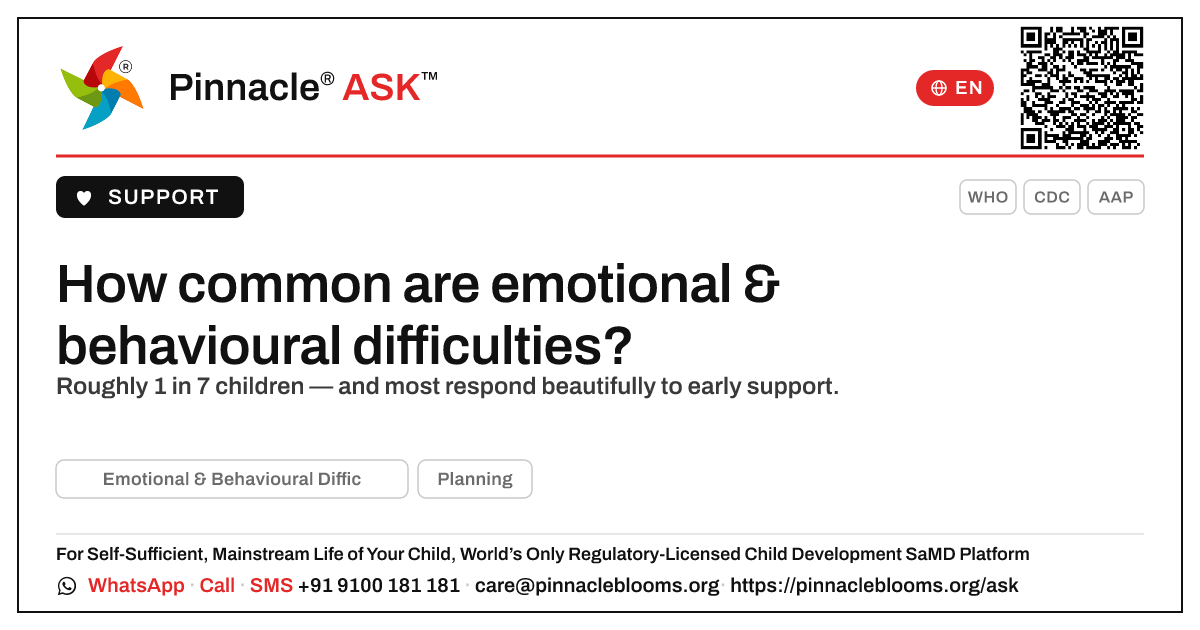
How common are emotional and behavioural difficulties in children?
Emotional and behavioural difficulties are among the most common developmental concerns in childhood, affecting roughly 1 in 7 children (around 10–20% at any time). Most are temporary or very treatable with early, warm support. AbilityScore® is part of Pinnacle’s developmental assessment. Diagnosis, where needed, requires an appropriately qualified healthcare professional.
In this answer 5 sections
Big feelings and tricky behaviours are part of growing up — and far more common than most parents realise.
In short
Emotional and behavioural difficulties are among the most common reasons families seek developmental support — studies across the world suggest that roughly 1 in 7 children and young people experience a meaningful emotional or behavioural difficulty at some point. These range from worries and big mood swings to difficulties with attention, frustration or getting along with others. The vast majority respond beautifully to early, warm, structured support — and noticing them is a strength, not a worry.
What the numbers mean
- Common, not rare. International estimates place emotional and behavioural difficulties in around 10–20% of children at any given time — so in almost every classroom, several children are quietly managing big feelings.
- They show up differently by age. A toddler may show intense tantrums or clinginess; a school-aged child may show worry, anger, withdrawal or trouble settling. These overlap with normal development, which is why patterns matter more than single moments.
- Most are temporary or very treatable. Many difficulties ease with consistency, understanding and the right environment. Where support is needed, early help works far better than waiting.
- They rarely travel alone. Emotional and behavioural difficulties often sit alongside learning, attention, sensory or communication differences — which is why a whole-child view matters.
A difficulty becoming common simply means your family is far from alone — and that well-established paths of support already exist.
When to seek a check
Consider a developmental check if difficult feelings or behaviours last for weeks, appear across more than one setting (home and school), get in the way of learning, friendships or family life, or if your child seems persistently sad, fearful, angry or withdrawn. You never need a crisis to ask — earlier is always gentler.
The Pinnacle way
AbilityScore® is part of Pinnacle’s developmental assessment. Diagnosis, where needed, requires an appropriately qualified healthcare professional — never from an app or online checklist. With 4.95 lakh+ families served across 70+ centres, our clinicians look at the whole child to understand why a behaviour is happening. Begin by exploring how we support children and families, understand your child's profile through the clinician-administered AbilityScore®, and learn how behavioural and emotional support is built around your child.
Trusted sources
WHO mental health guidance on child and adolescent wellbeing; CDC data on children's mental, behavioural and emotional health; American Academy of Pediatrics (HealthyChildren.org) guidance on emotional and behavioural development.
Next step — Wondering whether your child's big feelings need support? Book a gentle developmental assessment with a Pinnacle clinician.
This is general information, not a diagnosis — individual assessment and diagnosis require an appropriately qualified healthcare professional.
CONNECT THE ANSWER TO YOUR CHILD’S DAY
Something to notice. Something to discuss.
What to notice
Watch for difficult feelings or behaviours that last for weeks, appear across both home and school, disrupt learning, friendships or family life, or persistent sadness, fear, anger or withdrawal.
In everyday life
When big feelings hit, name them calmly before fixing them — 'You're really frustrated right now' helps a child feel understood and slowly builds their ability to manage emotions themselves.
Bring your observations and questions to your child’s professional. Choose activities that suit your child’s comfort, abilities and agreed plan.
Bring your questions to a first visitQuestions families ask
How common are emotional and behavioural difficulties in children?
They are among the most common childhood developmental concerns — international estimates suggest around 10–20% of children, or roughly 1 in 7, experience a meaningful emotional or behavioural difficulty at some point. Your family is far from alone.
Are these difficulties usually permanent?
No. Many are temporary or part of normal development, and most respond very well to early, consistent, warm support. Patterns that last for weeks and affect more than one setting are the ones worth checking.
When should I seek help?
Consider a check if difficult feelings or behaviours persist for weeks, appear at both home and school, interfere with learning, friendships or family life, or if your child seems persistently sad, fearful, angry or withdrawn. You don't need a crisis to ask.
FOLLOW THE SOURCE
References behind this answer.
- Source referenceWHO — child and adolescent mental health
- Source referenceCDC — data on children's mental and behavioural health
- Source referenceAAP HealthyChildren.org — emotional and behavioural development
References are supplied with this answer. An organisation homepage offers further reading; it does not establish an independent review of this page.
Content attribution: SETU Consortium · Pinnacle Blooms Network.
PEOPLE, TOPICS & DEVELOPMENT
See the connections.
Browse the wider question collections connected with this answer’s audience, developmental area and stage.
FROM UNDERSTANDING TO PURPOSEFUL SUPPORT
One question. Your child’s whole life.
Your child’s self-sufficient, mainstream-included life is the purpose from the beginning. At Pinnacle, that purpose shapes what we understand, the goals we choose, the people we bring together, everyday practice and review.
Connect this question with the right support.
Explore how the relevant service contributes to everyday abilities, then speak with us about your child.
Make the next conversation useful.
Bring the situations you notice at home or school. We’ll explain a suitable service, centre and first visit, including availability and fees, before you decide.
How PinnacleAI® connects the journeyExplore the seven stages
- 1Understand abilities
A starting picture of your child’s capabilities.
- 2Choose meaningful goals
Readiness and a plan shaped around the child.
- 3Bring the right support together
Suitable therapies and people for those goals.
- 4Carry practice into everyday life
Guidance for family, home and school.
- 5Track and correct
Use observations to adjust the plan.
- 6Reassess and review
Decide what to continue, change or do next.
- 7Grow independence and participation
The child’s life gives each step its purpose.
Explore the whole PinnacleAI® system → · Participation at school and in the community →
PINNACLE’S EVIDENCE, OPEN TO YOU
Look at the evidence behind our work.
Read our research, inspect the original regulatory documents and check what each institutional measure means.
General information supports a conversation with an appropriately qualified professional. Advice, goals and support depend on the individual child.