
YOUR QUESTION. A CLEARER NEXT STEP.
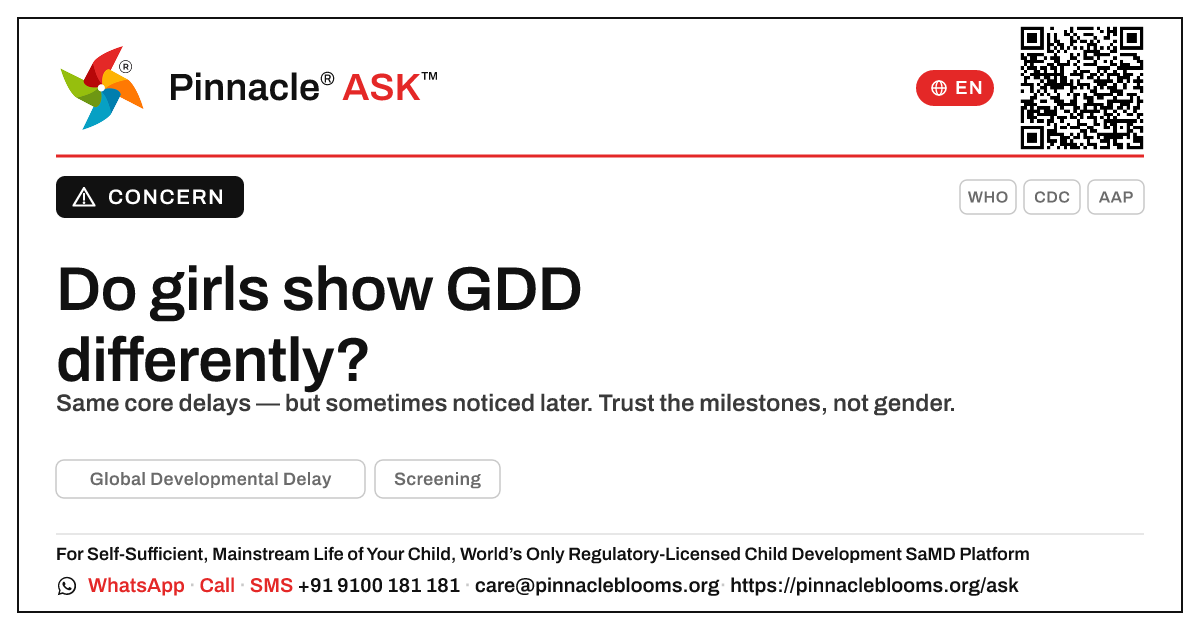
Do girls show Global Developmental Delay differently?
The core delays of Global Developmental Delay are the same in girls and boys — but some girls present quietly or mask difficulties, so delay is sometimes noticed later. Trust the milestones, not assumptions about gender, and check more than one delayed area. Only a Pinnacle clinician can confirm a developmental picture.
In this answer 5 sections
If your daughter seems to be developing more slowly than you expected, you may also be wondering whether delay even looks the same in girls — a fair and thoughtful question.
In short
Global Developmental Delay (GDD) means a young child is significantly behind in two or more areas of development — such as language, movement, thinking, social skills or self-care. The core delays themselves are the same in girls and boys. What can differ is how easily delay is noticed: some girls compensate socially, stay quiet and cooperative, or mask difficulties, so their delay is sometimes spotted later. The takeaway for any parent is simple — trust the milestones, not assumptions about gender.
How it can show differently
GDD is described for children under 5, when development is changing too fast to confirm a more specific lifelong picture. A few patterns parents notice:
- Quieter presentation — some girls are calm, sociable and eager to please, which can make delays in language or thinking less obvious to family and teachers.
- Social masking — a child may copy peers or rely on a few learned phrases, so understanding lags behind appearances.
- Same red flags, same response — not babbling or pointing, not walking or sitting at expected ages, very few words by two, or losing skills once gained deserve a check in any child, regardless of sex.
The honest position is that GDD is not fundamentally a different condition in girls. The risk is later recognition — so the safeguard is gentle, on-time milestone checking for every child.
When to seek a check
Use milestone guidance (CDC, IAP, RBSK's developmental screening) as your anchor. If your daughter is missing milestones in more than one area, has stopped doing things she once did, or your instinct says something is off — that is reason enough to ask. Early checking opens early support, and the early years are when support helps most.
The Pinnacle way
A clinical AbilityScore® and any diagnosis are formed only at a Pinnacle Blooms Network centre, under qualified clinician care — never from an online form or from assumptions about gender. Our clinicians look at your child's own developmental picture across communication, movement, thinking and daily skills, then build a plan with you. Explore how we support early development and how therapy is tailored child by child.
Trusted sources
WHO ICD-11 framing of developmental disorders; CDC Learn the Signs. Act Early. milestones; Indian Academy of Pediatrics developmental guidance; AAP (HealthyChildren.org); India's RBSK developmental delay screening.
Next step — Don't wait to see if she 'catches up' alone. Book a developmental screening and get clear, caring answers.
This is general information, not a diagnosis — individual assessment and diagnosis require an appropriately qualified healthcare professional.
CONNECT THE ANSWER TO YOUR CHILD’S DAY
Something to notice. Something to discuss.
What to notice
Seek a check sooner if your daughter is behind in more than one area, loses a skill she once had, isn't babbling or pointing by around a year, or has very few words by two — or simply if your instinct says something is off.
In everyday life
Keep a simple milestone note on your phone: first words, pointing, sitting, walking, two-word phrases. Patterns over weeks tell you far more than any single day, and give a clinician a clear, honest picture.
Bring your observations and questions to your child’s professional. Choose activities that suit your child’s comfort, abilities and agreed plan.
Bring your questions to a first visitQuestions families ask
Is Global Developmental Delay less common in girls?
Some developmental conditions are diagnosed more often in boys, partly because delay can be missed in quieter, more sociable girls. The safest approach is to check milestones in every child equally rather than assume girls are at lower risk.
Why is delay sometimes noticed later in girls?
Some girls compensate by staying calm, copying peers or using a few learned phrases, which can make difficulties in language or thinking less obvious to family and teachers. This 'masking' can delay recognition, not the delay itself.
When should I have my daughter assessed?
If she is behind in two or more areas, has lost a skill she once had, or your instinct says something is off, arrange a developmental check. Early years are when support helps most, so there is no benefit in waiting.
FOLLOW THE SOURCE
References behind this answer.
- Source referenceWHO ICD-11
- Source referenceCDC — Learn the Signs. Act Early.
- Organisation website · further readingAmerican Academy of Pediatrics (HealthyChildren.org)
References are supplied with this answer. An organisation homepage offers further reading; it does not establish an independent review of this page.
Content attribution: SETU Consortium · Pinnacle Blooms Network.
PEOPLE, TOPICS & DEVELOPMENT
See the connections.
Browse the wider question collections connected with this answer’s audience, developmental area and stage.
FROM UNDERSTANDING TO PURPOSEFUL SUPPORT
One question. Your child’s whole life.
Your child’s self-sufficient, mainstream-included life is the purpose from the beginning. At Pinnacle, that purpose shapes what we understand, the goals we choose, the people we bring together, everyday practice and review.
Connect this question with the right support.
Explore how the relevant service contributes to everyday abilities, then speak with us about your child.
Make the next conversation useful.
Bring the situations you notice at home or school. We’ll explain a suitable service, centre and first visit, including availability and fees, before you decide.
How PinnacleAI® connects the journeyExplore the seven stages
- 1Understand abilities
A starting picture of your child’s capabilities.
- 2Choose meaningful goals
Readiness and a plan shaped around the child.
- 3Bring the right support together
Suitable therapies and people for those goals.
- 4Carry practice into everyday life
Guidance for family, home and school.
- 5Track and correct
Use observations to adjust the plan.
- 6Reassess and review
Decide what to continue, change or do next.
- 7Grow independence and participation
The child’s life gives each step its purpose.
Explore the whole PinnacleAI® system → · Participation at school and in the community →
PINNACLE’S EVIDENCE, OPEN TO YOU
Look at the evidence behind our work.
Read our research, inspect the original regulatory documents and check what each institutional measure means.
General information supports a conversation with an appropriately qualified professional. Advice, goals and support depend on the individual child.