
YOUR QUESTION. A CLEARER NEXT STEP.
Can Fetal Alcohol Spectrum Disorder be prevented?
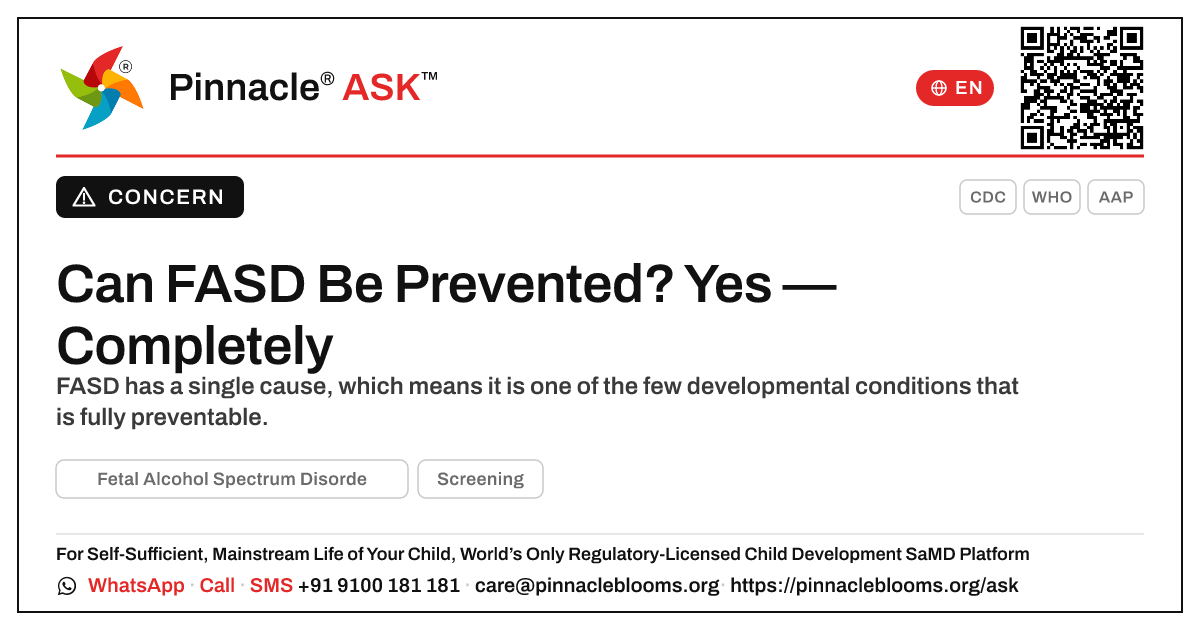
Yes — FASD is fully preventable, because its only cause is alcohol crossing the placenta in pregnancy. There is no safe amount or time to drink, so avoiding alcohol when pregnant or trying to conceive prevents it entirely. If exposure has already happened, stopping helps, and early developmental support makes a real difference.
In this answer 5 sections
If you're carrying worry about something that may have happened during pregnancy, take a breath — let's look at this clearly and kindly.
In short
Yes — Fetal Alcohol Spectrum Disorder (FASD) is one of the very few developmental conditions that is entirely preventable, because it has a single cause: alcohol crossing the placenta during pregnancy. There is no known safe amount, no safe type of alcohol, and no safe time in pregnancy to drink — so the surest prevention is to avoid alcohol completely from the moment pregnancy is possible. If you have already had a drink before realising you were pregnant, please don't panic: the most powerful thing you can do now is stop, and the rest of your pregnancy still matters enormously.
How prevention works
FASD is caused only by prenatal alcohol exposure — so prevention is genuinely in your hands:
- No alcohol when pregnant or trying to conceive — because the early weeks, often before a pregnancy is confirmed, are a sensitive window.
- No alcohol if there's any chance you're pregnant — many pregnancies are recognised only after several weeks.
- Support, not shame — if stopping is hard, that is a health matter, not a failing. Your doctor can help you safely.
- Already exposed? Stopping at any point reduces further risk. A gentle word with your obstetrician means you can be supported, and your baby's development can be watched for reassurance.
Unlike most developmental conditions, FASD cannot be "caught early" in the womb and reversed — but it can be prevented entirely, and where exposure has occurred, early developmental support makes a real difference to a child's outcomes.
When to seek a check
If alcohol exposure occurred and you'd like reassurance, or if your child later shows differences in growth, learning, attention, or behaviour, a developmental check offers clarity rather than worry. Early support — speech, occupational and behavioural therapy — helps children with FASD thrive.
The Pinnacle way
A clinical AbilityScore® and any diagnosis are formed only at a Pinnacle Blooms Network centre, under the care of a qualified clinician — never from an online form or a single conversation. If you ever need support, our clinicians measure your child against their own developmental baseline and build a plan with you, with warmth and without judgement. Across 70+ centres, 700+ therapists, and 4.95 lakh+ families served, the goal is always the same: every child supported to flourish.
Trusted sources
CDC guidance on alcohol use in pregnancy and FASD prevention; WHO ICD-11 framing of fetal alcohol spectrum conditions; American Academy of Pediatrics developmental guidance.
Next step — If you'd like reassurance or a developmental check for your child, book a screening with a Pinnacle clinician today.
This is general information, not a diagnosis — individual assessment and diagnosis require an appropriately qualified healthcare professional.
CONNECT THE ANSWER TO YOUR CHILD’S DAY
Something to notice. Something to discuss.
What to notice
If alcohol exposure occurred in pregnancy, watch your child's growth, learning, attention and behaviour over time. A developmental check brings reassurance or an early start to support — both helpful.
In everyday life
If you're pregnant or might be, treat 'no alcohol' as the simple, safe default — and ask your doctor for support if stopping feels hard. It's a health matter, never a failing.
Bring your observations and questions to your child’s professional. Choose activities that suit your child’s comfort, abilities and agreed plan.
Bring your questions to a first visitQuestions families ask
Is there a safe amount of alcohol during pregnancy?
No. Expert guidance is clear that no amount, type or timing of alcohol is known to be safe in pregnancy. The surest way to prevent FASD is to avoid alcohol completely when pregnant or trying to conceive.
I drank before I knew I was pregnant — should I panic?
Please don't panic. The most powerful step now is to stop, and the rest of your pregnancy still matters greatly. Mention it gently to your obstetrician so you can be supported and your baby's development can be reassuringly watched.
Can FASD be cured if it has already happened?
FASD cannot be reversed, but it can be prevented entirely, and where exposure occurred, early speech, occupational and behavioural support helps children make real progress and thrive.
FOLLOW THE SOURCE
References behind this answer.
- Source referenceCDC — About FASD and prevention
- Organisation website · further readingWHO ICD-11
- Organisation website · further readingAAP HealthyChildren
References are supplied with this answer. An organisation homepage offers further reading; it does not establish an independent review of this page.
Content attribution: SETU Consortium · Pinnacle Blooms Network.
PEOPLE, TOPICS & DEVELOPMENT
See the connections.
Browse the wider question collections connected with this answer’s audience, developmental area and stage.
FROM UNDERSTANDING TO PURPOSEFUL SUPPORT
One question. Your child’s whole life.
Your child’s self-sufficient, mainstream-included life is the purpose from the beginning. At Pinnacle, that purpose shapes what we understand, the goals we choose, the people we bring together, everyday practice and review.
Connect this question with the right support.
Start with your child’s strengths, your observations and what you want everyday life to become.
Make the next conversation useful.
Bring the situations you notice at home or school. We’ll explain a suitable service, centre and first visit, including availability and fees, before you decide.
How PinnacleAI® connects the journeyExplore the seven stages
- 1Understand abilities
A starting picture of your child’s capabilities.
- 2Choose meaningful goals
Readiness and a plan shaped around the child.
- 3Bring the right support together
Suitable therapies and people for those goals.
- 4Carry practice into everyday life
Guidance for family, home and school.
- 5Track and correct
Use observations to adjust the plan.
- 6Reassess and review
Decide what to continue, change or do next.
- 7Grow independence and participation
The child’s life gives each step its purpose.
Explore the whole PinnacleAI® system → · Participation at school and in the community →
PINNACLE’S EVIDENCE, OPEN TO YOU
Look at the evidence behind our work.
Read our research, inspect the original regulatory documents and check what each institutional measure means.
General information supports a conversation with an appropriately qualified professional. Advice, goals and support depend on the individual child.