
YOUR QUESTION. A CLEARER NEXT STEP.
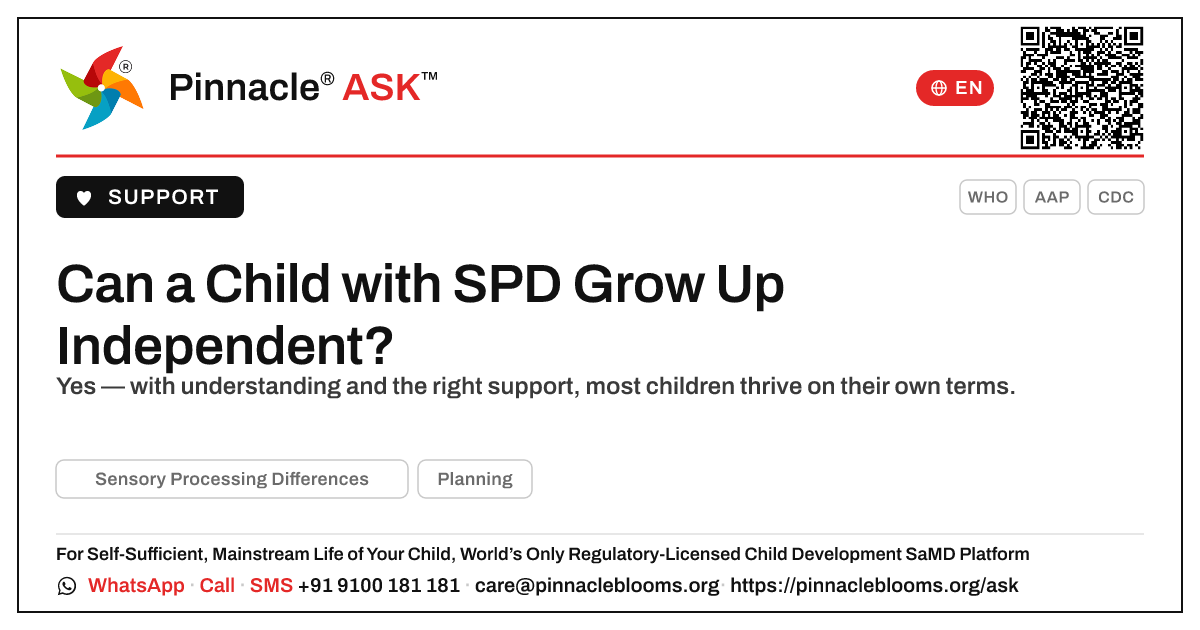
Can a child with Sensory Processing Differences live independently?
Yes — most children with Sensory Processing Differences grow up to live independently: studying, working and running their own homes. Sensory differences shape how a child experiences the world, not their capability. Early understanding and strategies build lifelong independence and confidence.
In this answer 5 sections
If your child covers their ears at the hand-dryer or only eats soft foods, you may quietly wonder what their grown-up life will look like. Here is an honest, hopeful answer.
In short
Yes — most children with Sensory Processing Differences grow up to live full, independent lives: studying, working, driving, forming relationships and running their own homes. Sensory differences describe how a child's nervous system takes in and responds to the world — they are not a measure of intelligence or capability. With early understanding, the right supports and time, children learn to manage their sensory world, and many turn their sensitivities into genuine strengths.
What independence really depends on
Independence grows less from "fixing" sensory differences and more from building strategies and self-knowledge. Over childhood, most children learn to:
- Recognise their own triggers — a noisy hall, scratchy clothes, bright lights — and plan around them
- Self-regulate — using calming tools, movement breaks or noise-reducing headphones
- Advocate for themselves — asking for a quieter seat, a different texture, a moment to reset
As adults, this looks like choosing a workplace that suits them, designing a calm home, and knowing what they need to feel steady. Many highly capable adults simply organise life around their sensory preferences — exactly as anyone with a strong preference does.
Where early support helps
The earlier a child is understood, the smoother the path. Occupational therapy and a supportive sensory environment help build regulation, daily-living skills and confidence during the years the brain is most adaptable. Independence is rarely a single moment — it is dressing, eating, transitions and friendships, each practised and mastered over time.
The Pinnacle way
Developmental measurement supports care planning; diagnosis requires an appropriately qualified healthcare professional., under the care of a qualified clinician — never from an online description. Our occupational therapy team maps your child's unique sensory profile against their own AbilityScore baseline, then builds a plan focused on real-life independence — calmer mornings, easier mealtimes, school participation. Drawing on 25 million+ therapy sessions across 70+ centres, our goal is always the same: your child thriving on their own terms.
Trusted sources
WHO ICD-11; American Academy of Pediatrics (HealthyChildren.org); CDC developmental milestones; Indian Academy of Pediatrics.
Next step — Turn worry into a clear plan. Book a sensory and developmental assessment with a Pinnacle occupational therapist.
This is general information, not a diagnosis — individual assessment and diagnosis require an appropriately qualified healthcare professional.
CONNECT THE ANSWER TO YOUR CHILD’S DAY
Something to notice. Something to discuss.
What to notice
Watch how your child copes as demands grow — new school, new routines. Seek support sooner if sensory reactions are stopping them joining everyday activities, learning self-care, or causing real distress and withdrawal rather than easing with familiarity.
In everyday life
Build independence one tiny step at a time. Let your child help choose a 'calm-down' tool they like — headphones, a fidget, a quiet corner — and let them reach for it themselves. Owning their own strategy is the seed of lifelong self-reliance.
Bring your observations and questions to your child’s professional. Choose activities that suit your child’s comfort, abilities and agreed plan.
Bring your questions to a first visitQuestions families ask
Will my child always need help with sensory issues?
Most children gradually need less hands-on help as they learn to recognise their triggers and self-regulate. Adults with sensory differences typically manage independently by shaping their environment and routines to suit them — much as anyone with a strong preference does.
Does Sensory Processing Difference affect intelligence?
No. Sensory differences describe how a child's nervous system takes in and responds to the world — not their intelligence or learning ability. Many children with sensory differences are bright, capable and creative.
How does therapy help with future independence?
Occupational therapy builds self-regulation, daily-living skills and self-advocacy during the years the brain is most adaptable. The focus is real-life independence — easier mealtimes, calmer transitions and confident school participation — not 'fixing' the child.
FOLLOW THE SOURCE
References behind this answer.
- Source referenceWHO ICD-11
- Organisation website · further readingAmerican Academy of Pediatrics (HealthyChildren.org)
- Source referenceCDC — Learn the Signs. Act Early.
References are supplied with this answer. An organisation homepage offers further reading; it does not establish an independent review of this page.
Content attribution: SETU Consortium · Pinnacle Blooms Network.
PEOPLE, TOPICS & DEVELOPMENT
See the connections.
Browse the wider question collections connected with this answer’s audience, developmental area and stage.
FROM UNDERSTANDING TO PURPOSEFUL SUPPORT
One question. Your child’s whole life.
Your child’s self-sufficient, mainstream-included life is the purpose from the beginning. At Pinnacle, that purpose shapes what we understand, the goals we choose, the people we bring together, everyday practice and review.
Connect this question with the right support.
Explore how the relevant service contributes to everyday abilities, then speak with us about your child.
Make the next conversation useful.
Bring the situations you notice at home or school. We’ll explain a suitable service, centre and first visit, including availability and fees, before you decide.
How PinnacleAI® connects the journeyExplore the seven stages
- 1Understand abilities
A starting picture of your child’s capabilities.
- 2Choose meaningful goals
Readiness and a plan shaped around the child.
- 3Bring the right support together
Suitable therapies and people for those goals.
- 4Carry practice into everyday life
Guidance for family, home and school.
- 5Track and correct
Use observations to adjust the plan.
- 6Reassess and review
Decide what to continue, change or do next.
- 7Grow independence and participation
The child’s life gives each step its purpose.
Explore the whole PinnacleAI® system → · Participation at school and in the community →
PINNACLE’S EVIDENCE, OPEN TO YOU
Look at the evidence behind our work.
Read our research, inspect the original regulatory documents and check what each institutional measure means.
General information supports a conversation with an appropriately qualified professional. Advice, goals and support depend on the individual child.