
YOUR QUESTION. A CLEARER NEXT STEP.
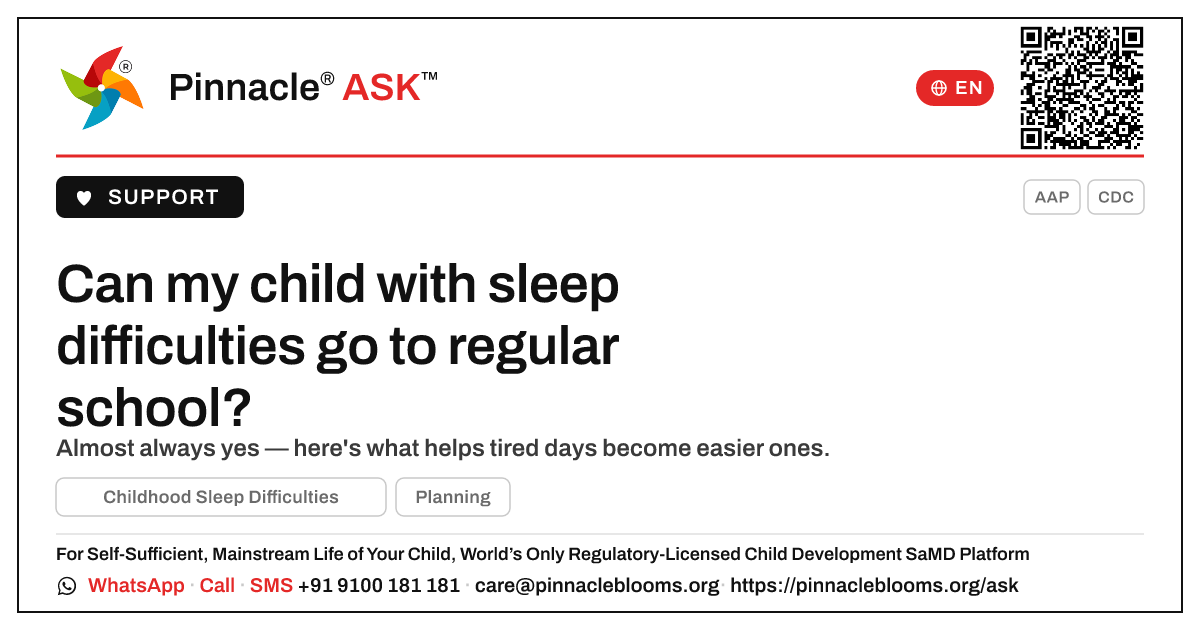
Can a child with childhood sleep difficulties attend regular school?
Yes — nearly all children with sleep difficulties attend regular school happily. Sleep problems are common and treatable, and steady routines plus a calm wind-down usually help. Seek a check if poor sleep persists for weeks or affects daytime learning and mood.
In this answer 5 sections
If bedtime battles and broken nights have you wondering whether school is even possible — take a breath. The answer is almost always yes.
In short
Yes — the great majority of children with childhood sleep difficulties attend regular, mainstream school very happily. Sleep difficulties — trouble falling asleep, frequent night waking, early rising or restless nights — are common and usually very treatable. With better sleep, daytime focus, mood and learning often improve too. School isn't the problem; tired days are, and those can be gently turned around.
What helps a tired child thrive at school
When a child sleeps poorly, you may notice daytime tiredness, trouble concentrating, irritability, or being slower to get going in the morning. These are consequences of poor sleep, not signs your child can't cope with school. A few practical anchors make a real difference:
- A steady rhythm — the same wake time and bedtime every day, including weekends, sets the body clock.
- A calm wind-down — dim lights and no screens for the hour before bed.
- A simple morning buffer — waking a little earlier so mornings feel unhurried, not panicked.
- A quiet word with the teacher — so they understand a tired morning isn't defiance, and can offer small flexibilities.
Most sleep difficulties respond well to gentle routine changes. A few have an underlying cause — such as anxiety, breathing trouble in sleep, or a developmental difference — worth checking when problems persist.
When to seek a check
Worth a closer look if poor sleep continues for several weeks despite a steady routine, if your child snores heavily or seems to stop breathing in sleep, or if daytime tiredness is clearly affecting learning, mood or friendships. These are reasons to assess, not to worry alone.
The Pinnacle way
No diagnosis or clinical AbilityScore® is ever formed from an online page — it is created only at a Pinnacle Blooms Network centre, through a structured assessment administered by a qualified clinician. We look at sleep alongside your child's whole picture, build a baseline against their own starting point, and shape a plan that fits family life. Where sleep links to communication or daily-living patterns, our therapy team supports both home and school. The goal is simple: rested days and a child who flourishes in the mainstream.
Trusted sources
American Academy of Pediatrics guidance on healthy sleep for children (healthychildren.org); CDC recommendations on sleep duration by age; Pinnacle Blooms Network clinical practice.
Next step — Restful nights and easier school mornings are within reach. Book a developmental check with a Pinnacle clinician for a clear, gentle plan.
This is general information, not a diagnosis — individual assessment and diagnosis require an appropriately qualified healthcare professional.
CONNECT THE ANSWER TO YOUR CHILD’S DAY
Something to notice. Something to discuss.
What to notice
Seek a check if poor sleep continues for several weeks despite a steady routine, if your child snores heavily or seems to pause breathing in sleep, or if daytime tiredness is clearly affecting learning, mood or friendships.
In everyday life
Keep the same wake-up time every day, even at weekends — it's the single strongest anchor for a child's body clock. Pair it with a calm, screen-free hour before bed and watch mornings slowly get easier.
Bring your observations and questions to your child’s professional. Choose activities that suit your child’s comfort, abilities and agreed plan.
Bring your questions to a first visitQuestions families ask
Will sleep difficulties affect my child's learning at school?
Poor sleep can make focus, mood and energy harder during the day, which may show up as slower mornings or trouble concentrating. The good news is that when sleep improves, daytime learning and mood usually improve too — so the focus is on better rest, not on holding your child back.
Should I tell my child's teacher about the sleep problems?
Yes, a quiet word helps. When a teacher understands that a tired morning isn't defiance, they can offer small flexibilities and support. It turns school into part of the solution rather than another pressure.
When should I seek professional help for my child's sleep?
Consider a check if poor sleep persists for several weeks despite a steady bedtime routine, if your child snores heavily or seems to pause breathing in sleep, or if tiredness is clearly affecting learning, mood or friendships.
FOLLOW THE SOURCE
References behind this answer.
- Organisation website · further readingAAP healthychildren.org — healthy sleep habits for children
- Organisation website · further readingCDC — recommended sleep by age
References are supplied with this answer. An organisation homepage offers further reading; it does not establish an independent review of this page.
Content attribution: SETU Consortium · Pinnacle Blooms Network.
PEOPLE, TOPICS & DEVELOPMENT
See the connections.
Browse the wider question collections connected with this answer’s audience, developmental area and stage.
FROM UNDERSTANDING TO PURPOSEFUL SUPPORT
One question. Your child’s whole life.
Your child’s self-sufficient, mainstream-included life is the purpose from the beginning. At Pinnacle, that purpose shapes what we understand, the goals we choose, the people we bring together, everyday practice and review.
Connect this question with the right support.
Explore how the relevant service contributes to everyday abilities, then speak with us about your child.
Make the next conversation useful.
Bring the situations you notice at home or school. We’ll explain a suitable service, centre and first visit, including availability and fees, before you decide.
How PinnacleAI® connects the journeyExplore the seven stages
- 1Understand abilities
A starting picture of your child’s capabilities.
- 2Choose meaningful goals
Readiness and a plan shaped around the child.
- 3Bring the right support together
Suitable therapies and people for those goals.
- 4Carry practice into everyday life
Guidance for family, home and school.
- 5Track and correct
Use observations to adjust the plan.
- 6Reassess and review
Decide what to continue, change or do next.
- 7Grow independence and participation
The child’s life gives each step its purpose.
Explore the whole PinnacleAI® system → · Participation at school and in the community →
PINNACLE’S EVIDENCE, OPEN TO YOU
Look at the evidence behind our work.
Read our research, inspect the original regulatory documents and check what each institutional measure means.
General information supports a conversation with an appropriately qualified professional. Advice, goals and support depend on the individual child.