
YOUR QUESTION. A CLEARER NEXT STEP.
At what age can a child start feeding therapy?
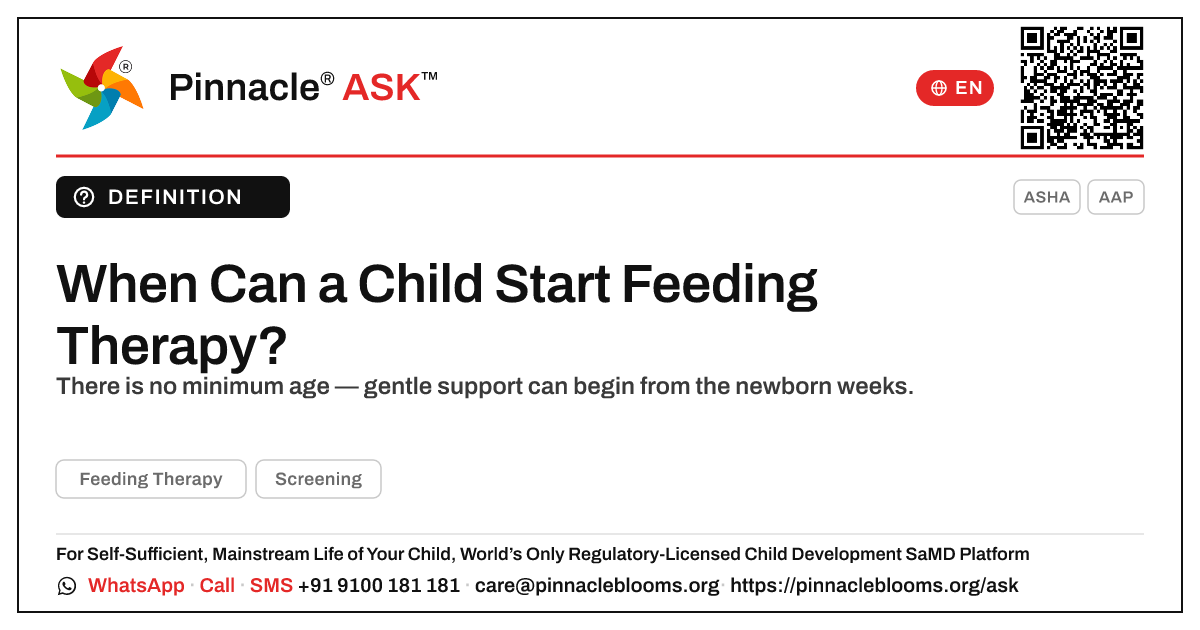
Feeding therapy has no minimum age — it can begin in the newborn weeks and continue through the preschool years and beyond. There is no "too early": a baby who struggles to latch, a 6-month-old who gags on solids, a toddler refusing textures, or a preschooler eating only a few foods can all benefit. The right time to start is simply when feeding is not going smoothly, because earlier support protects nutrition, growth and a positive relationship with mealtimes.
In this answer 5 sections
The moment feeding feels hard — bottle, breast or spoon — is the moment support can begin; there is no "too early" for gentle, expert help.
In short
Feeding therapy can begin at almost any age — even in the newborn weeks — because feeding difficulties show up from the very first days of life. There is no minimum age: a struggling latch in a newborn, a baby who gags on first purees around 6 months, a toddler who refuses textures, or a preschooler who is an extremely "picky" eater can all benefit. The right time to start is simply when feeding is not going smoothly — earlier support protects nutrition, growth and a happy relationship with mealtimes.
What feeding therapy supports at different ages
Feeding is a beautifully complex skill — it weaves together the muscles of the lips, tongue and jaw, breathing, swallowing, sensory comfort with tastes and textures, and the calm, connected feeling of mealtime. Difficulties can appear at every stage:
- Newborn to 6 months: trouble latching or coordinating suck-swallow-breathe, tiring quickly during feeds, frequent coughing or gagging, slow weight gain, or feeding challenges linked to prematurity or medical needs.
- 6–12 months: difficulty moving from milk to solids, strong gagging on lumps or purees, refusing the spoon, or not learning to chew.
- Toddlers (1–3 years): eating only a very narrow range of foods, distress at new textures, mealtime battles, or losing weight.
- Preschool and beyond: extreme selective eating, sensory aversions, or oral-motor difficulties that affect chewing and self-feeding.
A feeding therapist — often a speech-language pathologist or occupational therapist — looks at the whole picture: oral-motor skill, swallowing safety, sensory comfort and the mealtime environment, then supports the child and family together.
When to seek a review
Reach out if your baby struggles to latch or feed comfortably, coughs or chokes during feeds, is not gaining weight well, or if your older child gags often, refuses whole food groups, eats fewer than a handful of foods, or mealtimes have become stressful. For any sudden choking, breathing difficulty during feeds, or rapid weight loss, please seek prompt medical care first — these need a doctor before therapy.
The Pinnacle way
This is general information, not a diagnosis — a clinical AbilityScore® and any diagnosis are formed only at a Pinnacle Blooms Network centre, under qualified clinician care, never from an app or form. Our therapists assess your child's oral-motor skills, swallowing safety and sensory comfort together, then build a gentle, individualised plan — drawing on feeding therapy and, where helpful, occupational therapy for sensory support. Explore more about how we work across Pinnacle Blooms Network.
Trusted sources
The American Speech-Language-Hearing Association on paediatric feeding and swallowing; the American Academy of Pediatrics and HealthyChildren on infant feeding and introducing solids.
Next step — If feeding feels hard at any age, book a feeding assessment for reassurance and a clear, gentle plan tailored to your child.
CONNECT THE ANSWER TO YOUR CHILD’S DAY
Something to notice. Something to discuss.
What to notice
Difficulty latching or feeding comfortably, coughing or choking during feeds, slow weight gain in babies; frequent gagging on lumps, refusing the spoon, eating only a narrow range of foods, distress at new textures, or stressful mealtimes in older children.
In everyday life
Keep mealtimes calm and pressure-free — offer new foods alongside familiar favourites without insisting, let your child touch and explore textures with their hands, and eat together so they can watch and copy you. Curiosity grows best when there is no battle.
Bring your observations and questions to your child’s professional. Choose activities that suit your child’s comfort, abilities and agreed plan.
Bring your questions to a first visitQuestions families ask
Is my newborn too young for feeding therapy?
No — feeding therapy can begin in the newborn weeks. If your baby struggles to latch, tires quickly during feeds, coughs or gags, or is not gaining weight well, gentle expert support can help right away. There is no minimum age.
My toddler eats only a few foods. Can therapy help?
Yes. Extreme selective eating, distress at new textures and mealtime battles are common reasons toddlers benefit from feeding therapy. A therapist looks at oral-motor skills and sensory comfort together and supports the whole family, not just the child.
Who provides feeding therapy?
Feeding therapy is usually provided by a speech-language pathologist or an occupational therapist, often working together. They assess oral-motor skill, swallowing safety, sensory comfort and the mealtime environment, then build an individualised plan.
When should I see a doctor instead of a therapist first?
If your child has sudden choking, breathing difficulty during feeds, or rapid weight loss, please seek prompt medical care first. These need a doctor's review before feeding therapy begins.
FOLLOW THE SOURCE
References behind this answer.
- Source referenceASHA — Feeding and swallowing in children
- Organisation website · further readingAAP HealthyChildren — Infant feeding and solids
References are supplied with this answer. An organisation homepage offers further reading; it does not establish an independent review of this page.
Content attribution: SETU Consortium · Pinnacle Blooms Network.
PEOPLE, TOPICS & DEVELOPMENT
See the connections.
Browse the wider question collections connected with this answer’s audience, developmental area and stage.
FROM UNDERSTANDING TO PURPOSEFUL SUPPORT
One question. Your child’s whole life.
Your child’s self-sufficient, mainstream-included life is the purpose from the beginning. At Pinnacle, that purpose shapes what we understand, the goals we choose, the people we bring together, everyday practice and review.
Connect this question with the right support.
Explore how the relevant service contributes to everyday abilities, then speak with us about your child.
Make the next conversation useful.
Bring the situations you notice at home or school. We’ll explain a suitable service, centre and first visit, including availability and fees, before you decide.
How PinnacleAI® connects the journeyExplore the seven stages
- 1Understand abilities
A starting picture of your child’s capabilities.
- 2Choose meaningful goals
Readiness and a plan shaped around the child.
- 3Bring the right support together
Suitable therapies and people for those goals.
- 4Carry practice into everyday life
Guidance for family, home and school.
- 5Track and correct
Use observations to adjust the plan.
- 6Reassess and review
Decide what to continue, change or do next.
- 7Grow independence and participation
The child’s life gives each step its purpose.
Explore the whole PinnacleAI® system → · Participation at school and in the community →
PINNACLE’S EVIDENCE, OPEN TO YOU
Look at the evidence behind our work.
Read our research, inspect the original regulatory documents and check what each institutional measure means.
General information supports a conversation with an appropriately qualified professional. Advice, goals and support depend on the individual child.