
YOUR QUESTION. A CLEARER NEXT STEP.
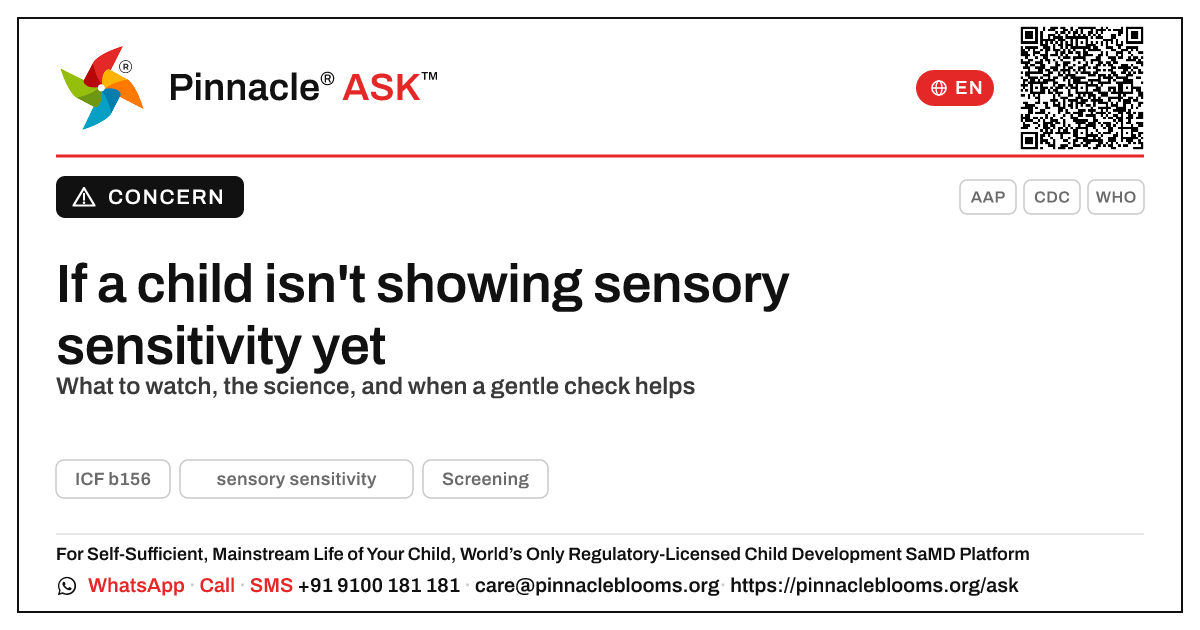
If a child isn't yet showing sensory sensitivity
Not yet showing strong sensory reactions is usually within the wide range of typical, especially in younger children still building their sensory map. Keep offering varied, gentle sensory play, watch how the child engages, and seek a developmental check if you also notice delays in play, communication, movement or daily routines. This is observation, not a diagnosis — early support works best.
In this answer 5 sections
If a child in your care hasn't yet shown clear sensory likes or dislikes, that's often simply part of how each child unfolds at their own pace — noticing it is thoughtful caregiving.
In short
Sensory sensitivity — how a child responds to sounds, textures, light, movement or touch — develops gradually and looks different in every child. Not yet showing strong reactions is usually within the wide range of typical, especially in younger children who are still building their sensory map of the world. The caring response is to keep offering rich, gentle sensory experiences, watch how the child engages, and seek a developmental check if you also notice delays in play, communication, movement or daily routines. This is observation, not a diagnosis.
What to watch
Sensory responses grow alongside play, movement and connection. Gentle things to notice:
- Variety of engagement — does the child explore different textures (sand, water, food), respond to familiar voices, and enjoy movement like swinging or rocking?
- Comfort and regulation — can the child settle after being upset, and shift between calm and active play?
- Travelling with other differences — very little response to sound or name, no exploring of toys or food, flat or limited play, or delays in talking, sitting, walking or social smiling.
- Daily routines — feeding, dressing and sleep going smoothly, or unusual distress that's hard to soothe.
The aim is curiosity, not worry. Offer a feast of safe sensory play and simply notice how the child meets it.
The science
Sensory processing (ICF b156) is a foundation for attention, movement and emotional regulation. Children integrate sensory information at their own rhythm, and a calm, observant adult who offers varied experiences supports this naturally. When sensory engagement seems consistently absent and pairs with other developmental differences, an early, gentle clinical look helps — because early support works beautifully.
The Pinnacle way
A clinical AbilityScore® and any diagnosis are formed only at a Pinnacle Blooms Network centre, under qualified clinician care — never from an online list. Learn more about sensory sensitivity and how our occupational therapy team supports sensory regulation through play.
Trusted sources
WHO ICF framework for sensory functions (b156); American Academy of Pediatrics (healthychildren.org) guidance on sensory play and developmental monitoring; CDC "Learn the Signs, Act Early" milestone resources.
Next step — Trust what you observe each day. Book a developmental assessment for a calm, clear review of the child's sensory and developmental milestones.
CONNECT THE ANSWER TO YOUR CHILD’S DAY
Something to notice. Something to discuss.
What to notice
Watch whether the child explores varied textures, responds to familiar voices and their name, enjoys movement, and settles after being upset. Seek a developmental check if little sensory engagement travels with delays in talking, play, movement or social smiling, or with feeding, dressing or sleep distress that's hard to soothe.
In everyday life
Set up a small sensory tray — warm and cool water, soft and rough fabrics, safe finger foods — and simply notice which the child reaches for, ignores or avoids. A short phone note of what you see gives a clinician a clear, useful picture.
Bring your observations and questions to your child’s professional. Choose activities that suit your child’s comfort, abilities and agreed plan.
Bring your questions to a first visitQuestions families ask
Is it a problem if a child shows no sensory sensitivity yet?
Usually no — sensory responses develop at each child's own pace, and many children are still building their sensory map. The caring step is to offer varied, gentle sensory play and notice how the child engages over time.
When should I seek a developmental check?
Arrange a gentle check if little sensory engagement travels with other differences — few words, not responding to name, limited play, or delays in movement, feeding or sleep that are hard to soothe.
Can I help a child build sensory awareness at home?
Yes. Offer safe, varied experiences — different textures, water play, swinging, music and finger foods — and follow the child's lead. Calm, playful exposure supports natural sensory development.
FOLLOW THE SOURCE
References behind this answer.
- Organisation website · further readingAmerican Academy of Pediatrics — sensory play and developmental monitoring
- Source referenceCDC — Learn the Signs, Act Early milestones
- Organisation website · further readingWHO ICF — sensory functions (b156)
References are supplied with this answer. An organisation homepage offers further reading; it does not establish an independent review of this page.
Content attribution: SETU Consortium · Pinnacle Blooms Network.
PEOPLE, TOPICS & DEVELOPMENT
See the connections.
Browse the wider question collections connected with this answer’s audience, developmental area and stage.
FROM UNDERSTANDING TO PURPOSEFUL SUPPORT
One question. Your child’s whole life.
Your child’s self-sufficient, mainstream-included life is the purpose from the beginning. At Pinnacle, that purpose shapes what we understand, the goals we choose, the people we bring together, everyday practice and review.
Connect this question with the right support.
Explore how the relevant service contributes to everyday abilities, then speak with us about your child.
Make the next conversation useful.
Bring the situations you notice at home or school. We’ll explain a suitable service, centre and first visit, including availability and fees, before you decide.
How PinnacleAI® connects the journeyExplore the seven stages
- 1Understand abilities
A starting picture of your child’s capabilities.
- 2Choose meaningful goals
Readiness and a plan shaped around the child.
- 3Bring the right support together
Suitable therapies and people for those goals.
- 4Carry practice into everyday life
Guidance for family, home and school.
- 5Track and correct
Use observations to adjust the plan.
- 6Reassess and review
Decide what to continue, change or do next.
- 7Grow independence and participation
The child’s life gives each step its purpose.
Explore the whole PinnacleAI® system → · Participation at school and in the community →
PINNACLE’S EVIDENCE, OPEN TO YOU
Look at the evidence behind our work.
Read our research, inspect the original regulatory documents and check what each institutional measure means.
General information supports a conversation with an appropriately qualified professional. Advice, goals and support depend on the individual child.