
Sensory Regulation
Which ICF Domain Does Sensory Regulation Map To?
In the WHO ICF, sensory regulation maps most directly to b156 (Perceptual functions) within Chapter b1, Mental functions, under the Body Functions component. It describes how a young child organises and modulates sensory input rather than raw sensory acuity, which sits in Chapter b2 (Sensory functions). In early childhood, b156 is best documented alongside related perceptual sub-codes and relevant Activities and Participation domains, because regulation is expressed through what a child can do and join in. This is a functioning-classification mapping, not a diagnosis.
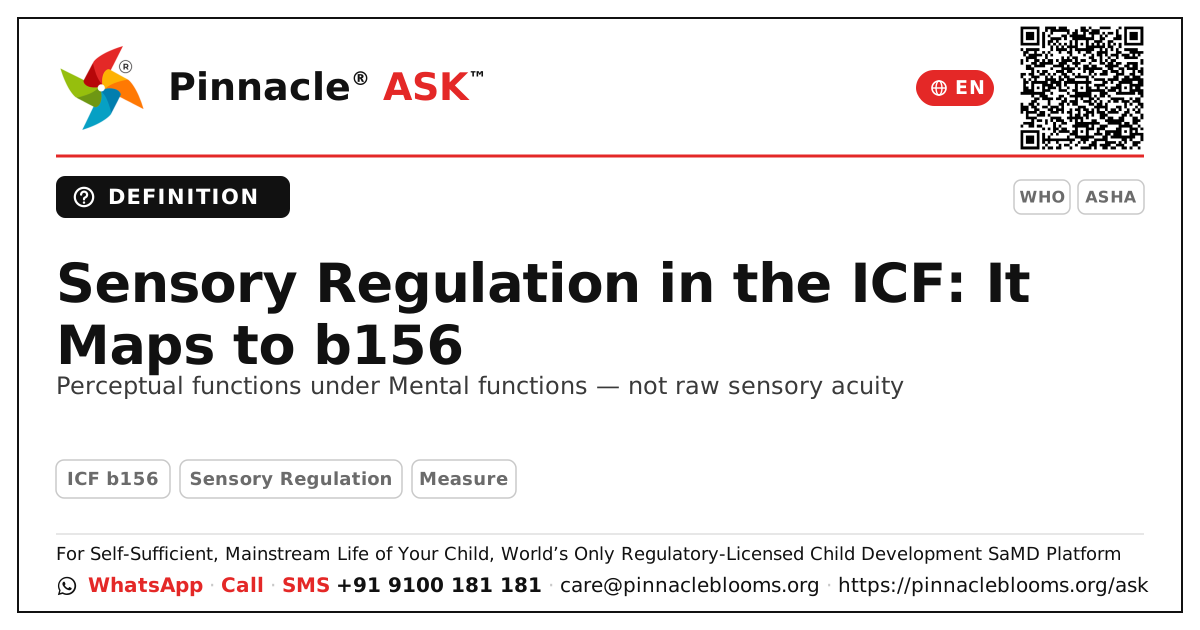
Sensory regulation is not a fringe skill — in the ICF it sits among the core mental functions that shape how a young child meets the world.
In short
In the WHO International Classification of Functioning, Disability and Health (ICF), sensory regulation maps most directly to b156 — Perceptual functions, within the chapter on Mental functions (b1) under the Body Functions component. In early childhood, this captures how a child recognises, organises and modulates sensory input — visual, auditory, tactile, gustatory, olfactory and vestibular-proprioceptive — so it can be used adaptively. It is best read alongside related codes (notably b147 psychomotor functions, b1560–b1568 perceptual sub-categories, and b270 sensory functions related to touch) and, crucially, alongside Activities and Participation domains, because regulation is expressed through what a child can actually do and join in.The science: where b156 sits and why
The ICF separates Body Functions (physiological and psychological functions, the b codes) from Activities and Participation (the d codes). Sensory regulation — the capacity to modulate arousal and integrate incoming sensation into a usable percept — is a perceptual/mental function, hence b156 under b1 Mental functions, with finer granularity available at b1560–b1568 (e.g. auditory, visual, tactile perception). This is distinct from the raw sensory functions of Chapter b2 (Sensory functions and pain), where b210 covers seeing, b230 hearing and b265/b270 touch — those describe sensory acuity, whereas b156 describes how the brain organises and regulates that input.For a clinician documenting a young child, the most defensible approach is dual-coding: record the perceptual/regulatory function at b156 and then capture its real-world impact through Activities and Participation codes — for example d110–d129 (purposeful sensing, watching, listening), d250 (managing one's own behaviour), and self-care or play participation domains. The ICF-CY (Children and Youth version) content is now integrated into the main ICF and supports exactly this developmental framing, because in early childhood functioning is inseparable from environmental and contextual factors (the e codes).
A note on scope
This is a conceptual mapping for documentation and research, not a diagnostic statement. The ICF classifies functioning, not disorders; sensory regulation difficulties are described, not diagnosed, through these codes, and severity qualifiers should be assigned only on direct, structured clinical observation.The Pinnacle way
This is general classification guidance, not a diagnosis — a clinical AbilityScore® and any diagnosis are formed only at a Pinnacle Blooms Network centre, under qualified clinician care, never from an app or form. Our therapists map a child's sensory profile against ICF functioning domains as part of an individualised plan, drawing on occupational therapy and structured developmental review. Explore more at our [home](/) resources.Trusted sources
WHO ICF browser entry for b156 Perceptual functions and the b1 Mental functions chapter; WHO guidance on the ICF and its Children and Youth content; ASHA resources on linking sensory and perceptual functioning to participation in young children.Next step — If you are mapping a child's sensory profile for assessment or research, book a developmental review to see how Pinnacle clinicians translate ICF domains into an actionable, individualised plan.
What to watch
When documenting, distinguish b156 perceptual/regulatory functions from b2 sensory acuity codes, and pair b156 with Activities and Participation codes (d110–d129, d250) so regulation is captured through real-world function, not in isolation.
Try this at home
When coding a young child, dual-code: record the regulatory function at b156 and its impact through participation codes, since early-childhood functioning is inseparable from environment and context.
Trusted sources
Developed by SETU Consortium · Pinnacle Blooms Network · Last reviewed 2026-06-10 · reviewed every 365 days
This is general information, not a diagnosis. A clinical AbilityScore® and any diagnosis are formed only at a Pinnacle Blooms Network centre, under qualified clinician care.
Frequently asked
Which ICF code does sensory regulation map to?
Most directly to b156 (Perceptual functions) within Chapter b1, Mental functions, under the Body Functions component, with finer detail available at b1560–b1568.
How is b156 different from the Chapter b2 sensory codes?
Chapter b2 (Sensory functions and pain) covers raw acuity — seeing (b210), hearing (b230), touch (b265/b270). b156 covers how that input is organised, integrated and regulated as a percept, which is the regulatory aspect.
Should sensory regulation be coded in Body Functions or Activities and Participation?
Both. Record the perceptual/regulatory function at b156, then capture its real-world expression through Activities and Participation codes such as d110–d129 and d250, since early-childhood functioning is contextual.
Is the ICF-CY still separate?
Its children-and-youth content has been integrated into the main ICF, so the standard ICF codes are used with developmentally appropriate framing for young children.