
Developmental Language Disorder
When to worry about DLD in your 6-year-old
At six, the time to seek a check for Developmental Language Disorder is when language difficulties persist into the school years — trouble following instructions, telling a simple story, finding words, or being understood by others. These aren't a diagnosis but good reasons for a structured assessment, since support at this age strongly helps learning and confidence. A hearing check is a sensible first step.
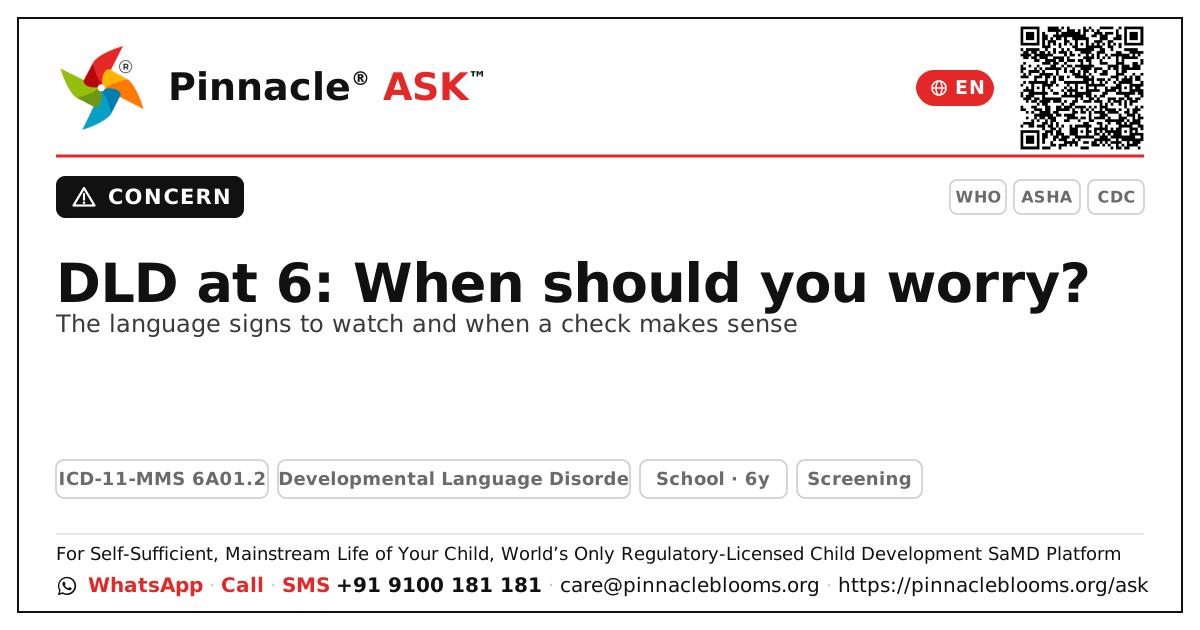
If your bright, curious six-year-old still finds it hard to put words together or follow what's said, paying attention now is one of the most loving things you can do.
In short
Developmental Language Disorder (DLD) is when a child has ongoing difficulty understanding or using spoken language, beyond what's expected for their age, without an obvious cause — and it is not down to your parenting or your child's intelligence. At six, the time to seek a check is when language difficulties are persisting into the school years: trouble following instructions, telling a simple story, finding the right words, or being understood by people outside the family. None of this is a diagnosis — it's a good reason for a structured assessment, because the right support at this age makes a real difference to learning and confidence.What to watch at six years
By six, most children chat in full sentences, retell events and follow multi-step instructions. Gentle flags worth a clinician's eye include:- Understanding — struggles to follow two- or three-step instructions, often seems lost or "not listening", muddles up question words (who, what, where).
- Talking — short or jumbled sentences, frequent grammar slips ("him goed"), hunting for words or saying "thing" a lot, hard for new people to understand.
- Storytelling & conversation — can't easily recount their day or a simple story in order; conversations feel one-sided or off-topic.
- At school — finds following the classroom hard, struggles to learn new words, or early reading and spelling feel like an uphill climb.
- Frustration — gives up, withdraws, or gets upset when trying to express themselves.
DLD is common — roughly two children in an average classroom — and importantly, it is not caused by hearing loss, autism or low ability. A hearing check is always a sensible first step, because hearing must be ruled out.
When to act
If several of these ring true and the difficulties have stuck around rather than fading, arrange a check now — don't wait for school to "sort it out". Early, targeted language support at six builds the foundation for reading, writing and friendships. Trust your instinct; a parent's noticing is good clinical information.The Pinnacle way
A clinical AbilityScore® and any diagnosis are formed only at a Pinnacle Blooms Network centre, under qualified clinician care — never from an online list. Our clinicians build your child's own language profile across understanding and expression, rule out hearing concerns, and shape support around strengths. If language is the worry, our speech therapy team begins playful, structured work, and you can learn more about Developmental Language Disorder and how we follow progress over time.Trusted sources
WHO ICD-11 describes Developmental Language Disorder (6A01.2) as persistent difficulty acquiring and using language. ASHA (asha.org) outlines language milestones and assessment for school-age children, and CDC milestone resources help frame typical six-year-old communication.Next step — Trust what you've noticed. Book a developmental assessment with a Pinnacle clinician so your child's language is reviewed properly, with clarity and care.
This is general information, not a diagnosis — a clinical AbilityScore® and any diagnosis are formed only at a Pinnacle Blooms Network centre under qualified clinician care.
What to watch
At six, seek a check if your child struggles to follow two- or three-step instructions, speaks in short or jumbled sentences, often hunts for words, can't retell a simple story in order, is hard for new people to understand, or gets frustrated trying to express themselves — especially if these difficulties have persisted rather than faded. Always rule out hearing first.
Try this at home
Each evening, ask your child to tell you one thing that happened today, in order — "first… then… last". Keep a short weekly note of how clear and connected the story is. It builds language naturally and gives you a clear record to share with a clinician.
Trusted sources
Developed by SETU Consortium · Pinnacle Blooms Network · Last reviewed 2026-06-10 · reviewed every 365 days
This is general information, not a diagnosis. A clinical AbilityScore® and any diagnosis are formed only at a Pinnacle Blooms Network centre, under qualified clinician care.
Frequently asked
Is Developmental Language Disorder the same as being a 'late talker'?
Not quite. Many late talkers catch up by three or four. DLD is when language difficulties persist into the school years without an obvious cause. By six, ongoing trouble understanding or using language is a good reason for a structured check rather than continued waiting.
Could my child's language difficulty just be a hearing problem?
Possibly, which is why a hearing check is always a sensible first step. DLD is diagnosed only when hearing, autism and overall ability don't explain the difficulty. A clinician will rule these out as part of a proper assessment.
Does DLD mean my child isn't clever?
No. DLD has nothing to do with intelligence. Many children with DLD are bright and capable — they simply find understanding and using spoken language harder, and they thrive with the right targeted support.
Will my six-year-old grow out of it?
DLD tends to persist without support, but targeted, playful intervention at this age builds strong foundations for reading, writing and friendships. Early help is why acting now, rather than waiting, makes such a difference.