
Social Communication Difficulties
Worrying about Social Communication at 6–9 Months
At 6 to 9 months it is too early to diagnose Social Communication Difficulties, which is recognised only in later childhood once language and conversation are expected. At this age, simply observe early connection — social smiles, eye contact, babbling and turning to your voice. If several of these are consistently absent by around 9 months, or you have any hearing concern, a calm developmental check is wise — never alarm. Only a Pinnacle clinician can assess, never an online form.
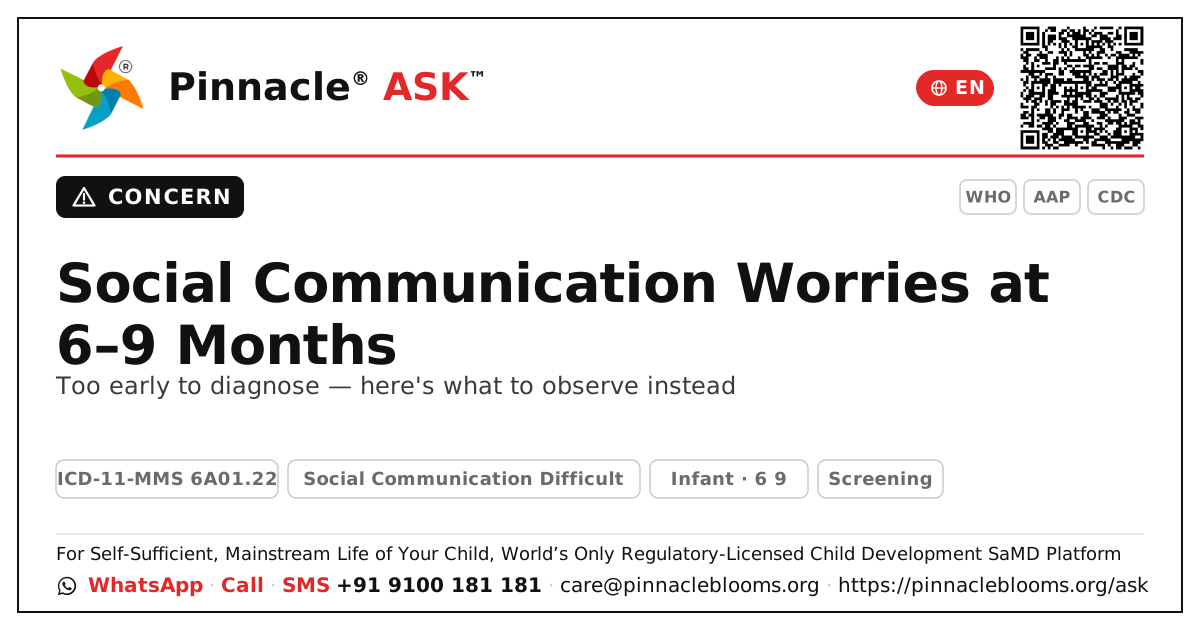
If you're watching your baby at 6 to 9 months and wondering whether their smiles, sounds and glances are "enough" — that is a loving, normal question, and the honest answer is reassuring.
In short
At 6 to 9 months it is far too early to diagnose Social Communication Difficulties (ICD-11 6A01.22) — that label belongs to later childhood, once spoken language and back-and-forth conversation are expected. What we can do at this age is gently watch how your baby connects: eye contact, social smiles, babbling, and turning to your voice. These are early threads of communication, not a test your baby can pass or fail. If a few of these threads seem consistently absent, that is simply a reason for a calm developmental check — never a cause for alarm.What is healthy to see at 6–9 months
Rather than worry about a condition diagnosed years from now, enjoy and observe these everyday social signs:- Social smiles — smiling back when you smile at them
- Eye contact — meeting your gaze, especially during feeds and play
- Babbling — strings of sounds like "ba-ba", "da-da" (not yet meaningful words)
- Turning to sounds and voices — especially yours
- Enjoying peekaboo and simple to-and-fro games
- Reaching, showing interest in faces and toys
Babies develop at their own pace, and a quieter or more watchful baby is often perfectly typical.
When a gentle check makes sense
Consider a developmental check — not because of a label, but to be reassured — if by around 9 months you consistently notice: very little eye contact, no social smiling, no babbling at all, no response to loud sounds or to your voice, or a baby who seems unusually "switched off" from people around them. A concern about hearing is especially worth raising early, as it can affect both responses and babble. Social communication itself becomes a meaningful question from the toddler years onward, once words and conversation emerge.The Pinnacle way
A clinical AbilityScore® and any diagnosis are formed only at a Pinnacle Blooms Network centre, under qualified clinician care — never from an online form or a checklist. At this young age our focus is gentle, play-based observation and parent reassurance, not labels. If you'd like a closer look at early connection and pre-language, our speech therapy team understands how communication grows from the very first smiles and sounds.Trusted sources
WHO ICD-11 (6A01.22, developmental speech and language conditions); American Academy of Pediatrics developmental milestone guidance (healthychildren.org); CDC "Learn the Signs. Act Early." milestones for infants (cdc.gov).Next step — If your instinct says something is worth checking, trust it gently. Book a developmental check with a Pinnacle clinician for warm, age-appropriate reassurance.
This is general information, not a diagnosis — a clinical AbilityScore® and any diagnosis are formed only at a Pinnacle Blooms Network centre under qualified clinician care.
What to watch
By around 9 months, watch gently for consistent absence of social smiles, very little eye contact, no babbling, or no response to your voice or loud sounds. A hearing concern is worth raising early. These are reasons for a calm check, not alarm — social communication itself becomes a meaningful question only in the toddler years.
Try this at home
Talk, sing and play face-to-face every day — pause after you speak to give your baby a turn to babble or smile back. These tiny back-and-forth moments are the foundation of all later communication.
Trusted sources
Developed by SETU Consortium · Pinnacle Blooms Network · Last reviewed 2026-06-10 · reviewed every 365 days
This is general information, not a diagnosis. A clinical AbilityScore® and any diagnosis are formed only at a Pinnacle Blooms Network centre, under qualified clinician care.
Frequently asked
Can my 6-month-old be diagnosed with Social Communication Difficulties?
No. This condition is recognised only in later childhood, once spoken language and conversation are expected. At 6 to 9 months we simply observe early connection — smiles, eye contact and babbling — and reassure, rather than diagnose.
What early social signs should I see at 6 to 9 months?
Social smiles, meeting your gaze, babbling such as "ba-ba", turning towards your voice, and enjoying games like peekaboo. Babies vary widely, so a quieter baby is often perfectly typical.
When should I book a developmental check?
Consider a calm check if by around 9 months you consistently notice no social smiling, very little eye contact, no babbling, or no response to your voice or loud sounds. Any hearing concern is worth raising early.